
Review · PARIS CITY TOURS
The French Revolution: Self Guided Audio Tour of Paris
Revolution walks quietly in Paris. This app-based route connects major Revolution-era locations across the Marais to the story of how France changed, with automatic GPS playback that guides you stop to stop.
I like two things a lot: the offline access (audio, maps, and geodata), and the way the narration turns big events into walkable moments you can control. The course runs about 1 hour 30 minutes to 1 hour 45 minutes, so it fits nicely into a busy day.
One consideration is simple: it is self-guided, so you will supply the smartphone and headphones. If you show up without them, you will have nothing to listen with.
Key highlights you should care about

- Offline-first audio and maps so you can keep exploring even with shaky cell service
- Turn-by-turn GPS playback that starts the right track near each landmark
- Lifetime access to the English tour and a virtual tour, long after your Paris day
- Marais focus on Revolution sites like Place de la Bastille and Hôtel de Ville
- Family-friendly pacing with narration that works well even for teens
Price and time: is $19.99 a fair deal?
At $19.99 per person, this is not a bargain that feels throwaway. Instead, you are paying for a structured 90-minute walk with offline audio, maps, and geodata, plus lifetime access to the tour in English.
That lifetime part matters more than it sounds. You are not just buying one day of listening, you are getting an audio route you can replay later, and a virtual tour for when you cannot get to Paris right away.
Time-wise, plan for roughly 1 hour 30 minutes to 1 hour 45 minutes. That is long enough to feel like you did something real, but short enough that you can pair it with other nearby stops in the Marais without turning your whole day into a slow crawl.
You can also read our reviews of more guided tours in Paris



VoiceMap and GPS playback: how this tour actually works
This is delivered through the VoiceMap app on Android and iOS, with lifetime access included. The big practical win is that the audio and your maps can work offline, so you are not stuck hunting for Wi-Fi while you stand in a line of medieval-looking streets.
The other practical win is the automatic GPS playback. You do not need to stare at your phone and manually select tracks every time you cross a street. Instead, the narration cues itself as you move, with maps and directions helping you keep your place.
What you need to bring is straightforward: your smartphone and headphones are not included. I’d also treat this as a phone-battery day, since GPS and audio together can drain power faster than you expect.
Where you start and end, and why that matters for flow
You begin at Place de la Bastille in the 4th arrondissement, then you finish at the Palais de Justice on the 1st side of the Seine. The route is built as one continuous walk that moves you from the Revolution’s spark points toward the political and legal center of Paris.
Starting at Place de la Bastille is smart because the story has a clear ignition point: the storming of the Bastille, the infamous political prison tied to the events that transformed France. Ending near the Palais de Justice gives the final theme a fitting edge, since political upheaval and social injustice are part of what you reflect on as you reach the end.
There are no special time windows listed for the route itself, since the provided hours show the location as open daily. In real life, you still want daylight and comfortable footwear, but you should not feel trapped by a tight appointment time.
Place de la Bastille to Place des Vosges: the Revolution’s opening scene
Your first stop is Place de la Bastille, tied to the storming of the prison with the same name. The tour frames this as more than a single event. You hear how it set off a chain reaction that changed the political direction of France.
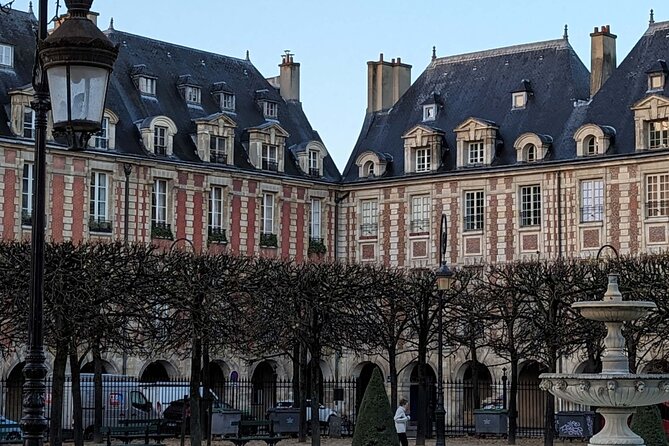
From there, you move toward Place des Vosges, a square famous for beauty and now also used as a storytelling stage for upheaval. The audio connects what you see in front of you with the shift from monarchy to republic within only a few swift years.
What makes these early stops work is that they give you a timeline you can feel under your feet. You start with the shock of the Bastille, then you quickly land in a place that helps you understand how fast the mood of a country can flip.
Possible drawback here: Place des Vosges is a popular public area. Since this is self-guided, you’ll want to pause for your narration when you need a quiet moment, because street noise can make audio harder to hear.
Hôtel de Sully and the look of medieval Paris in a political era
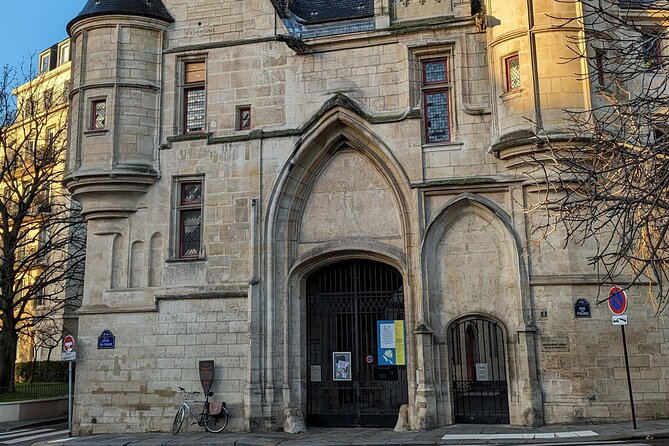
Next up, you pass the Cour et Jardin de l’Hôtel de Sully, an architectural site that echoes the medieval past. This part matters because it reminds you that the Revolution did not happen in a vacuum. It hit a city full of old structures, old wealth, and old power.
Then you move into the Hôtel de Sully history. The audio explains how the French Revolution affected aristocratic properties during the turmoil, and it uses the setting to help you connect buildings with political change.
This section is a good place to slow down. When you are walking past historic facades, it is easy to enjoy the look without attaching meaning. Here, the narration helps you connect the architecture to the social shift happening at the same time.
A practical note: since this is outdoors and app-driven, you will rely on what you can see from the street. If a particular courtyard view is blocked by crowds or angles, you might need to step around to find a good listening spot.
More Paris tours and experiences for the shortlist






Saint-Paul and Musée Carnavalet: when confiscation becomes everyday context
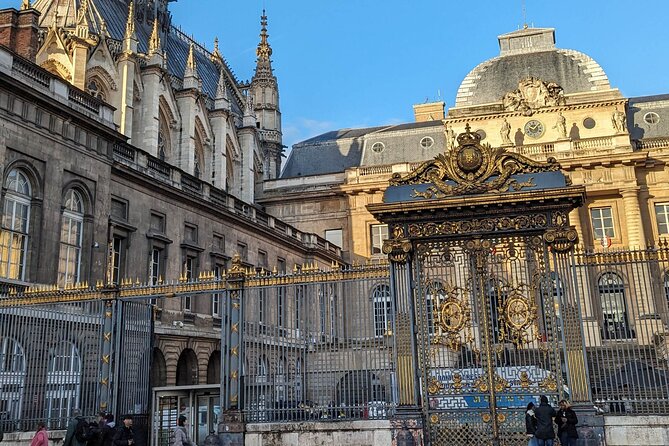
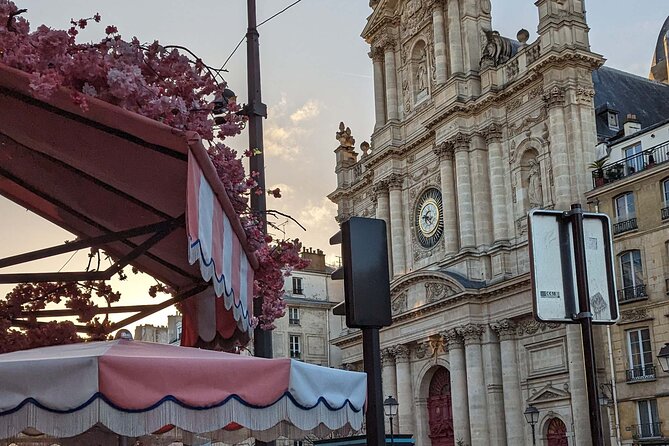
You then move to Place Sainte-Catherine and the Parish Church of Saint-Paul of Saint-Louis, described as tied to pivotal revolutionary events. The audio pairing of church and plaza helps you understand how political pressure can play out through community spaces, not just palaces.
After that, Musée Carnavalet is part of the route as a major learning moment. The tour’s focus here is the confiscation of buildings from aristocratic owners, and how that feeds into the bigger narrative of social and cultural transformation.
Even if you do not step into the museum, the stop can still be useful because it gives you a clearer mental map for what you are seeing around the neighborhood. You walk away understanding why certain properties mattered so much to the Revolution’s changes in power.
One drawback to keep in mind: entrance tickets to museums are not included. So if you want interior exhibits, you would need to plan that separately, and the audio tour itself stays outside, as designed.
Vestige de la Petite Force: bread, pressure, and the human side
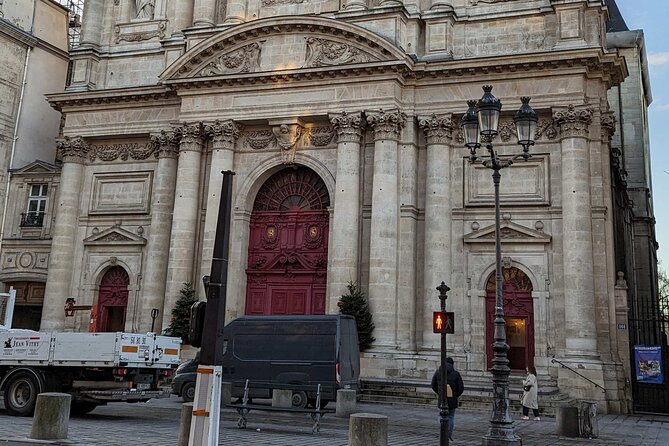
A standout moment in the route is the Vestige de la Petite Force. The audio uses this remnant to point you toward the challenges Parisian workers faced, especially with exorbitantly priced bread.
This is where the story stops being only political slogans. You start thinking about daily life, hunger, and anger, because revolutions are powered by what people feel in their homes.
I like this stop because it balances the earlier big-name locations. Place de la Bastille and Hôtel de Ville tell you what the Revolution did at the top. Petite Force helps you understand what it meant at street level.
Practical consideration: since this is a historical remnant rather than a big museum stop, you may want to slow your pace so you catch what the audio says before you move on.
Hôtel de Ville and its courtyard: the new politics taking shape
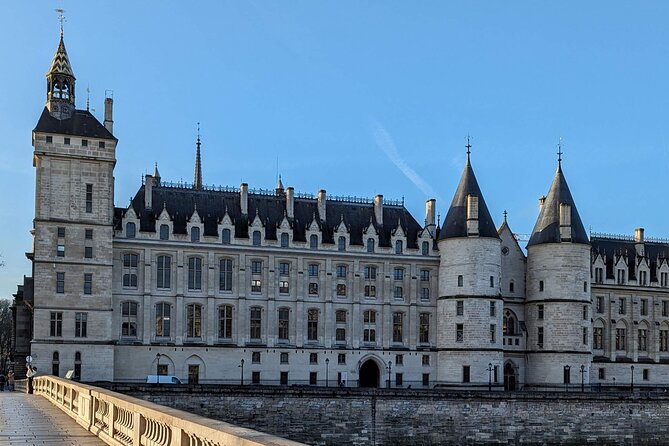
Next, you reach Hôtel de Ville, Paris’s City Hall, and the audio brings in the final days of the royal family and the broader implications for the political landscape. You are in the right physical place for the theme, because city halls and administrative spaces tend to be where new rules get made visible.
You then continue to the courtyard of Hôtel de Ville, where the tour explains the birth of the National Assembly. The narration also highlights advocacy for laws by independent citizens, which is a reminder that Revolution politics was not only about leaders. It was also about public voices demanding change.
If you like understanding the mechanics of revolutions, this is your section. It moves the story from crisis into governance, and from governance into who gets heard.
Possible downside: City Hall areas can be busy. Since you are using headphones and app audio, you may need to step a little to get a quieter listening pocket.
Saint-Jacques Tower and the city wall: a long memory in stone
After Hôtel de Ville, you pass the square of the Saint-Jacques Tower and get a visual cue for depth of time. The tour points out the over 800-year-old city wall, which gives you a sense of how old Paris protects itself and how new politics tries to reshape the same streets.
Then you see the Tour Saint-Jacques, described as a historical landmark tied to events from the revolutionary era. Even if you are not learning every detail, the key value is perspective. You see a structure meant to last, while the Revolution was a fast, messy push to change everything.
This section is also good for slowing your pace and just looking. The audio helps you connect what you see to why it mattered, so you are not only speeding from point to point.
Place du Châtelet and Pont au Change: symbolism and momentum
You finish the middle stretch by decoding symbolism in Place du Châtelet square. The tour focuses on the meaning behind the ornate column, and how symbols reflect the socio-political climate fueling the French Revolution.
From there, you cross Pont au Change. The tour uses the bridge crossing as a reflective moment on dramatic events that reshaped Paris and the course of history.
These two stops pair well because they teach you how Revolution stories get told through objects and urban choreography. A column is not just decoration. A bridge is not just a crossing. They become ways to read the city like a document.
Practical thought: bridges and open squares can feel exposed when the weather is hot, windy, or rainy. If that is your situation, keep your headphones secure and take a short break when you need to stay comfortable.
Ending at Palais de Justice: the Revolution’s final argument
The tour ends at the Palais de Justice de Paris, the palace of justice. The audio frames the finish around the convergence of political upheaval, climatic events, and social injustice as forces reshaping the world.
That ending location is useful because it ties the Revolution to law and institutions, not just battles. Even in a self-guided format, the narrative arc lands in a place where people would have argued over rights, punishment, and order.
One last practical tip: because the tour ends at a major civic building area, you can easily connect it to other walks nearby in the central city. You are right where many classic Paris routes start, which makes it convenient for the rest of your day plan.
Best way to use this tour in real life
If you want the best experience, treat this like a guided walk you set on autopilot, not like background audio. Put your headphones on when you step off the sidewalk, then pause briefly when you stop for photos or when crowds block your view.
The offline access is the safety net. You have the maps and geodata stored, and you are not forced to rely on constant signal. That matters in Paris, where streets and subways can interrupt data even when your plan says you should be fine.
Also, since the audio tour is in English with narration that is described as well done, it’s a good choice if your French is basic. You get the story clearly, without needing to translate street signs to understand what you are looking at.
Who should book this audio tour?
This works best if you like independence. You can walk at your pace, stop when you want, and keep moving when you are ready. It is also a nice fit for history buffs who enjoy linking events to specific places.
It is a strong pick for families with teens too, because the length is reasonable and the story is structured to follow a route rather than turning into a long lecture. If you have kids who get bored in museums, a focused outdoor audio route can feel more manageable.
If you strongly prefer a live guide who can answer questions, this will not replace that. It is app-based and self-guided by design, so it will be up to you to ask questions of the city using your own curiosity.
Should you book it?
I’d book this if you want a structured Marais walk tied directly to the French Revolution, and you value offline audio and GPS guidance more than a sit-down guided talk. At $19.99, the lifetime access is a bonus, especially if you plan to revisit Paris someday or want a virtual option later.
I’d think twice if you do not want to rely on your own phone and headphones, or if you prefer museum interiors over street-level context. Since tickets are not included, you might also end up doing a few extra stops on your own if you want to go deeper inside.
Overall, it is a practical way to turn a neighborhood stroll into a clear story, starting at the storming of the Bastille and ending where justice and politics overlap.
FAQ
How long is the French Revolution self-guided audio tour of Paris?
The tour runs about 1 hour 30 minutes to 1 hour 45 minutes.
Where does the tour start and end?
It starts at Place de la Bastille and ends at the Palais de Justice de Paris, 08 Bd du Palais, 75001 Paris.
Is the tour fully self-guided?
Yes. This is an app-based self-guided audio tour, using VoiceMap with GPS-triggered playback.
Does it include offline access?
Yes. It includes offline access to audio, maps, and geodata.
What language is the audio?
The tour provides lifetime access in English.
What do I need to have with me?
You need your own smartphone and headphones. Neither is included.
Are museum tickets included?
No. Tickets or entrance fees to museums or attractions along the way are not included.
Is there lifetime access after I buy it?
Yes. The tour includes lifetime access to the audio tour and a virtual tour.
What is the booking and cancellation policy?
The experience is non-refundable and cannot be changed for any reason.
More Guided Tours in Paris



More Tours in Paris




More Tour Reviews in Paris






Not for you? Here's more nearby things to do in Paris we have reviewed












Paris City Tours, side by side.
 ★ 4.6Louvre Museum Timed-Entrance TicketTickets from $2671,977 guest reviews
 ★ 4.6Disneyland® Paris 1-Day TicketTickets from $6149,412 guest reviews
 ★ 4.6Versailles Palace and Gardens Full Access TicketTickets from $1741,579 guest reviews
 ★ 4.6Arc de Triomphe Rooftop TicketsTickets from $1834,264 guest reviews
 ★ 4.7Orsay Museum Entry TicketTickets from $1525,647 guest reviews
 ★ 4.4Evening River Cruise with MusicTickets from $2722,721 guest reviews
 ★ 4.4Eiffel Tower Entry Ticket with Optional Summit AccessTickets from $2920,035 guest reviews
 ★ 4.3Eiffel Tower Summit or Second Floor AccessTickets from $5917,248 guest reviews
This tour also belongs to