
Review · LOUVRE MUSEUM TOURS
Louvre Evening Escape – Avoid The Crowds! Exclusive Guided Tour
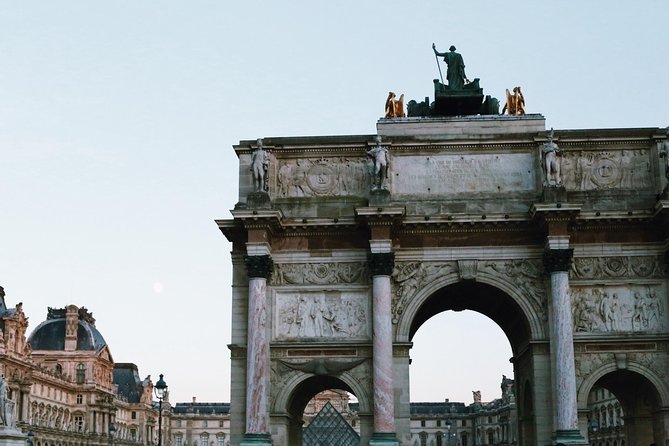
Paris at golden hour, then the Louvre at its best. This is a small-group evening escape that pairs a guided walk through classic Paris landmarks with a focused Louvre visit, built around timed admission. You trade the usual free-for-all for a route that makes the city make sense first, then helps you see the museum with clearer eyes.
Two things I really like: the tour is limited to just six guests for the exclusive option, so your guide can answer questions without shouting. And the Louvre entry is handled with a priority style approach, which matters because that museum can chew up time fast. One thing to consider: you’ll be on your feet for a good chunk of the evening, so if walking in busy areas tires you easily, pace yourself and plan your energy.
Key points to know before you go
- Timed Louvre entry included: you get help getting inside efficiently, not just a ticket and a prayer.
- Six-guest exclusive option: smaller group size means you’ll actually hear the guide.
- Seine River orientation first: you start around Île de la Cité and build context before the museum.
- Big-name art plus calmer rooms: you see major works like the Mona Lisa, then also less-obvious treasures.
- Evening scheduling helps: you’re choosing the time of day when crowds tend to feel less aggressive.
- Practical museum rules: no large bags, and some rooms are quiet or restrict speaking.
Why an evening Louvre tour helps you see Paris without the crush
If you’ve ever tried to get your bearings in the Louvre on a daytime visit, you already know the problem. The museum is huge, the signage is not always friendly, and the lines can turn your plan into a waiting game. An evening slot changes the rhythm. You’re still going to a world-famous place, but you’re doing it when the city is winding down and the museum experience can feel a bit more human.
This tour also leans hard into what you actually need as a first-time Louvre visitor: direction and context. Instead of walking into the Louvre cold, you spend time outside first, then the guide’s explanations help you recognize why certain works and rooms matter. That makes the museum feel less like a giant checklist and more like a story you can follow.
I also appreciate that the evening timing works with how you want to enjoy Paris. You get to watch the city’s landmarks, bridges, and gardens in softer light. And then you switch gears into art, with your guide pointing out major hits plus lesser-noticed pieces that you might otherwise miss.
You can also read our reviews of more guided tours in Paris



From Île de la Cité to the Louvre: how the guide sets the story
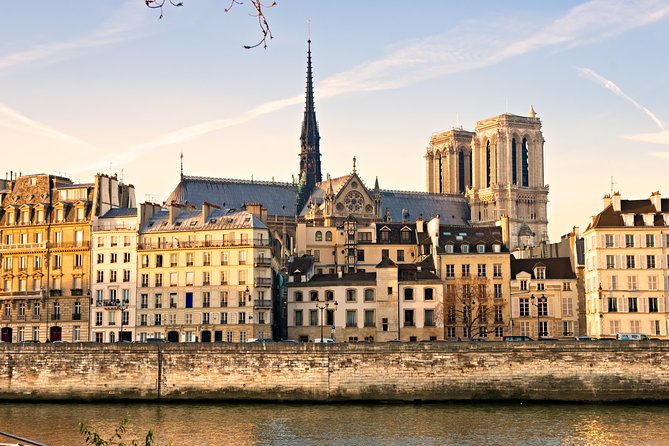
The best part of this tour is that it starts at the epicenter of Paris: Île de la Cité. That’s not just a scenic starting point. It’s a smart move because the early history of Paris ties directly into the wider French story, and the Louvre is one of the places where that history is physically visible.
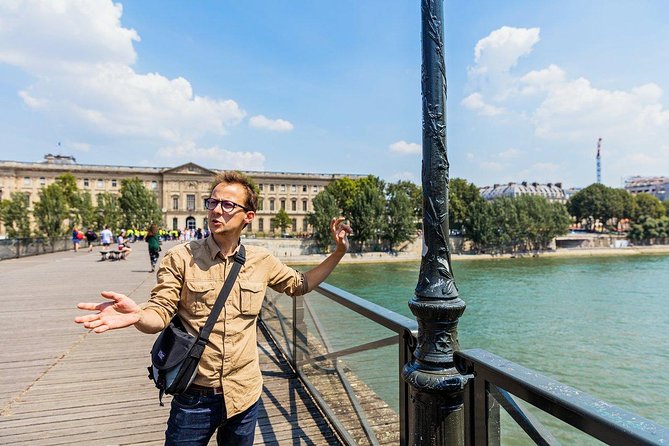
Your walk focuses on the evolution of the city as you move along the Seine. You’ll pass key sights tied to Paris’s identity, including Notre Dame, Pont Neuf, and the area around Pont des Arts. The guide also points out spots that are better known to locals than to casual tourists, which is where you start to feel like the city has more depth than the postcard version.
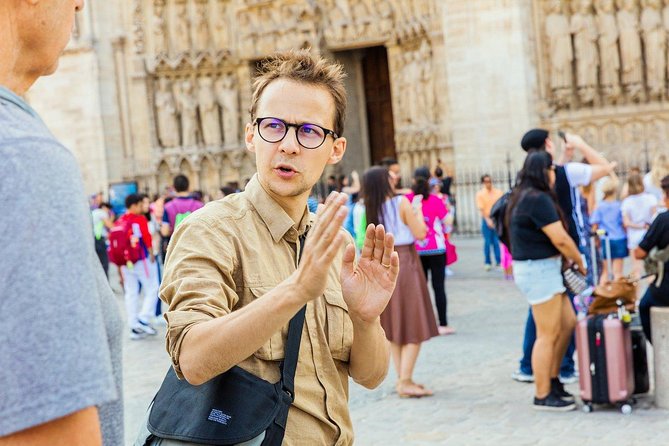
This is where having a guide matters most. You could technically wander these streets on your own, but you’d likely spend the time trying to figure out what you’re looking at. With the guide, the emphasis is on meaning: architecture, culture, and the way Paris developed. One of the most repeated theme in the experience is that the guide can turn landmarks into stories, and that makes it easier to connect what you see outside to what you’ll see inside.
The Seine route that mixes icons, photo-worthy bridges, and real context
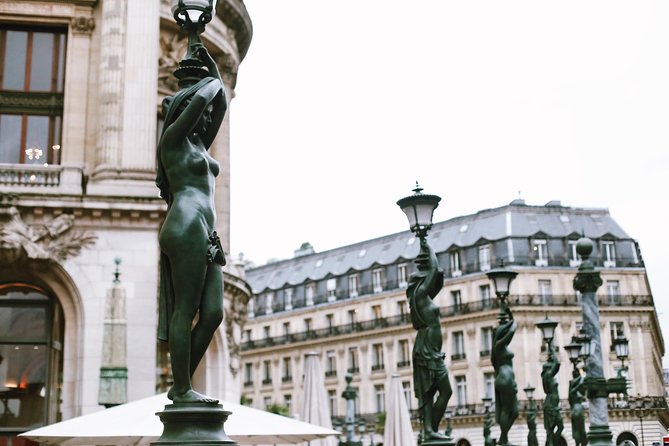
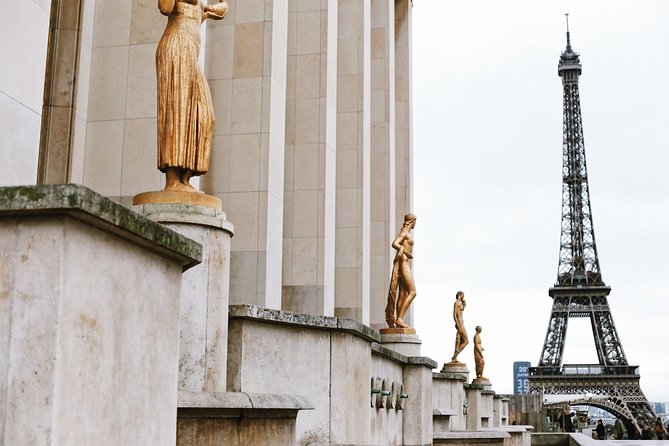
The route isn’t random. It’s designed to give you a broad “Paris in one evening” sweep without turning it into a sprint. You’ll move through a chain of famous stops, including sights around Musée d’Orsay, Musée de l’Orangerie, and the Jardin des Tuileries. Then you’ll head through major squares and neighborhoods you’ll recognize instantly once you’re there, including Place de la Concorde, La Madeleine, and the stretch that leads toward the Champs-Elysées.
Yes, that’s a lot of famous names in one outing. But it works because your guide is linking them. The point is not to memorize everything. The point is to leave with a mental map, plus a sense of where art, power, and architecture show up in the real city.
And since it’s an evening plan, you’re less likely to feel like you’re constantly fighting for position. In practical terms, you still have crowds around the biggest monuments, but the pace and structure feel calmer than the typical all-day group tours that start too early and run too long.
There’s also a transfer piece built in. After a lunch break that’s on your own dime, you’re chauffeured by a luxury vehicle to the Louvre. That means you’re not spending your precious museum time wrestling with transit in peak conditions.
Priority entrance at the Louvre Pyramid: what it changes on the ground
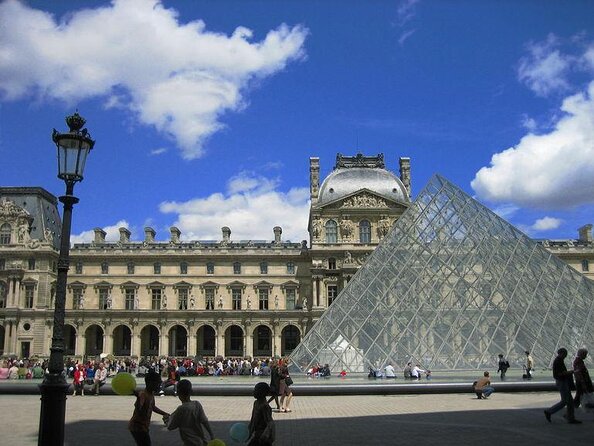
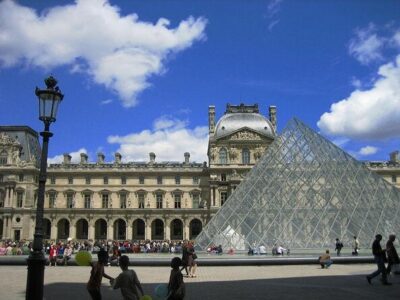
Meeting at the Louvre Pyramid is convenient, and starting at 5:00 pm is even more helpful. Evening entry typically means you can spend more of your energy inside and less of it waiting for security and ticket scanning.
This tour includes timed admission, and the priority entrance approach is explicitly meant to help you get past the usual long entrance lines. That’s a real value add, because the Louvre’s bottlenecks can derail your plan no matter how good your map skills are.
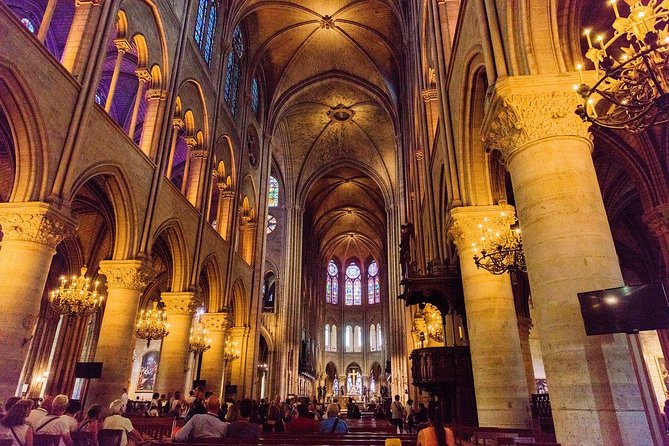
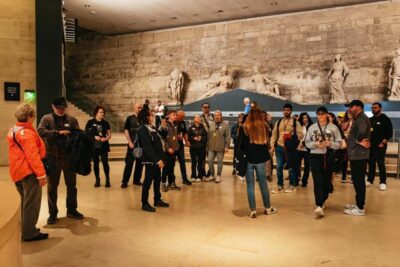
Once inside, you get a guided museum visit that focuses on significance and context. You’ll learn how the Louvre wasn’t always just an art museum. Historically, it served as a fortress and palace, including during Napoleon’s era. That background matters because it changes how you understand the building itself, not just the paintings.
Also, a small heads-up that will save frustration: like many major attractions, security can still create some lines, even if you have skip-the-line style access. Plan for delays the way you would for any high-security museum, but expect the overall experience to feel much smoother than standard entry.
The Louvre highlights you’ll actually walk out remembering
You’re not only seeing the museum’s biggest celebrities. You’re seeing them with explanation, plus a set of works chosen to show variety in style and era.
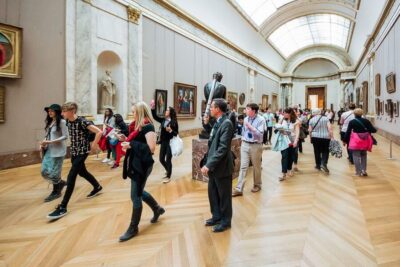
The tour’s art focus includes major works such as Delacroix’s Liberty Leading the People, Géricault’s The Raft of the Medusa, Michelangelo’s Dying Slave, and paintings from the Romanticism and Classicism periods. You also get stops connected to key sculpture and Renaissance fame, including Venus de Milo and Leonardo da Vinci’s Mona Lisa.
Here’s what I think is smart about this approach. The guide doesn’t just point at famous art. They explain why it mattered, what it represents, and how it fits into larger French history and cultural identity. That means you can spend less time wondering what you’re looking at and more time noticing details like expression, composition, and symbolism.
Even better, the experience is designed to include “lesser frequented treasures,” meaning you’re not trapped in only the busiest rooms. And because the Louvre can change what’s on display over the year, your exact lineup may vary seasonally. That’s normal for a museum of this size, and it’s also one reason a guided plan helps: you’re guided to the most meaningful selections, not just whatever happens to be convenient.
Finally, you’ll tour the museum with rules you should know about. Some rooms are quiet or restrict speaking, and your guide will tell you before you enter. This is one of those small cultural expectations that makes the tour feel respectful and helps everyone enjoy the experience.
You can also read our reviews of more evening experiences in Paris






Practical tips: tickets, bags, walking pace, and what to do afterward
This tour is built on logistics that are mostly straightforward, but a few details matter.
First, it’s a mobile ticket experience. You’ll need your phone ready for entry. You also need to provide a mobile phone number with the country code when you book, so the day of your tour communication works without delays.
Second, what you bring into the Louvre matters. You cannot bring large bags or suitcases inside. Security is only allowing handbags or small thin bag packs. If you’re traveling with a bigger daypack, plan on keeping it minimal or using a storage option before you arrive.
Third, the tour is walk-heavy. You start outdoors, move through multiple iconic zones, then go into a major museum. The listed fitness level is moderate. That doesn’t mean you need to be an athlete. It just means you should be comfortable standing and walking for long stretches at evening pace.
Fourth, after the guided portion, you’ll have time to explore on your own or follow the guide’s suggestions for local gems. This is where your advantage grows. Once you’ve learned what to look for inside the Louvre, it’s easier to wander intelligently instead of aimlessly.
And if you’re wondering about the guide factor, the names you’ll see associated with the experience often include Marcel, Jean, Julien, Miriam, Liliya, Belen, Heidi, Harriet, Alex, and Chris. I can’t guarantee any specific guide, but the recurring pattern is strong: guides tend to be strong storytellers who can connect Paris history to what’s on the wall.
Price and what you’re really paying for at $181.02
At $181.02 per person, this isn’t a budget play. But it can still feel like good value if you’re spending the evening smart.
Here’s how I look at it. You’re paying for:
- A small-group or private-style guide experience, which reduces wasted time and increases interaction.
- Timed admission and a priority-style entry approach that saves you from the biggest Louvre time sink.
- A structured orientation walk across major Paris landmarks, which is hard to replicate well solo in the same amount of time.
Also, the museum ticket is part of the package. The tour includes a €22 entrance ticket value, so you’re not paying that separately.
Could you DIY the Louvre and save money? Yes. But you’d be giving up the combination of orientation, art context, and efficient entry. For many first-time visitors, that trade is worth it because it protects your evening from turning into a logistics problem.
Who this Louvre evening escape fits best
This tour fits best if you want three things at once: a strong orientation to Paris, a confident start to the Louvre, and a plan that helps you avoid the worst crowd crush.
You’ll likely love it if:
- You’re visiting Paris for the first time and want a practical sense of how everything connects.
- You don’t want to stand in a long entry line while your day slips away.
- You prefer a smaller group atmosphere, where you can ask questions and hear the answers.
- You want both major highlights and a few calmer, less obvious art stops.
You might want to reconsider if:
- You hate walking at night or you’re worried about stamina.
- You’re traveling with someone who needs frequent, extended breaks.
- You’re the kind of visitor who wants to wander entirely on your own without a timed plan.
Should you book this Louvre evening escape?
If your goal is to see the Louvre without wasting your evening in chaos, I think this is a smart booking. The blend of timed entry, small-group guidance, and a Paris walk that builds context first is exactly how you make the Louvre feel manageable.
My advice: book it if you like guided structure and you want art context, not just photos. If you’re someone who enjoys reading maps and wandering freely, you can DIY it, but you’ll likely lose the time advantage and the storytelling layer that helps everything click.
If you’re weighing options, this one is especially compelling for evening timing, because you’re choosing a calmer mood when Paris looks better and the Louvre experience can feel less relentless. Given it’s typically booked well ahead, try to lock in your preferred date early so you get the evening slot you want.
FAQ
What time does the tour start and where do I meet?
The tour starts at 5:00 pm, and you meet at the Louvre Pyramid in 75001 Paris. The activity ends back at the meeting point.
How long is the experience?
It runs about 2 hours 30 minutes.
Is Louvre admission included?
Yes. The guided museum tour includes entry, with a priority style approach using timed admission. The package includes a €22 entrance ticket to the museum.
Is lunch included?
Lunch is not included. You’ll have time for lunch at your own expense before you head to the Louvre.
Are there restrictions on bags in the Louvre?
Yes. Large bags and suitcases are not allowed inside the museum. Only handbags or small thin bag packs can go through security.
What if the Louvre is closed or delayed?
If the Louvre faces an occasional closure and the opening time is delayed by more than 1 hour from the tour start time, the operator will provide an appropriate alternative. In those cases, refunds or discounts are not available.
More Guided Tours in Paris



More Tours in Paris




More Tour Reviews in Paris





Not for you? Here's more nearby things to do in Paris we have reviewed












Louvre Museum Tours, side by side.
 ★ 4.6Louvre Museum Timed-Entrance TicketTickets from $2671,977 guest reviews
 ★ 4.3Louvre Guided Tour with Reserved Access & Boat CruiseTickets from $8116,353 guest reviews
 ★ 4.5Louvre Museum Masterpieces Guided Tour with AccessTickets from $8612,023 guest reviews
 ★ 4.6Louvre Museum Entry Ticket With Host and River CruiseTickets from $1009,926 guest reviews
 ★ 4.1Priority Access Louvre with Host -Direct to Mona LisaTickets from $748,387 guest reviews
 ★ 4.6Mona Lisa & Louvre Masterpieces Tour with Reserved AccessTickets from $806,812 guest reviews
 ★ 5.0Louvre Museum – Exclusive Guided Tour (Entry Included)Tickets from $1816,296 guest reviews
 ★ 4.0Louvre Reserved Ticket and River Cruise ComboTickets from $376,054 guest reviews
This tour also belongs to