
Review · PARIS CITY TOURS
Paris Revolutionary Walking Tour: Iconic French Sights & Stories
French Revolution clues live in the streets. This Paris Revolutionary Walking Tour connects familiar landmarks to the decisions and conflicts that shaped modern France, using a guide to supply the missing context. I like how the walk keeps revolutionary history grounded in real places, not vague names.
I like the 8 max group size because it leaves room for questions and side conversations. I also like the relaxed pace, where each stop gets enough time to look closely and ask what something means, with guides who speak clearly and bring real passion to the story, like Lou, Alex, and Walid.
One possible drawback: you only get about 2 hours total, so some stops are brief, especially if you prefer long museum-style explanations.
Quick take on this Paris Revolutionary Walking Tour
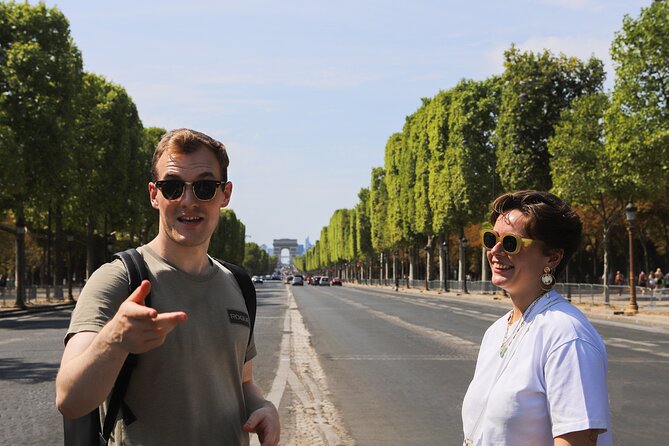
- National Assembly first: start at the heart of French politics for an easy entry point into the revolution era
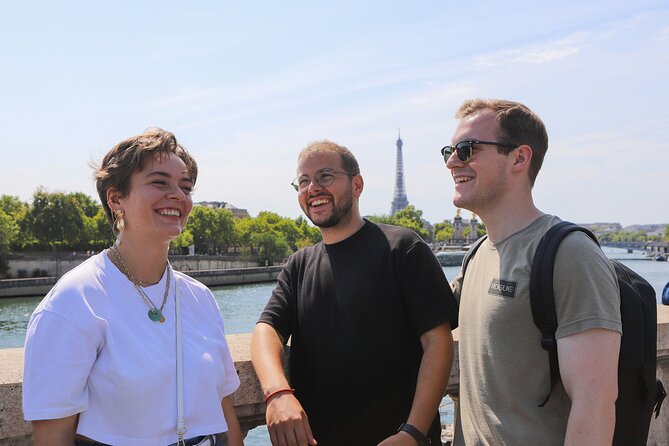
- Concorde’s landmark view from Pont de la Concorde: train your eye on Notre Dame, the Eiffel Tower, the Alexander III bridge, and Sacré Coeur
- Place de la Concorde explained on the spot: you’ll stand where major revolutionary events, including Louis XVI’s execution, took place
- Tuileries Gardens as a calm pause: a short reset that helps the story feel human, not just dramatic
- Place-Vendome to the Opéra finale: a smart contrast between wealth, power, and Parisian art
Why this 2-hour French Revolution walk makes Paris make sense
Paris can feel like a grab bag of pretty buildings, unless you have a story threaded through it. This tour gives you that thread fast. You move from the National Assembly to Concorde, then through the gardens and into the Opéra area, with a guide explaining how politics, public space, and social change all connect.
What makes it especially useful is the pacing. You are not racing block to block to hit ten photo ops. Instead, you get time at each stop to look up, notice details, and ask questions while the guide ties what you see to the French Revolution era.
It is also built for first-timers. Even if you already know the big names like Notre Dame or the Eiffel Tower, you still leave with better orientation. After the walk, the city’s layout clicks because you saw how the monuments line up from key points like Pont de la Concorde.
Finally, you get built-in help for what to do next. The tour includes tips on how to navigate Paris after the walk, which is a small thing that saves you time the moment you step away from the group.
You can also read our reviews of more walking tours in Paris



Meeting at 1 Pl. du Palais Bourbon, the political doorway
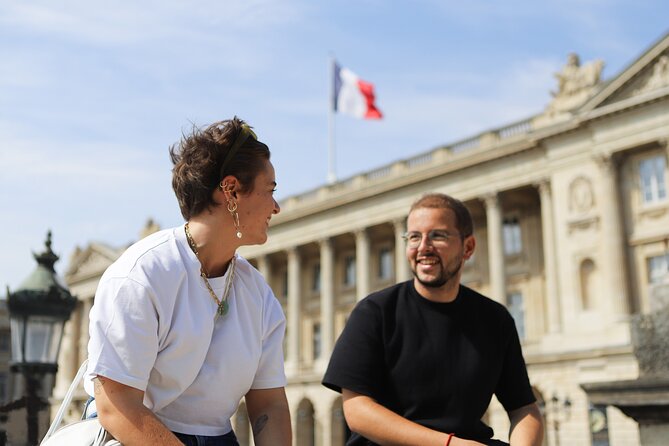
You start at 1 Pl. du Palais Bourbon in the 7th arrondissement. The location matters because it puts you right at the Assemblee Nationale, where French political life and big decisions have been shaped for centuries.
This first stop is short, about 20 minutes, but it works as a warm start. You get a sense of how the revolution was not just street-level chaos. It was also arguments about representation, authority, and how decisions should be made.
You’ll also appreciate that the guide sets expectations early. Instead of launching into dates only, you get the story framed so you understand why you are going to the next places. That makes the later stops feel less random and more like chapters.
If you like history but hate lectures that feel far from the street, this start is a good fit. You are physically close to the institutions that people argued about, which helps everything feel concrete.
AssembIee Nationale to Pont de la Concorde: democracy meets the skyline
After the National Assembly, you head toward Pont de la Concorde for a quick but memorable viewpoint. This stop is about 10 minutes, yet it is one of the most practical parts of the whole tour.
From the bridge, you get an amazing spread of major Paris sights in one sweep. The guide points out landmarks including Notre Dame, the Eiffel Tower, the bridge Alexander III, and even Sacré Coeur. If you are the type who learns faster by seeing how places relate, this viewpoint pays off later when you start planning your own routes.
This is also a smart moment to reset your bearings. Once you understand where you are in relation to those landmarks, you can read the city better when you are walking on your own. You stop treating Paris like a postcard and start treating it like a map with patterns.
One caution: since this is a short stop, keep your phone charged. You’ll want quick photos, but also a couple minutes just to look, because the view is the point, not just the snapshot.
Place de la Concorde: standing where Louis XVI’s fate played out
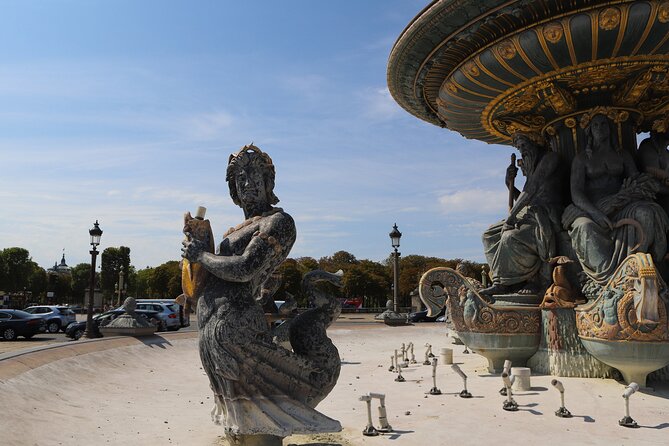
Then you move to Place de la Concorde, where you spend about 30 minutes. This is the emotional center of the walk. You are in a place tied to major revolutionary events, including the execution of King Louis XVI.
The guide helps you see the square as more than architecture and monuments. You learn how public spaces can become stages where politics turns into action, and why this location matters when you talk about the revolution’s momentum.
You’ll also notice the design features you might normally overlook. The stop includes time to admire the fountain and the obelisk, and you get the context so those details are not just decoration. They become part of why the square feels so significant.
This is a moment where your expectations should be realistic. You are not standing in a museum display. You are standing in a busy, real city square, so the story is delivered in a live setting. That can be powerful, but it also means you should be prepared for normal street life around you.
If you want to take extra time here, do it by asking your guide one or two focused questions. This stop rewards curiosity more than speed.
Jardin des Tuileries: a calm reset between big events
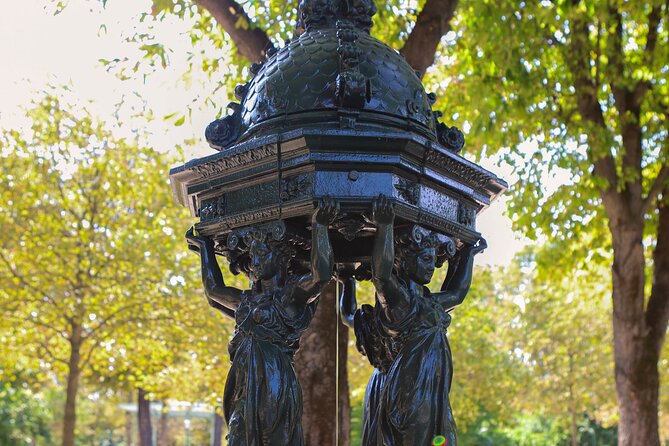
Next comes the Jardin des Tuileries, and the shift in mood is the point. You get about 20 minutes here, and it feels like the tour takes a breath.
This is where the revolution story becomes more than conflict. In the gardens, you can slow down, look around, and connect the political narrative to the everyday culture of Paris. You also get more time to process what you just learned at Concorde, which makes the rest of the walk easier to follow.
The guide adds cultural context as you stroll along the paths. Even if you already associate the Tuileries with photos and pleasure, you’ll understand more of how the place fits into broader French social life.
This stop is also useful for practical comfort. Walking tours add up, and gardens are a natural way to take the edge off without ending the tour early. It’s a good place to grab water if you need it, and to check your next route.
If you are sensitive to heat or cold, plan your timing here. The gardens offer a break from open-sky squares, but weather still affects how comfortable it feels.




Place-Vendome: luxury architecture with revolution-era questions behind it
After the gardens, you visit Place-Vendome for about 20 minutes. This stop is a contrast to the earlier squares and the heavy themes at Concorde.
Place-Vendome is associated with Parisian luxury, from prestigious hotels to high-end shops and elegant architecture. The guide uses that contrast to help you think about the revolution’s long shadow, especially the way wealth, status, and power get expressed through city design.
Even if you are not shopping, the architecture and layout give you something to study. You start noticing how Paris communicates hierarchy visually, and how that connects to the revolution’s debates about who holds authority and why.
This is a good stop for travelers who like to understand theme and symbolism, not just dates. You’ll probably catch yourself looking up more than usual here.
One practical note: this is not the longest stop, so if you are hungry, consider grabbing a snack before you arrive. The tour keeps moving, and you want your energy for the final push to the Opéra area.
Opéra and Palais Garnier finish: art, music, and a new kind of power
The tour ends with Opéra, spending about 20 minutes, and finishing at Palais Garnier at Pl. de l’Opéra. This finale is a smart ending choice because it shifts the story from street-level conflict to cultural identity.
You learn about Paris’s artistic, cultural, and musical heritage, and you get to admire the stunning architecture tied to one of the most famous opera houses in the world. The guide helps you connect the revolution-era changes to the way Paris later expressed itself through art and public culture.
If you’ve been thinking, so far, in terms of politics and public space, the Opéra stop changes the lens. It shows another kind of influence, where culture and performance become part of how a city tells its own story.
This is also the part where you’ll appreciate the walking route ending where it does. Palais Garnier sits in a convenient area for continuing your day. You can branch off to museums, cafes, or additional sightseeing without feeling like you are stranded at the edge of nowhere.
If you want extra photos at the end, give yourself a few minutes right after the group finishes. The building is a strong visual closer.
Guides Lou, Alex, and Walid: what makes the stories stick
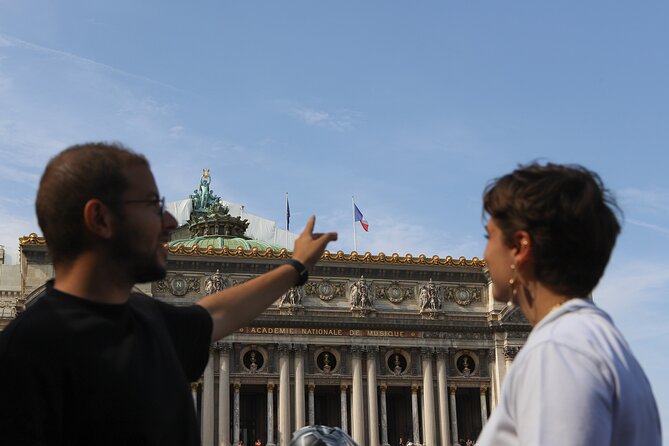
A big reason this tour earns high marks is the guides. You’ll meet a guide who is personable and engaging, and the communication style helps the history land clearly.
People like Lou and Walid bring passion to the French Revolution topics and keep the group involved. Alex combines history and architecture in a way that helps you understand why a building matters, not just that it is beautiful.
You should also expect humor where it fits. One guide’s approach blends explanation with light entertainment, which helps when you are standing outside for long stretches.
And yes, weather happens. If it’s raining, the tone stays practical. One guide was said to keep going even in heavy rain, which is reassuring if you tend to worry about outdoor tours.
A bonus you may enjoy: some guides share restaurant recommendations. Even if you already have plans, those suggestions can help you pick places that match the area you just walked through, rather than guessing blindly.
Price of $66.23: how it holds up for a 2-hour guided story
At $66.23 per person, this tour is not the cheapest way to see Paris. But it is also not trying to sell you a ticket lottery. You are paying for a live guide who connects multiple major sites into one coherent French Revolution storyline.
You also get added value through structure. The stops are planned, the timing is workable for a first pass, and the tour includes tips on how to navigate the city after. If you are spending your first day learning what is where, that help can be worth a lot.
Admission is free at every listed stop, which means you are not layering extra costs on top of the tour fee. You also get a mobile ticket and options for small group (8 max) or private tours.
One small consideration: tips are not included, so factor that into your budget if you follow local tipping norms. Also, this is booked about 40 days in advance on average, which suggests it’s popular. If your schedule is tight, grab a time slot earlier rather than later.
Rain or shine walking comfort and navigation tips you can use
This tour runs rain or shine, so your comfort matters. Wear shoes you already trust on cobblestones or uneven sidewalks. Bring a compact umbrella if you can, or plan on a hooded jacket and quick drying clothes.
Even though the pace is relaxed, you are still walking outdoors in multiple neighborhoods. For that reason, I’d treat this as a priority activity for your schedule. Do it when you have energy left to enjoy the finished sights, especially Palais Garnier at the end.
You’ll also benefit from the city navigation tips provided during and after. After a walk like this, the hard part is usually turning what you learned into a simple plan for the rest of your day. The guide’s advice helps with that, so you spend less time staring at maps and more time choosing your next stop.
Lastly, keep in mind the tour itinerary can change due to the 2024 Olympics. You might find a route adjustment, but the core idea stays the same, seeing Paris through the revolution lens.
Should you book this Paris Revolutionary Walking Tour?
Book it if you want Paris to feel less random and more meaningful. This French Revolution walking tour is a great fit for history lovers, first-time visitors, and anyone who likes learning through real streets and real buildings.
Skip it or consider something else if you need long indoor explanations or you dislike outdoor walking. The time at each stop is limited, and some travelers prefer museum time over fast context.
If you are going on a day when the weather looks rough, you can still feel good about it. The tour is designed to run in rain, and the guide approach is clearly built for keeping the experience moving.
If you are deciding last minute, do it with one thing in mind: you will be leaving with a clearer sense of where Paris’s power centers and major monuments connect. That is the kind of payoff that makes the rest of your trip easier.
FAQ
How long is the Paris Revolutionary Walking Tour?
The tour lasts about 2 hours.
What does the tour cost?
The price is $66.23 per person.
Is the tour offered in English?
Yes, it is offered in English.
How many people are in the group?
The tour has a maximum of 8 travelers. Small group or private options are available.
Where do I meet the guide and where does the tour end?
The tour starts at 1 Pl. du Palais Bourbon, 75007 Paris, and ends at Palais Garnier, Pl. de l’Opéra, 75009 Paris.
Does the tour run in bad weather?
Yes, the tour takes place rain or shine.
What is the cancellation policy?
You can cancel for free up to 24 hours in advance for a full refund. If you cancel less than 24 hours before the start time, the amount paid is not refunded.
More Walking Tours in Paris


More Tours in Paris





More Tour Reviews in Paris


Not for you? Here's more nearby things to do in Paris we have reviewed









Paris City Tours, side by side.
 ★ 4.6Louvre Museum Timed-Entrance TicketTickets from $2671,977 guest reviews
 ★ 4.6Disneyland® Paris 1-Day TicketTickets from $6149,412 guest reviews
 ★ 4.6Versailles Palace and Gardens Full Access TicketTickets from $1741,579 guest reviews
 ★ 4.6Arc de Triomphe Rooftop TicketsTickets from $1834,264 guest reviews
 ★ 4.7Orsay Museum Entry TicketTickets from $1525,647 guest reviews
 ★ 4.4Evening River Cruise with MusicTickets from $2722,721 guest reviews
 ★ 4.4Eiffel Tower Entry Ticket with Optional Summit AccessTickets from $2920,035 guest reviews
 ★ 4.3Eiffel Tower Summit or Second Floor AccessTickets from $5917,248 guest reviews