
Review · LOUVRE MUSEUM TOURS
Paris: Louvre Museum Tour Mona Lisa & Iconic Masterpieces
One building, endless art, and a smart plan. This 2-hour Louvre highlights tour is built for speed with pre-reserved entry and audio headsets so you can keep up even when the museum is packed.
What I like most is the focus: you do not wander for hours hoping to stumble onto the right rooms. With guides such as Martina and Andrea, you get clear context and a route that actually hits the Louvre big names, including the Venus de Milo and the Winged Victory of Samothrace.
The main drawback to plan around is crowd pressure. Even with group access, you may still face some waiting for security on busy days, and a couple of guests noted the pace can feel fast if you prefer longer photo stops.
Key things to know before you go
• Pre-reserved ticket included so you skip the main ticket line, but not the reality of security checks
• Audio headsets help you hear the guide without crowding in tight groups
• A tight highlights route in about two hours that covers ancient Greek, Renaissance, and more
• Mona Lisa is included, with guidance on how to enjoy it even during the crunch
• Max group size of 25 which usually keeps the experience organized
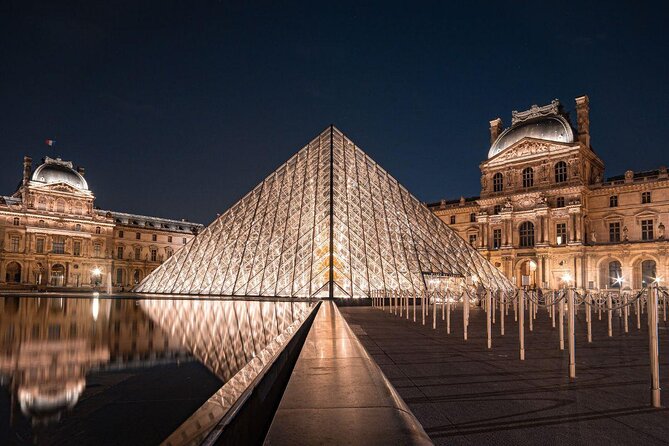
• End point is inside the Louvre, under the pyramid, with no re-entry to the rooms once you exit the wings
A 2-hour Louvre highlights route that actually helps
The Louvre is not one museum. It feels like several museums stacked on top of each other. This tour takes on that problem with a compact plan that runs about two hours, so you leave with real highlights under your belt and energy left to explore on your own.
I also like how the format respects your time. You get an official guide plus audio headsets, so you are not stuck staring at the back of someones coat while you strain to hear what they are saying. In a place this huge, hearing the explanation matters, because it helps you notice what you would normally miss, like specific symbols, artistic choices, or why a piece ended up here.
The tour is also timed like a practical Paris day. Many people choose departures that fit their schedule, so you can pick a time when the museum feels more manageable. If you are trying to see the Louvre and still do other things in Paris, this kind of structured sprint is the difference between feeling satisfied and feeling overwhelmed.
You can also read our reviews of more museum experiences in Paris



Meeting point, pre-reserved entry, and the real meaning of skip-the-line
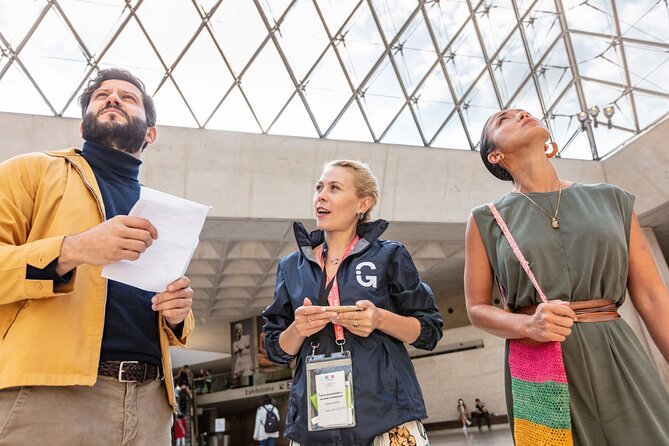
You start at Le Kiosque des noctambules, 12 Pl. Colette, 75001 Paris. The meeting point is deliberately not at the Louvre entrance because finding your guide there can be chaotic. Plan to arrive a bit early so check-in stays smooth.
Here is the key value in the included ticket. You bring a pre-reserved entry into the museum with the group, which is what usually prevents the longest ticket lines. That does not mean you become invisible to lines. On crowded days, you can still run into some waiting for the security process. One guest even described having to stand in a line despite the skip-the-line ticket approach, so it is smart to keep expectations grounded.
Once you finish, you are left in the Louvre itself. You can keep looking after the tour ends, including time to wander. But there is one strict rule that matters for planning: once you have exited the wings and are under the pyramid, you cannot re-enter the rooms you left. So if you have a second must-see list, decide before the tour ends.
Your Louvre route: from castle foundations to ancient Greek icons
The Louvre route is built around variety. You start with the museum visit itself and a highlights sweep designed to move you from one major art world to another without getting lost.
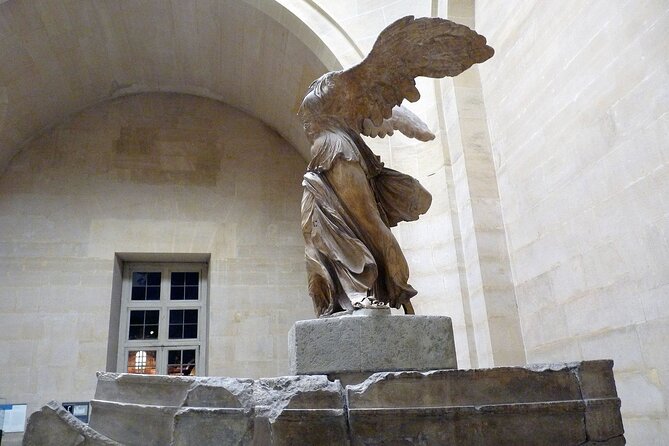
You see ancient Greek masterpieces like the Venus de Milo and the Winged Victory of Samothrace. These pieces can feel imposing even in a quick glance, but with a guide you learn what to look for, the mood behind the sculpture, and how the Louvre frames antiquity. That matters because these statues are not just famous. They are famous for specific reasons, and the explanation helps you connect the dots fast.
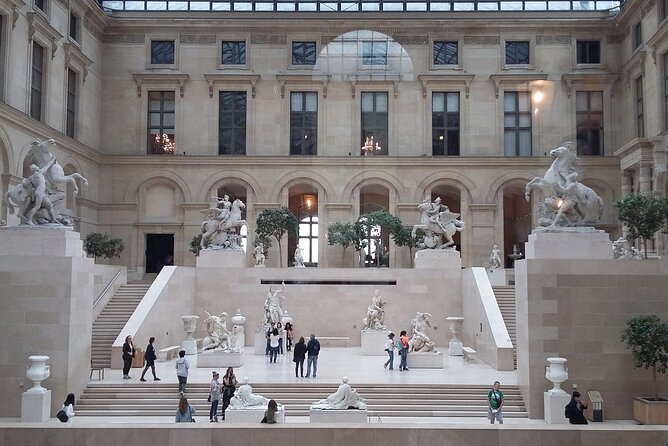
You also go beyond sculpture. The tour includes Renaissance treasures, including the Mona Lisa, plus paintings and other works spanning a wide range from the 13th to the 19th centuries. One part of the experience I especially like is that you also get a sense of the building itself. In the basement of the Louvre Palace, you can see the foundations of the castle that once stood on the site. It is a rare chance to step outside the art bubble and understand why the Louvre looks the way it does today.
There is also a nod to the Louvre as a collection, not just a catalog of icons. The tour mentions prints from the Royal Collection, and it also includes the idea of seeing the Renaissance and ancient worlds as part of a single long story.
Renaissance portrait time: how the guide changes your Mona Lisa moment
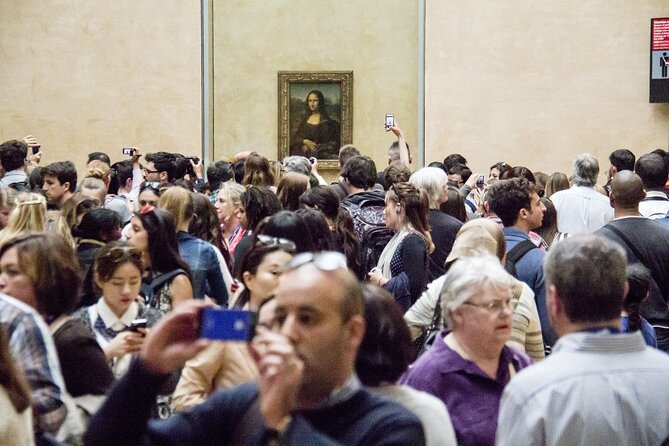
The Mona Lisa is the star, but it is also the trap. The room is usually packed, and the crush can turn a meaningful stop into a frustrating photo mission. This tour helps by bringing you with timing and explanation, so you are not walking in cold.
You will still have to face the famous crowd reality, but a guide can make the experience feel less like waiting and more like looking. If you have ever stood at the Mona Lisa and felt like you were trying to see a postcard through a wall of elbows, you know why that guidance matters.
A practical tip: if your goal is photos, plan for imperfect angles. If your goal is understanding, let the guide set the pace, then slow down with your own eyes for a few quiet seconds. The tour format gives you that chance without turning your visit into a full hour of standing.
Also, the tour structure matters here. One reason people love this tour is that it brings you to the major pieces without forcing you to spend your whole time navigating from one wing to another. In a 2-hour window, that is huge.
Ancient art, paintings from 13th to 19th centuries, and why the Louvre feels themed
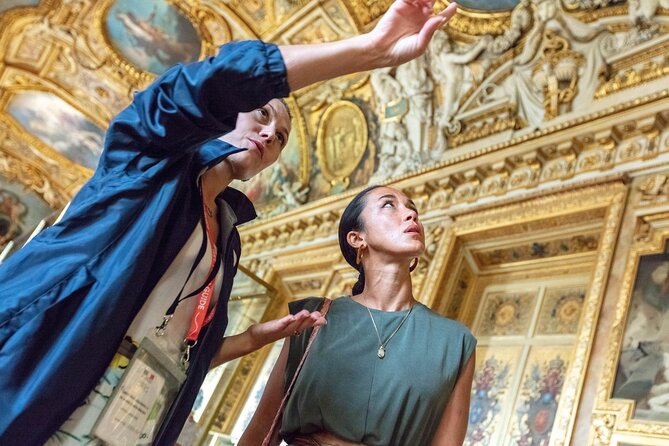
A lot of first-time Louvre visits fail because people think it is one straightforward loop. It is not. You end up zigzagging based on what the map says you should see, not based on what your eyes and brain can actually handle.
This tour keeps the viewing organized. You move through categories that the Louvre is known for, ancient sculpture first, then Renaissance and later painting highlights, with stops tied to story, not just sight lines. That means you can actually compare styles as you go, and you start to understand why the Louvre became what it is.
You also get a better sense of the museum as a physical timeline. The basement castle foundations remind you that this place has a history beyond art, and that the building itself carries layers. Then you jump into antiquity with Greek sculpture, and later you connect to Renaissance portraiture and beyond. It feels like stepping through time rather than chasing rooms.
If you prefer context over crowds, look for guides who explain the how and why, not just the who. In the experiences I read, guides such as Maryam, Gabriella, and Sophie were praised for keeping the information clear and for making the works easier to follow while moving through thick crowds.





Guides, pace, and what to do if you prefer slower looking
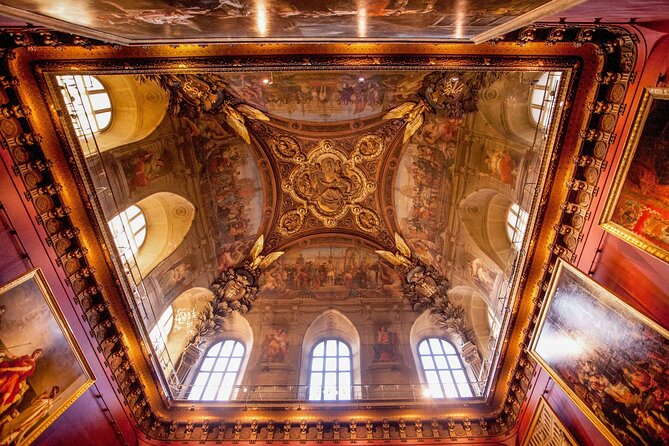
A highlights tour is always a negotiation between seeing a lot and lingering. Most guests love the efficiency, but a couple of experiences mention that the pace can be fast, and that some groups did not always stay tightly together. One review described a moment where the guide moved on quickly and the guests felt they needed to double back on their own.
So here is the deal for your planning. If you are the type who likes to stop for extended sketching, long photo sessions, or slow reading of labels, this might feel like too much momentum. If you are more interested in getting the major works and understanding the big themes, this is often a very good match.
You can also protect your experience by setting your own rules. Pick your top Mona Lisa photo goal, then accept that everything else is about seeing and learning. If you want more time after the tour ends, use that window. One big benefit of this format is that you stay inside the Louvre after the guided portion, so you can return to whatever caught your eye most.
Audio headsets: a small detail that can make or break your comfort
Audio headsets are included, and in a museum like the Louvre, they are not a gimmick. They keep you from yelling or guessing what the guide is saying. Several guests specifically called out the headsets as a win.
Still, comfort matters. One family noted that the headset was uncomfortable for their 12-year-old, and the helpful workaround was to plug in their own earphones into the device if the tour setup allows it. That is a great idea for anyone with sensitive ears or kids who do not tolerate in-ear gear well. If you have your own comfortable headphones, bring them.
Headsets also help with pacing. When you can actually hear the point, you do not need to keep walking faster just to stay close. That makes a highlights sprint feel more relaxed, even when the museum feels crowded.
Price and value: what 108.13 buys you in the Louvre
At $108.13 per person, the price looks steep until you break down what is included. You get a €22 museum entrance ticket, a licensed 2-hour guided tour, and audio headsets. The rest of the value is in time management: you avoid the worst of ticket-line chaos and you get a guide who knows how to move through the museum efficiently.
For me, this is worth it when you have limited time in Paris or when you want the Louvre highlights without the stress of planning a route across a building that is too big to solve on a map. The tour also helps you avoid the common first-time mistake, which is spending your best energy getting lost rather than looking at art.
Is it a bargain? Not really in the cheap sense. But it often becomes a good deal in the time-and-headache sense. If you are paying for one Louvre experience, and you want a guided overview plus the option to wander after, this price can be fair.
One note on value expectations: if you get unlucky with crowd flow or if the group rhythm is fast for your taste, the two hours can feel tighter. In that case, you may still enjoy the guide, but you might feel like you rushed. Choosing a quieter time slot is one way to protect your return on money and energy.
Practical tips so the Louvre day stays fun
A few habits will make your tour day smoother.
First, plan your clothing. The Louvre can feel hot and crowded in certain galleries, and that can affect your ability to enjoy details. Bring layers you can manage and wear comfortable shoes.
Second, set a post-tour plan. Because you cannot re-enter rooms after you exit the wings and end under the pyramid area, decide what you want next before you leave. If you love antiquity, consider targeting more sculpture after. If you care about later painting, pick a section you can reach easily from where you finish.
Third, be ready for the crowd reality around icons. The Mona Lisa room is famous for a reason, and the crush can make even a fast visit feel like a long wait. Expect it, then focus on one or two meaningful moments rather than trying to solve every angle.
Finally, communicate your needs. If you are traveling with kids, or if someone in your group needs a slower pace, mention that to your guide and move as a group when the route changes.
Should you book this Louvre Museum Tour?
Book it if you want the Louvre highlights in about two hours, you like structure, and you prefer learning with a guide rather than self-navigating through a maze. This is also a strong choice if you are short on time, because the pre-reserved entry and guided route can save you real effort.
Skip this tour or consider a different format if you know you need lots of quiet looking time, you hate fast pacing, or you want to spend most of your visit in one room. In that case, a longer or more flexible tour might fit better.
My take: for most first-time visitors, this is a practical way to get the Mona Lisa, Venus de Milo, Winged Victory, and the Louvre story in one day, without turning the museum into a full-time navigation job.
FAQ
How long is the Louvre tour?
The tour is about 2 hours.
Is the Mona Lisa included?
Yes, the tour includes a visit to the Mona Lisa.
Does the price include museum admission?
Yes. A €22 entrance ticket is included.
Are audio headsets provided?
Yes. Audio headsets are provided so you can hear your licensed guide better.
Is this an English tour?
Yes, it is offered in English.
Where do we meet, and where do we end?
You start at Le Kiosque des noctambules, 12 Pl. Colette, 75001 Paris. You end inside the Louvre Museum under the pyramid area.
Can I leave the Louvre and re-enter after the tour ends?
No. Once you have exited the wings and are under the pyramid, you cannot re-enter the rooms.
How big is the group?
The group has a maximum of 25 travelers.
Is food or transport included?
No. Food and drinks are not included, and transport to or from the museum is not included.
More Museum Experiences in Paris



More Tours in Paris




More Tour Reviews in Paris


Not for you? Here's more nearby things to do in Paris we have reviewed












Louvre Museum Tours, side by side.
 ★ 4.6Louvre Museum Timed-Entrance TicketTickets from $2671,977 guest reviews
 ★ 4.3Louvre Guided Tour with Reserved Access & Boat CruiseTickets from $8116,353 guest reviews
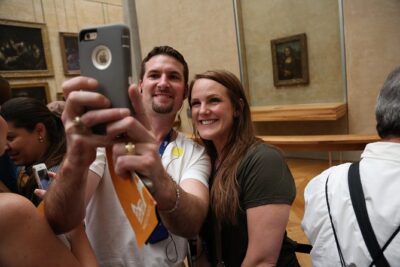 ★ 4.5Louvre Museum Masterpieces Guided Tour with AccessTickets from $8612,023 guest reviews
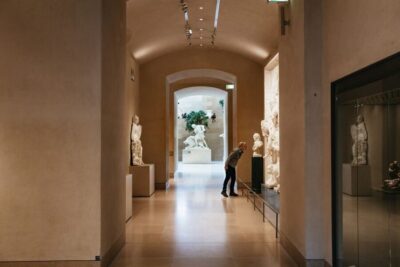 ★ 4.6Louvre Museum Entry Ticket With Host and River CruiseTickets from $1009,926 guest reviews
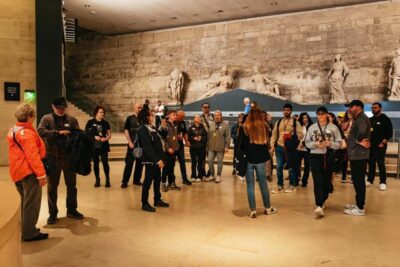 ★ 4.1Priority Access Louvre with Host -Direct to Mona LisaTickets from $748,387 guest reviews
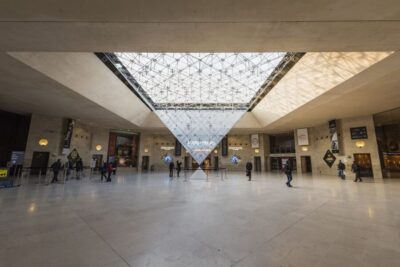 ★ 4.6Mona Lisa & Louvre Masterpieces Tour with Reserved AccessTickets from $806,812 guest reviews
 ★ 5.0Louvre Museum – Exclusive Guided Tour (Entry Included)Tickets from $1816,296 guest reviews
 ★ 4.0Louvre Reserved Ticket and River Cruise ComboTickets from $376,054 guest reviews
This tour also belongs to