
Review · PARIS CITY TOURS
Paris Highlights with an LGBTQ Perspective Private Tour
Paris gets a whole new meaning on this tour. I love how Queer Tours France threads LGBTQ+ stories through big, familiar landmarks, with guides from the community, including names like Alex and Johanna, who keep the storytelling moving while you walk. It is a practical way to do Paris sightseeing without treating queer history like an afterthought.
I especially like the pacing. You stop at major sights, take in the views, then get time to ask questions as you go, instead of rushing past everything. The route also leans into contrast, from formal squares to quieter courtyards and passages, so your walk feels like you are watching the city change.
One consideration: it is an out-in-the-open walking experience, and bottled water and snacks are not included. If you run low on energy, plan to bring your own small supplies and dress for the weather.
Key things to know before you go
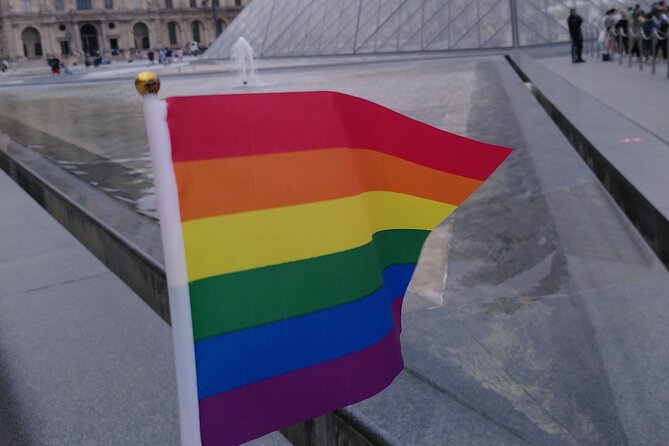
- A private, LGBTQ+ community guide means the tone stays personal, not generic.
- Classic Paris stops, queer context included from Concorde to City Hall.
- Short, focused stop times keep it doable at 2.5 hours.
- Plenty of question time so you can go deeper where you care.
- Free admissions at each listed stop means no museum-ticket headache.
Why this central Paris walk feels different
This is the kind of tour where you get your bearings fast, then you start noticing what you would normally miss. You see the usual postcard Paris, like major squares and the Opera area, but the guide keeps asking a better question: what did people hide, change, celebrate, or risk in each place?
I like that the approach is grounded. You are not just hearing “Paris had queer communities.” You are getting stories tied to specific corners, streets, and monuments, which makes the whole picture feel real instead of abstract. It also helps you understand why some locations feel formal and public, while others were more about privacy, code-switching, and finding your people.
And because it is private, you can steer the conversation. If something the guide mentions sparks curiosity, you can slow down and ask. That matters in Paris, where the distances between sights look small on a map but can add up under walking fatigue.
You can also read our reviews of more private tours in Paris



Quick logistics: where you start and what the route does
The tour runs about 2 hours 30 minutes and ends at Hôtel de Ville in front of Paris City Hall. You start at 2 Rue Royale, 75008 Paris, then work your way across the center, ending in the 4th arrondissement area.
This is helpful because it gives you two natural advantages:
- You get a concentrated walk through the most “wow” parts of central Paris.
- You finish near a hub, which can make it easier to keep going on your own after the tour, whether you head to lunch or to another neighborhood.
The tour is offered in English. It is near public transportation, and service animals are allowed. Most people can participate, but you will be on foot for the full time, so comfortable shoes are a must.
Finally, you get to choose a departure time that fits your schedule. That is a small detail, but it can make a big difference if you are trying to align the walk with your energy level or meal plans.
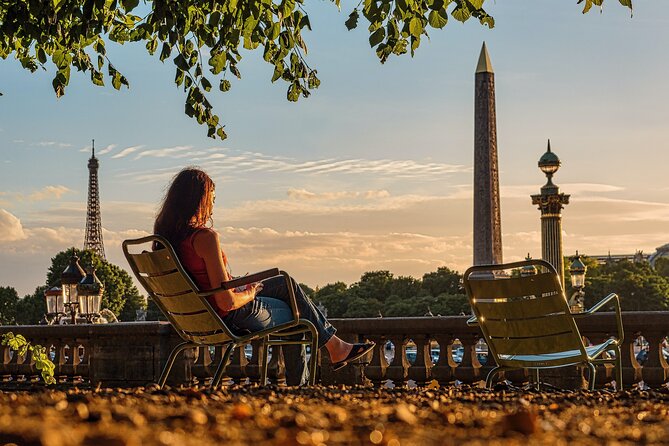
Place de la Concorde: starting with the big stage of Paris
You kick things off at Place de la Concorde, one of the city’s main squares. From here, the guide points out the major “you are in Paris” landmarks you can spot right away, including the Champs-Élysées, the Arc de Triomphe, and the Tour Eiffel.
What makes this start work is that Concorde is about spectacle and power. It sets the tone for how Paris has always been watched, judged, and managed. When the guide brings in LGBTQ+ history here, it is not just trivia. It helps you see how public space can feel like both a stage and a pressure cooker, especially when social rules were harsher.
This stop is about 20 minutes. It is long enough for orientation and context, but short enough that you do not feel stuck staring at one spot. If you like photos, this is a good place to grab a wide-angle shot before the walk tightens into smaller spaces.
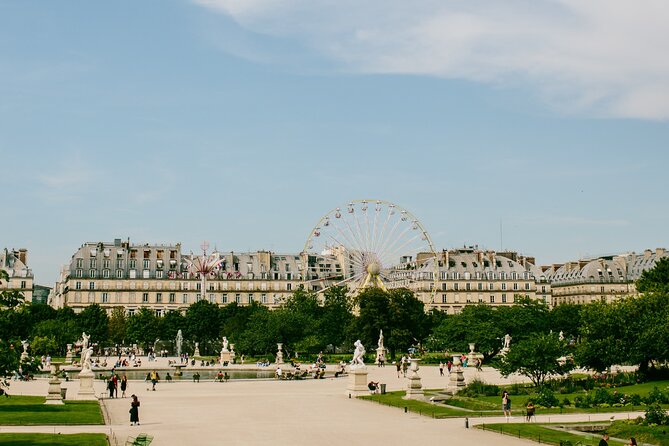
Jardin des Tuileries: where public beauty meets social rules
Next is Jardin des Tuileries, the garden stretch that many people pass through quickly on their way to other sights. Here, the guide connects the scenery to how LGBTQ+ people shaped their presence in Paris across different eras.
The key value of this stop is perspective. Gardens can look neutral, even timeless, but they were also social environments. As you walk, you are learning how people read the crowd, how privacy and visibility can flip depending on who is watching, and why certain places mattered even when they were not officially celebrated.
This is also about 20 minutes. That length gives you time to slow down and actually enjoy the surroundings, not just treat the gardens as a corridor to get through. If you tend to enjoy parks and people-watching, this part will likely feel like a break.
Place Vendôme: Napoleon, myth, and social attitudes
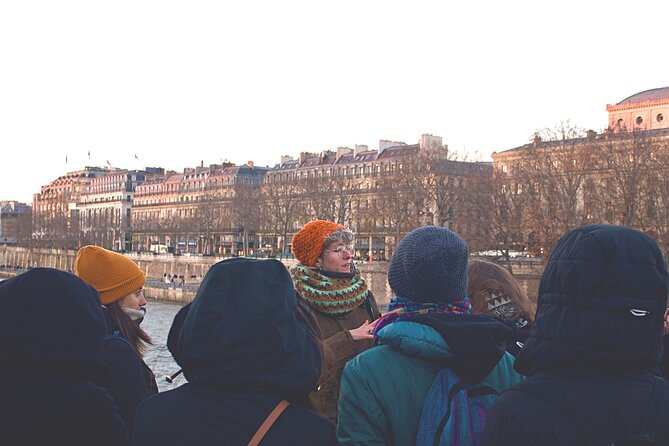
At Place Vendôme, you admire a classic square and then shift into a more complicated conversation. The guide focuses on Napoleon and his view on homosexual practices during his time.
This is one of those moments where the guide turns a famous name into something more useful. You do not just learn that attitudes existed. You learn that leaders, laws, and propaganda can shape what people dared to do, and where.
It lasts about 20 minutes, which is perfect for keeping the topic clear without turning the tour into a lecture. If you like history that explains power structures, this stop will likely land.
One practical note: squares can be windy and open. If you are touring in colder months, bring a layer you can manage while walking.
More Paris tours and experiences for the shortlist
Jeanne d’Arc statue: gender identity and medieval symbolism
You then pass by Jeanne d’Arc and talk about gender identity in the Middle Ages, using the French hero as a special case.
This is a fascinating pivot because the conversation moves away from modern street-level neighborhoods and into cultural storytelling from long ago. The guide uses the statue as a starting point for how communities framed gender and identity, and why symbols like Jeanne d’Arc kept meaning beyond the battlefield.
This stop is about 15 minutes. It is shorter than the square stops, but it is intentionally focused. You get enough time to understand the theme and ask what it means in a broader historical context, without losing momentum.
If you prefer tours that connect “then and now” instead of staying in one era, this is one of the best transitions on the route.
The Opera area (9th arrondissement): spotting the LGBTQ imprint
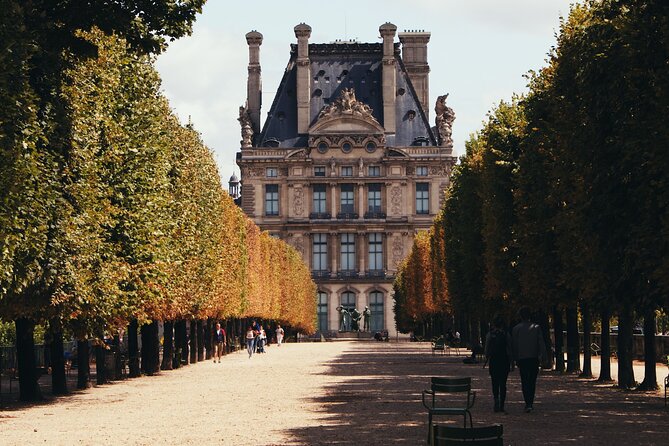
After that, you head toward the 9th arrondissement, Opera area, where you spot a monument from a distance. The guide explains the area’s former LGBTQ+ role, essentially mapping how parts of the city shifted socially over time.
This is where the walking tour stops being only sightseeing and becomes a way to read Paris like a document. The Opera area can feel grand, but the guide gives you the missing layer: the way different districts gathered communities and shaped visibility.
This stop is about 10 minutes, so it is meant to be quick and purposeful. You are learning enough to notice patterns later, without getting bogged down.
If you want a tour that helps you interpret what you see when you return to your hotel, do not skip this short section. It is compact, but it changes how you look at the city’s layout.
Palais-Royal: a quieter space with big stories
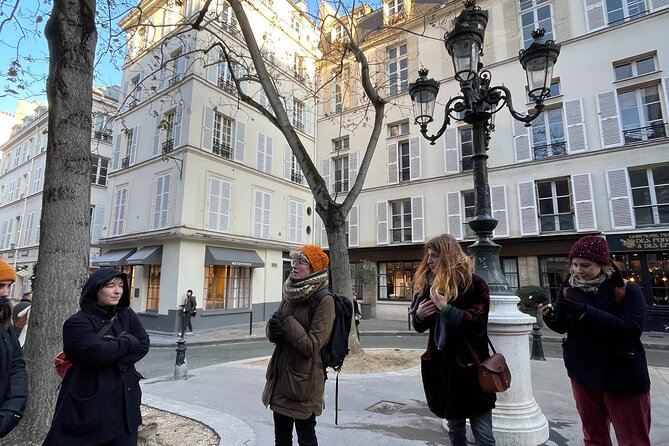
Next up is Palais-Royal, where you discover a gorgeous garden setting and learn its LGBTQ+ secrets. This is one of the more atmospheric parts of the walk.
Why it matters: courtyards and garden spaces can feel different from open squares. They can offer pockets of privacy while still being in the center of things. That is exactly the sort of environment where “public identity” and “private life” can create tension, or where community can gather more discreetly.
This stop is about 20 minutes. That time lets you actually enjoy the space instead of just glancing and moving on. It also gives you a good moment to reset your attention, because the tour is about to shift again into narrower, covered passages.
If you are sensitive to crowds, this part might feel calmer than some of the open squares, even though you are still in central Paris.
Galerie Véro-Dodat: the covered passage that changes the mood
You then visit Galerie Véro-Dodat, a covered passage dating back to the 19th century. The guide explains why this kind of place mattered: passages create a semi-private world. They are walkable, public enough to navigate, but enclosed enough to feel safer than an open street.
This stop is about 10 minutes, so the goal is not to exhaust you. It is to give you a clear sense of the setting and what it symbolized for LGBTQ+ life over time.
If you like architectural details, pay attention to how covered spaces alter sound and sightlines. Even small changes can make places feel more discreet, and the guide turns that into a story.
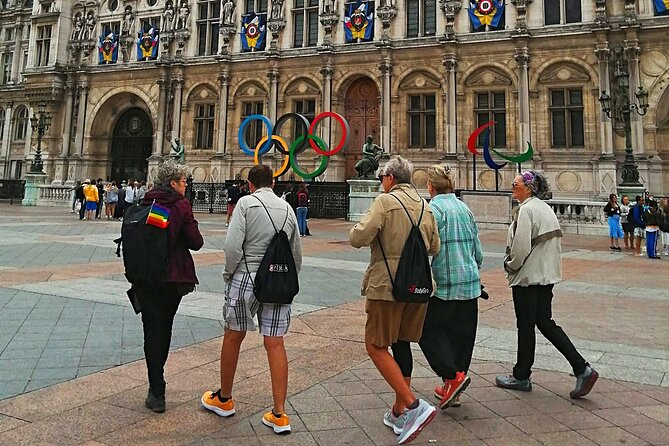
Hôtel de Ville: ending with repression and consequence
You finish at Hôtel de Ville, Paris City Hall, with a longer final segment of about 35 minutes. Here, the guide shares the story of the repression of LGBTQ+ people in Paris before the French Revolution.
This ending matters because it adds weight to everything you learned earlier. It is easy to think of history as a parade of colorful facts. This stop brings in consequences, what repression looked like, and why it shaped where people could go and who they could safely be.
Also, ending at City Hall gives you a strong visual payoff. You stop at a major civic building, which makes the political theme land. You walk through Paris’s power centers, then you close by talking about power turning against people.
By the time you finish, you should feel like the route was not random. It was building toward a big idea: public space has always been political, and LGBTQ+ history is part of that story.
Price and value: what you’re really paying for
The price is $355.21 per person, and the experience runs about 2 hours 30 minutes. That can sound steep at first, until you factor in what you are getting.
You are paying for a private guide from the LGBTQ+ community, plus a tightly designed route through central sights with no paid entry tickets at the stops listed. You also get time to ask questions, which is rare on short sightseeing tours that try to cram in as many stops as possible.
For me, the best value angle is this: the guide does not treat LGBTQ+ history as an add-on. They treat it as the lens for the entire walk. That changes the value because you are not just buying access to landmarks, you are buying interpretation you can carry with you after the tour.
If you are traveling with someone and you want a more personal pace than a big group bus tour, this price starts to look more reasonable. If you are solo and comparing only cost per hour, you might feel it. But if you care about respectful storytelling and want it tied to real places, it is a solid use of time.
One more thing: the tour includes a mobile ticket. That usually saves time at the start, so you can focus on finding the guide and getting going.
How guides shape the experience (and what to look for)
The strongest feature across the guides associated with this kind of Queer Tours France experience is style. The guides are described as engaging, organized, and capable of blending general Paris history with LGBTQ+ stories without turning it into a single-issue lecture.
You can also expect a clear sense of humor and precision. If something is funny, it tends to be used to keep you relaxed while learning serious topics. That combination helps on a 2.5-hour walk, where attention can fade if the narration is dry.
When you meet your guide, ask yourself one quick question: can I picture the places as I hear the stories? If you can, you will likely get a lot out of the tour, because each stop builds the mental map you need to understand the city.
Who this tour is best for, and who should skip it
This is a great match if you want:
- an LGBTQ+ perspective on major Paris landmarks without a museum ticket
- a short, structured walk you can fit into a day
- a private setting where questions feel welcome
- a guide who can connect social history to what you see on the street
It can be less ideal if:
- you hate walking for 2.5 hours, even at a manageable pace
- you are looking for long, inside-only stops
- you do not want to handle outdoor weather and you do not like carrying your own water
This tour also has a family-friendly reputation in the general sense of small, approachable storytelling. If you are traveling with kids, you may find the pacing easier than very academic tours, as long as your group can handle walking and attention spans.
FAQ
How long is the Paris highlights tour?
It runs about 2 hours 30 minutes.
Is this tour private?
Yes. It is a private tour/activity, so only your group participates.
Where do we meet, and where does the tour end?
You start at 2 Rue Royale, 75008 Paris. You end at Hôtel de Ville, 75004 Paris, in front of Paris’s City Hall.
Is it offered in English?
Yes, it is offered in English.
What should I bring since water and snacks are not included?
Bring bottled water and any snacks you want, since neither is included. Comfortable walking shoes also help, since it is a walking tour.
Are service animals allowed?
Yes, service animals are allowed.
Is there free cancellation?
Yes. You can cancel for a full refund up to 24 hours in advance of the experience start time.
Should you book this Paris LGBTQ highlights tour?
If you want a short, high-impact way to see central Paris through an LGBTQ+ lens, I would book this. The best reason is simple: the guide ties your walking experience to real locations, not vague generalities, and you get time to ask questions as you go.
If your ideal Paris day is mostly indoor time, or you cannot handle outdoor walking for about 2.5 hours, look for a different style of tour. But if you like the idea of connecting monuments and squares to lived social history, this one is a smart use of your time.
More Private Tours in Paris



More Tours in Paris






More Tour Reviews in Paris






Not for you? Here's more nearby things to do in Paris we have reviewed












Paris City Tours, side by side.
 ★ 4.6Louvre Museum Timed-Entrance TicketTickets from $2671,977 guest reviews
 ★ 4.6Disneyland® Paris 1-Day TicketTickets from $6149,412 guest reviews
 ★ 4.6Versailles Palace and Gardens Full Access TicketTickets from $1741,579 guest reviews
 ★ 4.6Arc de Triomphe Rooftop TicketsTickets from $1834,264 guest reviews
 ★ 4.7Orsay Museum Entry TicketTickets from $1525,647 guest reviews
 ★ 4.4Evening River Cruise with MusicTickets from $2722,721 guest reviews
 ★ 4.4Eiffel Tower Entry Ticket with Optional Summit AccessTickets from $2920,035 guest reviews
 ★ 4.3Eiffel Tower Summit or Second Floor AccessTickets from $5917,248 guest reviews