
Review · PARIS 2CV TOURS
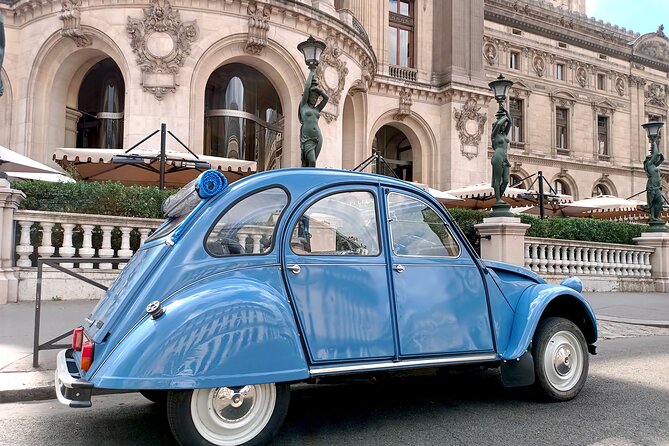
Private Tour of Paris in a convertible citroën 2CV
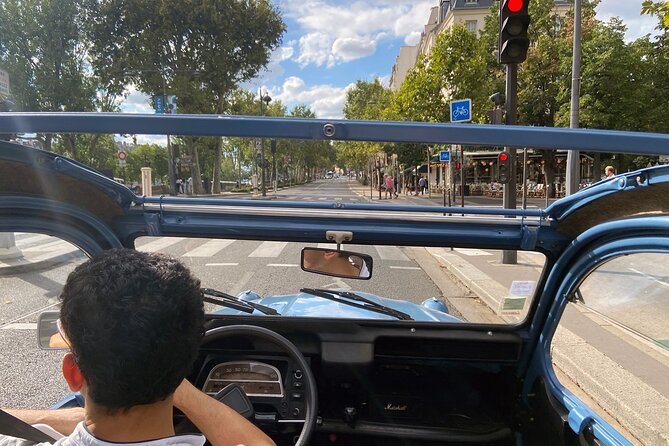
Paris feels like a movie in a 2CV. You get a convertible seat, a real Paris guide, and a tight route that makes sense when you only have a day (or less).
I really love two things: the photo-friendly stops that let you grab landmark shots without long walks, and the way Jean-Baptiste ties what you see to what it means, from the Flame of the Unknown Soldier to Napoleon I’s victory names.
One watch-out: this is mainly sightseeing by car, and entrances are not included, so you will not get much time inside museums or big-ticket sites unless you plan that separately.
Key reasons this 2CV tour works
- Top-down viewpoints for instant, breezy landmark photos
- Flexible stopping for pictures or quick detours when you want them
- A smart, dense route that hits major sights efficiently in limited time
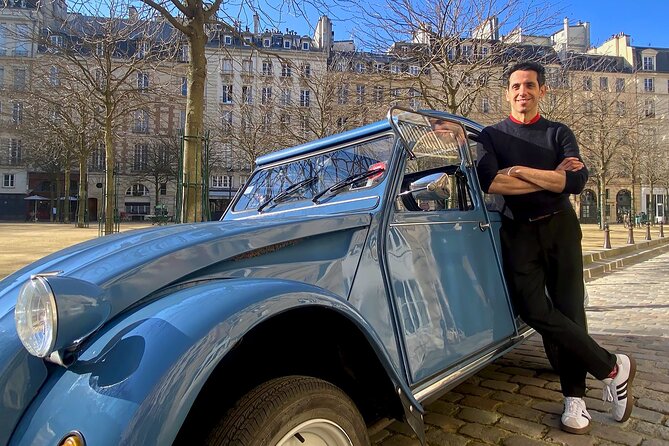
- Jean-Baptiste’s route instincts, plus clear history and friendly energy
- Private, small-group vibe (up to 3), so it feels like you hired a local driver
- Easy logistics with pickup, a mobile ticket, and English service
Paris in a convertible 2CV: why this beats the big-bus feeling
There is something about a vintage open-top car that instantly changes how Paris feels. You see the city at eye level, not from behind glass or behind the back of someone else. When you are moving through avenues and crossing bridges like Pont d’Iéna and Alexandre III, the sights come at you faster than a walking loop, and the wind makes it fun instead of tiring.
The 2CV also helps you relax. Your guide is focused on timing, turns, and where the car can actually stop. That matters in Paris, where curb space is limited and traffic patterns can be annoying. Instead of you fighting for the best angle and the best sidewalk, you get a smoother flow, with stops that are chosen for what you want to photograph.
You can also read our reviews of more private tours in Paris



Price and timing: getting value for up to 3 people
The price is $132.75 per group, up to 3 people, and the tour runs about 1 hour. On paper, that can sound short. In practice, that quick hit is the whole point: you are buying efficiency, plus a guide who can connect the dots while you ride.
Two things make it feel like good value:
- You are not paying per person like many walking tours, so a small group can make the cost per seat reasonable.
- You get private transportation plus guidance, which saves you time figuring out routes, parking logic, and what to prioritize.
A practical note on timing: the experience is listed at around an hour, but some people report it feeling closer to two hours. So I would plan your day with enough slack that you are not rushing to your next reservation right after.
Starting at Hôtel de Crillon and the Louxor obelisk: Paris power in one look
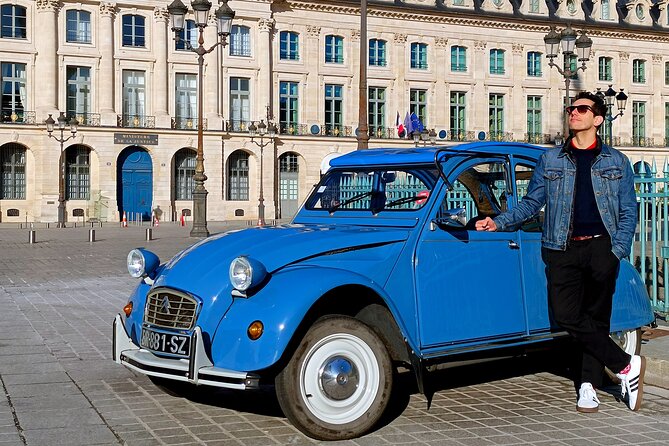
You kick off near Hôtel de Crillon and the obelisk from Louxor. This is a classic Paris “big-signal” start. It tells you you are in the center of the city’s most ceremonial streets, where monuments are designed to be seen from far away and to frame perspectives.
The obelisk is especially interesting because it is not just decoration. It is a statement object, and the guide’s explanation helps you notice what is happening visually. Instead of you only seeing a tall stone marker, you start reading the city as an arrangement of symbols, alignments, and histories stacked on top of each other.
Champs-Élysées and the luxury-brasserie rhythm: what you learn while you watch
Then you move along the grand stretch often described as the most beautiful avenue in the world. This is where you see the rhythm of Paris consumer culture: luxury boutiques, big storefronts, and brasseries that look like they have always been part of the scene.
In a car tour, this kind of street is perfect. You are not trying to “cover it all” on foot. You are getting the feel of the avenue’s scale while still having time to swing by the key monuments later. And if you like people-watching, the drive-by format is actually better than committing to a long walk, because you can keep your attention on the bigger story of the boulevard.
Place de l’Étoile: Arc-level details you can actually point at
A tour of Paris by car is never complete without at least one lap around Place de l’Étoile. From the car, you get the layout fast: the geometry, the traffic patterns, and the way streets radiate outward.
What makes this stop more than just passing by is the specific focus on the Flame of the Unknown Soldier and the names of Napoleon I’s victories. Those elements turn the monument from a postcard into something you can interpret. You start to notice how memorial and imperial pride share the same space, and how that is reflected in what you see at street level.



Pont d’Iéna, Avenue de Suffren, and École Militaire: the Eiffel Tower framed, not just seen
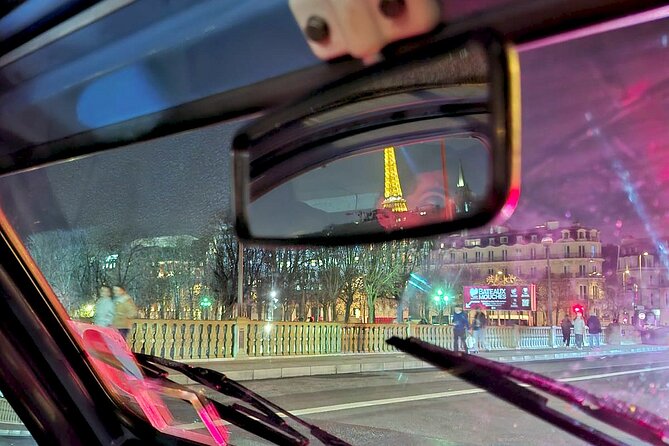
Next comes one of my favorite “view logic” moments: riding by Pont d’Iéna, along Avenue de Suffren, and with École Militaire helping frame the angle toward Champ de Mars and the Eiffel Tower.
This is the kind of stop that is hard to get right on your own without already knowing where to stand. In a 2CV, you can reach several vantage-feeling spots without breaking your legs. You also get multiple chances to photograph the tower with different surroundings, instead of relying on a single viewpoint where everyone else ends up.
If you care about photos, this is where I would ask for your moment to get out briefly. A good open-top car tour is not only about driving past. It is about timing small stops so you can turn landmark shots into memories.
Alexandre III and the Grand and Petit Palais: glass roof and cinematic backdrops
Then you cross Alexandre III, and the route opens up into the palace district. This is a smart stretch for a car tour because the buildings are visually complex, but you still need efficiency. You see the Grand Palais with its impressive glass roof, and you also get the view of the portal of Petit Palais right across the street on Avenue Winston Churchill.
One of the best reasons to do this segment by car is perspective. The palaces are grand, but the details are not always obvious from just one angle. Moving around by vehicle helps you absorb the scale quickly, then lets your guide point out what is worth your attention.
And if you like film and television, this area has that “I’ve seen this before” effect. The setting is recognizable, even when you are not sure from where.
Early 19th-century neoclassical church stop: architecture you can spot, even without a ticket
After the palaces, you pass an early 19th-century neoclassical church tied to the kind of high-society wedding scenes found in literature like Guy de Maupassant’s Bel Ami. I like this kind of stop because it shifts the tour from only the famous giants to the smaller architectural clues that make Paris feel layered.
The value here is subtle. You start noticing how Paris uses style to signal social status. In a short tour, that is huge. Instead of collecting only landmarks, you collect cues about class, design, and storytelling in the city.
Opéra area and the Haussmann glamour zone: Galeries Lafayette to Café de la Paix
Then you reach the crown jewel feel of Haussmannian Paris, surrounded by Galeries Lafayette, Café de la Paix, and Avenue de l’Opéra. This part of the route works for almost everyone because it is both iconic and sensory. Even if you are not shopping, the density of design and the scale of the storefronts make it easy to understand why people fall for the city.
Your guide also passes luxury names like Cartier, Tiffany’s, and Chanel. You might not go in, and that is fine. The point is that you see the Paris version of luxury geography, concentrated into a short drive.
This segment is ideal if you want your Paris day to feel like a montage: wide boulevards, beautiful façades, and a sense that the city has been staging itself for generations.
From Austerlitz Column to the Ritz, plus the standard meter
The tour continues with stops around the Austerlitz Column, the Ritz Hotel, and the standard meter. This is where a good car guide earns their fee. Most people know the easy names. They do not necessarily connect the dots between monument, place, and the practical details that make Paris interesting beyond beauty.
The Austerlitz Column adds a different tone. It is memorial architecture, not shopping architecture. Seeing it from the car also helps you understand how Paris memorials are built into the street grid rather than hidden in quiet corners.
The Ritz is the glamour counterweight, and it is fun to spot because it instantly signals high-society Paris. Then you have the standard meter reference, which adds a science and measurement angle. That shift is refreshing on a short tour, because Paris can otherwise feel like only monuments and romance.
Fashion and design street where Molière was born in 1622
Next comes a street of fashion and design, also known as the place where Molière was born in 1622. This is one of those stops that feels like a cheat code for cultural depth. You get a quick reminder that Paris creativity did not start with modern fashion labels.
When your guide links the name to the year and the place, the neighborhood becomes more than a “shopping zone.” It becomes a location in an ongoing story.
Cardinal Richelieu residence, Ministry of Culture, and Council of State: the garden pause
You then pass the former residence of Cardinal Richelieu, now home to the Ministry of Culture and the Council of State, with a 17th-century garden attached. This is a smart, calmer change in mood compared to the shopping and monumental stretches.
Even if you do not enter anything, the garden concept matters. It signals how power once lived in planned spaces, and how the city preserves institutional history in ways that do not always show up in typical first-day highlights.
If your day has felt rushed, this is a nice reminder that Paris is not only outward spectacle. It has quiet structure too.
Louvre and the glass pyramid since 1989: kings, art, and a modern landmark
Then you reach the Louvre area, home to the Kings of France for centuries and now best known for the Mona Lisa, plus the glass pyramid introduced in 1989. This combination is why the stop is so worth it.
You see layers: royal palace authority, museum ambition, and then modern architecture that changed the entrance feel. Even if you never buy a museum ticket on this specific ride, the car stop helps you understand where the Louvre sits in the wider Paris layout and how the pyramid acts as a visual anchor.
Former railway station turned museum spot: Jacquemart’s Rhinoceros
A big highlight in the route is the former railway station built for the 1900 World’s Fair, where you can see Jacquemart’s Rhinoceros. The former station context matters because it shows how Paris reuses impressive structures instead of discarding them.
This stop is also great for “I want one cultural detour but I’m short on time” travelers. You get the monument and the setting connection without needing to commit to a long interior plan. If you later decide to go inside, you will already understand the building’s shell and why it is memorable.
Palais Bourbon and the French National Assembly: where 577 deputies meet
Near the end, you pass Palais Bourbon, built under Louis XIV, another example of neoclassical architecture, and you see where the 577 French deputies meet. That number can feel random until you connect it to the building’s purpose.
For me, this is one of those Paris stops that adds a grounded note. The city is often presented as art, romance, and glamour, but Paris is also governance and legal tradition. Seeing the meeting place in neoclassical form gives you a different angle on why the city invests in imposing architecture.
Practical tips to make your 2CV ride feel smooth
A few small things will make your ride better. First, wear something comfortable. You are not walking a long distance, but you do want to stay ready for quick photo stops and any short get-outs you request.
Second, bring your camera plan. If there is one shot you care about most, tell your guide early. Jean-Baptiste has a reputation for navigating for the right angles and timing stops so you can actually get the landmark in the frame, including classic moments like a stop for an Eiffel Tower photo with the car included.
Third, be weather-smart. This experience requires good weather, and because it is convertible, you will feel conditions more than you would in a closed car.
Finally, treat this as an overview. This tour is ideal for building a “Paris map” in your mind. Once you know where everything is, you can come back later for longer museum time, neighborhoods, or a second pass on your favorite street.
Should you book this Paris in a 2CV tour?
Book it if you want:
- A fun first-day or first-night orientation to Paris
- A way to see big sights without spending your whole day walking
- A private, small-group ride with pickup, mobile ticket, and English service
- Landmark photos with a guide who can time stops for the best moments
Consider skipping or pairing it differently if:
- You mainly want time inside museums and major attractions, because entrance tickets are not included
- Your schedule is extremely tight and you cannot handle a ride that may feel closer to longer sightseeing blocks depending on conditions
If you are visiting for a short stay and you want Paris in quick, memorable doses, this 2CV route is a strong choice. It is part sightseeing, part photo session, and part guided story, all wrapped into one breezy ride in the middle of the city.
FAQ
How many people is this tour for?
This is a private tour. Your group can include up to 3 people.
Where do we meet, and is pickup included?
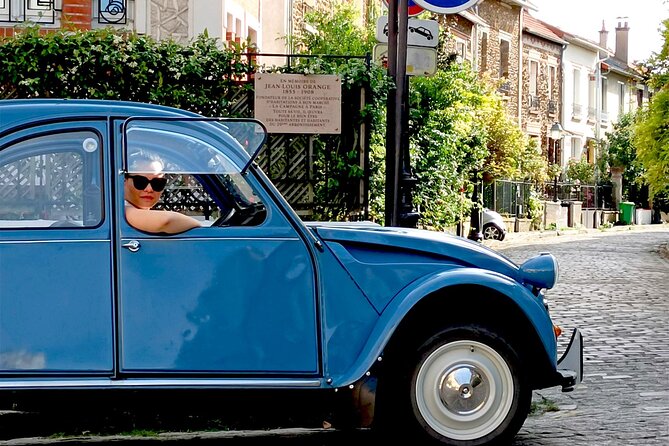
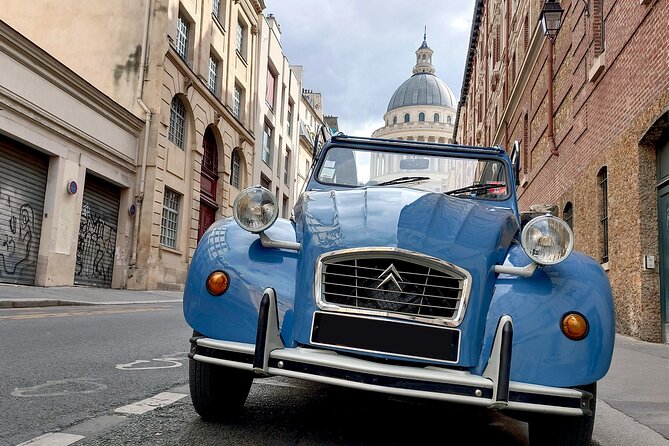
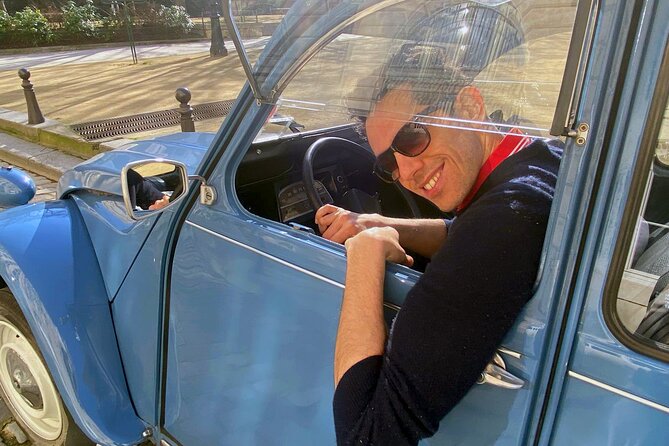
Pickup is offered. The guide will wait in front of the address you selected, next to a small blue convertible car.
How long is the tour?
The tour lasts about 1 hour (approx.).
What does the price include?
The price includes private transportation and a guide.
Are entrance tickets included for attractions?
No. Entrance tickets to attractions are not included.
Is the tour offered in English?
Yes, the tour is offered in English.
Do we receive a mobile ticket?
Yes. A mobile ticket is provided.
What happens if the weather is bad or I need to cancel?
The experience requires good weather. You can cancel for a full refund if you cancel up to 24 hours in advance.
More Private Tours in Paris


More Tours in Paris


More Tour Reviews in Paris


Not for you? Here's more nearby things to do in Paris we have reviewed








Paris 2CV Tours, side by side.
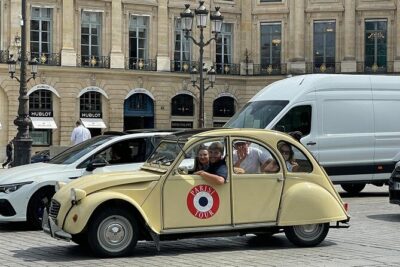 ★ 4.5Vintage 2CV Adventure: 2 -Hour Paris Secrets TourTickets from $344488 guest reviews
 ★ 4.9Discover Paris 2CVTickets from $135472 guest reviews
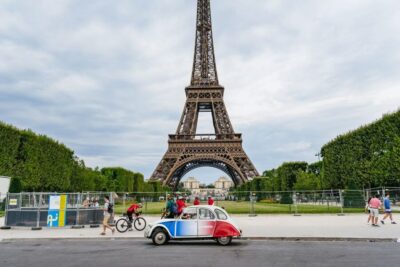 ★ 4.71-Hour Vintage Citroen 2CV TourTickets from $64314 guest reviews
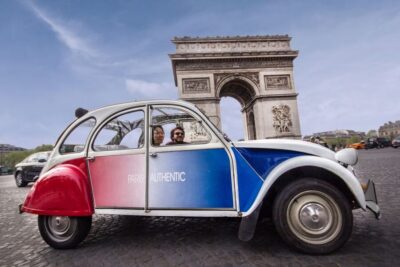 ★ 4.4Vintage 2CV tour + CruiseTickets from $100252 guest reviews
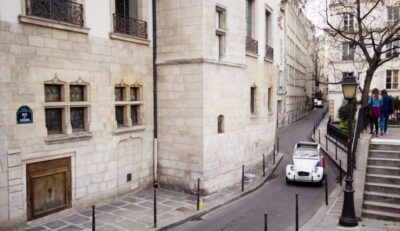 ★ 4.7Off-the-Beaten Track in Paris: 2-Hour Vintage 2CV TourTickets from $129236 guest reviews
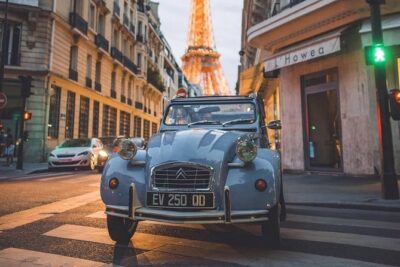 ★ 4.5Vintage 2CV Adventure: 2-Hour Paris Highlights TourTickets from $349214 guest reviews
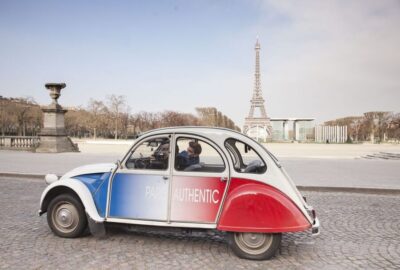 ★ 4.6Romantic Paris Vintage Citroën 2CV TourTickets from $140198 guest reviews
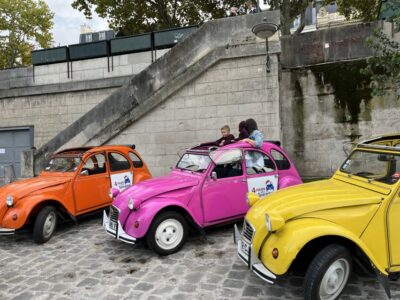 ★ 4.9Private Sightseeing Tour in Citroën 2CVTickets from $246194 guest reviews
This tour also belongs to