
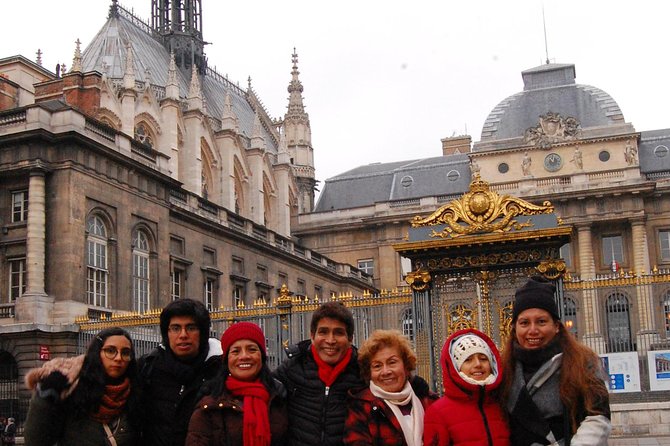
Review · LOUVRE MUSEUM TOURS
Notre Dame, St Chapel, ile de la cité, Louvre – semi private -4h
Three Paris icons, one tight route. I like the small group format, and how the guide’s storytelling makes art and architecture feel understandable fast. I also love the way this packs Notre-Dame, Île de la Cité, and the Louvre into a single half-day, so you do not burn time guessing what to see first.
One possible drawback is that the pace is brisk. Also, the details call out ticket amounts for Sainte-Chapelle and possibly the Louvre, so double-check what your booking covers versus what you pay with the guide on the day.
Highlights that matter (not just the brochure)
- Up to 6 people keeps the tour more personal than big coach groups
- Skip-the-line help lets you spend your time looking, not queuing
- Notre-Dame, Île de la Cité, Louvre, Sainte-Chapelle in about 4 hours
- A guided Louvre plan hitting big-name works like the Mona Lisa and Venus de Milo
- Île de la Cité orientation so you understand why this area shaped Paris
- Family-friendly teaching (including kids and attention-challenged travelers, based on guide feedback)
A 4-hour Notre-Dame, Sainte-Chapelle, and Louvre route that saves your time
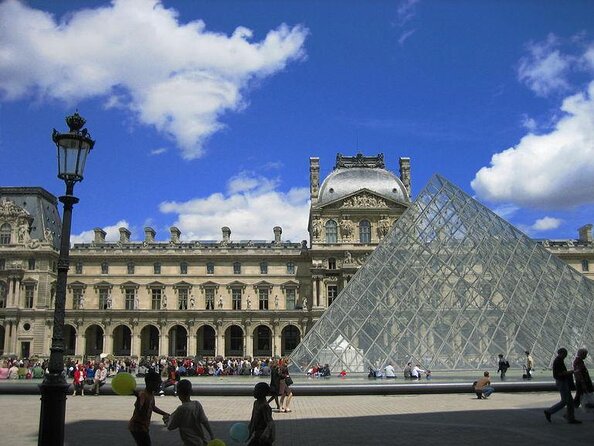
This is designed for the one problem most first-time visitors face in Paris: you want the classics, but you do not want to spend your day sprinting or staring at museum maps like they are encrypted.
The smart part is how the route builds momentum. You start with the cathedral exterior area and the historic heart of Paris, then you pivot to the Louvre for a curated sweep, and you end at Sainte-Chapelle for the stained-glass payoff. Done well, this order helps you make sense of what you are seeing rather than treating every stop as a separate time capsule.
The tour is semi-private, capped at 6 travelers, with a professional licensed guide in English. That size matters. You get more back-and-forth, and you can usually hear the guide without competing with a crowd’s echo.
Physically, the plan is for travelers with moderate fitness. If you can handle walking around central Paris streets and the museum surfaces are not an issue for you, you should be fine.
You can also read our reviews of more private tours in Paris



Start at Hôtel-Dieu, then end inside the Louvre
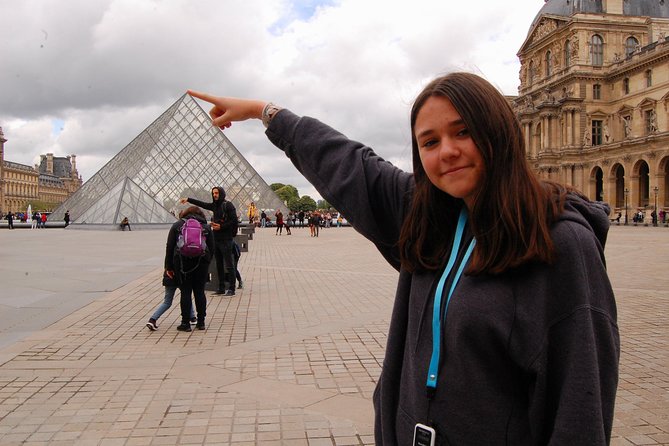
The meeting point is at Hôtel Dieu Hospital, at 1 Parvis Notre-Dame, Pl. Jean-Paul II, 75004 Paris. It is in the thick of things near public transit, so you are not stuck trying to navigate Paris by taxi or rideshare in the middle of peak hours.
The ending point is inside the Louvre Museum, with the listed location at the Louvre side by Rivoli. That is a practical detail, because it means your last stop is not scattered across the city after you leave the museum. You finish where the crowds naturally are, and you can then decide what to do next without doing a second round of transit planning.
The tour also uses a mobile ticket, which is handy if you hate paper tickets or you want everything on your phone. One less thing to manage.
Timing is approximate, but the stops are fairly tightly defined. That is why this works as a time-pressed plan. It is not the kind of day where you wander off to follow your curiosity for an hour, then come back. This is a guided line of sight day, and you will get the most if you go in ready to listen and look.
Notre-Dame in 20 minutes: what to focus on at the cathedral area
Notre-Dame is free to enter at the cathedral itself, and the tour keeps this stop to about 20 minutes. That sounds short, but it is not crazy if you treat it as a orientation and details-and-context visit.
The guide approach matters here. A good guide will point out specific architectural elements, explain why this site mattered at major moments like Napoleon Bonaparte’s coronation, and also flag unusual incidents that people tend to forget. The result is that the cathedral stops being just a big photo backdrop and becomes a place with a story you can actually follow.
You will also be managing expectations. Since this portion is short, I would not plan on doing a full self-guided sweep. Instead, aim to notice three things: the facade details you can see from where you are standing, the scale of the space, and the way the guide ties it to Paris’s turning points.
Dress code is listed as formal for the visit inside the cathedral. In summer, bring a shawl to cover shoulders and legs. Even if you think you are going to pop in for a quick look, Paris rules can be strict when it comes to attire in religious spaces.
Île de la Cité: the birthplace feeling, from bridges to royal squares
This is the “get your bearings fast” section, and it lasts about 1 hour. The Île de la Cité is presented as the birth of Paris and its most significant historical zone, and the walk is meant to connect those dots quickly.
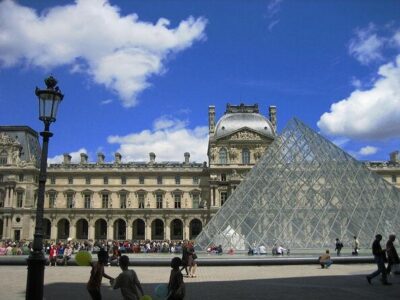
You start by seeing Notre-Dame from a bridge. Then you move through classic landmarks in a way that feels like you are stepping through layers of time rather than bouncing between separate sites. The route includes the Conciergerie and a royal square, plus a look at the oldest bridge and the one associated with love locks at a point in time. You also pass the French Academy area and get a viewpoint tied to the Louvre side, including the Louvre pyramid sightline.
Here is what makes this part valuable for you, even if you have seen Paris photos before. Bridges and river islands are where a city’s logic shows up. When you understand how people crossed the Seine and where power concentrated, the later stops feel less random.
The other practical win is that this segment is not museum-paced. It is a walking and explaining portion. If you have kids, it is often easier than sitting through a tight museum block, because you get movement plus big visual moments.
Louvre in 2 hours: seeing the right masterpieces without losing the plot
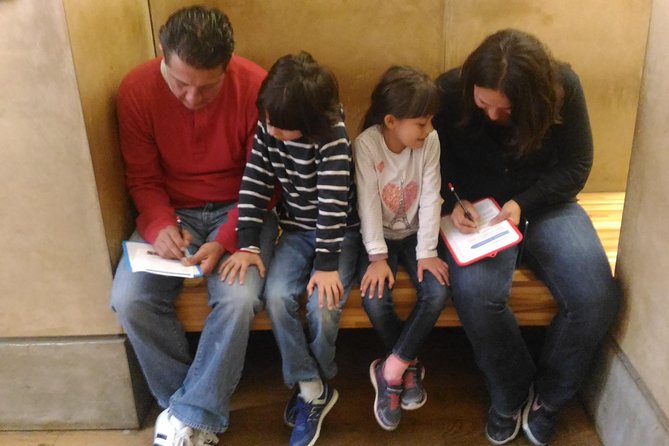
The Louvre can swallow a whole day. This tour takes a different approach, a curated sprint through the museum’s most famous highlights, guided by a plan.
In about 2 hours, you are set up to see works that represent an evolution of the idea of beauty from antiquity through 19th-century French painting. The list includes major anchors such as the Venus de Milo and the Winged Victory of Samothrace. You also have stops associated with artists like Cimabue and Giotto, plus the Apollo gallery, and the big magnet itself, Leonardo da Vinci’s Mona Lisa.
You are also taken toward Michelangelo’s slaves. Even if you do not know the terminology, a guide can translate why these sculptures matter, what makes the poses different, and how the art connects to the era that produced it.
The key advantage for you is that the guide is not just naming paintings. The tour is framed as a guided story of how artistic taste and technique changed over centuries. That makes it feel like you are learning something real, not just checking boxes.
The other advantage is the time pressure. The included notes say line skipping is part of the experience. That matters at the Louvre, where waiting can steal your energy and kill your attention. Still, do go in with a realistic mindset: in two hours, you will not see everything. You will see a lot of what people come for, and you will leave with a clearer sense of what you just saw and why.






Sainte-Chapelle in 35 minutes: the gothic payoff you will remember
Sainte-Chapelle is the short, high-impact closer. You get about 35 minutes, with admission ticket status listed as included in the overview, but the details also mention a specific Sainte-Chapelle ticket amount. In plain terms, plan to budget for Sainte-Chapelle, unless your booking confirmation clearly states you do not need to pay extra.
This stop is described as the most remarkable French Gothic architectural example in the capital. The real draw is the effect of the space: tall forms, strong geometry, and stained glass that changes how you feel inside. In this short window, your guide can help you aim your eyes, not just drift randomly.
The best way to get value from a 35-minute Sainte-Chapelle visit is to stay present. Instead of trying to take in every window at once, listen for what to look for, like how the stained glass tells stories and how the architecture frames the light.
If you are traveling with kids, this is often the part that makes them actually want to look. When it works, it is because the guide helps them see patterns and scenes, not just “pretty colored glass.”
Why the guide makes or breaks this day
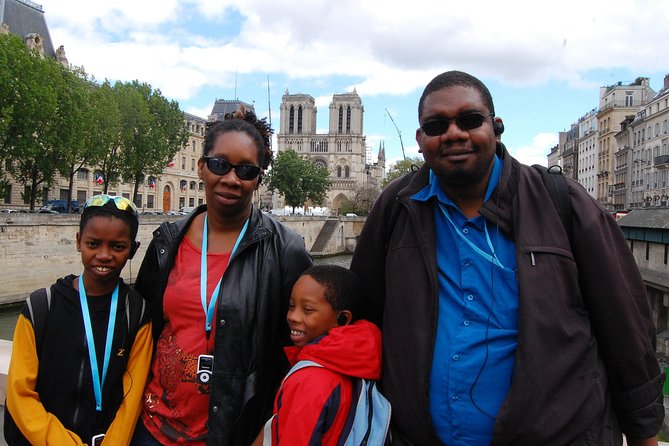
The reviews put a spotlight on one thing: the guide’s teaching style. The name Cinthia shows up repeatedly, and the praise is consistent. People describe her as engaging, great at explaining without talking over you, and effective with different ages at once.
I think that matters most at the Louvre. When you only have a couple hours, a guide who can prioritize and explain makes the difference between you leaving impressed versus leaving confused. The same applies at Notre-Dame and Sainte-Chapelle, where details are easy to miss if you do not know what you are looking at.
Cinthia is also praised for pacing and adaptation. One review mentions support for an 85-year-old traveling with a wheelchair, with extra attention so the person could hear and see everything. Another review notes that she kept a 9-year-old with ADD engaged, which is not a small feat in a museum full of distractions.
For families, that kind of adjustment is huge. This tour is not just for adults who love history. The planning itself also works for kids because the day alternates between walking outdoors and short, high-visual museum moments.
Language-wise, the tour is listed as offered in English. Still, one review specifically calls out strong performance for Spanish speakers, so if you need help in another language, it is worth checking with the provider before you book.
Price and value: what $204.70 per person covers
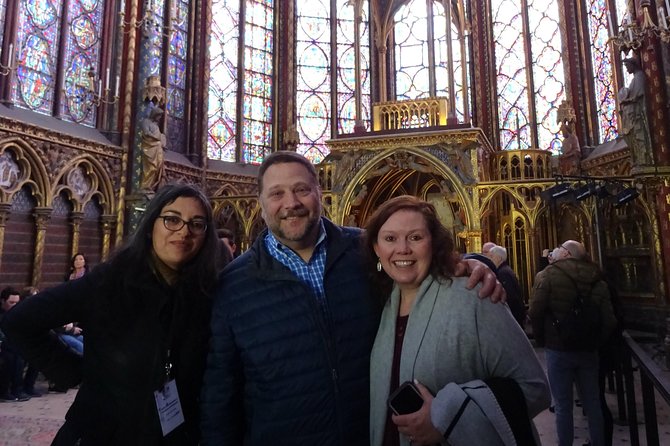
The price is listed at $204.70 per person for an approximate 4-hour semi-private experience. That is not the cheapest way to see Paris, but it is also not trying to be.
You are paying for three things that add up quickly in a busy city:
- a licensed guide who can tie stops together into one clear story
- small-group time, capped at 6 travelers
- line skipping support, which can be a big time saver in major sights
Now the “worth it or not” question depends on how you handle the ticket costs.
Notre-Dame cathedral entry is stated as free and open to all, and the tour notes that services offered are independent of access to the interior. For Sainte-Chapelle, the details say the entrance tickets cost 25 euros, and you are told not to buy them ahead, but to pay the guide 25 euros per person.
For the Louvre, the details are less consistent in the provided notes. The itinerary section says Louvre entrance is included, but the not-included section lists adult admission at 28 euros and also shows a group ticket figure of 20 euros, while still showing 28 euros per person. Because of that mismatch, I recommend you confirm the exact payment arrangement with the provider before the day. It could be included in your booking, or you might pay on the spot. Either way, you want clarity so you are not stuck at the entrance doing math on your phone.
If you are going in with a clear plan, this price can feel like a good trade. You are spending money to buy focus and efficiency, not just entry into buildings.
Who this tour suits best, and who might want a slower plan
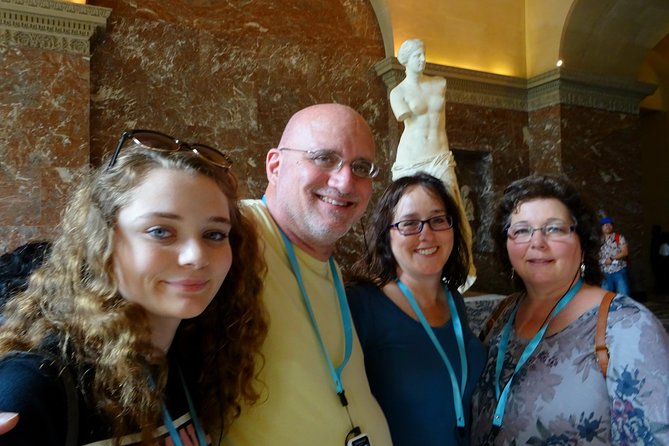
This tour is ideal if you meet any of these profiles:
- you are in Paris for a short time and want big-name highlights in one half-day
- you do not want to spend hours deciding what to prioritize at the Louvre
- you want a guide-led route that turns landmarks into a connected story
- you are traveling with kids and want someone who can adjust the pace and explanations
It might be less ideal if you want total freedom to wander museum wings at your own rhythm. Two hours inside the Louvre is a sprint, not a deep self-guided day. If you love lingering, this day may feel too structured.
Also, because the cathedral portion has formal dress expectations, plan your outfit accordingly. Bring the shawl if you are visiting in summer.
Should you book this Notre-Dame, Sainte-Chapelle, and Louvre semi-private tour?
I would book it if you want a high-value guide day that helps you see the classics without getting lost in the details yourself. The small group size, the line-skipping element, and the curated Louvre focus make this a strong choice for first-timers and time-pressed visitors.
I would hesitate if you prefer long museum browsing, or if you want total control over every minute. And because the ticket notes include conflicting information for the Louvre, do your homework before you go. Confirm what is covered versus what you pay the guide, especially for Sainte-Chapelle and the Louvre amounts.
If you like practical routes, clear guidance, and a day that ends with you understanding what you saw, this one is a solid bet.
FAQ
How long is the Notre-Dame, Île de la Cité, Louvre, and Sainte-Chapelle tour?
It runs for approximately 4 hours.
How many people are on the tour?
The tour has a maximum of 6 travelers and requires a minimum of 2 people per booking.
Is Notre-Dame Cathedral entry included?
Notre-Dame Cathedral entrance is free and open to all. The tour notes that access to the interior is separate from the services offered.
Do I need to buy tickets for Sainte-Chapelle and the Louvre?
Sainte-Chapelle entrance tickets are listed as not included, with a 25 euro payment per person to the guide. For the Louvre, the overview says admission is included, but the details also list ticket costs for adults, so it is important to confirm what your booking covers versus what you pay.
Where does the tour start and end?
It starts at Hôtel Dieu Hospital, 1 Parvis Notre-Dame, Pl. Jean-Paul II, 75004 Paris. It ends inside the Louvre Museum, with the listed end area at Louvre, Rivoli, 75001 Paris.
What language is the tour offered in?
The tour is offered in English.
Is this tour suitable for families and children?
Yes, families with children are welcome, and the tour is described as working well for different ages.
What should I wear for the Notre-Dame visit?
The cathedral visit has a formal dress code. In summer, bring a shawl to cover your shoulders and legs.
Is there free entry to the Louvre for some visitors?
Yes. Free admission applies to visitors under 18 and EEA residents under 26 with valid ID and proof of residency.
Is the tour accessible for people with moderate physical fitness needs?
It is recommended for travelers with moderate physical fitness level.
More Private Tours in Paris



More Tour Reviews in Paris



Not for you? Here's more nearby things to do in Paris we have reviewed












Louvre Museum Tours, side by side.
 ★ 4.6Louvre Museum Timed-Entrance TicketTickets from $2671,977 guest reviews
 ★ 4.3Louvre Guided Tour with Reserved Access & Boat CruiseTickets from $8116,353 guest reviews
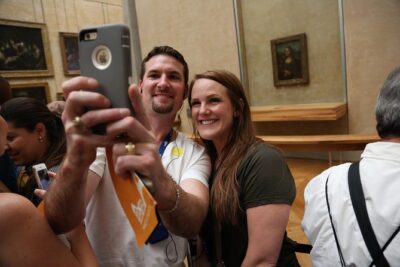 ★ 4.5Louvre Museum Masterpieces Guided Tour with AccessTickets from $8612,023 guest reviews
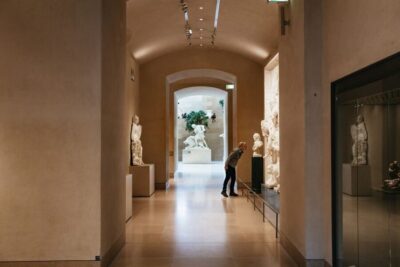 ★ 4.6Louvre Museum Entry Ticket With Host and River CruiseTickets from $1009,926 guest reviews
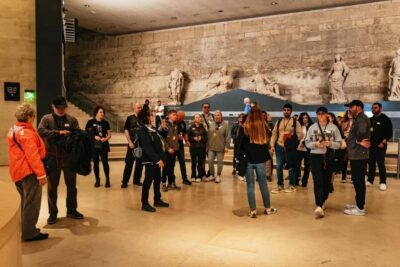 ★ 4.1Priority Access Louvre with Host -Direct to Mona LisaTickets from $748,387 guest reviews
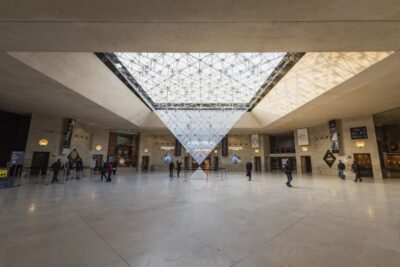 ★ 4.6Mona Lisa & Louvre Masterpieces Tour with Reserved AccessTickets from $806,812 guest reviews
 ★ 5.0Louvre Museum – Exclusive Guided Tour (Entry Included)Tickets from $1816,296 guest reviews
 ★ 4.0Louvre Reserved Ticket and River Cruise ComboTickets from $376,054 guest reviews
This tour also belongs to