
Review · MONTMARTRE TOURS
Montmartre Private Walking Tour
A stroll through Montmartre, minus the guesswork. You’ll walk cobbled lanes in Montmartre with a private, art-historian guide who connects what you see to stories from 19th-century Paris, including the origins of impressionism and the era of cancan dancers. You get a tight loop that hits the big sights without feeling like a checklist.
I love two things most: the private attention (your guide can match the pace and interests of your group), and the way the tour turns famous places like the Moulin Rouge and Sacré-Cœur into human stories, not just photos. I also like that the stop plan keeps moving but still gives you time to look, ask questions, and catch your breath.
One consideration: this is a hill neighborhood. Even with smart pacing, you should have moderate walking fitness, and bring the right shoes if you want to enjoy it instead of just survive it.
Key things that make this Montmartre private walking tour worth it
- Art historian storytelling tied to what you’re standing in front of, not generic facts
- Private group format for up to 6 people, so you’re not lost in a crowd
- A smart 2-hour route that links Moulin Rouge, artist streets, and Sacré-Cœur
- Time to breathe and look at key corners, courtyards, and viewpoints
- Good pacing for the hill with short stops along the way
- Clear ticket expectations, with the big paid stop called out
Montmartre, Moulin Rouge, and Sacré-Cœur in a tight 2-hour loop
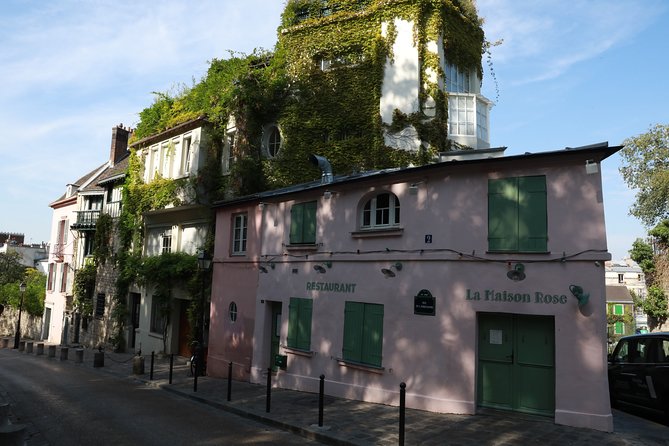
Montmartre works best when you understand it. From street level, the neighborhood looks like a postcard, but the real fun is learning how it became the stage for daring entertainment, creative life, and the art movements people still talk about. This tour gives you that context as you walk, with a guide who can point out why certain streets and buildings mattered.
The route also makes sense for a first visit. You’re not spending your afternoon commuting across Paris. Instead, you stay in the Montmartre zone, moving from the classic entertainment face of the neighborhood toward the artist area and then up to Sacré-Cœur for the payoff views.
The duration, about 2 hours, is long enough for stories and photos, but short enough that you won’t feel like you’ve been walking since breakfast. That balance matters in Montmartre, where time can vanish quickly once the hill and stairs start adding up.
You can also read our reviews of more walking tours in Paris



Price and what you actually get for up to 6 people
The price is $360.48 per group for up to 6 people. On its face, it’s not cheap if you’re thinking in per-person terms. But private tours in Paris price the guide time and the personalized route, not just a seat on a bus.
Here’s how I think about value for this one. If you have a small group, the per-person cost can become reasonable fast, especially because you’re getting an art historian guide and a route designed around Montmartre’s key beats: entertainment (cancan and Moulin Rouge), creative life (the artist quarter vibe), and the big viewpoint moment at Sacré-Cœur.
Also, the itinerary includes several stops where no extra admission is required, so you’re not constantly paying entrance fees beyond the one major paid stop that’s clearly flagged.
How the private guide changes the whole experience
A private guide is not just comfort. It’s control. You decide how quickly to move through side streets, how much time to spend on a particular corner, and what questions you want answered right then, not later after you’ve already walked past it.
What I like about this tour setup is the guide’s ability to meet different ages and energy levels. One guide, Boris, has handled groups with adults and teenagers by talking at the right pace for each, so nobody feels bored or lost. Another guide, Caroline, is specifically described as making the climb feel easier by building in lots of stops along the way, which is exactly what you want in Montmartre.
You’ll also notice the tour feels like a conversation. The best moments are when you’re standing somewhere familiar, like Place du Tertre or Sacré-Cœur, and your guide explains what’s going on beneath the surface, including why the neighborhood became known for certain kinds of artists and styles.
Stop 1: Moulin Rouge, the cancan era, and why it matters
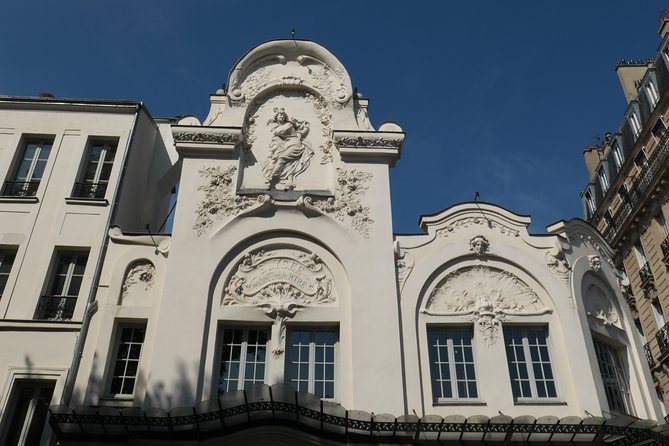
The tour’s first major stop is the Moulin Rouge area. Even if you’ve seen it in pictures, it’s the kind of place where a guide can help you read the scene. This stop is tied to Montmartre’s entertainment history, including stories about the so-called obscene cancan girls and how that period helped shape the neighborhood’s reputation in the 19th century.
You get around 15 minutes here. The key practical note: admission is not included, so if you want to go inside, you’ll need tickets separately. If you only want the outside and the story, you can still enjoy this part, since your guide focuses on what the building and surrounding area meant back then.
This is a good opening stop because it frames Montmartre as more than art galleries and views. It reminds you that the neighborhood became famous by being a little bit dangerous, a little bit daring, and very much alive.
Stop 2: Rue Lepic, street-level history you can actually feel
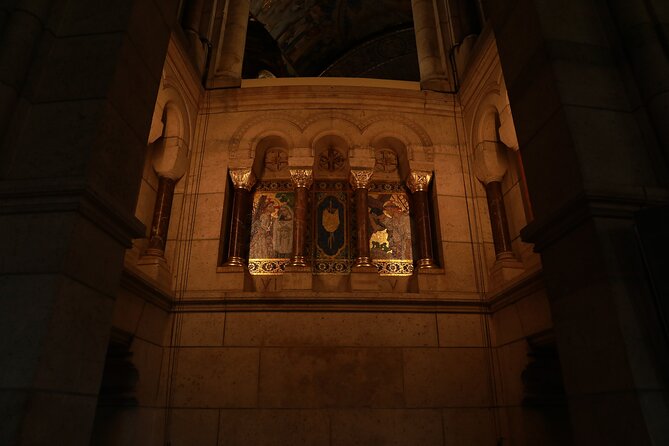
Next up is Rue Lepic for about 30 minutes. Streets like this are where Montmartre stops being a name and starts being a place you can navigate. A guide can show you how the neighborhood developed and why certain streets became connected to its creative and social identity.
This stop is marked as free for admission. The value here is the time. Thirty minutes gives you room to slow down and notice the texture of Montmartre: the tight turns, the way the street layout funnels you, and the moments where a courtyard or alley feels like it belongs to another era.
If you like walking tours that help you understand the city’s logic, this is the stop you’ll appreciate most. You’re learning how Montmartre works, not only what to photograph.
You can also read our reviews of more private tours in Paris






Stop 3: Le Passe-Muraille, the statue that captures Montmartre attitude
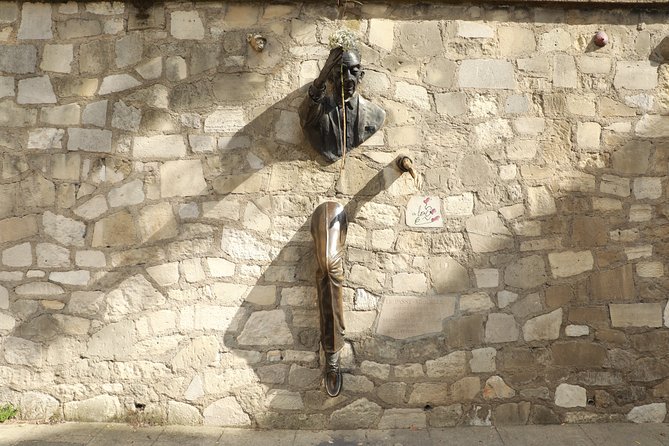
Then you’ll reach Le Passe-Muraille, the iconic statue linked to Montmartre’s spirit. You’re there for about 15 minutes, and admission is listed as free.
This stop is short, but it’s a great reset. Statues like this matter because they turn abstract reputation into something you can point to. Montmartre has always been about people who refuse to stay in their assigned place, and this statue is an easy way to remember that theme while you keep climbing toward higher ground.
It’s also a useful pause if you want a mental break from the hill. You stop, look, and let the guide connect the symbol to what you’ve already been learning.
Stop 4: Place du Tertre, cobbles, artists, and the postcard that isn’t a lie
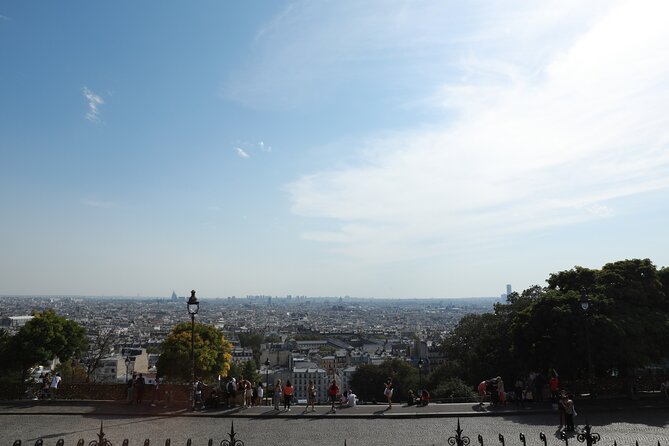
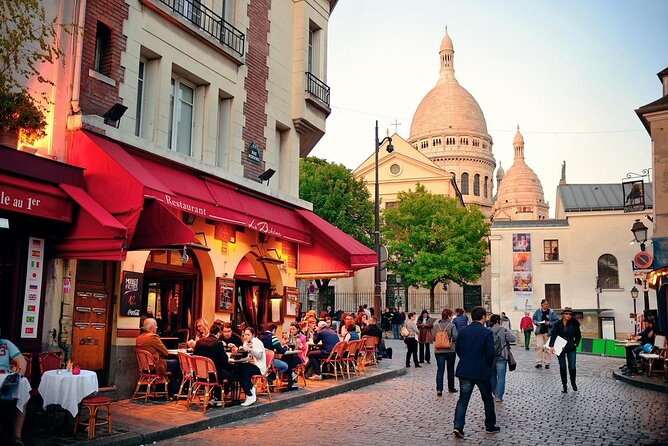
After that, it’s Place du Tertre for around 15 minutes, also free. This is the former centre of the village of Montmartre, and it’s one of the most scenic sections of the neighborhood.
This is where Montmartre’s art-world vibe becomes very physical. You’ll see the artist presence, and the area’s creative energy is the reason people come to this part of town. One of the strongest impressions from a guide experience was how often the artist-related atmosphere turns into the highlight of the tour, because it feels like you’re watching tradition continue rather than looking at a museum behind glass.
Practical tip: bring your patience for small turns and crowded pockets. This is a popular area, and the fun comes from noticing details at the right speed. Your guide can help you keep the focus on why the place developed this way, not just where to stand for a photo.
Stop 5: Basilique du Sacré-Cœur, views with context (and breaks for your legs)
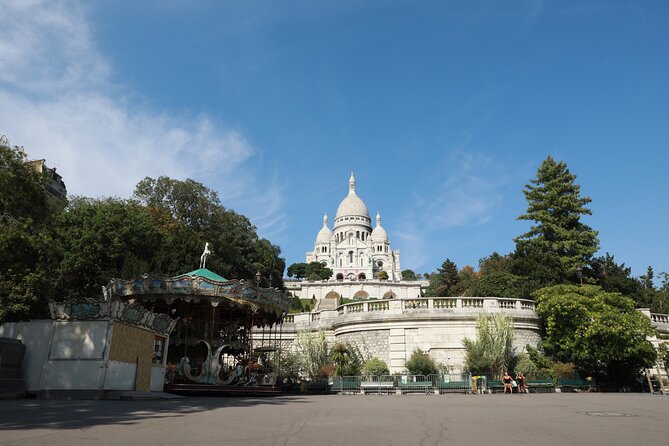
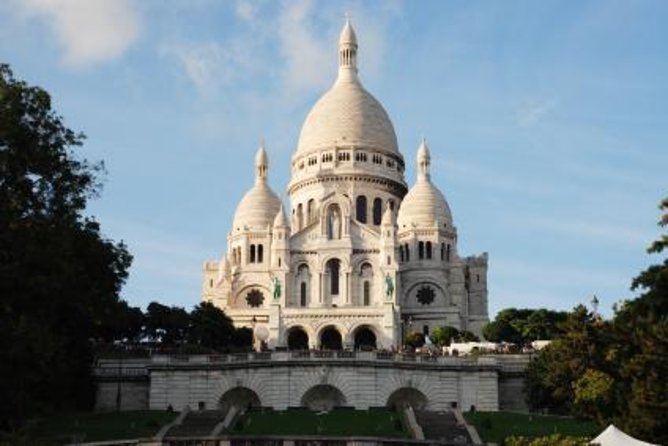
The final big stop is Basilique du Sacre-Cœur de Montmartre for about 20 minutes. Admission is listed as free for this stop, and it’s the key end point because it dominates the neighborhood, both visually and historically.
This is where the tour pays off. From Sacré-Cœur you get the big Paris view, but you also get the story of how Montmartre fit into turn-of-the-century Paris. Your guide ties the outlook back to the creative rise you’ve been hearing about since the lower streets, including the artistic energy of the 19th century.
It’s also where pace matters. In one guide experience, Caroline was praised for making the climb easier with lots of built-in stops. That matters because when you arrive tired, you don’t enjoy the view the same way. You want to be able to take in the details: the angles of rooftops, the way streets layer across the city, and the sense of why people keep returning to this hill.
Wear shoes you trust here. If your feet are unhappy, your brain stops absorbing stories.
What to bring so the walk feels easy, not stressful
Montmartre rewards the prepared. The simplest things make a big difference: good walking shoes, a hat on sunny days, and water. That advice comes straight from what makes the tour enjoyable in practice.
Also, wear clothing that can handle changing weather. Paris can go from bright to breezy without asking permission. Light layers help. And if you’re sensitive to stairs, plan for short walking bursts, because Montmartre is full of steps and grade changes.
If you’re traveling with teens, kids, or anyone who hates slow lineups, a private guide helps you keep momentum. You’re not waiting behind others. But you still want to move at a pace that lets everyone stay engaged.
Where the tour starts and ends, and why that matters
The tour begins in Montmartre (75018 Paris) and ends near Anvers (75018 Paris). That end point is useful because it gives you a practical way to keep moving through the neighborhood after the tour ends, instead of retracing your exact route.
Both points are in the general Montmartre area, and the tour is marked as near public transportation. So if you want to pop back later for more exploring, you won’t be trapped far from transit.
You’ll also receive a mobile ticket, which is handy in Paris when you’re bouncing between stops and don’t want to fuss with paper.
Who this Montmartre private walking tour is best for
This is a strong match if you:
- Want a private guide who can customize the pace for your group
- Like art and culture, especially the stories tied to 19th-century Paris and impressionism’s origins
- Want the big Montmartre highlights without planning the whole thing yourself
- Appreciate walking tours with humor and human detail, not just dates
It’s also a good option for mixed-age groups. One guide experience specifically mentions tailoring explanations to adults and teenagers so everyone could enjoy it. If your group includes people who learn differently, private tours often work better than fixed-group formats.
If you’re looking for a long, museum-style day, this is probably too short. But if you want a smart, story-driven Montmartre hit that leaves room to wander after, it’s a great fit.
Should you book this Montmartre private walking tour?
I’d book it if you want Montmartre to make sense fast. The biggest selling point is not the monuments alone. It’s the way an art historian guide connects the neighborhood’s entertainment era, artist life, and major viewpoint moment into one smooth walking story.
I’d pass or adjust expectations if you’re only seeking a photo walk and don’t care about context. This tour is built for people who enjoy learning why places became famous. It’s also best when you’re ready for the hill, especially if you tend to rush and get sore.
If you’re traveling with up to 6 people, the group price can be a smart way to buy time, comfort, and attention. And if you like having a plan that still feels human, this private format delivers.
One final practical note: book early if you can. This experience is often reserved about three weeks ahead, so waiting until the last minute can make your dates harder to find.
FAQ
Where does the tour start and where does it end?
The tour starts in Montmartre, 75018 Paris, France and ends near Anvers, 75018 Paris, France.
How long is the Montmartre private walking tour?
It lasts about 2 hours (approx.).
Is this tour private?
Yes. It’s a private tour or activity, and only your group participates. The group size is up to 6.
Is the tour offered in English?
Yes, it is offered in English.
Are tickets for Moulin Rouge included?
Admission for the Moulin Rouge stop is not included. The other listed stops are free of admission ticket requirements.
Are food and drinks included?
No, food and drinks are not included.
Do you include hotel pickup or drop-off?
No, hotel pickup and drop-off are not included.
What physical condition do I need?
The tour is best for travelers with moderate physical fitness, since it involves walking in Montmartre.
Are children and service animals allowed?
Children must be accompanied by an adult. Service animals are allowed.
Can I cancel and get a full refund?
Yes. You can cancel for a full refund if you cancel up to 24 hours in advance of the experience’s start time. If you cancel less than 24 hours before, the amount paid is not refunded.
More Walking Tours in Paris



More Tours in Paris






More Tour Reviews in Paris






Not for you? Here's more nearby things to do in Paris we have reviewed












Montmartre Tours, side by side.
 ★ 5.0Montmartre Hidden Gems and Scenic Highlights Walking TourTickets from $382,684 guest reviews
 ★ 5.0Montmartre Hill French Gourmet Food and Wine Tasting Walking TourTickets from $1452,588 guest reviews
 ★ 4.8Montmartre Cheese, Wine & Pastry Guided Walking TourTickets from $1272,255 guest reviews
 ★ 4.9Montmartre Highlights Walking Tour with a Local GuideTickets from $341,668 guest reviews
 ★ 4.1Sacré-Coeur and Montmartre Tour with Expert GuideTickets from $281,027 guest reviews
 ★ 5.0Private Montmartre Food Tour with Wine, Cheese & PastriesTickets from $3021,027 guest reviews
 ★ 5.0Paris Montmartre Food Tour – A Full French Meal by Do Eat BetterTickets from $95877 guest reviews
 ★ 5.0Hidden Montmartre: Paris’ Secret Streets Walking TourTickets from $44809 guest reviews
This tour also belongs to