
Review · MONTMARTRE TOURS
Private Walking Tour of Montmartre and Sacré-Cœur Visit
Montmartre goes art-mode fast. This private walk threads through artist haunts, odd optical illusions, and romantic corners, ending at Sacré-Cœur for sky-high Paris views. You’ll get a focused guide who explains what you’re seeing, and you’ll pause often enough to watch the neighborhood work its magic.
I especially like the way the tour balances famous names with real street details. You’ll spend real time at Le Bateau-Lavoir and Le Moulin de la Galette, then get a very photo-friendly route through Montmartre’s most memorable corners.
One thing to plan for: this area is mostly uphill. Even with a moderate pace, expect some steep sections, and bring comfy shoes and a little patience for the climb.
Key things to know before you go
- Private, English-guided pacing that helps you move without hunting for context
- Sacré-Cœur dome costs extra (entry is free, dome access is a separate fee)
- Short, visual stops built for photos, street performers, and quick orientation
- Le Pass-Muraille optical illusion plus the story behind it, Marcel Aymé
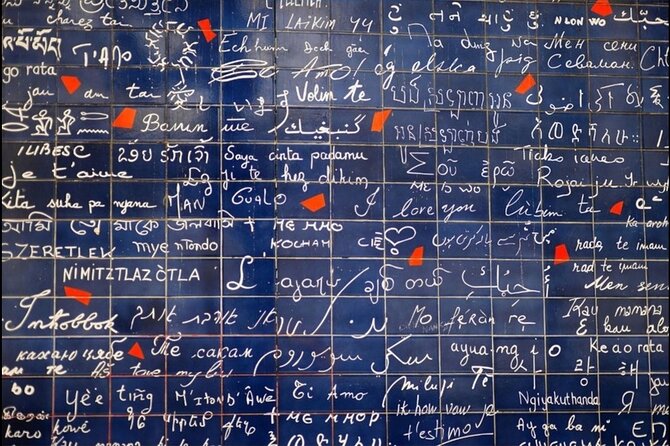
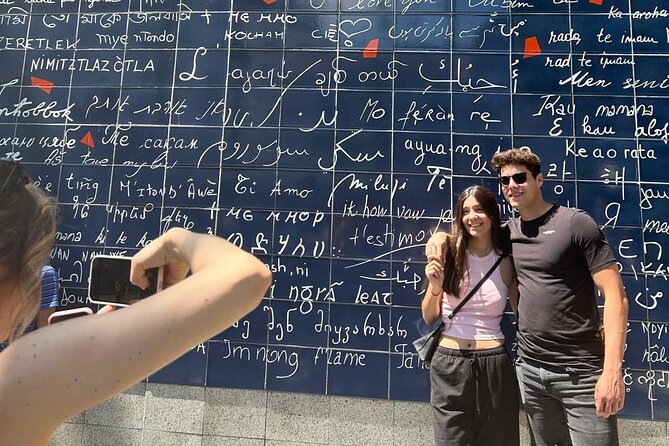
- The I love you in 250 languages wall, perfect for couples and quirky travelers
- Guide quality is the standout, with multiple reports of helpful, patient hosts who answer questions and handle photos well
Montmartre and Sacré-Cœur in 2 Hours: the real value
This is a compact, private walking tour that’s designed to help you get your bearings fast in one of Paris’ most confusing neighborhoods. You’re not crammed into a long day, but you still hit major landmarks and the small, oddball details that make Montmartre feel like a living art gallery.
The price, $118.63 per person, can feel steep at first glance. But you are paying for a guide’s time, a private group experience, and an end-to-end route that tells you what matters and where to look. Also, Sacré-Cœur access is included at the basilica level, with dome access available as a paid add-on.
If you’re the type who hates wandering aimlessly for hours, this format helps. If you want a slow, sit-down café day with zero walking, you may find the pace too “moving.”
You can also read our reviews of more walking tours in Paris



Starting at Place Blanche: where the walk begins
Your tour starts at 5 Pl. Blanche, 75009 Paris. That matters because it puts you near the core of Montmartre’s nightlife and historic energy, without forcing you to navigate from the far edges of the hill.
You’ll typically want to arrive a few minutes early so you can get oriented before the group gathers. The tour runs in English, and it’s set up as a private experience, so you should expect a smoother flow than you’d get with a large group that keeps stopping to regroup.
The Moulin Rouge area, Belle Époque vibes, and street-level energy
The first part of the tour focuses on Montmartre’s legendary entertainment past, tied to the Belle Époque and the wild artistic nights that made the area famous. In practice, this means you’ll look at the neighborhood through an entertainment lens, not just a postcard lens.
You’ll also get a chance to observe the ongoing street scene. This is where you can spot street performers and portrait artists working in public, which is part of why Montmartre still feels different from other Paris districts. Your guide helps you frame what you’re seeing, so it doesn’t just feel like random busyness.
If you’re hoping for a quiet stroll with zero distractions, this first section may be too lively for you. But if you want the real “on the street” Montmartre feeling, it’s exactly right.
A Van Gogh connection on winding streets
Next you’ll move through a charming, winding street lined with historic cafés, bakeries, and shops. The big story beat here is a Vincent Van Gogh connection, plus the kind of everyday storefront atmosphere that helps you understand why artists kept clustering here.
This portion works well because it slows you down. You’ll see how the neighborhood shape, narrow lanes, and local businesses create the mood that artists wanted. Even if you’re not a deep art specialist, you’ll walk away with a clearer sense of why these streets mattered.
Practical tip: Montmartre streets can be uneven. Keep an eye on where you place your feet, especially if you’re hopping between photo angles.
The Art Nouveau metro entrance and an old-school Paris groove
Another stop highlights one of Montmartre’s authentic streets with classic bistros, boutiques, and a striking Art Nouveau metro entrance. This is a good reminder that Montmartre isn’t just about art museums and view decks. It’s also about the everyday Paris that still runs here.
Your guide’s job in this stretch is to point out what people often miss: the design details, the street texture, and the way transportation links shaped neighborhood life. If you like “small stuff” like doorways, signage, and architectural flourishes, this section tends to land well.
You can also read our reviews of more private tours in Paris






Le Bateau-Lavoir: where modern art got a foothold
Le Bateau-Lavoir is one of the stops you’re going to remember. This humble building is described as an artists’ residence where major names lived and worked, including Picasso and Modigliani. The connection to Picasso is especially strong here, because the site is linked to Picasso painting Les Demoiselles d’Avignon.
The key value of this stop on a walking tour is not that it’s a giant exhibit. It’s that your guide puts the art in a place context. You’re standing in the kind of space where creativity gathered, and that makes the stories feel less abstract.
Admission ticket here is listed as not included. So you can expect a stop focused on viewpoint and interpretation rather than museum time.
Le Moulin de la Galette: art inspiration outside the walls
Then you head to Le Moulin de la Galette, another short but meaningful stop. This place was a favorite gathering spot for artists and Parisians, and it even inspired Pierre-Auguste Renoir’s painting Bal du moulin de la Galette.
What I like about this stop is that it connects visual art to a specific setting. You’re not learning art terms in a vacuum. You’re seeing the kind of spot that could spark a scene.
Like Le Bateau-Lavoir, the details here are time-efficient. You’re likely getting a quick look, photo, and explanation, not a long indoor visit.
Le Pass-Muraille: the optical illusion that makes you look twice
At Le Passe-Muraille you’ll see an optical illusion sculpture, The Man Passing Through the Wall, inspired by a story by Marcel Aymé. This is one of those stops where the guide matters because the explanation changes how you see the sculpture.
If you’re a photo person, this is also a practical win. The illusion is made for angles, and once you know what to look for, you can get better shots without wasting time experimenting.
Admission ticket is not included, so treat it as an outdoor art break with story added on.
Place Dalida: a quieter pause with a lucky-touch legend
Place Dalida is described as a quiet, tucked-away square dedicated to the beloved French-Italian singer Dalida. There’s a statue here, and legend says touching her bronze bust brings good luck.
This stop gives you a change of tempo. After the busier art-landscape moments, you get a calmer space that feels more local and less tour-queue.
Because it’s a short stop, don’t count on it for a full break from walking. Use it for one thing only: reset, look around, and get your bearings before the climb toward the basilica.
La Petite Maison Rose: the pink building that signals artist haunt energy
You’ll also see La Petite Maison Rose de Montmartre, a pink building noted as since 1920 and linked to artists like Picasso and Modigliani. Even if you can’t go inside, this kind of outward-facing stop helps you map the neighborhood’s creative footprint.
I like these “recognition” stops because they turn Montmartre from a list of famous points into a feeling of continuity. The pink façade is an easy visual anchor, and the guide’s context makes it more than just a colorful wall.
Admission ticket is not included.
The painters’ square: where easels still show up
The tour then brings you to Montmartre’s most famous square, where painters set up easels daily. This is where the neighborhood’s art tradition is visible in real time, not just as a historical story.
This is also where street life can be at its most obvious. You’ll be surrounded by cafés and activity, so expect to see artists working, and expect to see that old Montmartre “you’re in on it” vibe.
If you prefer quiet sightseeing, you’ll need to choose your timing. Early in the day usually feels calmer than late afternoon.
Finishing at Sacré-Cœur: the view you came for
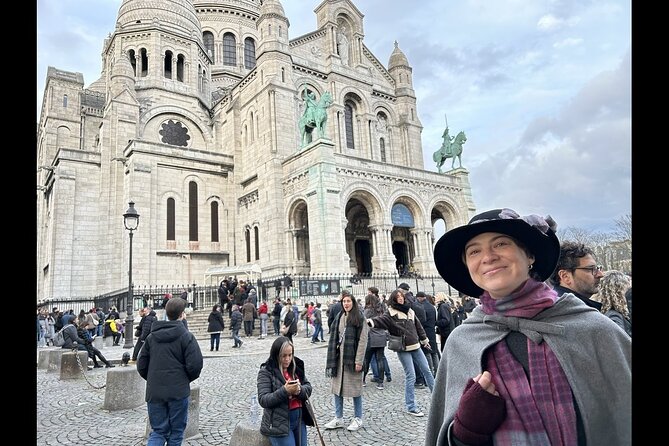
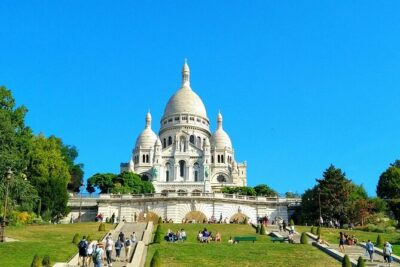
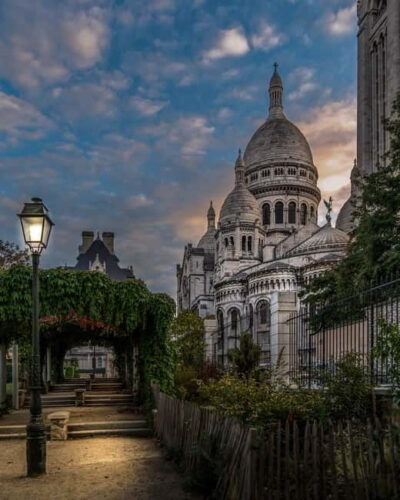
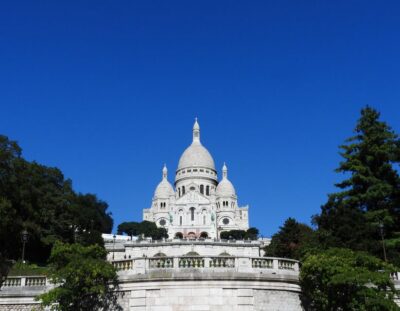
Finally, the walk ends at the Basilique du Sacré-Cœur de Montmartre. Perched on the hill, it gives one of the best panoramic views over Paris, and your guide will frame what you’re looking at so it’s not just a pretty skyline.
Sacré-Cœur basilica entry is listed as free, which is great. But there is a separate fee of €7.00 per person if you want access to the dome. So if you’re set on the highest viewpoint, plan for the extra cost.
This end portion is also where you get a final “photo wave.” Expect lots of picture moments, especially with the lighting on the hill and the sense of scale when you look across the city.
The I love you in 250 languages stop: romantic, artsy, and very photogenic
Along the way, you’ll visit the romantic hidden gem installation featuring I love you written in over 250 languages. This is one of the most memorable “stand and look” spots on the route because it mixes public art with a very universal message.
It’s a strong stop for couples, but it’s also a fun one for solo travelers who like quirky symbolism. It gives you something different from the architecture and sculptures, and it’s easy to photograph from multiple angles.
If you’re traveling with someone, this is also the stop where you’ll feel a clear moment of connection, because everyone reacts to the same idea.
Optional upgrades: private tour time or a wine tasting add-on
There’s an optional upgrade path included in the offer. You can upgrade to include a private tour or an exclusive French wine tasting.
Here’s how I’d think about it: if you want more time for conversation and extra stops, pay for the extended experience rather than trying to add random detours yourself. If you want the Montmartre day to end with a taste of France, the wine tasting upgrade can turn your final views into a complete experience.
The tradeoff is simple. Upgrades typically mean more money, so decide based on how much you care about downtime versus just seeing more sights.
What the guides do that makes or breaks the tour
One theme pops up in the experience quality: the guide’s presence. Multiple guide names are mentioned as standouts, including Ifi and Benedict, with praise for being helpful, patient with photos, and ready to answer questions.
That matters because Montmartre can feel like a maze. A good guide doesn’t just point at places, they help you understand why the places exist, how art legends connect to real streets, and what to pay attention to when you’re surrounded by performance and people.
This is also why your tour time feels efficient. You’re not stuck guessing which sights are the key ones. You get the “why this, why here” fast.
Physical pace and weather reality on the hill
This is a walking tour, and the route includes a climb up to Sacré-Cœur. The tour info flags a moderate physical fitness level, and one caution that comes up is that parts can be steep.
So bring shoes with traction. Plan for wind on the hill. If it’s raining, street-level photography can be trickier, but the tour format still works because stops are short and frequent.
If you have mobility limitations, consider whether you can handle repeated uphill sections. There’s no guarantee you’ll be able to avoid stairs or steep gradients.
Who this tour fits best (and who should skip it)
I’d say this fits best if you:
- Want a tight route that covers Montmartre highlights plus art stops without endless wandering
- Like learning through street context, not just museum facts
- Want a photo-friendly experience that still includes meaning
- Appreciate a private setup where you can ask questions
I’d skip it or change plans if you:
- Want a long, slow, mostly flat walk
- Hate any uphill at all
- Prefer self-guided sightseeing with zero guide involvement
Should you book this Montmartre and Sacré-Cœur walk?
Book it if you want a smart, guide-led Montmartre primer with iconic stops like Le Bateau-Lavoir, Le Moulin de la Galette, the Le Pass-Muraille illusion, and the I love you in 250 languages artwork, plus a strong finish at Sacré-Cœur.
I’d feel comfortable recommending it because the best feedback centers on guide quality, clear storytelling, and patience with questions and photos. Also, the structure is practical: you get a full hit of sights in about two hours, which is ideal if you only have a short window in Paris.
Think twice if you’re budget-sensitive and you know you’ll want the dome access fee. Think twice again if steep uphill walking is a dealbreaker for you.
If you can handle a climb and you want your Montmartre day to feel guided but still very you, this tour is a solid choice.
More Walking Tours in Paris


More Tours in Paris






More Tour Reviews in Paris






Not for you? Here's more nearby things to do in Paris we have reviewed










Montmartre Tours, side by side.
 ★ 5.0Montmartre Hidden Gems and Scenic Highlights Walking TourTickets from $382,684 guest reviews
 ★ 5.0Montmartre Hill French Gourmet Food and Wine Tasting Walking TourTickets from $1452,588 guest reviews
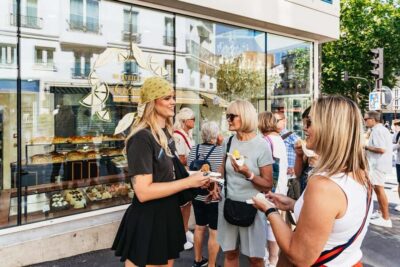 ★ 4.8Montmartre Cheese, Wine & Pastry Guided Walking TourTickets from $1272,255 guest reviews
 ★ 4.9Montmartre Highlights Walking Tour with a Local GuideTickets from $341,668 guest reviews
 ★ 5.0Private Montmartre Food Tour with Wine, Cheese & PastriesTickets from $3021,027 guest reviews
 ★ 4.1Sacré-Coeur and Montmartre Tour with Expert GuideTickets from $281,027 guest reviews
 ★ 5.0Paris Montmartre Food Tour – A Full French Meal by Do Eat BetterTickets from $95877 guest reviews
 ★ 5.0Hidden Montmartre: Paris’ Secret Streets Walking TourTickets from $44809 guest reviews
This tour also belongs to