
Review · MONTMARTRE TOURS
Montmartre Self-Guided Audio Tour: More Than Meets the Eye
Montmartre without the pushy group pace. This self-guided audio tour uses your phone like a quiet companion, guiding you through streets, studios, and oddball legends while you explore at your speed. You get offline audio and maps so the hilltop stories keep going even when cell service gets flaky.
I especially love the lifetime access angle. Once you buy it, you can replay the route later, and the offline download means you are not stuck hunting for signal. I also like how the narration blends clear directions with humor and place-based details, so you are not just sightseeing, you are learning what you are looking at.
The main consideration is physical. Montmartre is steep, and this route means stairs and uphill segments, so bring a fully charged phone and expect to pause for breaks if you need to.
Quick hits before you start
- Offline audio, maps, and geodata so you can keep moving without constant data use
- GPS-based tracking that helps you stay on route and get back when you wander
- Lifetime access in English to replay the tour as many times as you like
- Art-and-life stops tied to real names like Picasso, Utrillo, Edith Piaf, and Van Gogh
- Flexible pacing with start/stop control, and the option to speed up the recording
Where this Montmartre audio walk fits in (and what it costs)
For $14.99 per person, you get a self-guided Montmartre walking route in English delivered through the VoiceMap app (Android and iOS). The advertised duration is about 1 to 2 hours, but the route is in a hilly neighborhood, and if you stop often for photos or music, it can easily take longer.
You start at 22 Rue des Abbesses (75018 Paris) and finish near Basilique du Sacré-Cœur de Montmartre, at 35 Rue du Chevalier de la Barre. This is a good format if you dislike walking behind strangers, want to linger at a view, and prefer a guide voice that you can pause.
One practical note: you pay for the tour content, not for entrances. Tickets for museums or churches are not included, though the end includes a peep inside Sacré-Cœur.
You can also read our reviews of more guided tours in Paris



Start at Rue des Abbesses, let the app do the steering
When this works well, it is a real quality-of-life upgrade. The tour is designed to follow your location, so the audio cues you as you approach each stop, and you can control things like start and stop on your phone.
A few details that matter on a walking route:
- Keep your phone volume up enough to hear clearly outdoors.
- If you ever go off route, the app gives reminders to help you reconnect.
- Some people love that they can speed up the audio when they want to cover more ground faster.
If your phone battery runs low, consider a portable charger. Battery usage is a real concern on long, hilly walks, and having a backup makes the experience feel less stressful.
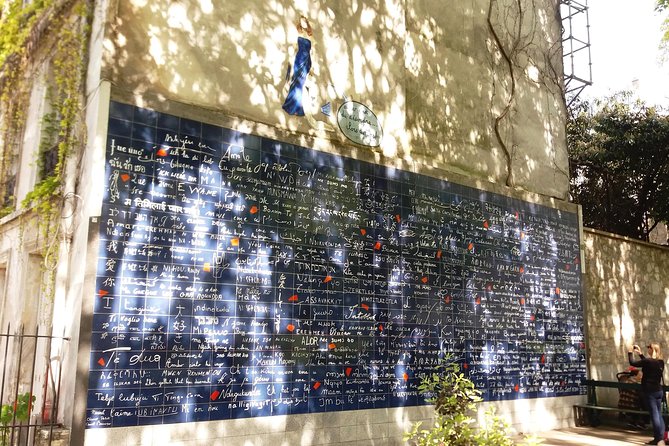
Mur des Je t’aime: the Wall of I Love Yous in 250 languages
Right away, this route gives you a smart warm-up stop. You will briefly pause in front of Mur des je t’aime (often described in English as the Wall of Love). It was created in 2000 by Frédéric Baron and Claire Kito.
What makes it memorable is the scope. The tiles contain 311 ways to say I love you, in 250 languages. It is quick to see, but it is the kind of moment that changes your mood from just walking to noticing. Look for how the same idea shows up in totally different scripts and styles, then move on while the stories are still fresh.
A church with records back to 885
Another stop spotlights the age of Christian worship in Paris. You will encounter a church connected to written records dating back to the year 885, which makes it one of the oldest Christian sites in Paris.
This is one of those moments where audio helps more than you expect. When you are standing in front of a real place, a simple date can feel abstract. The narration turns it into context, so you start recognizing that Montmartre is not just cute streets and views, it is layered time.
One practical caution: if you go inside and the GPS signal gets awkward, the audio may seem to pause or lose track. If that happens, stepping back outside or adjusting your position usually helps the app re-lock on to your location.
Picasso, Modigliani, and the artist-studio trail
Montmartre earns its reputation here. The route guides you to the workshop where Picasso lived from 1904 to 1909, and it also notes that Modigliani lived and worked there. Along the way, it connects the area with other creative names you may recognize, including Renoir, Juan Gris, Max Jacob, and le Douanier Rousseau.
You will also pass through additional studio-related landmarks, including place Émile-Goudeau and Picasso First Studio, plus La maison de Dalida. Even if you do not know every artist listed, you will feel the pattern: Montmartre was a working neighborhood for artists, not just a stage for tourists.
Here is the value of this section: it gives you a map for your imagination. As you walk, you start seeing doors, corners, and small streets as part of a creative network, instead of just scenery.
More Paris tours and experiences for the shortlist






Place Émile-Goudeau and Picasso First Studio: follow the creative geography
These stops keep the route focused. Place Émile-Goudeau is one of those Paris locations that feels small until you remember how many artistic stories tie into the neighborhood. Then Picasso First Studio pulls you back to a specific place in Picasso’s timeline.
Because the tour is self-paced, you can do this part well even if you are not a “museum person.” Take 1 to 2 minutes at each spot, read the audio cue, and keep moving. You do not need to stop for long to get the meaning.
Maison Rose and Montmartre celebrity nights
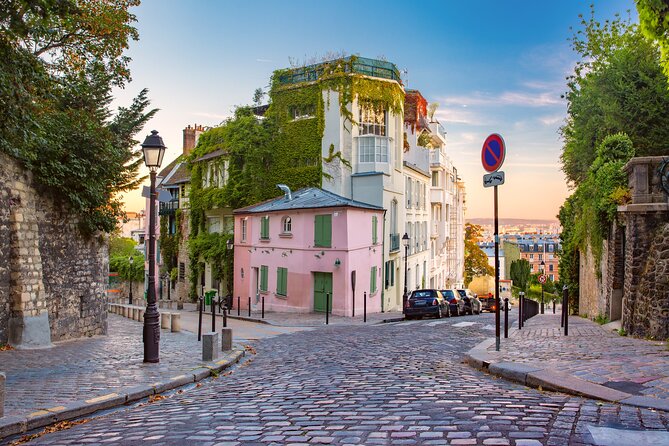
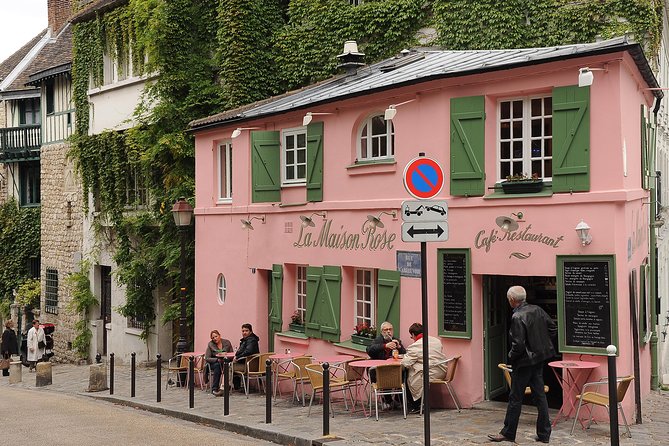
Next, the route heads toward the second pink house, famously marked Maison Rose. The tour says it was made known by painter Utrillo, and it became a cultural magnet after it was bought by someone who socialized with famous singers.
The audio connects those visits with names like Edith Piaf, Aznavour, and Jacques Brel. Before them, Albert Camus was also a fan. If you like the way real people connect with real rooms, this is one of the more fun segments.
Why this stop is worth your time: it explains why the building gets remembered. You are not just taking a photo of a pink façade, you are stepping into the neighborhood’s habit of turning everyday places into meeting points.
Le moulin that still grinds, plus Van Gogh’s obsession
One of the most iconic stops is also one of the most specific. The windmill you will see is described as one of only 2 left in Montmartre, specialized in grinding wheat. The tour also notes it has been a restaurant for a long time.
That matters because it links everyday work to art scenes. The audio says artists like Renoir, Van Gogh, and Pissarro frequented the restaurant and painted it, helping turn it into an icon of Montmartre. It also explains a key detail about paintings: Renoir’s Bal au Moulin de la Galette shows the party behind the famous windmill facade, not the windmill itself.
Van Gogh is the big connection here. The route says Van Gogh painted several versions of this windmill because his brother Theo lived nearby and Van Gogh knew the area well. That gives you a new way to look at the building, even if you already know the name.
Le Passe-Muraille and the statues stop the walk for a reason
Montmartre has a way of mixing legend and sculpture, and the tour uses two types of “pause points.”
You will pass Le Passe-Muraille, plus the Statue of Saint-Denis. Later on, you will also pass the 2nd Statue du Chevalier de la Barre. These stops are not just photo opportunities. They act like rhythm breaks in a steep walk, giving your feet a moment while your mind gets anchored in the neighborhood’s stories.
If you want the experience to feel smooth, treat these as micro-rests. Stand there, listen, then take the next steep segment one step at a time.
Rue de l’Abreuvoir: where the route keeps you moving
The itinerary includes a walk down Rue de l’Abreuvoir. On audio tours, these “in-between” streets are crucial because they often contain the views you remember later, even if they are not the headline stops.
The GPS guidance helps you avoid the most common audio-tour problem, getting stuck staring at your screen. This is one reason people rate this tour highly for being easy to follow.
Still, keep an eye on your surroundings. If you find yourself unsure, the route’s approach is to get you back rather than to leave you stranded.
Lapin Agile: from thieves to cabaret rabbit drawings
Then you hit a stop with real personality: Lapin Agile. The audio notes it first opened as a cabaret and drinking establishment in 1795. It started as Rendez-vous of Thieves, then became Cabaret of the Assassins.
In 1880, caricaturist André Gill was commissioned to create a new look, including the rabbit drawing tied to the name. If you like eccentric local history, this is the kind of story that makes a self-guided tour feel like more than directions.
It also helps you understand Montmartre’s vibe. The neighborhood’s art scene did not come from nowhere. Places like Lapin Agile show how entertainment, bohemia, and personality all lived together.
Place du Tertre and the open-air Montmartre feel
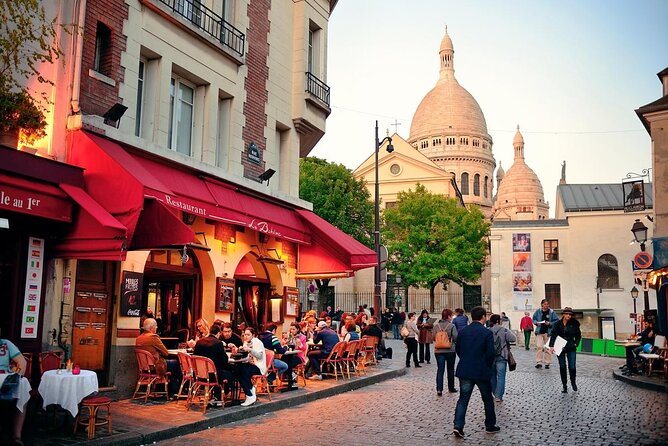
Next up is Place du Tertre. This is one of those stops where the audio does not need to be long to land. It helps you make sense of what you are seeing around you, and it gives you a way to interpret the square without feeling like you are just scanning for the next landmark.
If you plan to take photos, do it here. The route gives you a clear reason to pause, and the walking segment after is still part of the story.
The restaurant stop: simple and without ceremony
The route includes a restaurant stop in Montmartre, with a name meaning simple and without ceremony. The audio says there has been a restaurant here since the 1500s, and it has been rebuilt and renamed many times.
This stop also connects to major art figures. The narration lists patrons including Degas, Renoir, Monet, Cézanne, Sisley, and Toulouse-Lautrec. It also says that in 1886, Van Gogh painted La Guinguette à Montmartre here.
Even if you never sit down, this is a valuable stop. It explains how artists spent time between studios. You start to see the neighborhood as a place where work and leisure overlapped, not as a gallery of isolated monuments.
Ending at Sacré-Cœur: the route’s finish line
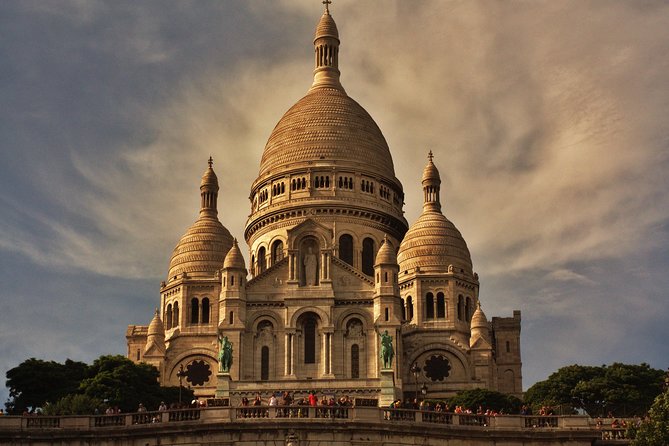
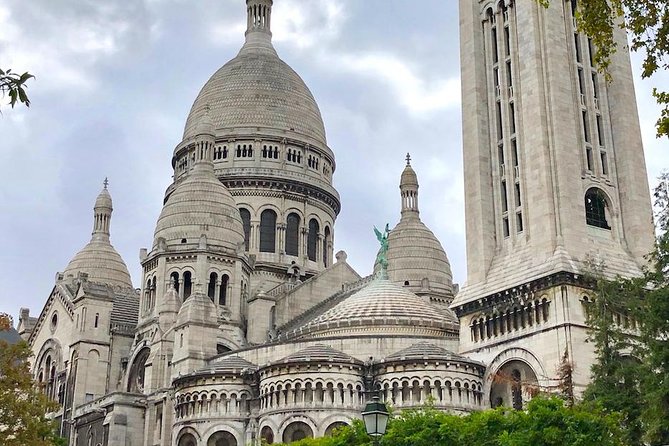
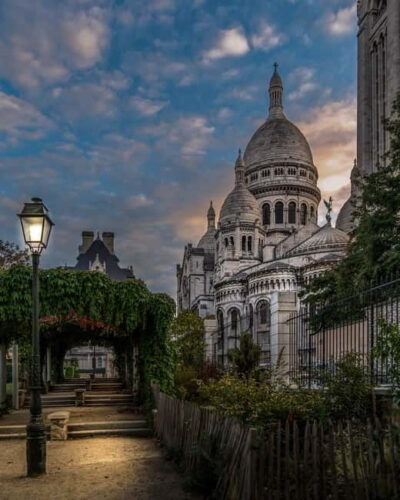
The tour ends with a peep inside Basilique du Sacré-Cœur de Montmartre. You will reach it after passing the 2nd Statue du Chevalier de la Barre, with the final push landing at the basilica area.
Sacré-Cœur is a natural ending point for a Montmartre walk because it gives you an emotional payoff. The audio route moves from quirky love messages to artist studios and cabarets, and then it lands at a landmark that people associate with the top of the hill.
If you have energy, take a few extra minutes before you wrap up. The tour format lets you stop and restart your rhythm. Use that freedom.
Price and value check: why $14.99 can be a good deal
At $14.99, the value comes from three things that matter on a self-guided walk.
First, you get offline access to audio, maps, and geodata. That means you can actually use the tour in the neighborhood, not just in theory. Second, you get lifetime access to the tour in English, so it is not a one-time novelty. Third, it is built for independent pacing. You can spend more time where you care, and less where you do not.
What you should also weigh: you must bring your own smartphone and headphones. And you should be comfortable with hill walking. If you hate stairs, this might feel like work instead of fun.
Finally, the route is structured. That is great for people who want a guided flow, but if you are the type who wants to wander freely without a storyline, you may find yourself wanting to prioritize differently than the fixed sequence.
Should you book this Montmartre self-guided audio tour?
Book it if you want a solo-friendly Montmartre walk with clear GPS help, offline support, and narration that adds meaning to the sights. It is especially a smart choice if you like art connections and you enjoy small stops that explain why a place matters, from Mur des je t’aime to Picasso-linked locations, to Lapin Agile and the windmill.
Skip it or plan carefully if you know you need frequent breaks, because Montmartre is physically demanding. Also, arrive with a fully charged phone, since battery issues can turn an enjoyable walk into stress.
If you want a low-cost way to see more without paying for guided-group time, and you like learning as you walk, this is an easy yes.
FAQ
How long is the Montmartre self-guided audio tour?
It is listed as about 1 to 2 hours.
Where does the tour start and end?
It starts at 22 Rue des Abbesses, 75018 Paris, France, and ends in front of Basilique du Sacré-Cœur de Montmartre at 35 Rue du Chevalier de la Barre, 75018 Paris, France.
What language is the tour available in?
The audio tour is offered in English.
What does the price include?
You get lifetime access to the tour in English, the VoiceMap app for Android and iOS, and offline access to audio, maps, and geodata.
What do I need to bring?
You need your smartphone and headphones. Tickets or entrance fees for attractions along the route are not included.
Is this tour self-paced?
Yes. It is a self-guided walking tour, so you can start and stop as you like.
Does the tour require mobile data?
No. Audio, maps, and geodata are available offline.
When can I do the tour?
The listed hours are Monday through Sunday, 12:00 AM to 11:59 PM, with validity shown from 12/31/2020 to 02/16/2027.
What is the cancellation policy?
Free cancellation is available. You can cancel up to 24 hours in advance for a full refund, but cancellations within 24 hours are not refunded.
More Guided Tours in Paris



More Tours in Paris




More Tour Reviews in Paris






Not for you? Here's more nearby things to do in Paris we have reviewed












Montmartre Tours, side by side.
 ★ 5.0Montmartre Hidden Gems and Scenic Highlights Walking TourTickets from $382,684 guest reviews
 ★ 5.0Montmartre Hill French Gourmet Food and Wine Tasting Walking TourTickets from $1452,588 guest reviews
 ★ 4.8Montmartre Cheese, Wine & Pastry Guided Walking TourTickets from $1272,255 guest reviews
 ★ 4.9Montmartre Highlights Walking Tour with a Local GuideTickets from $341,668 guest reviews
 ★ 4.1Sacré-Coeur and Montmartre Tour with Expert GuideTickets from $281,027 guest reviews
 ★ 5.0Private Montmartre Food Tour with Wine, Cheese & PastriesTickets from $3021,027 guest reviews
 ★ 5.0Paris Montmartre Food Tour – A Full French Meal by Do Eat BetterTickets from $95877 guest reviews
 ★ 5.0Hidden Montmartre: Paris’ Secret Streets Walking TourTickets from $44809 guest reviews
This tour also belongs to