
Review · PARIS CITY TOURS
Medieval Paris Private Tour
Medieval Paris, taught street by street. This private walking tour is interesting because it connects major monuments to the Middle Ages, not just the postcard version. I love the art historian guide who turns architecture into stories, and I love the street-level viewing of key sites, where you learn what to look for on the façade and in the layout. One tradeoff: the plan focuses on commentary from outside at Notre-Dame and Musée de Cluny, so you will not get a full inside visit to every stop.
You walk a compact route through the Île de la Cité area and the Latin Quarter, then keep going toward sights tied to medieval power, pilgrimages, and markets. The tour runs about 2 hours and is designed for a small group, so you can ask questions as you go.
Key things to know
- Art historian leadership: the guide explains medieval Paris through art, architecture, and institutions, not just dates.
- Most stops are outside: you get visual context without paying for entries at Notre-Dame and Musée de Cluny.
- Latin Quarter and Île de la Cité focus: Notre-Dame, Sorbonne, and nearby medieval traces anchor the route.
- Signature medieval stops: Tour Saint-Jacques, the Fountain of the Innocents, and the medieval core behind today’s buildings.
- Flexible Q and A time: private format means you are not stuck with a one-size-fits-all script.
A 2-hour Medieval Paris walk built around stonework you can actually see
This is the kind of medieval tour that helps you look smarter when you are out on the street. Instead of bouncing between multiple long museum stops, the route stays tight and points you to architectural details you might miss on your own. If you like reading a building the way you would read a map, you will get a lot out of it.
The time is also realistic. With roughly two hours on foot, you cover several landmark zones without feeling like you are spending your day traveling between far-off sites. It also keeps the focus on the 1100 to 1500 period, so the Middle Ages feel coherent rather than random.
You can also read our reviews of more private tours in Paris



Private group size and the art historian approach (Amy and Caroline style)
This is a private walking tour, meaning you and your group only. The pricing is per group up to 6, and the tour description also lists a maximum of 10 people per booking, so it is worth confirming the exact group cap on your date. Either way, the main point stays the same: you can ask questions and follow the thread the guide is laying down.
In feedback, two guides stand out: Amy and Caroline. Amy is praised for making the experience both educational and fun, and Caroline gets credit for clarifying misconceptions about medieval Paris. What I like about this setup is the way the guide connects form and function. A Gothic façade is not treated as decoration, and a medieval institution is not reduced to a label.
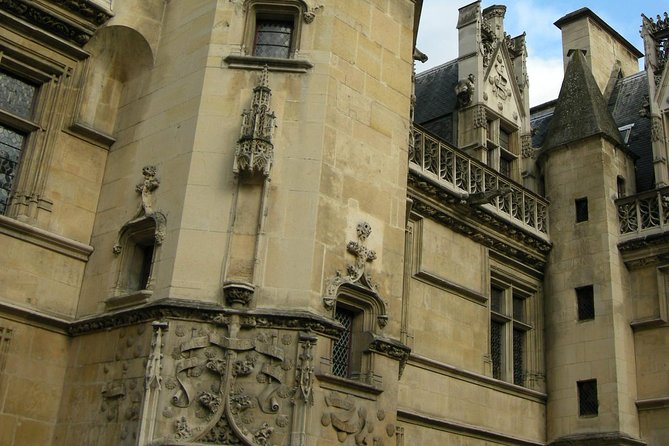
Musée de Cluny exterior: the medieval building lesson you can take without an entry ticket
The first stop is Musée de Cluny, a medieval museum housed in an older building. Here, the tour keeps it practical. You get commentary on how the structure reflects the medieval period in Paris, but you do not visit the museum inside. The time is brief, around 20 minutes.
Why this matters: outside viewing works well when the guide teaches you what to notice. You can learn the building language first, then decide later if you want a separate museum visit. It also means you can stay on schedule and keep the momentum for the bigger stops ahead.
If your dream is one tour that includes multiple interiors, this is the point where you may wish it spent time inside. But if you want context for the stones you will see all day, this stop does its job.
Notre-Dame de Paris from afar: why the Île de la Cité location is the real story
Notre-Dame is the headline, but the tour handles the current reality. Since the cathedral is not accessible for a while due to a fire, you get guided commentary from afar, without entering. Expect about 20 minutes here, focused on the cathedral’s Gothic identity and the site history.
The key connection is the location itself. The guide ties Notre-Dame to the city’s original founding area on the Île de la Cité. Even from outside, that helps you understand why this spot matters. You are not just looking at one era of Paris, you are looking at the layers that later built on earlier foundations.
A consideration: if you were specifically hoping to go inside Notre-Dame, this tour will not fill that gap. The upside is that you still get the medieval meaning without losing time waiting around for an interior that is closed.
La Sorbonne: the medieval University of Paris and what it changed
Next comes La Sorbonne. This stop is shorter, about 10 minutes, and it is built around one idea: a university is a medieval power tool, not just a school building. The tour frames Sorbonne as part of the medieval University of Paris and one of Europe’s oldest colleges.
This is a smart pivot in the route because it broadens medieval Paris beyond churches and monuments. Medieval learning shaped politics, law, religion, and culture. When a guide connects the institution to the way knowledge traveled, you start to see why buildings matter even when they are not as visually dramatic as a tower or façade.
If you enjoy history that explains how systems worked, this stop will land. If you only want grand exteriors, it might feel more like an educational lecture break than a photo stop.





Tour Saint-Jacques: pilgrims, astrologers, alchemists, and flamboyant Gothic form
Then you reach Tour Saint-Jacques, with about 15 minutes devoted to it. This is not treated as a single pretty tower. You learn why the site mattered for pilgrims and also for people tied to astrologers and alchemists of Paris. The guide also points out how it fits flamboyant Gothic style.
This is one of the best stops for turning curiosity into comprehension. Even if you have never studied medieval symbolism, the guide’s framing helps you see how faith, science-like thinking, and civic life intersected. That story gives you a reason to care about every angle of the tower, not just its silhouette.
Practical tip: bring your eyes, not your ticket. Since the time is limited, focus on the details the guide calls out, like decorative Gothic elements and how the structure reads from different viewpoints.
Fountain of the Innocents: medieval life, beautiful and cruel
The Fountain of the Innocents is given about 20 minutes, and it is the kind of stop that changes your mood. The tour positions it as the city’s oldest monumental fountain and uses it to explain how medieval daily life could be both beautiful and incredibly cruel.
That contrast is useful. It keeps medieval Paris from turning into a costume drama. When you pair the visual charm of a fountain with what it represented for ordinary life, you get a sharper sense of the Middle Ages as lived reality.
If you care about social history, this is a highlight. If you mainly want architecture trivia, it is still worth it because the guide connects the fountain to how the city functioned.
Centre Pompidou and Les Halles layers: how modern Paris sits on medieval foundations
Next is Centre Pompidou, about 15 minutes. The tour explains why a modern building made to look like modernity can still be influenced by medieval ideas. It also ties the discussion to Les Halles, once the central marketplace with roots as early as the 12th century.
This is where the route becomes more than a list of sights. You learn to think in layers. The modern city is not just built on top of the past, it is built from decisions made over centuries. The guide helps you connect what you see today to what the city needed back then, like commerce, crowds, and the constant reshaping of public space.
A possible drawback: if you want lots of interior time, this stop will feel like another look and talk moment from the outside. But if you want the big-picture explanation, it is a strong payoff.
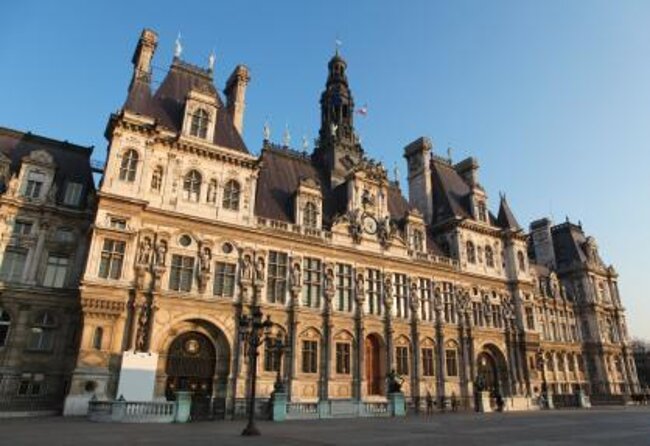
Hotel de Ville: the medieval institution behind the Renaissance façade
The tour wraps with Hotel de Ville, about 15 minutes. The emphasis is clear: do not let the Renaissance façade fool you. The tour frames the site as having medieval roots and describes it as an institution of the greatest importance in medieval Paris.
This is a good final stop because it teaches you how to read contradictions. Paris loves layers. A building can look one way on the outside while holding older meaning underneath. The guide’s approach gives you a lens you can use on your own after the tour ends.
When a tour ends with a lesson like this, you are not just collecting facts. You leave with a method.
Meeting point, walking pace, and how to plan your day
The meeting point is 98 Bd Saint-Germain, 75005 Paris, at the side of the Pompidou museum by the Stravinsky fountain. The tour ends at 26 Rue Saint-Merri, 75004 Paris.
That matters because it can shape your lunch plan and your next stop. Ending near Saint-Merri puts you in a different neighborhood than where you started, so it can be easy to keep walking toward other sights without backtracking.
The tour calls for moderate physical fitness. It is a walking tour, so you should expect steady walking and time spent standing for commentary. It is also set up for children to come with an adult.
Price and value check for a 2-hour private tour
At $360.48 per group up to 6, this works out best when you travel as a small group of friends or family. The value is not that it is cheap. The value is that you get an art historian guide for a focused route in a short time window.
You are also getting a kind of access that is hard to replace on your own: explanations that connect multiple sites across the medieval city. Many self-guided walks turn into photo stops. This one teaches you what to look for and how to connect the dots, especially around Gothic architecture and medieval institutions.
Included is the professional art historian guide. Not included is food and drinks, and there is no hotel pickup or drop-off. So plan on handling your own meals and getting yourself to the meeting point.
One more pricing nuance: your booking is private, but there is a maximum of 10 per booking. If you are booking with a larger party, confirm the group size that your rate covers so expectations are clear.
Who should book this Medieval Paris private tour
This tour fits best if you want medieval Paris with structure. You like architecture, you enjoy understanding how institutions shaped the city, and you are curious about how the Middle Ages explain what you see today.
It is also a good choice if you want flexibility. Because it is private, you can steer follow-up questions. If you love walking, this route is compact enough to feel satisfying.
It may be less ideal if your top priority is interior access to major sites. The plan is designed around free, outside viewing and commentary, including Notre-Dame and Musée de Cluny without entering.
Should you book this tour or mix in your own stops?
Book it if you want a guided lens for medieval Paris and you like learning while you walk. It is especially worth it if you want the story behind Notre-Dame’s site, the role of the medieval University at Sorbonne, and why places like Tour Saint-Jacques and the Fountain of the Innocents mattered in daily life.
Skip or supplement it if you need more museum time. One piece of feedback points out that an ideal version would include entering some sites that the current format keeps as exterior commentary. If that matters to you, consider pairing this tour with a separate museum visit on a different slot.
A small extra tip from the kinds of details your guide may share: Caroline, in feedback, pointed out a square near the end of the Île de la Cité for lunch and even mentioned borrowing pétanque balls from a waiter so you could play in the square. That kind of practical local guidance is the bonus you only get when a guide is invested in how your day works, not just the monuments.
FAQ
How long is the Medieval Paris private tour?
The tour runs about 2 hours.
What is the meeting point and where does the tour end?
It starts at 98 Bd Saint-Germain, 75005 Paris, at the side of the Pompidou museum by the Stravinsky fountain, and it ends at 26 Rue Saint-Merri, 75004 Paris.
Is Musée de Cluny included inside, or is it just viewed from outside?
The tour provides commentary on Musée de Cluny’s building and how it reflects the medieval period, but it does not include visiting the museum inside.
Can I enter Notre-Dame during this tour?
No. Notre-Dame is not accessible for a while due to a fire, so the tour includes commentary from afar without entering.
Does the tour include food or drinks?
Food and drinks are not included.
What language is the tour offered in?
It is offered in English.
Is free cancellation available?
Yes, you can cancel up to 24 hours in advance for a full refund.
More Private Tours in Paris



More Tours in Paris




More Tour Reviews in Paris


Not for you? Here's more nearby things to do in Paris we have reviewed









Paris City Tours, side by side.
 ★ 4.6Louvre Museum Timed-Entrance TicketTickets from $2671,977 guest reviews
 ★ 4.6Disneyland® Paris 1-Day TicketTickets from $6149,412 guest reviews
 ★ 4.6Versailles Palace and Gardens Full Access TicketTickets from $1741,579 guest reviews
 ★ 4.6Arc de Triomphe Rooftop TicketsTickets from $1834,264 guest reviews
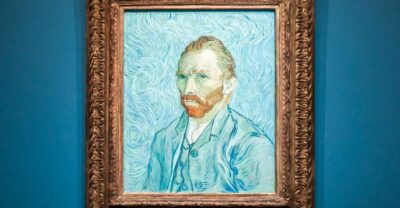 ★ 4.7Orsay Museum Entry TicketTickets from $1525,647 guest reviews
 ★ 4.4Evening River Cruise with MusicTickets from $2722,721 guest reviews
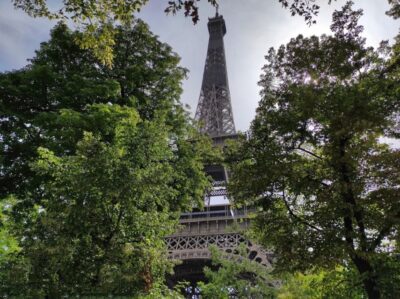 ★ 4.4Eiffel Tower Entry Ticket with Optional Summit AccessTickets from $2920,035 guest reviews
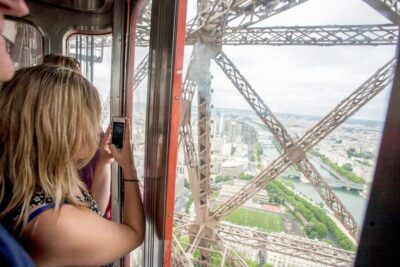 ★ 4.3Eiffel Tower Summit or Second Floor AccessTickets from $5917,248 guest reviews