

Review · LOUVRE MUSEUM TOURS
Louvre masterpieces in 2 hours
Two hours at the Louvre is a sprint with purpose. This tour gives you expert context fast, connecting sculptures and paintings across eras, and it does it with a small group led by Alice, a professional guide and Ecole du Louvre graduate.
My favorite parts are how you get guided meaning behind big hits like the Venus de Milo, and how you also catch related works in the Greek and Renaissance sections that most people miss when they wander on their own. The one drawback to think about: admission tickets to the museum are not included, and there have been some serious past complaints about guide no-shows, so it is smart to verify details before you head in.
Key Things You Should Know Before You Go
- Max 8 people so questions do not get lost and you move at a human pace
- Alice leads the tour, an Ecole du Louvre graduate who explains what you are seeing
- Venus de Milo plus context, you will not just spot it, you will understand why it matters
- Renaissance highlights like the throne hall sculptures and the hall tied to Napoleon and Josephine
- Mobile ticket for the tour, but you still need separate Louvre entry
Two Hours at the Louvre, How Much Is Really Enough?
The Louvre is huge, like, do-not-pretend-you-will-see-it-all huge. What I like about this experience is that it is honest about the format: 2 hours with a guide means you trade total coverage for sharper looking. You leave with a story, not just a camera roll.
You also get a group capped at eight, which changes the feel right away. You can actually stop, listen, and ask a question without the guide shouting into the crowd. That is the kind of comfort that helps you pay attention instead of trying to survive the logistics.
One more practical thing: your timing matters here. With only two hours, you will want to arrive ready to go, because the tour focuses on key zones rather than covering every wing.
More Paris tours and experiences for the shortlist


Meeting at Carrousel du Louvre, Then Getting Oriented Fast
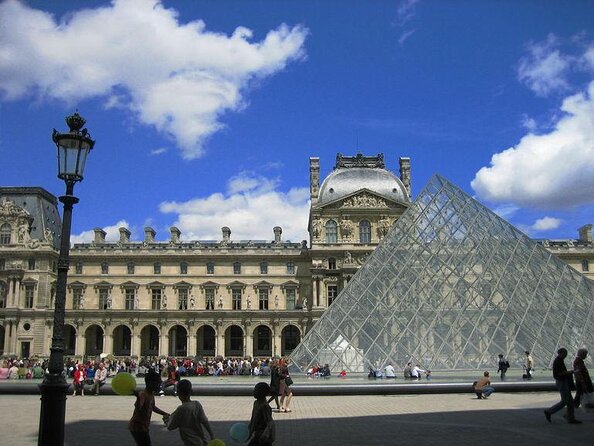
The tour starts near the Carrousel du Louvre area at 99 Rue de Rivoli, 75001 Paris. The walk-in energy around the Louvre can be chaotic, so I suggest you aim to arrive a bit early, even if you do not think you will need it. Once you are late, it is harder to reset your mindset and get settled.
The tour uses a mobile ticket, so have it ready on your phone. You will also want your own Louvre entry sorted because museum admission is not included. That is a big deal for value: the guide experience is priced separately from getting into the building.
At the end, the visit finishes at the museum area, giving you the option to continue on your own. That is a smart add-on, because once the guide has helped you decode the museum’s logic, you can keep exploring the parts that caught your attention.
What You Will Learn at the Louvre, Not Just What You Will See
This is not a generic highlights walk. Alice’s style is built around explaining why art looks the way it does, how artists and patrons thought, and what themes link different galleries. That matters because the Louvre can feel like a blur of masterpieces if you do not get a mental framework.
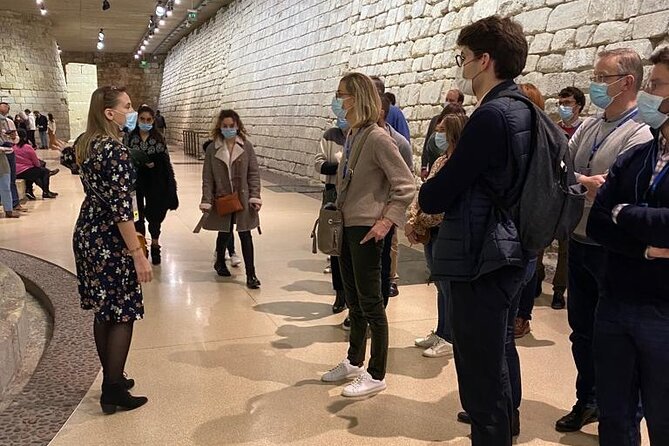
For example, the tour starts with the Louvre itself as a clue. You begin by looking at the ancient walls tied to the Louvre’s earlier identity as a 13th-century warrior castle. That framing helps you understand something important: this building is not just a museum container, it is part of the story.
Then the tour moves into the Greek portion, where you get guidance about the attributes of Greek sculpture and how to read them. You will not just view objects, you will learn what details to notice and why.
Greek Sculptures and the Venus de Milo: How the Tour Frames a Masterpiece
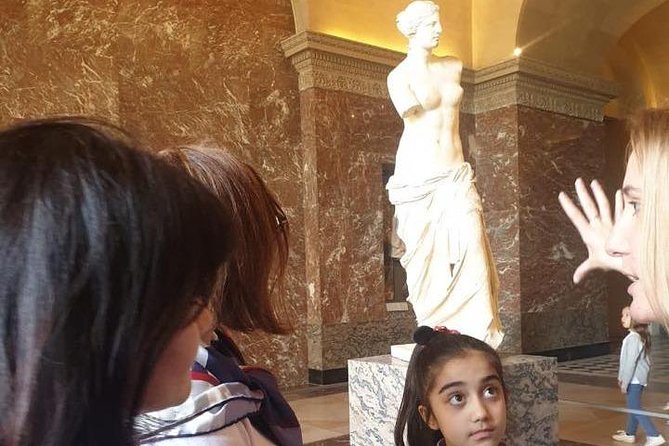
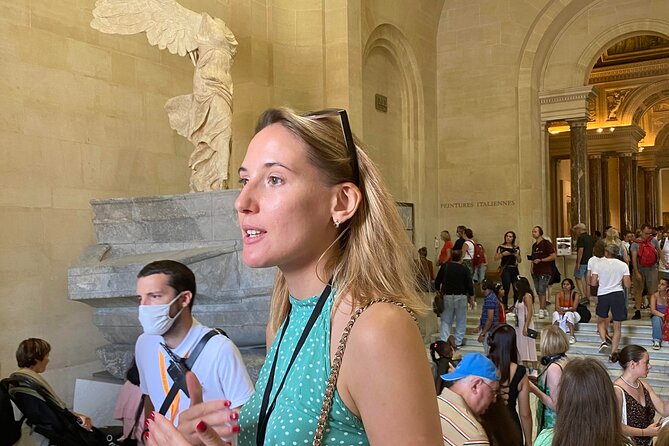
One of the biggest reasons to choose a guided format is that the Venus de Milo can look like an iconic statue to you, even if you do not know how to interpret the signals. In this tour, you spend time in the Greek section and get commentary that helps you place it within a broader set of ideas about form and representation.
You will also hear why certain features and conventions mattered in Greek sculpture. That is useful, because once you know what to look for, you start noticing patterns across other statues and reliefs in the same area.
This is where the small group pays off. With only a handful of people, you can pause at the statue, listen to the guide’s explanation, and actually take in the work instead of rushing your viewing.
A quick consideration: if you are the type who wants to fully linger for 30 to 40 minutes in one spot, two hours can feel fast. But if you want momentum and context, this is a great fit.
The Renaissance Throne Hall Moment, Caryatids and Three Graces
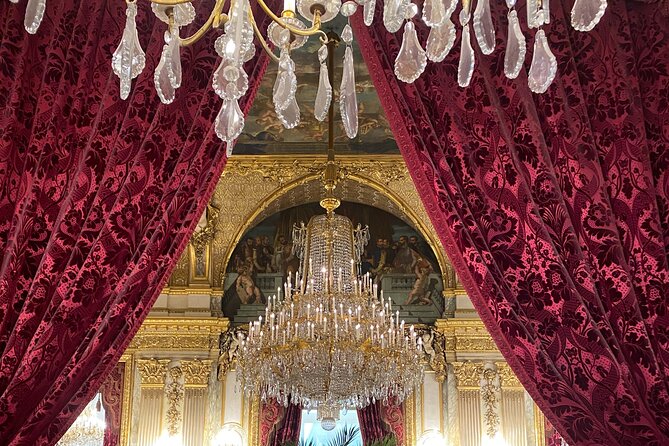
After the Greek section, the tour takes you to one of the early Renaissance throne halls. This is where the Louvre shifts from ancient ideals into power, display, and court culture.
You will see sculptures connected to the throne-hall setting, including the Caryatids and the Three Graces, plus other sculptures the tour highlights. You will also get explanations that connect these classic models back to much earlier sources around 500 B.C. That cross-time link helps you see Renaissance work as more than a copy, it is a re-use of symbols with new meaning.
One thing I like here is that Renaissance art often gets simplified into names on a museum label. This tour pushes past that by pointing out the function of these sculptures in the space. It becomes easier to imagine the room as a stage, not just a room full of art.
If you love architecture and how galleries shape the experience, you will probably enjoy this segment more than you expect.






Napoleon and Josephine: A Painting Stop That Feels Like a Scene
The painting portion of the tour includes time in the Renaissance painting areas, with a standout stop in the hall where Napoleon celebrated his marriage to Josephine. Even if you are not a deep-dive historical buff, that kind of location context can change how you look at paintings.
What you gain is a sense of scale, not only in size of works but in political gravity. You start connecting who lived here, who used these spaces, and how art and power were braided together.
This also helps with museum fatigue. After sculpture and ornate stonework, the move to painting gives your eyes a new job. Instead of your brain trying to process “cool statue, next,” you are now processing compositions, themes, and style with guidance.
Again, two hours is brief, so you will not see every painting you might dream about. But you will see enough key items to get oriented, and that sets you up to follow your own interests after the tour ends.
Grande Galerie and Italian Painting: Leaving With a Mental Map
The tour continues into the Grande Galerie for Italian painting. This is a smart choice because Italian painting is central to the Louvre’s identity, and it is easy to feel lost without a sense of the gallery’s rhythm.
By the time you reach this section, you should feel less like you are moving through rooms at random. You will have learned how the guide is connecting themes from one era to another, so the paintings become part of the same larger story rather than isolated masterpieces.
I also like that you end with an area where you can keep exploring. Once you have had a guide point out what matters, you can choose which Italian painters or rooms to revisit with better focus.
Price and Value: Is $174.53 a Good Deal?
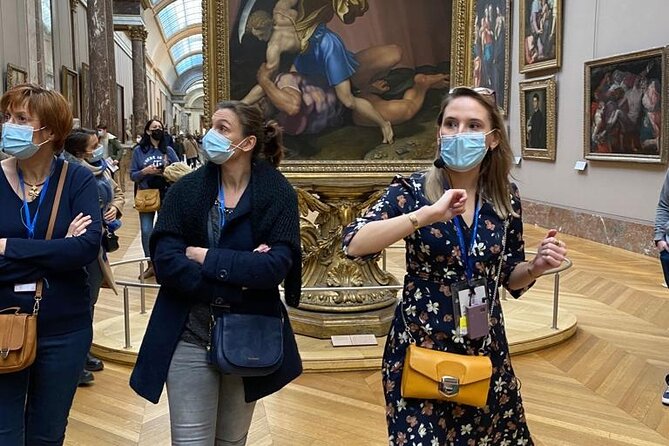
At $174.53 per person for a two-hour small-group guided experience, you are paying for two things: a professional guide and a tight itinerary. You are not paying for the Louvre admission itself, since entry tickets are not included.
So the value question is simple. If you already have a Louvre entry sorted and you want an efficient path through the museum with context, this price can make sense. The capped group size, and Alice’s Ecole du Louvre background, help justify the cost because you are paying for focused attention, not just motion.
If you are on a shoestring and planning to self-tour, you will likely feel the price immediately. The Louvre has plenty of signage, and you can build your own route. But you will lose the benefit of an expert explaining how to read specific works, especially around sculpture conventions and Renaissance themes.
Booking timing matters too. This tour is often booked about 70 days in advance on average, which suggests there is steady demand. If you have your heart set on a particular date, it pays to book earlier rather than hoping.
Language Options and Why They Matter Inside the Galleries
The tour is available in English, French, and Russian. Language matters more than people expect in a museum. When you can follow the guide’s phrasing, you catch the logic of the explanations, not just the surface facts.
That is especially true when the guide is walking you through the meaning of sculpture attributes or why certain works show up in key halls. If you understand the guide, you will notice more yourself after the tour.
The Real Tradeoffs: Tickets, Time Pressure, and No-Show Concerns
Here is the honest part. Museum admission is not included. If you wait too long to buy tickets, you can end up stressed, and stress is the enemy of enjoying the Louvre. Plan your entry ahead so you are not trying to solve ticket problems at the last minute.
Also, while many people emphasize how friendly and engaging Alice is, there have been some serious complaints in the past about a guide not showing up. I cannot tell you how likely that is for your date, but it is enough of a warning sign that I would verify your booking details and keep an eye on the day-of instructions.
If you hate uncertainty, choose a travel style that gives you buffer time. Arrive early, confirm the meeting point, and be ready to adjust if anything seems off.
Who This Tour Is Best For
This experience fits you if you want:
- a guided path through the Louvre without drowning in options
- a guide who connects sculpture and painting to the spaces they live in
- a small group setting where you can actually listen
It might not be ideal if you want to spend long stretches just wandering freely, with no sense of route. Two hours is short, and the tour focuses on the highlights plus a few supporting works, not every masterpiece in the building.
Should You Book This Louvre Masterpieces in 2 Hours Tour?
I think you should book if your goal is clarity and context. You are paying for Alice’s guidance, and the route makes sense: Louvre building history first, then Greek sculpture reading, then Renaissance throne-hall drama, plus Renaissance painting connected to major historical moments, ending with Italian painting in the Grande Galerie.
I would hesitate only if you are extremely ticket-dependent or allergic to risk. Since admission is not included and there have been past no-show type complaints, your best move is to book confidently, confirm details, and show up early.
If you do that, you will likely leave with the Louvre feeling less like a giant maze and more like a place with a readable storyline.
FAQ
How long is the Louvre masterpieces in 2 hours tour?
The tour lasts about 2 hours.
Is Louvre museum admission included in the price?
No. Admission tickets to the museum are not included. Children under 18 do not need entrance tickets.
How many people are in the group?
The group is capped at a maximum of 8 travelers.
What languages are available?
Tours are available in English, French, and Russian.
Where do I meet the guide?
The meeting point is Carrousel du Louvre, 99 Rue de Rivoli, 75001 Paris, France.
Where does the tour end?
The tour ends at the Musée du Louvre area, 75001 Paris. You can continue exploring after the guided part.
Do I get a mobile ticket?
Yes. The tour includes a mobile ticket.
When will I receive confirmation after booking?
Confirmation is received within 48 hours of booking, subject to availability.
What is the cancellation policy?
You can cancel for a full refund up to 24 hours before the experience starts. If you cancel less than 24 hours before, the amount paid is not refunded.
More 2-Hour Experiences in Paris



More Tour Reviews in Paris



Not for you? Here's more nearby things to do in Paris we have reviewed












Louvre Museum Tours, side by side.
 ★ 4.6Louvre Museum Timed-Entrance TicketTickets from $2671,977 guest reviews
 ★ 4.3Louvre Guided Tour with Reserved Access & Boat CruiseTickets from $8116,353 guest reviews
 ★ 4.5Louvre Museum Masterpieces Guided Tour with AccessTickets from $8612,023 guest reviews
 ★ 4.6Louvre Museum Entry Ticket With Host and River CruiseTickets from $1009,926 guest reviews
 ★ 4.1Priority Access Louvre with Host -Direct to Mona LisaTickets from $748,387 guest reviews
 ★ 4.6Mona Lisa & Louvre Masterpieces Tour with Reserved AccessTickets from $806,812 guest reviews
 ★ 5.0Louvre Museum – Exclusive Guided Tour (Entry Included)Tickets from $1816,296 guest reviews
 ★ 4.0Louvre Reserved Ticket and River Cruise ComboTickets from $376,054 guest reviews
This tour also belongs to