
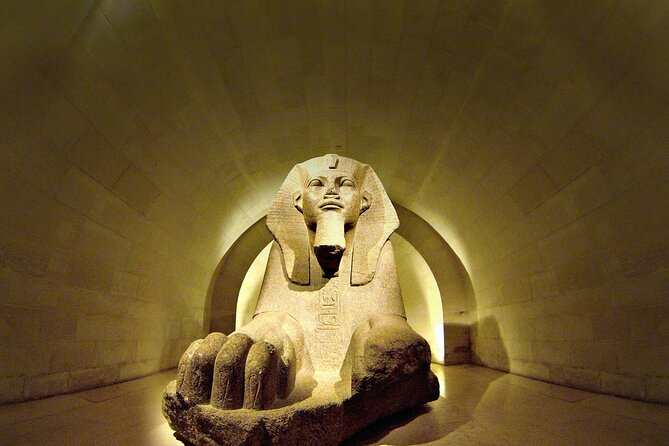
Review · LOUVRE MUSEUM TOURS
Louvre Museum Small-Group English Guided Tour
The Louvre, minus the head-spinning chaos. This small-group Louvre tour makes the biggest museum in Paris feel doable, with priority entry and an expert guide to point out the stories behind Mona Lisa, Venus de Milo, and Nike of Samothrace. I like that you get a focused, high-impact route instead of wandering lost in the crowds. I also like the group stays tiny, capped at six, so questions are welcome. One thing to keep in mind, the guided portion is about two hours, so you will still want extra time after the tour if you love to linger.
You’ll meet at 6 Rue de l’Amiral de Coligny in the 1st arrondissement, then head into the Louvre with your pre-booked, day-valid ticket. The guide works in French, English, and Spanish, and at $99.11 per person you’re paying for speed, context, and a real plan, not just entry.
Key Takeaways Before You Go

- Priority access with pre-booked tickets helps you get in with less waiting than casual entry.
- Mona Lisa, Venus de Milo, and Nike of Samothrace are built into the highlights route.
- Up to 6 people keeps pacing manageable and makes it easier to ask questions.
- Multilingual guidance is available in French, English, and Spanish.
- Guided then free time: your Louvre ticket works for the rest of the day.
- Meeting point is near, not inside the Louvre at 6 Rue de l’Amiral de Coligny.
Two Hours in the Louvre, with the Right Plan
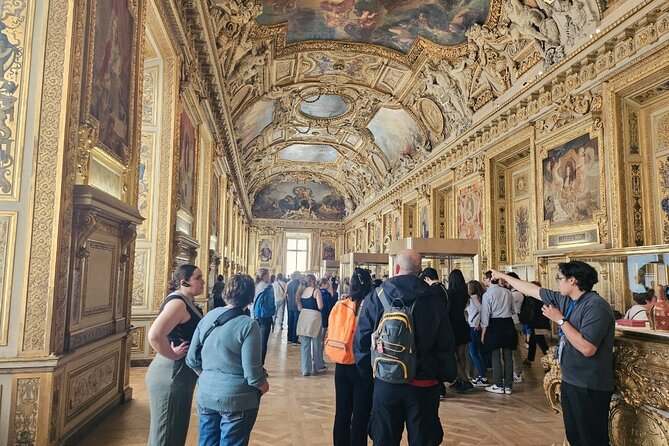
The Louvre is one of those places where the problem is not a lack of art, it’s too much art. This tour tackles that head-on. In about two hours, you get a guided route built around the pieces most visitors dream about, plus the background that turns a quick glance into an actual understanding of what you’re seeing.
The two big wins for me are the structure and the size. Priority access means you spend your energy on masterpieces, not endurance standing around. And a group of six is small enough that you do not disappear into a human river. You can hear what the guide says, you can pivot when something grabs your attention, and the tour does not feel like a race.
Is there a catch? Yes. Two hours is a concentrated hit, not a full Louvre education. You’ll likely finish near the highlights and then realize you could easily spend the rest of the day in just one wing. The tour ends with time to continue on your own, which solves that, as long as you plan your schedule to actually use the extra hours.
You can also read our reviews of more guided tours in Paris



Where You Meet at 6 Rue de l’Amiral de Coligny (and Why It Matters)
Most first-timers aim for the main Louvre entrances. That’s a mistake with this kind of tour. Your starting point is at 6 Rue de l’Amiral de Coligny, 75001 Paris, and that is where you should plan to connect with your guide.
In one experience, the guide meeting point being just a few meters away was a real benefit, since the Louvre area can be chaotic right at the entry lanes. In contrast, there’s also a cautionary note: if you assume the guide will appear inside the museum doors, it can slow you down. So treat the meeting address as the anchor. Give yourself a few extra minutes, especially if you’re arriving by foot and need to orient yourself.
Once you’ve met up, you’re set for the priority entry process, and that early rhythm matters. When the group moves together, you lose less time to confusion and you start seeing art sooner.
Priority Access: Fast Entry Without Losing the Human Part
Priority access sounds like marketing until you feel it. The point here is simple: you have pre-booked entry, and your guide helps you use that advantage. The reward is less waiting at the busiest points, which is huge at the Louvre.
But the real value is not only time saved. It’s what you gain with that time. When you don’t burn the first hour in a queue, you can actually spend your energy learning. And a good guide makes that learning practical. Instead of generic statements, you get stories that explain why certain works matter and how to look at them with more than a tourist glance.
One detail I really appreciate is that the tour is designed to move efficiently through the museum’s crowd flow. Even with the Louvre being crowded, the group size helps you follow the route without feeling like you’re herded into a bottleneck.
The Highlights Route: Mona Lisa, Venus de Milo, and Nike
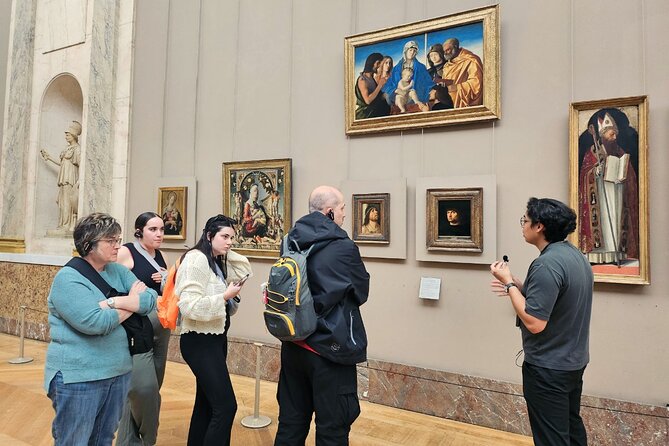
The Louvre highlights are not random. They are popular for a reason. This tour places you where you can appreciate these iconic works in a relatively efficient order, with a guide who ties the art to its backstory.
Mona Lisa: More Than a Name on a Checklist
The Mona Lisa is so famous it can become invisible. The guide’s job is to make her visible again by giving context. In one guided experience, the tour concluded at the entrance to the Mona Lisa room, which is a smart way to end: you arrive with context and then you can take your time at the end, when the initial route pressure is gone.
Practical tip: if you want a calmer look, plan to linger a bit after the guide steps away. The tour gives you the structure. Your extra time gives you the pace.
You can also read our reviews of more museum experiences in Paris






Venus de Milo: The Power of Form in a Busy Room
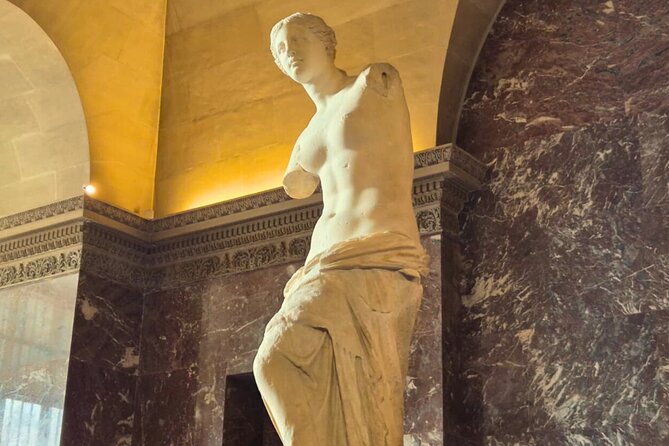
Venus de Milo is often framed as a single object. A good guide helps you notice details tied to form and history, so you can move beyond the postcard version. In a short tour window, this is exactly where guided explanation pays off, because you will not have the hours needed for deep research. You will, however, understand what you are looking at.
Nike of Samothrace: Seeing Drama in Stone
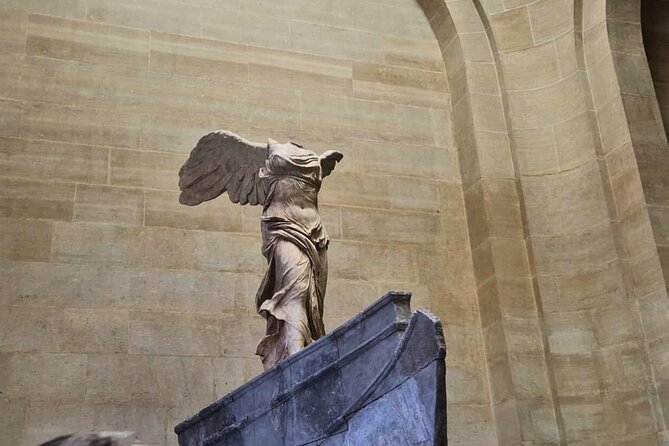
Nike of Samothrace is a masterclass in motion. Even in a crowd, the guide’s storytelling approach helps you see why that sense of action works. If you’ve ever looked at a famous sculpture and felt underwhelmed, this is often the fix: someone explains what to look for, and suddenly your brain stops scanning for the obvious and starts reading the details.
How the Tour Fits Inside One Stop: The Louvre Museum
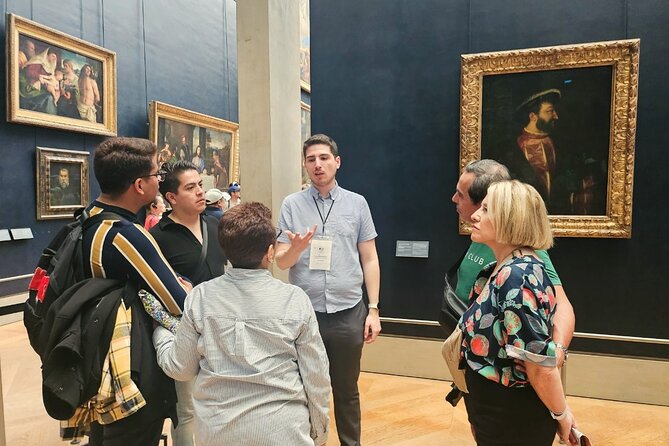
This tour is focused: you spend the whole guided portion inside the Louvre Museum. That keeps things simple, and it’s good for first-timers with limited time.
Here’s what to expect during the guided visit:
- A guided walk focused on the biggest masterpieces.
- Explanations that connect the works to history and art stories.
- A route that’s designed to help you manage the museum’s crowds.
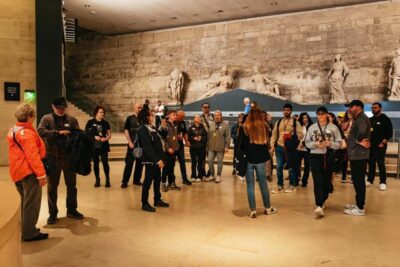
One specific example from a guide experience: at the start, the guide helped with practicalities like where to stow coats and bags, then led a route through areas such as the antiquities and medieval wings. The details of which rooms you pass through can vary by route planning, but the overall goal stays the same: get you to the works you came for without turning the day into a logistics puzzle.
After the guided portion, you get free time to stroll the museum. And because your Louvre entrance ticket is valid for the day, you can come back to sections you care about most.
Small Group Energy: The Difference Between Watching and Understanding
Crammed tours have one common problem: you end up standing still while someone else walks ahead. A group of six changes that dynamic.
With a smaller group, I expect three things you can actually feel:
- Easier pacing. You are not just dragged from one stop to the next.
- More human interaction. It’s simpler to ask a question when you are not shouting over 40 people.
- Better navigation. The guide can adjust when people pause, not only when the schedule allows.
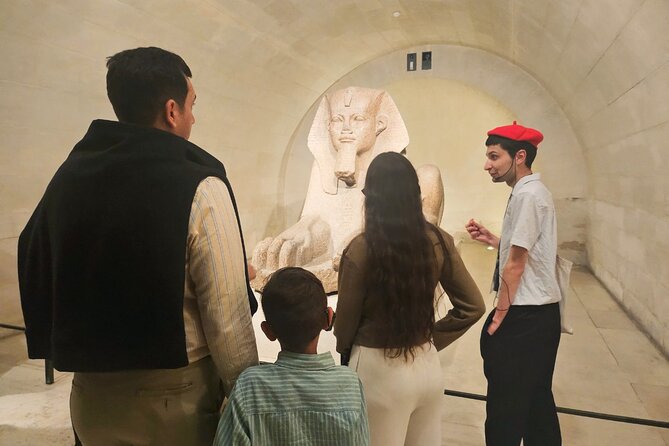
This is also why families tend to like this style of tour. In one experience, the guide tailored explanations to an 11-year-old and two adults. Even if your group is adults only, the best guided museum tours adapt to different attention spans and question styles.
Price and Value: What $99.11 Buys You (and When It’s Worth It)
At $99.11 per person for a roughly two-hour tour, the price is not only the ticket. You’re paying for:
- Priority access using pre-booked tickets
- A professional guide operating in French, English, or Spanish
- A guided route that highlights major works
- A smoother, less stressful start to your Louvre day
Is it worth it? Often, yes, if you are trying to make the most of limited time. The Louvre can be overwhelming even for people who love museums. The guide helps you convert a visit from hours of aimless wandering into a focused experience.
When it might not be worth it:
- If you already know exactly where you want to go and you love self-guided wandering, you may prefer a DIY plan.
- If you want to spend many hours in one wing studying details, a two-hour highlights tour will feel short.
A nice clue for planning: the tour is commonly booked about 44 days in advance. That’s usually a sign that you should lock in your slot early, especially if you want morning timing.
What to Do After the Tour So You Don’t Feel Rushed
The tour ends with time to continue exploring, and your ticket is valid for the day. That’s your chance to turn the highlights tour into a personal museum day.
Here are smart ways to use that free time, without guessing too much:
- Revisit the stop that grabbed you most during the guided portion. If Mona Lisa hooked you, give that room extra time.
- Spend time in adjacent areas of the museum where your guide’s context helped you notice connections. For example, if you got stories about different periods, look for nearby works from the same era.
- If you still have energy, use your free time to chase the art you care about most, not what you feel you missed.
One of the best things about this format is that you get a plan first, then freedom. You’re not forced to keep pace with the group forever.
What Could Go Wrong (and How to Handle It)
Even with a well-run small-group tour, a few real-life factors can affect your experience.
First, guide style can vary. In one account, the guide leaned heavily on a planned route and did not feel especially engaging. The information may still be accurate and helpful, but if you want a very animated performance, you should keep expectations flexible.
Second, a two-hour route cannot cover everything. If you were specifically hoping to hit niche exhibits or a particular temporary show, a highlights-first plan may not match your priorities. The best workaround is simple: do your long, deep browsing after the tour using your day ticket.
Finally, your meeting point matters. If you show up at the main Louvre entrance but your guide is at 6 Rue de l’Amiral de Coligny, you can lose time. Use the meeting address, not the instinct to go straight to the biggest door.
Who This Tour Suits Best
This is a strong fit if you:
- Want priority access and a smoother entry at the Louvre
- Are visiting for the first time and want the iconic works without a scavenger hunt
- Prefer a small group where you can ask questions
- Have limited time in Paris and need a smart use of it
- Travel with kids and want explanations that can adapt to shorter attention spans
It’s less ideal if you:
- Plan to spend most of your trip studying one museum wing for hours on end
- Want a fully self-directed route with no guide structure
- Need a flexible or refundable plan if schedules change
Should You Book This Louvre Small-Group English Guided Tour?
If your goal is to see the Louvre’s biggest masterpieces with context, in a format that respects your time, I’d book this tour. The combination of priority access, a tight group size of six, and a guided highlights route is exactly what helps the Louvre feel manageable.
I would book it especially if you like the idea of getting the museum’s main stories first, then using your day ticket to wander on your own. And because the average booking lead time is about 44 days, it’s smart to reserve early rather than gamble on last-minute availability.
FAQ
How long is the guided tour?
The Louvre guided portion is about 2 hours.
Does my Louvre ticket let me stay after the tour?
Yes. Your entrance ticket to the Louvre is valid for the day, so you can continue exploring after the guided visit.
Where do I meet the guide?
The start point is 6 Rue de l’Amiral de Coligny, 75001 Paris, France.
What is the group size limit?
The tour is limited to a maximum of 6 people per booking.
What languages does the guide speak?
The guide is described as multilingual, with French, English, and Spanish.
Can I get a refund if I cancel?
This experience is non-refundable and cannot be changed for any reason. If it is canceled because the minimum number of travelers is not met, you’ll be offered a different date or a full refund.
If you want, tell me your travel dates and whether you’re going in the morning or afternoon, and I’ll suggest a simple plan for pairing this with the rest of your Louvre day.
More Guided Tours in Paris



More Tours in Paris




More Tour Reviews in Paris




Not for you? Here's more nearby things to do in Paris we have reviewed












Louvre Museum Tours, side by side.
 ★ 4.6Louvre Museum Timed-Entrance TicketTickets from $2671,977 guest reviews
 ★ 4.3Louvre Guided Tour with Reserved Access & Boat CruiseTickets from $8116,353 guest reviews
 ★ 4.5Louvre Museum Masterpieces Guided Tour with AccessTickets from $8612,023 guest reviews
 ★ 4.6Louvre Museum Entry Ticket With Host and River CruiseTickets from $1009,926 guest reviews
 ★ 4.1Priority Access Louvre with Host -Direct to Mona LisaTickets from $748,387 guest reviews
 ★ 4.6Mona Lisa & Louvre Masterpieces Tour with Reserved AccessTickets from $806,812 guest reviews
 ★ 5.0Louvre Museum – Exclusive Guided Tour (Entry Included)Tickets from $1816,296 guest reviews
 ★ 4.0Louvre Reserved Ticket and River Cruise ComboTickets from $376,054 guest reviews
This tour also belongs to