
Review · PARIS CITY TOURS
Harlem in Paris : the Birth of Jazz in France (Small Group Walking Tour)
Jazz history lands right on the sidewalk. This small-group tour follows the footsteps of Black performers who helped shape Paris jazz, using real addresses in Pigalle to turn names like Josephine Baker into something you can picture.
I like how the stories connect Pigalle to Harlem-era careers, including music, nightlife, and even wartime history.
I especially like two things. First, I love the guided intro with photos, videos, and audio, presented in a tablet style way by Ellen before you head out. Second, I love the stop-by-stop focus on specific locations tied to major figures, so the walk feels like a trail, not a general lecture.
One consideration: it is not a long all-outdoor hike. You spend a meaningful chunk of time seated at the start, so if you want maximum street time, plan for a shorter walking portion.
Key Highlights to Expect in Pigalle
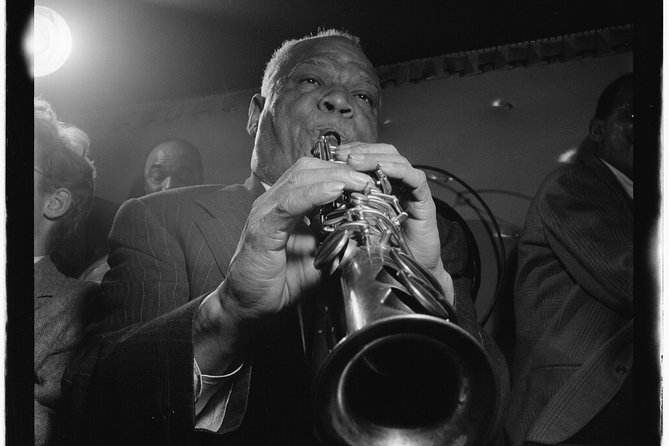
- Ellen’s storytelling with A/V uses music, photos, and videos to set the scene before the walk starts
- Real street addresses connected to Chez Josephine, Zelli’s, and other club sites that shaped early Paris jazz
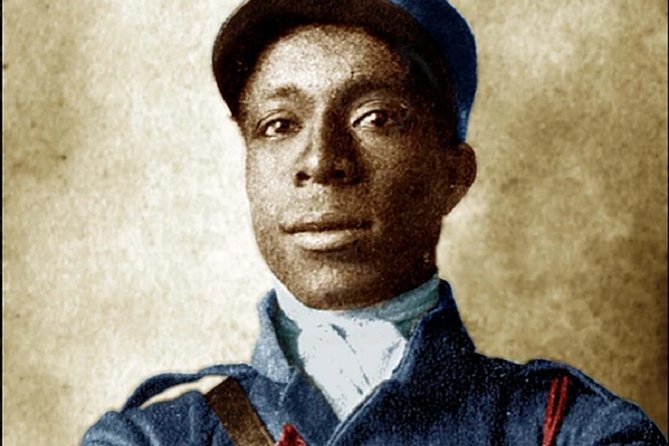
- Big names, plus lesser-known pioneers like Eugene Jacques Bullard and Valaida Snow
- Short, manageable walking route around 2 km, with a pace that works for many people
- A mix of joy and loss as some venues are now closed, including one linked to Covid
- Jazz legends tied to everyday details like Armstrong’s choucroute stop and the neighborhood’s nightlife rhythm
Entering the Harlem to Paris Jazz Story in One Easy Sweep
This tour is built around a simple idea: Paris jazz did not happen in a vacuum. It grew through people who traveled, performed, invested, and fought for a place in the spotlight. In Pigalle, the stories sit literally on street corners, which makes the whole theme feel grounded.
You start with a guided “how we got here” portion. Then you walk a short route with multiple stops where the guide connects history to what you can still see today. Many venues have changed or disappeared, so part of the magic is using the guide’s materials to help you imagine what the nightlife looked like in the 1920s and 1930s.
The tone is upbeat but honest. You will hear triumph, star power, and cultural impact, alongside reminders that some clubs closed for reasons that include the modern world. It is a tour for people who enjoy stories that move fast, names that matter, and music that you can almost hear even when you are standing still.
You can also read our reviews of more walking tours in Paris



How the Tour Works, Time, and What Your Money Buys
The experience runs about 2 hours 30 minutes. The price is $107.84 per person, and it is offered in English. It is also a private tour in the sense that only your group participates, even though it is described as a small-group walking tour.
Here is where the value comes from. You are paying for more than directions around Pigalle. You are paying for a prepared narrative built around original music, photos, and video clips, plus a guided link between famous figures and the exact addresses you pass. Multiple stops are focused on major careers, and each one adds context rather than repeating the same lesson in a new place.
Also, the tour includes admission tickets listed as free for the stops. That matters because it keeps the experience from turning into a series of paid museum line items. Food and beverages are not included, so you will want to think of this as history and music first, and dining as a separate plan.
Starting at Artemisia Montmartre, Then Getting in the Story
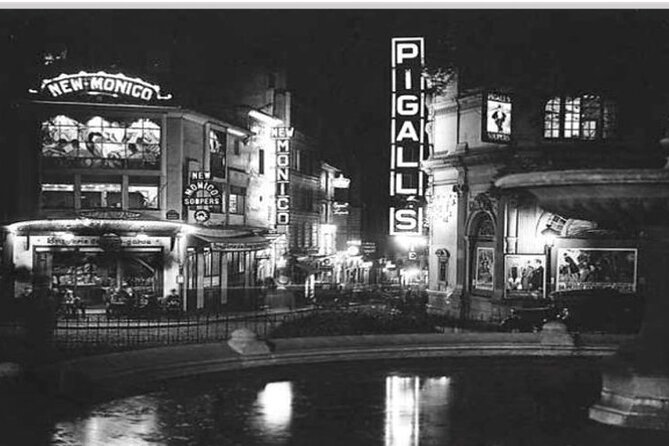
Your meeting point is Artemisia Montmartre, 11 Rue Fromentin, 75009 Paris. The tour starts at 2:00 pm. The walk ends at Place Pigalle, Pl. Pigalle, Paris.
I like the way the tour begins. You do not just start walking and hope everyone catches up. You get a sit-down intro with audio and visual support on a tablet style setup. In plain terms, it helps you understand who the guide is talking about before you hit the streets. It also keeps the group engaged, including families. One review noted the route worked well even with a stroller, which is a helpful clue if you are traveling with kids.
Dress for walking. It is a walking tour with multiple short stops. It also requires good weather, so if rain is in the forecast, check the day of. Even if the weather is fine, bring comfortable shoes. Pigalle sidewalks can be a mix of smooth and uneven in short stretches.
Place Blanche and Chez Josephine: Josephine Baker’s Paris Breakthrough
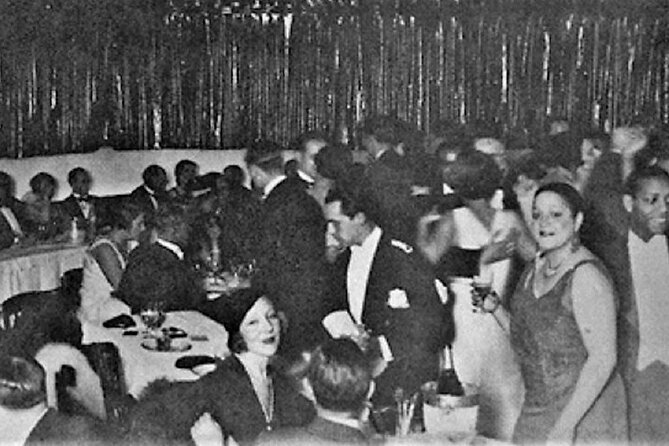
The tour begins shaping the story at Place Blanche, near where Josephine Baker’s club, Chez Josephine, was located. This is one of the stops that gives you the tour’s emotional core: Baker was not just a performer who visited Paris. She became part of French life and lived in the area from 1925 until her death in 1975.
You will hear how she arrived in France in 1925 as a dancer for the NY Syncopated Orchestra, alongside the young clarinet player Sidney Bechet. The guide connects that arrival to the audacious Revue Negre, commissioned by the Theatre des Champs Elysées. It was a show with a large cast, and Baker, at just 18, became an instant star. The details matter here. The guide does not treat Baker as a vague legend. You get the sense of how the performance grabbed attention, shocked expectations, and then turned into icon status.
What I like most about standing in this area is that the guide ties celebrity to place. You are not just learning a biography. You are learning why this neighborhood mattered to her rise and to the larger Black performance scene in France.
Tip for your mindset: when you see the street now, remember the guide is asking you to picture the club energy that used to fill it.
Rue Mansart: Armstrong’s Rehearsal Routine and the Choucroute Detail
Next is Rue Mansart, where the tour points you toward a bistro Louis Armstrong would have dined at after rehearsals nearby. That simple detail is one reason this stop lands. You get Armstrong as a working musician with a schedule, not just a name on a poster.
The guide also connects this stop to two big musical links. You will hear that Armstrong discovered choucroute here, and that he also met Django Reinhardt, described as a local Gypsy Jazz musician. Those two connections make the neighborhood feel like a crossroads where people from different musical worlds overlapped in everyday life.
This is the kind of stop that gives you something you can talk about later. If someone asks what you learned in Pigalle, you can mention Armstrong, choucroute, and Reinhardt all in one breath. That is not typical tourist trivia. It is the kind of street-level detail that makes a walking tour worth your time.
One practical note: this stop is short, like the others. Do not expect a deep interior visit. Think of it as a guided exterior moment where the story does the heavy lifting.






Rue Pierre-Fontaine and Zelli’s: Eugene Jacques Bullard’s Club to Fighter-Pilot Path
At Rue Pierre-Fontaine, the tour shifts to Zelli’s, a mythical Parisian cabaret from the 1920s. The guide frames it as one of the most popular clubs in the city because of avant garde jazz.
Then the story moves to Eugene Jacques Bullard, introduced as the son of a freed slave from Martinique. The guide emphasizes his place in history as the first African American fighter pilot. The tour gives you concrete milestones: he flew 30 missions and downed 2 German planes, earning a promotion to corporal and the nickname Black Jacques.
After his military career, the guide connects the dots again, from combat to music. Bullard learned drums and later worked as a musician at Zelli’s, rising to manager. With backing from Joe Zelli, he opened his own night club, the Grand Duc, where he offered a mix of hot jazz and soul food.
This stop is valuable for one clear reason: it expands your sense of what “Black jazz history” can include. It is not only about performance. It is also about how people built institutions, shaped scenes, and carried experiences from other worlds into Paris nightlife.
If you only know the famous bandleaders, this is the stop that broadens your mental map.
Back at Place Blanche: Bricktop and Valaida Snow’s Big-Stage Impact
The tour returns to Place Blanche for the Jazz Ladies portion, and this is where you get a parade of names that deserve to be heard. One highlight is Bricktop, described as Queen of Pigalle. The guide shares her origin story, arriving in Paris with $24 in her pocket, then becoming a social and entertainment figure who rubbed shoulders with royalty and celebrities.
Then you move to Valaida Snow. The guide calls her the second best trumpet player in the world, quoting Louis Armstrong. Snow’s talent is presented as wide and physical, not just musical. She played 8 different instruments, sang, danced, and charmed audiences across Europe in the 1930s.
The tour does not skip the hard part of her story. In 1940, while playing in Denmark, she was arrested by the Nazis. She was later saved in a prisoner exchange, returned to the US, and the guide explains that she came back broken, then gradually rebuilt her career. The ending here is important: even after such a traumatic rupture, she returned to jazz and kept moving forward.
Why this section works: the guide treats these women as full human beings, with careers, risks, and reinventions. You will leave with more than admiration. You will leave with a sense of how fame worked in that era and how the scene made space for exceptional talent.
Rue Victor Massé: Alberta Hunter, the Club That Closed, and the Comeback
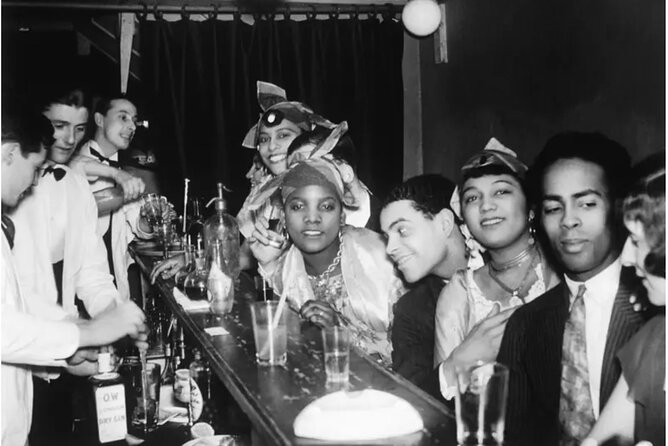
Rue Victor Massé is where the tour includes a bittersweet note. The club here is described as closed, a victim of Covid. The guide points out that the building may not function as a nightlife hub anymore, which you have to accept on a tour like this.
But the story does not stop at the closure. Standing outside, the guide introduces Alberta Hunter, an extraordinary blues singer who lived the Jazz Age in both Harlem and Paris. You will hear that she stepped away from music in the 1940s to become a nurse for 20 years.
Then comes the comeback. At age 83, she was persuaded to return to singing, and she relaunched her career. The guide frames it as a second wave of stardom, driven by her voice and the emotional power behind it.
I like this stop because it adds realism. Jazz history is not only about legend and early fame. It is also about the long middle of life, health choices, career breaks, and persistence when the world changes.
If you are worried about the tour feeling too sad, don’t. The storytelling keeps a forward motion, and Hunter’s comeback provides a satisfying payoff.
What Makes This Tour Stand Out: A/V Support, Pace, and Street Imagining
Several details come up again and again in how people talk about this experience. First, the A/V support is not an afterthought. The guide uses photos, videos, and music recordings throughout, and the intro is presented with that tablet style format. That helps you picture the vanished clubs and understand the sounds tied to the names.
Second, the balance is built in. You get history and storytelling first, then a walk that is short but purposeful, with multiple stops tied to major figures. Reviews described it as a good mix of history and walking, and the route is described as easy to manage for many people.
Third, the guide is praised for being organized and professionally prepared. One review even noted she used a presentation style set up with video and audio clips. That kind of structure matters because it keeps you from feeling lost while you switch from Josephine Baker to Armstrong to Bullard to Bricktop to Snow.
Finally, the “build your own imagination” factor is real. Some venues are now vacant or closed. But the guide accounts for that by helping you reconstruct what those spaces were like when they were working clubs. If you like that kind of mental time travel, you will enjoy the experience.
Price, Logistics, and Practical Tips Before You Go
At $107.84 per person, this is not a bargain-basement walking tour. The upside is what you get for the money: an organized narrative, strong A/V storytelling, and multiple stops tied to significant names and addresses. It feels like you are paying for research and presentation, not just footsteps.
A few practical things to plan:
- Bring comfortable walking shoes. The total walking is short, but you still want good footing.
- Wear weather-appropriate layers. The tour requires good weather.
- Plan food around it. Food and beverages are not included.
- Know that you will start at Artemisia Montmartre and finish at Place Pigalle, so the tour naturally drops you back in the center of the action.
Also, it is offered in English and uses a mobile ticket. Service animals are allowed. It is near public transportation, which helps if you are linking it with the rest of your day in Paris.
One final point. This tour often gets booked about 49 days in advance on average. If this is on your Paris must-do list, pick a date and reserve early.
Who Should Book This Harlem in Paris Jazz Tour
This is a great fit if you want:
- Street-level jazz history tied to Josephine Baker, Louis Armstrong, Django Reinhardt, Eugene Jacques Bullard, Bricktop, Valaida Snow, and Alberta Hunter
- A guide who uses A/V materials to make the eras feel alive
- A walking tour that is doable in a normal afternoon, with a pace that works for many groups
It might be less ideal if you want a long, mostly outdoors march through Pigalle with minimal seating time. The tour includes a sit-down intro, and the walking route is not huge. In that case, you might prefer a longer walking-focused sightseeing plan.
Should You Book This Harlem in Paris Walking Tour?
Book it if you like jazz history that connects names to actual Paris addresses, and you enjoy guided storytelling with real audio and video support. The short walk, the structured intro led by Ellen, and the focus on both famous stars and less-remembered pioneers make it feel like more than a quick overview.
Skip it if your top priority is hours of outdoor wandering. This tour is designed for a mix of seated context and a short route where you can still make the street-level links without exhaustion.
If you are even mildly curious about how Black performers shaped Paris nightlife, this is the kind of tour that turns your curiosity into something you can carry home.
FAQ
How long is the Harlem in Paris walking tour?
It runs for about 2 hours 30 minutes.
Is the tour in English?
Yes, it is offered in English.
Where do I meet, and where does the tour end?
You meet at Artemisia Montmartre, 11 Rue Fromentin, 75009 Paris, and the tour ends at Place Pigalle, Pl. Pigalle, Paris.
Are food or drinks included?
No. Food and beverages are not included.
Are there entrance fees for the stops?
The tour lists admission tickets for the stops as free.
What is the cancellation plan if plans change or weather is bad?
You can cancel for a full refund up to 24 hours in advance. If it is canceled due to poor weather, you are offered a different date or a full refund.
More Walking Tours in Paris



More Tours in Paris




More Tour Reviews in Paris


Not for you? Here's more nearby things to do in Paris we have reviewed











Paris City Tours, side by side.
 ★ 4.6Louvre Museum Timed-Entrance TicketTickets from $2671,977 guest reviews
 ★ 4.6Disneyland® Paris 1-Day TicketTickets from $6149,412 guest reviews
 ★ 4.6Versailles Palace and Gardens Full Access TicketTickets from $1741,579 guest reviews
 ★ 4.6Arc de Triomphe Rooftop TicketsTickets from $1834,264 guest reviews
 ★ 4.7Orsay Museum Entry TicketTickets from $1525,647 guest reviews
 ★ 4.4Evening River Cruise with MusicTickets from $2722,721 guest reviews
 ★ 4.4Eiffel Tower Entry Ticket with Optional Summit AccessTickets from $2920,035 guest reviews
 ★ 4.3Eiffel Tower Summit or Second Floor AccessTickets from $5917,248 guest reviews