
Review · PARIS CITY TOURS
Half Day Walking Tour to Over 30 of the Top Sights of Paris
Paris rewards good planning. This tour gives you that. You get a smart, efficient loop through Montmartre and major Paris landmarks, with stories you can use right away while you keep exploring on your own. I like that it is not just “look and move,” it is built around how neighborhoods and monuments connect.
Two things I really like: the route covers 30+ top sights without pretending you will have museum-hours at every stop, and the guide pacing keeps it realistic for a half-day. You will also get metro rides folded into the experience, so you are not stuck thinking about transit while you are still jet-lagged.
One possible drawback: several of the big-ticket icons are photo stops only, not ticketed entrances. If you want deep time inside places like the Louvre or a view from the Eiffel Tower, you will need another plan for that.
Key highlights worth your attention
- Montmartre first, with Sacré-Cœur and the painter-street vibe around Place du Tertre and Le Bateau-Lavoir
- Neighborhood context, including stories tied to Hotel de Ville, the Latin Quarter, and Jardin des Tuileries
- Icon views without long lines, since you will not go up the Eiffel Tower or Arc de Triomphe
- A real Paris transit moment, with metro rides that make the city feel less confusing
- Small group size of up to 15 people, which helps keep the walk moving
- A smooth finish at the Louvre area, useful if you want to head in afterward
Why this half-day Paris walk is a smart first-stay move
This tour is built for orientation. In 4 to 5 hours, you get a concentrated sweep across several “must-know” parts of Paris, from Montmartre to the Seine area and back toward the Louvre. It is a great way to understand how Paris is laid out, not just what you should photograph.
I like that the tour uses short stops that still feel meaningful. You will pause for quick stories, then keep moving, so you leave with mental bookmarks. Those bookmarks matter later, when you decide where to return for a slower day.
Another plus is the way it mixes viewpoints with streets. You are not only aiming at famous buildings. You are also walking through the older lanes in Montmartre, where the city’s human scale is the point.
Finally, this is offered in English and includes a live guide, which helps when you want the “why” behind what you see. Paris looks stunning, but it is even better when you know the layers.
You can also read our reviews of more walking tours in Paris



Price and what you get for $75.01
At $75.01 per person for about half a day, the value depends on your expectations. You are paying for an experienced guide plus route time that covers many top sights. Most of those sights are quick exterior or walking-time moments, so you are not paying for lots of timed museum entry.
Many stops are admission free based on what is listed, including Sacré-Cœur entry (if timing and queue allow), Montmartre areas, Quartier Latin, and several photo stops like Fontaine Saint-Michel and Place du Tertre. That helps keep the experience accessible.
But you should plan for the money gaps. The tour does not include entrance to the Eiffel Tower, and it also does not include access or a show at Moulin Rouge. Centre Pompidou is not ticketed either. So the tour is about seeing and learning, not buying your way into every major attraction.
If you want the most out of your day, use this as your “map with stories.” Then, when you decide what you love most, you can return for paid entry later with less guessing.
Meeting point, pacing, and how it actually feels to walk
You start at 72 Blvd Marguerite de Rochechouart (75018). The tour ends near the entrance to the Louvre Museum in the 75001 area. That finishing location is handy because you can pivot into more exploring immediately.
The group cap is 15 people, which typically means the guide can keep the walking rhythm. The itinerary is spread across multiple neighborhoods, so you should expect a brisk but guided pace rather than a slow scenic stroll.
Several stops are short, 5 to 10 minutes, and some are longer, like Montmartre at about 1 hour. That mix is practical. It lets you get a true feel for a neighborhood while still collecting the big-photo hits along the way.
The tour also runs in weather that holds up for walking. It requires good weather, and if it is canceled for poor conditions, you will be offered a different date or a full refund. Plan to dress for wind and sun, because you will be outside the whole time.
Montmartre: Sacré-Cœur, painters’ streets, and the Rue Lepic film stop
Montmartre is a smart place to start because it sets the tone. You begin with the Basilique du Sacré-Cœur at the top of the hill. If timing works and the queue cooperates, you can go inside, and you will hear the history and stories tied to the basilica.
Even if you do not get inside, you still get context. Sacré-Cœur is one of those places where the view alone is worth pausing, and the guide adds the “how it became what it is” angle.
After that, you move through Montmartre itself for about an hour. This is where you twist and turn through older streets where famous painters once walked. You are not just passing by, you are learning how the area earned its artistic reputation.
You also get stops that connect culture to everyday street life. Place du Tertre is a short photo and artist-area stop, and you can see the old-school painting scene there. Le Bateau-Lavoir is another photo moment tied to modern art origins.
One extra fun detail is Café des Deux Moulins on Rue Lepic. This is where a famous French film was shot, and it gives you a pop-culture hook that feels natural in Montmartre’s film and art atmosphere.
If you are someone who hates “standing still for photos,” Montmartre is still manageable. You will do photos, yes, but the route inside the neighborhood gives you movement and story at the same time.
Hotel de Ville to the Louvre area: classic Paris power and a logical finish
After Montmartre, the route transitions toward central Paris. You pass Hotel de Ville, where you hear stories connected to the city and the water merchants and their coat of arms. The time here is brief, around 5 minutes, but the story framing helps make the building more than a landmark you already recognized on postcards.
Next comes the big “passing” moments. You will not go up the Arc de Triomphe, but you will hear about its story, including who started it and who finished it. You will also take photos, which is the right call if you want to keep the walk moving and avoid ticket time.
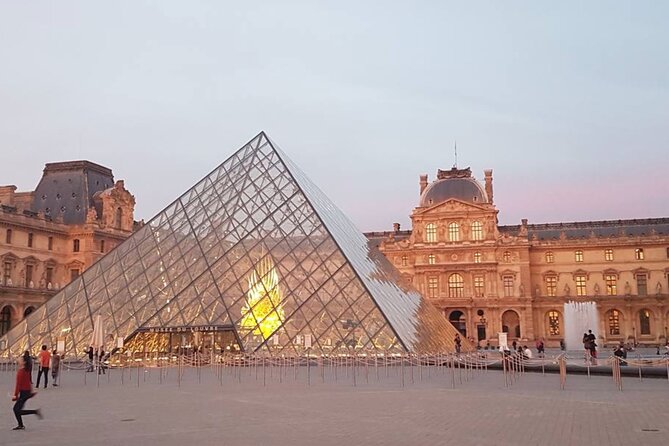
You also will not go inside the Louvre Museum. Still, the guide covers the Louvre’s history and how it became the museum it is today. This matters because the building itself carries the layers, even when you are only seeing it from the outside.
The tour’s finish near the Louvre entrance is practical. You get that final landmark moment, and then you can decide if you want to buy tickets for your own pace. You do not end the day stuck in a random spot with no next move.





Eiffel Tower views, Moulin Rouge, and the value of photo stops
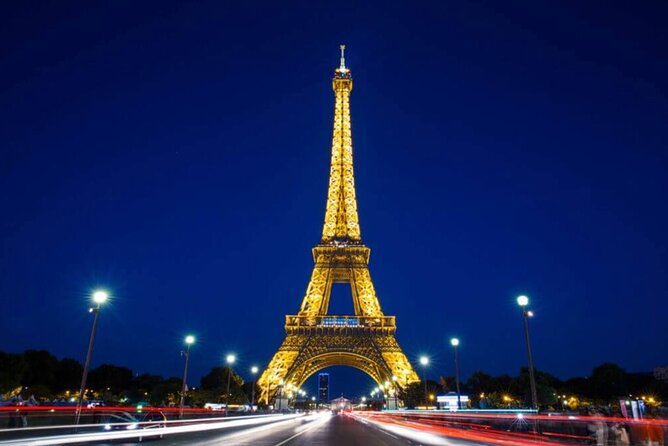
If the Eiffel Tower is the reason you are coming, this tour manages expectations well. You will reach the Eiffel Tower area for about 10 minutes. The key point is clear: no Eiffel Tower entrance, no climb, just learning plus photos.
You also get the history behind how it became the figure of Paris. That kind of explanation turns a quick sighting into something you can remember, instead of just another skyline icon.
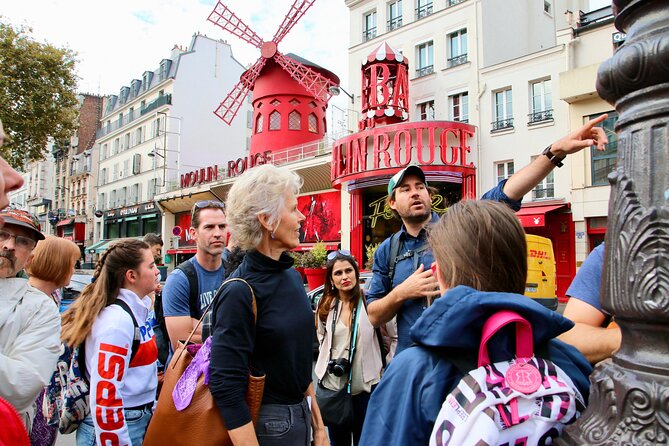
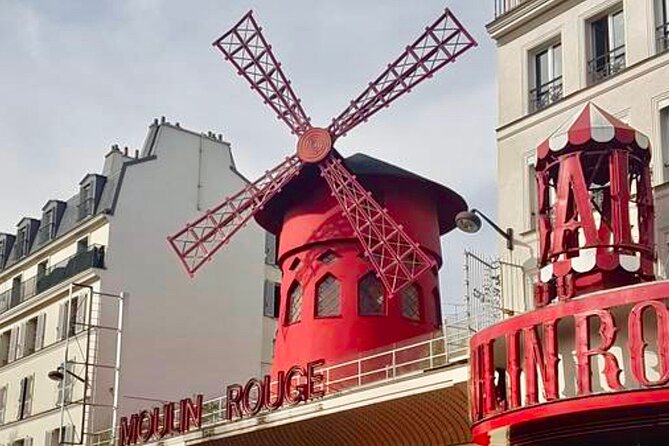
Then comes Moulin Rouge for about 10 minutes. Again, this is not included access or a show. You will hear the stories behind it, and you will see it from the outside.
This is actually good value for many first-timers. It lets you capture the essence of two major symbols without paying for tickets that take time and energy. If you do want Moulin Rouge later, you will be ready to choose what kind of show experience fits you, instead of rushing into it.
Latin Quarter and Jardin des Tuileries: old streets plus grown-up Paris
The Latin Quarter stop is set up for atmosphere. You get around 15 minutes and a clear focus on its history and stories. The guide helps you understand why the area carries student and intellectual energy, even after centuries of change.
From there, you move toward the Jardin des Tuileries. The tour frames the gardens around a story described as being commissioned by a queen. Even without going deep into long garden time, that context is useful because it explains why the spaces feel designed and political, not accidental.
Short stops like this are not a weakness. They are how you pack multiple neighborhoods into a half-day without burning out. If you decide you want more garden time later, you will know exactly which direction to go.
The tour also includes Champs-Élysées for a quick look. You get about 5 minutes plus history and stories tied to the avenue. It is enough time to understand what it became and why people still treat it like a must-see strip, even if it is not everyone’s favorite walk.
Pont Neuf, Île de la Cité, Notre-Dame, and the Seine-side photo logic
This part of the tour leans into “Paris at street level.” You see Fontaine Saint-Michel, including the kind of place you might recognize from popular culture. It is a short sightseeing and photos pause, and that is exactly what you want here, because you are collecting landmarks without turning the day into a waiting game.
You also stop near an old, iconic bridge described as the oldest bridge in Paris, with a name that may suggest otherwise. That clue points you to Pont Neuf, and it is a classic spot to pause because the views work from many angles.
Then you reach the heart of the city by visiting Île de la Cité for about 10 minutes. This is the core geography of Paris, and it helps connect the dots between earlier stops and major cathedral-level landmarks.
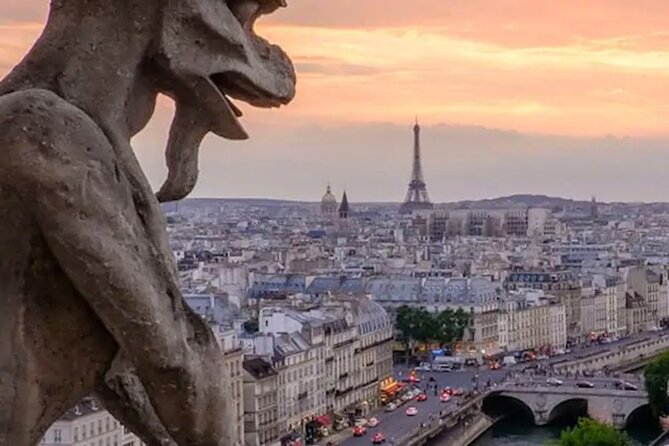
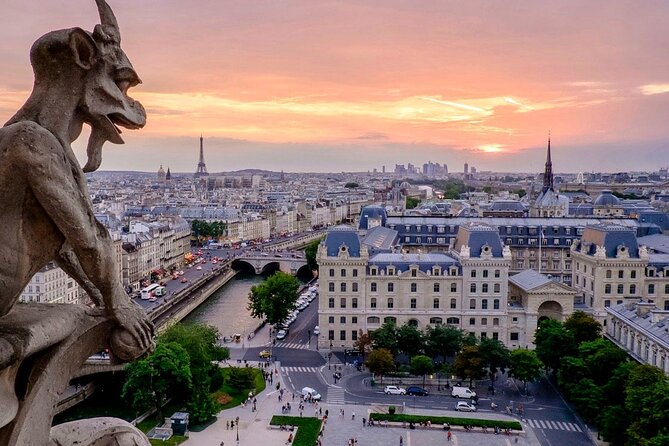
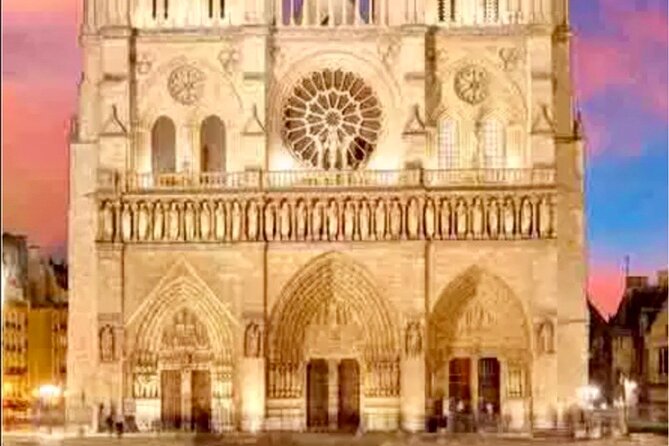
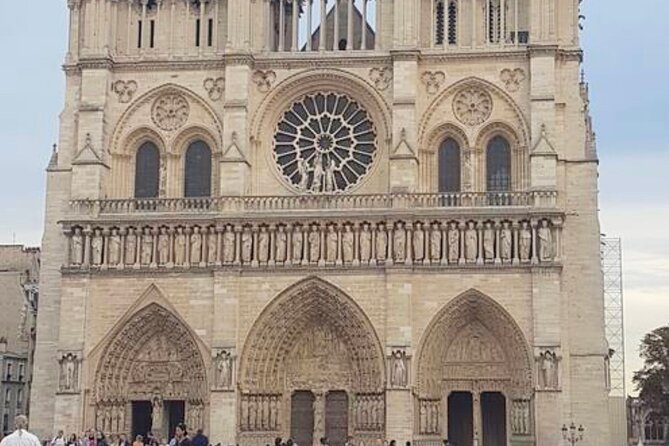
Cathedrale Notre-Dame de Paris is the standout here for a short window of about 10 minutes. You get to marvel at the complex structure and you also hear about what happened after the fire and how the damage left a mark. This stop is short, so your focus should be on the exterior and the story, not on expecting long cathedral-time.
After Notre-Dame, you see Fontaines Wallace. These are scattered around Paris, and the tour gives you the why behind them in a quick, useful way. You might see these later all over and suddenly understand they are not random street furniture.
Centre Pompidou and modern Paris contrast without wasting your day
The route includes Centre Pompidou for a sightseeing stop, and it is noted as not included for admission. That is important. If you want the museum inside, you will need to plan it separately.
Still, there is value in seeing Pompidou from the outside during a neighborhood tour. It is a sharp contrast to the older stone-and-church feel you have already gotten. Even a short look helps you picture how Paris changes across decades.
You also pass the “biggest department store” photo moment. The tour keeps these as short stops so you do not get stuck in retail lines or decision fatigue. The goal is orientation.
This middle-and-late portion of the tour works especially well for people who do not want their feet to only walk in historic settings. Paris is layers, and this helps you see that quickly.
Metro rides: the one part you must plan, not guess
A big practical element here is that you will take the metro several times. There is a listed sub-stop of around 20 minutes for Paris Metro. That matters because you are covering a lot of ground, and transit is what keeps the half-day realistic.
But you need your own transit setup. The tour states you need an EASY PASS card for the metro (12€), and you must top it up with a MOBILIS ticket for zones 1 and 2 (12€ per person). Without this, you risk losing time or being forced into a less smooth option.
My advice is simple: sort your metro card before the tour day. Then you can focus on the walking and stories instead of solving transit mid-route.
Once you have the pass, you get a “how to move through the city” bonus. It is not only about getting from point A to point B. It also helps you decode where the neighborhoods connect.
Who should book this tour, and who should not
This is a great fit if you want history, culture, and epic views in a tight schedule. It is also ideal for first-time visitors who need the lay of the land fast, with a guided framework for where to return later.
It is also good for people who like outdoors sightseeing but do not want to spend extra hours in lines. The tour intentionally does not include entrances to the Louvre or the Eiffel Tower, which can be a relief if you are trying to keep your day sane.
You may want a different plan if your main goal is deep museum time. This tour is not designed for that. It is designed for quick, guided orientation, with the option to revisit attractions afterward.
Finally, consider your comfort with walking. Most stops are short, but the day covers several neighborhoods. If you want lots of sitting time, you might feel rushed.
Should you book this Paris half-day walking tour?
Yes, if your priority is a guided, efficient introduction that helps you decide what to explore next. It covers 30+ top sights, uses metro for speed, and gives you story context at the places people most often ask about later.
Book it especially if you are visiting for the first time and want to reduce guesswork. An average booking time of 32 days in advance also suggests you should reserve early if you care about specific dates.
Skip it or pair it with other plans if you know you will only be satisfied with paid entrances like the Eiffel Tower climb, Louvre time, or a Moulin Rouge show. This tour is the foundation, not the full package.
If your travel style is, see a lot, learn a lot, then return for what you love most, this one fits.
FAQ
How long is the Half Day Walking Tour to Over 30 of the Top Sights of Paris?
It runs about 4 to 5 hours.
Where does the tour start and where does it end?
The tour starts at 72 Blvd Marguerite de Rochechouart, 75018 Paris, and it ends near the entrance to the Louvre Museum (75001 Paris).
Is the tour offered in English?
Yes, it is offered in English.
What admissions are included, and what is not?
Many stops are listed as free or admission free, but Eiffel Tower entrance is not included, Louvre entrance is not included, Moulin Rouge access and show are not included, and Centre Pompidou admission is not included.
Do I need a metro pass for the tour?
Yes. You need an EASY PASS (12€) plus a MOBILIS ticket for zones 1 and 2 (12€ per person).
How big is the group?
The tour has a maximum of 15 travelers.
What if the weather is bad?
The experience requires good weather. If it is canceled due to poor weather, you will be offered a different date or a full refund.
More Walking Tours in Paris



More Tours in Paris





More Tour Reviews in Paris



Not for you? Here's more nearby things to do in Paris we have reviewed












Paris City Tours, side by side.
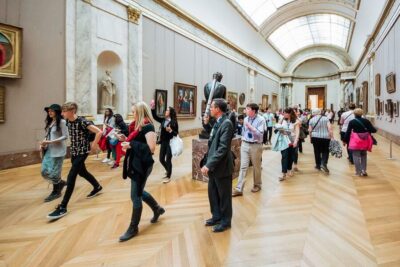 ★ 4.6Louvre Museum Timed-Entrance TicketTickets from $2671,977 guest reviews
 ★ 4.6Disneyland® Paris 1-Day TicketTickets from $6149,412 guest reviews
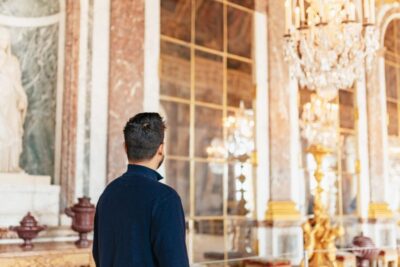 ★ 4.6Versailles Palace and Gardens Full Access TicketTickets from $1741,579 guest reviews
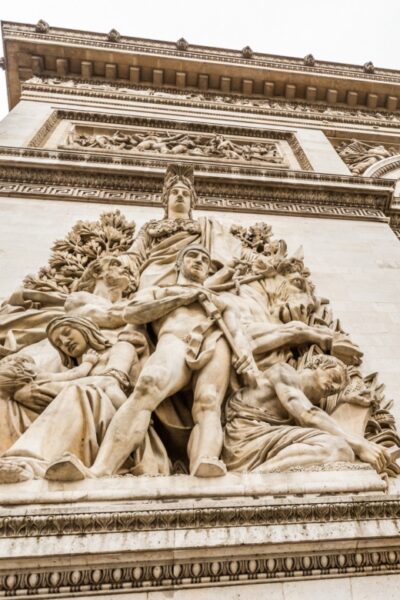 ★ 4.6Arc de Triomphe Rooftop TicketsTickets from $1834,264 guest reviews
 ★ 4.7Orsay Museum Entry TicketTickets from $1525,647 guest reviews
 ★ 4.4Evening River Cruise with MusicTickets from $2722,721 guest reviews
 ★ 4.4Eiffel Tower Entry Ticket with Optional Summit AccessTickets from $2920,035 guest reviews
 ★ 4.3Eiffel Tower Summit or Second Floor AccessTickets from $5917,248 guest reviews