
Review · PARIS 2CV TOURS
Guided tour of Paris in Citroën Traction Avant or DS 21
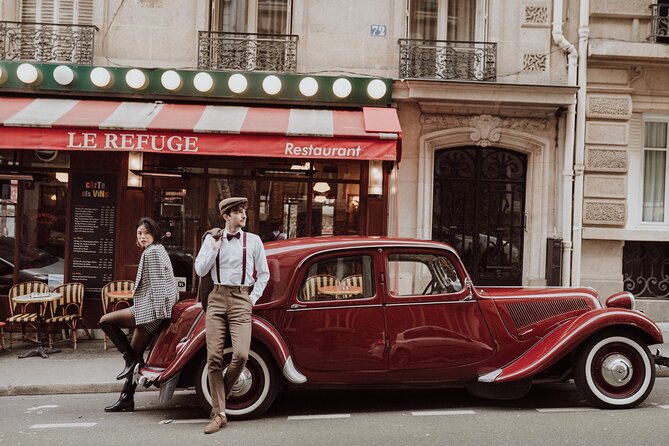
Paris looks different when it is not on foot. A guided hop-by-car in a Citroën Traction Avant or DS 21 turns big sights into quick, memorable moments, with minimal walking.
What I like most is the style factor: you choose between two iconic vintage models, and the car basically acts like a moving spotlight for photos. I also like that it is a private experience with pickup offered, so you get landmark-by-landmark stops instead of waiting around.
One drawback to weigh carefully is that the “guided” part can vary. Some drivers focus more on pointing out sights than giving cultural depth, and English clarity can be a mixed bag.
Key highlights to know before you go
- Pick your ride: Citroën Traction Avant or DS 21, both made for street-level photo moments
- Private and low-walking: see a lot in 1 to 3 hours without the usual leg burn
- Photo-focused stops: the route is built around quick stops for pictures at major icons
- Tickets are not included: most stops are for views, not interior visits
- Driver communication matters: English can be clear or challenging depending on the driver
- Comfort is usually good, but fumes can be a factor: if windows are open, ask for ventilation
Vintage Citroën Paris tour, what makes it special
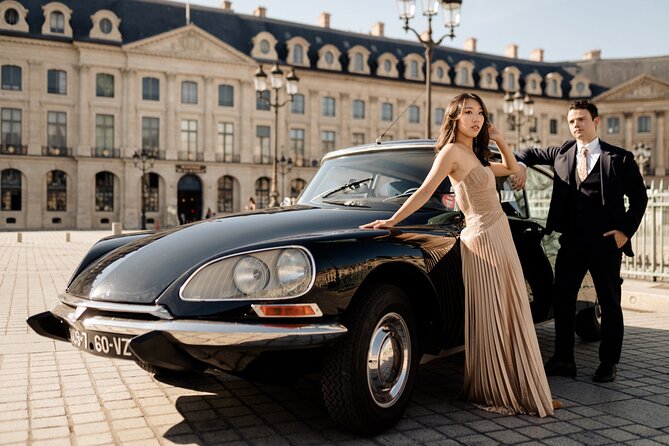
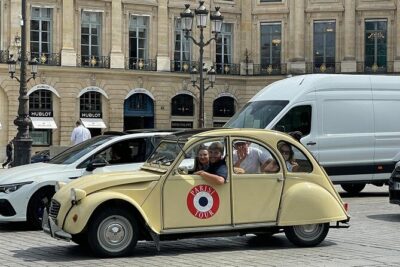
Paris by classic car has a different rhythm. Instead of marching from stop to stop, you glide between landmarks, with the driver handling traffic and the turns. The vintage Citroën models make every corner feel like a scene from a French film, even when you are just outside the Eiffel Tower.
This tour is built for people who want the highlights without spending hours standing in crowds. You will do more “arrive, look, photo, move on” than “walk, read, and linger.” That can be perfect if your time is short.
You also get a nice bonus: because the car gets attention, you are more likely to get spontaneous photo moments and better angles than you would on a standard city bus. And if you are traveling with someone who moves slowly, being driven right up to key spots is a real advantage.
You can also read our reviews of more guided tours in Paris


Price and value for a private up-to-4 landmark drive
At $171.18 per group (up to 4), you are paying for two things: privacy and a specific experience. You are not just buying sightseeing. You are buying a vintage-vehicle “courier” through Paris with a driver who times stops around the route.
If you compare it to taxis for a similar stretch, the math can look better or worse depending on your exact route and timing. But the real value is in how efficiently you can check off major icons in a short window. For first-time visitors, that efficiency often beats paying for longer guided walking tours when you have limited hours.
Still, the price can feel steep if you expect deep storytelling at every stop. The best versions of this experience feel like a mix of driving, photo help, and enough context to make the landmarks click. The weaker versions can feel closer to a chauffeur who points and names sights. So set your expectations: you are buying a classic-car overview tour first.
How the 1 to 3 hours play out on crowded Paris streets
This is not an all-day “Paris on foot” plan. Expect a tight schedule, with multiple stops designed for quick viewing and photos. Many of the exterior landmarks are paired with brief time windows, around 5 minutes noted for several major sights.
That structure matters because you will not do museum-level touring or long indoor visits. You will see exteriors, take pictures, and get a stop-by-stop explanation. It is ideal for:
- short stays
- first-time orientation
- people who need low walking
- photo lovers who want you, not just the monument, in the frame
If your main goal is reading every plaque and going inside everything, you will likely want additional tickets or another tour afterward. In short: this is a highlights route, not a deep-dive museum itinerary.
Place de la Concorde and the Avenue, your fast orientation in Paris
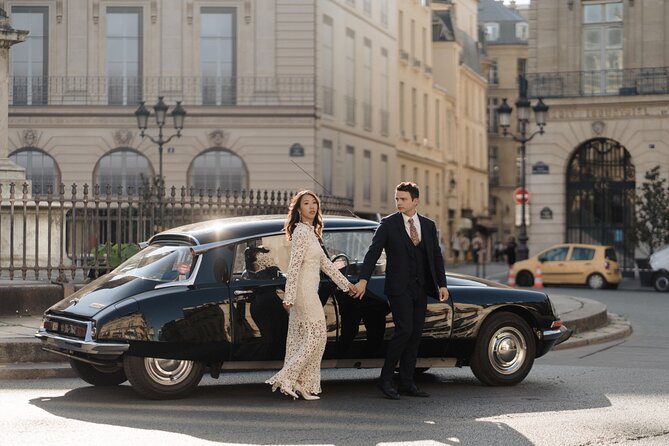
You start at Concorde (75008), and the early part of the route is about orientation. You get explanations as you move through key city corridors, including the Avenue segment and the Place de la Concorde area. Even if you have visited Paris before, this kind of “where are we and why does it matter” framing can help your later self-guided wandering.
The big advantage here is time. Instead of trying to figure out where landmarks sit relative to each other, you get a guided sense of the geography while you are already being driven into position. You also get the bonus of being dropped or parked strategically for photos, which can be hard to coordinate on your own.
One thing to keep in mind: Paris traffic changes minute by minute. The driver’s ability to find smooth routes and smart stopping points can make the difference between a tour that feels fun and one that feels rushed.
Arc de Triomphe and the Eiffel Tower, picture stops without the marathon
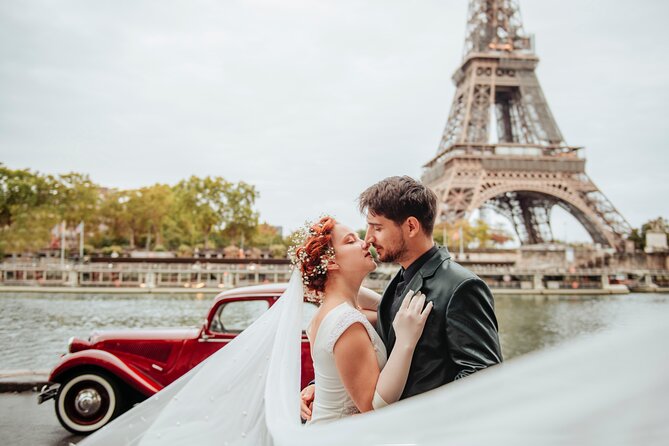
Two of the biggest wins are Arc de Triomphe and the Eiffel Tower. You get quick stops that are built around views and photos, with explanations as you arrive. The tour is specifically paced so you are not stuck walking far just to get a decent angle.
For both Arc de Triomphe and Eiffel Tower, admission tickets are not included. That means you are mainly looking at what you can see from outside, and you should plan accordingly if you want to go up inside. Also, the Eiffel Tower area can be extremely busy, so the “brief but timed” stop is a practical approach.
If your priority is getting those classic shots, this is where the car shines. You arrive with your group already positioned, you get help finding photo spots, and you are not battling crowds for your turn to take pictures.




Seine views, palace squares, and the Opera area
After the big-picture center icons, the route moves into more varied city scenery. You pass a bridge stop, plus several “monument” and “palace” style stops, then an Opera area stop. The naming here is broad, but the purpose is clear: you are moving through the Paris you recognize from postcards, while still getting a driver-guided connection between sights.
This section can be a hit or miss depending on the driver. When it works well, you get simple, useful context that makes the architecture feel less random. When it does not, you may get more “what it is” than “why it mattered,” and the tour can start to feel like a photo run.
Still, even a lighter commentary version can be worth it because the car puts you right in the right place for quick looks. You are not trying to cross neighborhoods on foot while carrying water and fighting heat or rain.
Moulin Rouge to Sacré-Cœur, Montmartre without the uphill grind
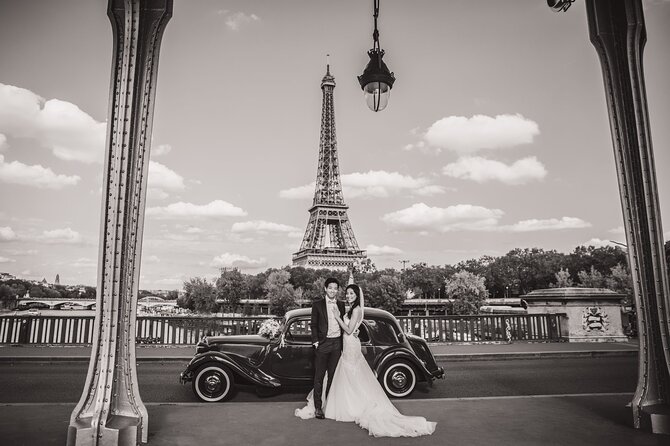
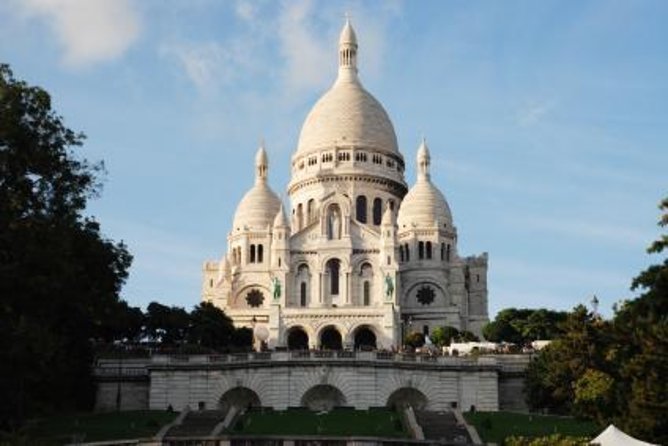
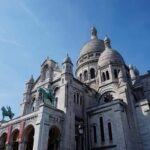
The tour includes Moulin Rouge and then heads toward Basilique du Sacré-Cœur (Montmartre). These are two places people often want to see, but doing both on foot in a short timeframe can be tough.
What makes this section valuable is the “make it easy” factor. You are not negotiating steep streets and long walks while also trying to get the photos. You get a stop at Moulin Rouge for views, then a later stop at Sacré-Cœur where you also have a chance for pictures.
As with other major stops, noted admission is not included for the areas where tickets would apply. So think of these as view and photo stops. The upside is that Montmartre’s drama still comes through even if you are not doing a full on-foot neighborhood exploration.
If you are traveling with someone elderly or with mobility limits, this part can be a relief compared to building a Montmartre walking day yourself.
From the museum and Pyramid stop to Notre-Dame and the Pantheon
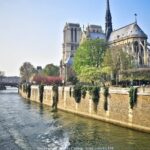
Toward the end, the route continues through more iconic, “you can picture it instantly” Paris. You have a museum stop, then a Pyramid stop, followed by Notre-Dame and the Pantheon.
Because the details for the museum and pyramid stops are not specified beyond those labels, I treat this section as a guided route through key landmark zones rather than a promise of a specific building interior. In practice, that means you should expect outdoor viewing, quick explanations, and photo opportunities.
This is also where the tour can feel especially satisfying. You go from the “classic skyline” moments earlier in the drive into the Left Bank and history-heavy icons. Even if you already know the names, seeing them in sequence by car helps your brain connect the city layout.
For photo planning, this late section matters too. If you are going to ask for specific angles, do it when you still have time for one or two extra stops. Once the clock tightens, your driver will move on to finish the loop.
The driver, the language, and the 1950s comfort question
This experience lives or dies on the driver. Some guides come across as genuinely engaging, helpful with photo positioning, and clear enough in English to make the landmark explanations land. Others can be harder to follow, with limited English or heavy accents that make it tough to catch the story behind the places.
From the positives you can expect the classic “car helps, photos happen” combo. Drivers who are comfortable and patient tend to stop where the view is best, take your pictures, and make the drive feel smooth even through busy traffic. There are also strong mentions of drivers giving recommendations and helping people settle into Paris fast.
From the caution side, communication can be inconsistent. If you want cultural storytelling, ask yourself how much you will enjoy a simpler “this is what you are seeing” style explanation. If you prefer details, consider coming with a few specific questions written down in advance.
Comfort is another factor. Many people describe the ride as smooth and the car as very comfortable. One review flags gas fumes when windows are open, causing a headache. That is not something you can fully control, but you can reduce risk by asking the driver to keep windows adjusted and ventilation on, especially in traffic.
Should you book this Citroën or DS 21 Paris tour?
Book it if you want a private, low-walking overview and you love the idea of seeing Paris icons from a vintage Citroën. It is especially compelling for first-timers, short-stay visitors, and anyone who would rather spend their time looking and photographing than doing long walks. You are also getting a real wow-factor with the car itself, and that tends to make the trip feel special.
Skip it or adjust expectations if your top priority is deep, continuous cultural commentary. This is a highlights route, and ticketed interior visits are not included. Also consider that English clarity can vary by driver, so if you need precise explanations, plan to rely more on your own reading between stops and on any clear moments your driver provides.
If you go in knowing you are paying for the classic-car experience plus efficient sightseeing, you will likely feel good about the value. If you are expecting a formal museum-grade guide at every stop, you might walk away wanting more.
More Guided Tours in Paris

More Tours in Paris


More Tour Reviews in Paris



Not for you? Here's more nearby things to do in Paris we have reviewed









Paris 2CV Tours, side by side.
 ★ 4.5Vintage 2CV Adventure: 2 -Hour Paris Secrets TourTickets from $344488 guest reviews
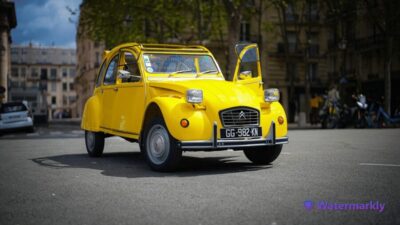 ★ 4.9Discover Paris 2CVTickets from $135472 guest reviews
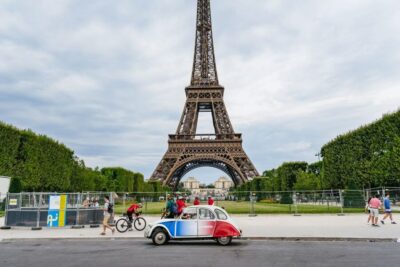 ★ 4.71-Hour Vintage Citroen 2CV TourTickets from $64314 guest reviews
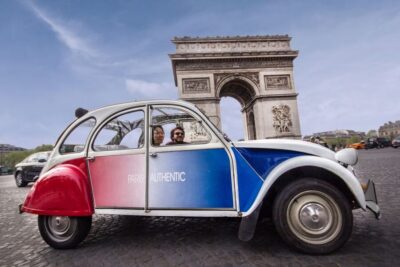 ★ 4.4Vintage 2CV tour + CruiseTickets from $100252 guest reviews
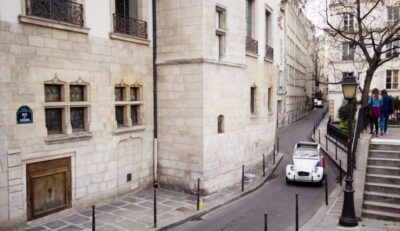 ★ 4.7Off-the-Beaten Track in Paris: 2-Hour Vintage 2CV TourTickets from $129236 guest reviews
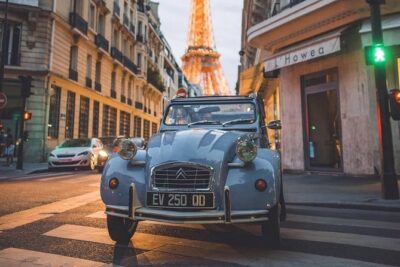 ★ 4.5Vintage 2CV Adventure: 2-Hour Paris Highlights TourTickets from $349214 guest reviews
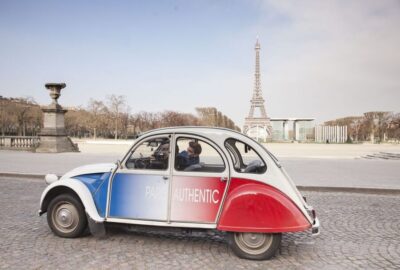 ★ 4.6Romantic Paris Vintage Citroën 2CV TourTickets from $140198 guest reviews
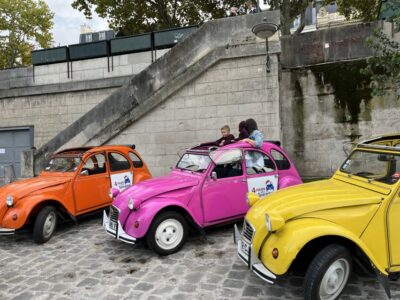 ★ 4.9Private Sightseeing Tour in Citroën 2CVTickets from $246194 guest reviews
This tour also belongs to