
Review · PARIS CITY TOURS
Paris Art Nouveau Private Tour
Art Nouveau details hide in plain sight. This private walking tour helps you connect Paris landmarks to Art Nouveau and Belle Époque thinking, with a professional art historian guide leading the way. One heads up, the Eiffel Tower entrance is not included, so you’ll be learning from the outside view rather than going in.
I like that the tour is built for people who want real architectural storytelling, not just stop-and-snap photos. In the past, guides such as Boris, Milica, and Melissa have been especially good at keeping the history clear, lively, and geared to questions.
Because it is a walking route with a moderate fitness level, it works best if you’re comfortable on your feet for about two hours. The walk typically ends around square Rapp near the building formerly known as Société théosophique, now a Tour Eiffel theatre, which makes it easy to keep exploring afterward with your bearings.
Key things to know before you go
- Private, group-size friendly: up to 6 people, so you get more back-and-forth with your guide
- Art historian guidance: you’re not just looking, you’re learning how styles relate and change
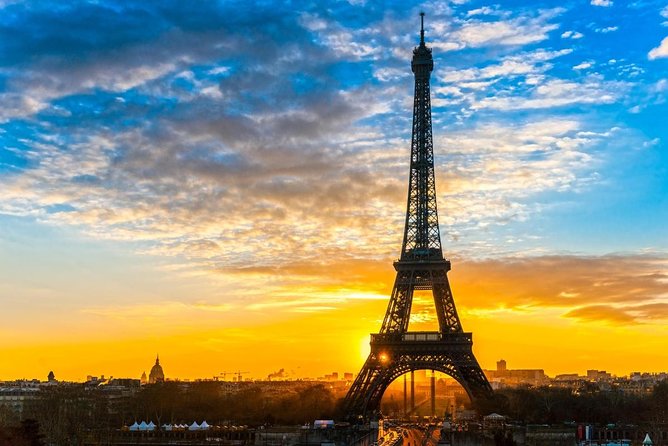
- Eiffel Tower, explained in context: you’ll hear the story through Art Nouveau and Belle Époque framing, without entry
- Lavirotte stops: you’ll spend real time at both 29 Ave. Rapp and Immeuble 3 Square Rapp, Art Nouveau highlights
- Less crowded, more focused: a 2-hour plan centered on architectural examples rather than a city checklist
- Mobile ticket included: simpler on-the-day logistics once you’re in Paris
Why this Art Nouveau tour feels different in Paris
Paris is full of grand art and big names, but Art Nouveau rewards your attention in a quieter way. This tour is designed for that payoff. Instead of treating Art Nouveau as a single style you either like or don’t, you learn how it fits into the broader Paris story your guide is building for you.
I also like the pacing. The route is short enough that you can actually stop, look closely, and ask questions, but long enough that you see contrasts. You move from an Eiffel Tower area framing, to Gothic revival at the American Cathedral in Paris, and then into the Lavirotte buildings that are often considered some of the best examples in this corner of Paris. That mix helps you understand why Art Nouveau looked the way it did, and why it mattered.
Finally, the private format changes the whole vibe. If you care more about the architectural evolution than the landmark names, you can steer the conversation. If you want explanations of what you’re seeing on facades, you can keep asking until it clicks.
You can also read our reviews of more private tours in Paris



The 2-hour route, what you’ll actually walk through
This experience is about two hours on foot, with a start at 221 Rue de l’Université (75007) and an end around avenue Rapp, typically by square Rapp. The itinerary is structured around a handful of focused architectural stops, with extra time for your guide to connect the dots.
Here’s the basic flow:
- You begin with a major Paris landmark area (Eiffel Tower), explained through Art Nouveau and Belle Époque lens.
- You shift to a contrasting style moment at the American Cathedral in Paris, known for Gothic revival.
- Then you spend time on the Lavirotte buildings on and around avenue Rapp and square Rapp.
- Along the way, the tour highlights Art Nouveau facades tied to the Ceramic Hotel and the Hotel Gaillard, plus the story behind the Eiffel Tower.
The best part for me is that it’s not just a list of addresses. Your guide is there to help you see how the designs relate, and why Paris adopted these ideas when it did.
Stop 1 at the Eiffel Tower area, Art Nouveau and Belle Époque framing
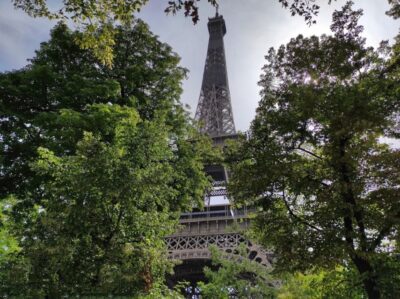
The Eiffel Tower is arguably the most famous landmark on earth, so it’s an easy starting point. But here it is used like a teaching tool. You’ll hear it explained through Art Nouveau and Belle Époque framing, which is a smart move because it forces you to think beyond postcards.
Practical reality: entrance to the Eiffel Tower is not included. Even if the stop mentions admission ticket free, you should plan as if you are viewing and learning from the outside. That can be a benefit if you want to avoid ticket lines during your limited time.
Why it’s worth doing anyway:
- You get a themed explanation tied to a specific art and design movement.
- You can orient yourself in this part of Paris for later sightseeing.
- You get context before you zoom in on the more detailed Art Nouveau facades on the rest of the route.
A drawback to consider is weather. The Eiffel Tower stop is outside, so rain or strong wind can make the experience shorter on comfort. Bring a small umbrella or a light rain layer so you don’t spend the best photo moments stuck looking down at your shoes.
Stop 2 at the American Cathedral in Paris, a Gothic revival contrast
From Eiffel Tower area framing, the tour moves quickly into style contrast at the American Cathedral in Paris. It’s a Gothic revival example, and that matters for learning.
In a short, two-hour window, style comparison is one of the fastest ways to make Art Nouveau make sense. Gothic revival gives you the sense of what came before in terms of design language, while the Art Nouveau buildings that follow shift the mood toward different forms and ideas. Your guide’s job is to point out these connections without turning it into a lecture you can’t follow.
This stop is listed as short, about five minutes, and admission ticket free. That usually translates to quick viewing and explanation rather than a long interior visit. If you’re hoping for a full cathedral interior time, you might need another plan for that later.
Still, as a learning moment, it’s strong. It keeps the tour from feeling like pure admiration. Instead, it helps you understand why architectural styles evolve, and how a city reads different design movements at the same time.
Stops 3 and 4 at Lavirotte buildings on Avenue Rapp and Square Rapp
Now you get into the heart of the Art Nouveau focus. The tour’s standout theme is Lavirotte architecture, with two specific stops:
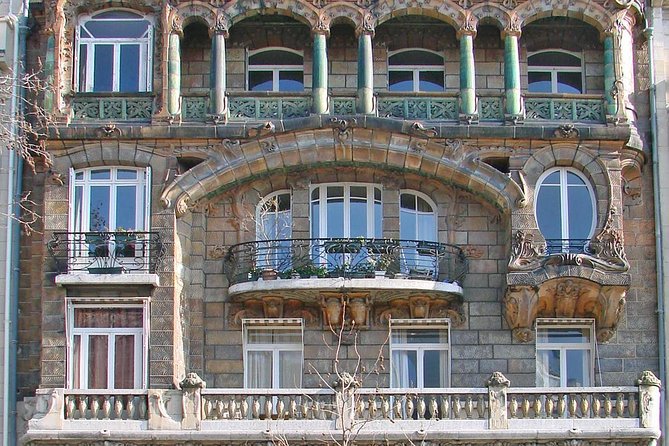
- 29 Ave. Rapp, the world famous Lavirotte house, presented as a masterpiece of Art Nouveau style.
- Immeuble 3 Square Rapp, another striking example of Lavirotte’s work, just less known.
Both are set for about 20 minutes each, which is good. Too many tours rush Art Nouveau because it’s the kind of architecture you understand by looking slowly. With time, you can notice proportions, facade rhythm, and the way the design communicates a mood.
The value here is not only the buildings themselves, but what your guide can do with them. A good art historian guide should help you connect the dots between these facades and the broader movement you started hearing about back at the Eiffel Tower area.
A small consideration: these are architectural stops, so you’ll be standing and focusing on details rather than moving inside museums. If you like interactive, hands-on exhibits, you might prefer a museum day for some of your time. If you love reading a city through its buildings, this route fits your style.




Ceramic Hotel and Hotel Gaillard facades, the stories behind the look
The tour description includes a focus on specific Art Nouveau facade moments beyond the Lavirotte houses, including the Ceramic Hotel and the Hotel Gaillard. Even if you don’t know these names yet, it’s useful that your guide flags them as you walk.
Why this matters:
- Art Nouveau can feel like a blur if you only see one or two buildings.
- Facade storytelling helps you connect visual details to a time period and a design idea.
- You learn to recognize the movement rather than just memorize addresses.
I’d also pay attention to how your guide ties these facades back to what you heard earlier about Art Nouveau and Belle Époque. The whole point is to build a mental map. By the time you reach the Lavirotte stops, you should feel like you can explain what you’re seeing in plain terms.
What you’re really paying for with a private art historian guide
At $360.48 per group (up to 6), this is not a cheap add-on. But it can be good value if you’re traveling with a small group that likes architecture and discussion.
Here’s how I think about the price:
- You’re paying for a private guide who can tailor pacing and respond to questions.
- You’re not paying per person for a themed explanation, so your cost per head drops as your group fills.
- You get a short, intentional route, which can save time compared to piecing together multiple independent visits.
The reviews highlight exactly why that matters. I’ve heard stories of guides like Boris, Milica, and Melissa being engaging and handling questions smoothly, which is what you want for architecture. And when someone needed a rest break, the guide worked with the group to add a pause at LaDurée on the Champs-Élysées area for coffee and macarons, then helped the group finish the route. That kind of flexibility is hard to find in standard group tours.
In practical terms, a private guide also helps you avoid confusion on the day. Instead of guessing where to look and what you’re supposed to care about, you have someone guiding your attention so the architecture actually lands.
Logistics that affect your experience, meeting point, timing, and tickets
This is a walking tour with a moderate physical fitness level. Plan on comfortable shoes and slow moments to enjoy the design details, not a sprint between photo stops.
You start at 221 Rue de l’Université, 75007 Paris, France. The tour ends on avenue Rapp area, typically near square Rapp by the building previously known as Société théosophique, now a Tour Eiffel theatre. That end location is convenient because it sits in an area where you can keep sightseeing without needing to teleport back.
Tickets: you get a mobile ticket. There’s no mention of hotel pickup and drop-off, and transportation to and from attractions is not included. So you’ll want to arrive on your own, then return on your own. If you’re coming from another part of Paris, build in buffer time to get to 221 Rue de l’Université.
Also, children must be accompanied by an adult. If you’re bringing kids, it can work best for older children who can handle explanations and short standing periods, since the format is about architecture focus rather than hands-on activities.
Tips to get more out of the Art Nouveau stops
Art Nouveau rewards attention. You’ll get more from the tour if you show up with a simple goal: learn what to look for.
A few ways to make it easier:
- Bring a camera, but also take one quiet minute at each facade to simply look. Your guide will point things out, but you need a moment to absorb them.
- If you have specific questions, write them down on your phone beforehand. The private format is best when you know what you want clarified.
- If you’re sensitive to walking fatigue, tell your guide early. In at least one case, the guide adapted with a planned rest break, which helped older family members keep going.
And remember, the Eiffel Tower entrance is not part of this plan. If you want to go up, you’ll need a separate ticket and timing plan for later.
Should you book this Paris Art Nouveau Private Tour?
Book it if you:
- Want a focused architecture lesson in a short time window.
- Like seeing style contrast, from Gothic revival to Art Nouveau, and understanding why designers made certain choices.
- Are traveling with a group up to 6 where a private format makes financial sense.
Skip or pair it differently if you:
- Only care about landmark interiors and want lots of inside access. This route is built around walking and facade viewing.
- Expect Eiffel Tower entry as part of the package. You’ll be learning from the outside here.
- Prefer large museum exhibits over street-level architectural storytelling.
If your goal is to understand Paris beyond the usual list, this is a smart way to spend two hours. You walk away with a clearer sense of how Art Nouveau shows up in the city, not just where it shows up.
FAQ
Is the Eiffel Tower entrance included?
No. The tour includes explanation and viewing connected to the Eiffel Tower area, but Eiffel Tower entrance is not included.
How long is the Paris Art Nouveau Private Tour?
It runs for about 2 hours.
How much does the tour cost, and how many people can be in a group?
The price is $360.48 per group, for up to 6 people.
What is included in the tour price?
You get a professional art historian guide.
Where do you meet and where does the tour end?
You meet at 221 Rue de l’Université, 75007 Paris. The tour typically ends around square Rapp by the building previously known as Société théosophique, now a Tour Eiffel theatre, on avenue Rapp area.
Can I get a refund if I change my plans?
Yes. Free cancellation is available up to 24 hours in advance for a full refund.
More Private Tours in Paris



More Tours in Paris




More Tour Reviews in Paris



Not for you? Here's more nearby things to do in Paris we have reviewed












Paris City Tours, side by side.
 ★ 4.6Louvre Museum Timed-Entrance TicketTickets from $2671,977 guest reviews
 ★ 4.6Disneyland® Paris 1-Day TicketTickets from $6149,412 guest reviews
 ★ 4.6Versailles Palace and Gardens Full Access TicketTickets from $1741,579 guest reviews
 ★ 4.6Arc de Triomphe Rooftop TicketsTickets from $1834,264 guest reviews
 ★ 4.7Orsay Museum Entry TicketTickets from $1525,647 guest reviews
 ★ 4.4Evening River Cruise with MusicTickets from $2722,721 guest reviews
 ★ 4.4Eiffel Tower Entry Ticket with Optional Summit AccessTickets from $2920,035 guest reviews
 ★ 4.3Eiffel Tower Summit or Second Floor AccessTickets from $5917,248 guest reviews