
Review · PARIS CITY TOURS
America’s Founding Fathers in Paris, Walk in their Footsteps (Small Group Tour)
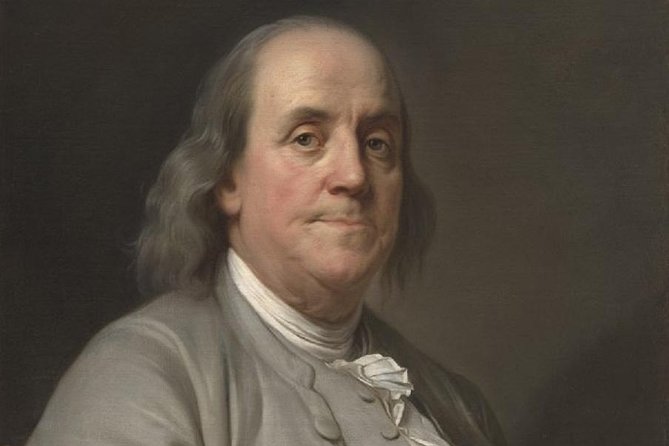
Step into Paris and the American Revolution shows up. This small-group walk connects Benjamin Franklin and Thomas Jefferson to real corners of Paris, with stops like Le Procope and Rue Bonaparte and the kind of details that make the Franco-American story feel personal. I especially liked the maximum 8-person group feel, plus how the tour goes beyond famous names with lesser-told connections like John Paul Jones’ story near the Luxembourg area. One thing to think about first, this is a 2.5 hour walk, so if your legs get tired fast, it may not be your best match.
The route is built for people who want Paris at street level, not from a bus window. You’ll also have audio commentary to support what you’re seeing, and you can ask questions while you go. The tour isn’t about museums or long indoor time, so pack patience for walking, and plan a simple day around it.
Key things to know before you go
- Le Procope, opened in 1686, the first cafe stop on the route, where revolutionary-era visitors reportedly met and played chess
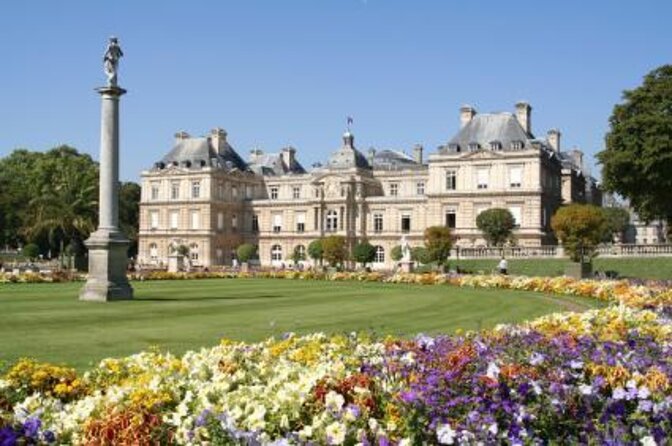
- Luxembourg Gardens area and John Paul Jones, including the story of a tomb that was paved over and later rediscovered
- Thomas Paine near Odéon, tied to his years in Paris after publishing Common Sense
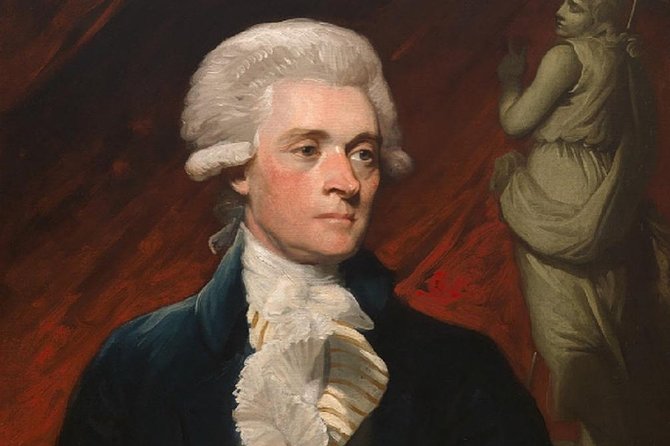
- Rue Bonaparte and Jefferson’s Paris, including his ambassador period that followed earlier time in the city
- Small-group format (up to 8), designed for questions and a more human pace
- Mobile ticket and audio commentary, so you’re not stuck waiting on printed handouts
Why America’s Founders feel oddly at home in Paris
Paris and the American Revolution are linked in ways most people never notice. On this walk, the connection is not abstract. It’s about places where people actually talked, argued, dined, or worked out ideas that crossed the Atlantic.
What I like most is that the tour treats Franklin, Jefferson, Paine, and Jones like living historical figures, not statues. You get practical context, such as where Jefferson lived briefly while he was in the city, and why John Paul Jones’ Paris chapter mattered even after his death. The result is a tour that helps you place these names in a real map, with fewer “and then history happened” moments.
There’s also a nice contrast in pacing. The group keeps moving, but each stop is short enough that you don’t feel trapped in a lecture. If you like to wander, then come back to a few anchor points with stories, this format fits that style.
You can also read our reviews of more walking tours in Paris



Price and timing, what $98.90 gets you
At about $98.90 per person for roughly 2 hours 30 minutes, this sits in the mid-range for a guided walking tour in Paris. Is it budget? No. Is it good value for what you get? Usually, yes, especially because the group is capped at 8 travelers and you have audio support plus a guide who can tailor how you spend time.
Another practical point: the tour is booked on average about 50 days in advance. That’s a sign it sells regularly in the busy season, and you don’t want to be scrambling for a slot once your Paris days are locked.
Also, the tour depends on good weather. That matters because you’re outside for the full walking portion. If Paris is doing its typical “one nice hour, one surprise shower” thing, you’ll want to be flexible.
Le Procope, the first cafe stop and the chess-and-coffee vibe
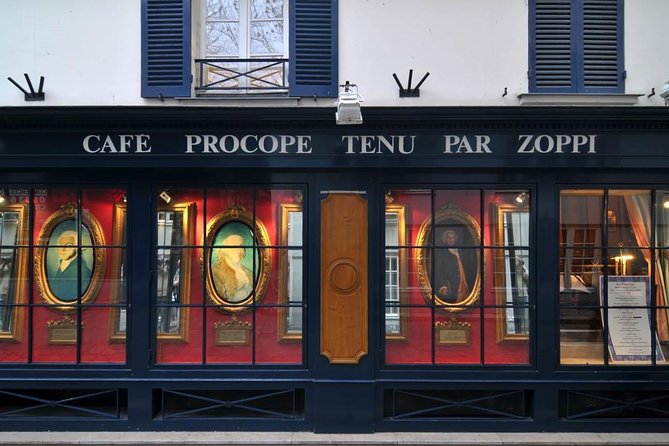
Le Procope is a fun place to start because it tells you what kind of story you’re about to hear. This landmark cafe opened in 1686, and it’s tied to the social side of revolutionary thinking. You’re there for the atmosphere as much as the facts.
During your stop, you’ll hear how Franklin and Jefferson were part of the kind of conversations that happened in cafes, where ideas spread over coffee and where people played chess between debates. Even if you don’t care about chess, the point lands: Paris was a network city, and coffeehouses were meeting points.
A quick heads-up for expectations. This stop is short. It’s about getting oriented and building context, then moving on before you lose the thread. If you’re the type who could spend an hour in one spot, you might want to plan a follow-up cafe break on your own after the tour.
Practical tip: wear comfortable shoes right from the start. Le Procope is right at the beginning, so your feet are still fresh. Don’t waste that advantage by showing up in fancy footwear.
Luxembourg Gardens and John Paul Jones, a tomb that vanished
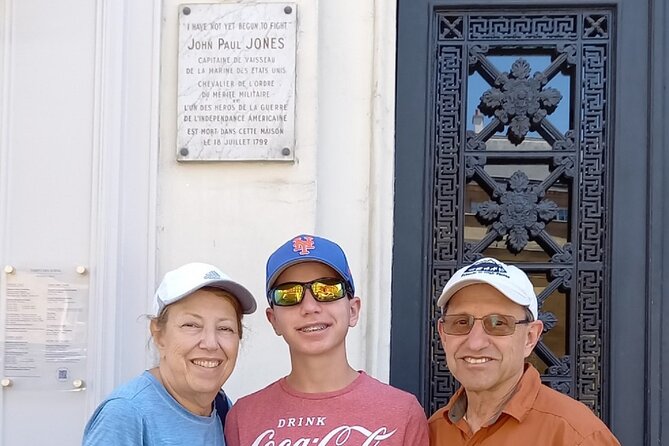
Next you shift from cafe culture to a quieter, more emotional story. Near the Luxembourg Gardens area, the tour connects you to John Paul Jones, including his final residence in Paris and the complicated path to giving him a proper burial.
This is where the tour earns attention. You learn that his remains were placed in a cemetery that was later paved over and forgotten. Then, after years, the tomb was found again, his remains were repatriated, and he received a full military burial in the United States.
What I like about this stop is that it shows how memory works. History is not only what happened in the 1700s. It’s also about how later generations recover the past, even when it gets buried under new streets.
Also, you get a built-in geographic benefit. Luxembourg Gardens is one of those “easy to find” areas once you know the neighborhood. If you’re exploring on foot anyway, this stop helps you learn where everything is, so you’re not later trying to decode your own map while hungry.
Expect another short stop, so take in what you can quickly. If this topic hits you, consider doing a bit of reading afterward so the story stays with you.
Odéon area and Thomas Paine, the pamphlet author in Paris

After the Luxembourg area, the tour heads toward Odéon, Theatre de l’Europe. The connection here is Thomas Paine, and the guide ties his time in Paris to the impact of Common Sense.
This stop works well because it reframes Paine from “a book I once saw in school” into a person making choices in real streets. You learn that Paine lived in Paris for about five years, and that he arrived after publishing his major bestseller. That timing matters. It helps you understand why Paris was not just a backdrop, but part of the conversation around independence.
One small drawback to note, this stop is also brief. It’s more about landing the connection and pointing you toward the right area, rather than turning the walk into a long deep-stay on Paine.
Practical tip: if you’re a word person, keep an eye out for how the guide connects political writing to physical location. When you tie text to place, it sticks better.






Rue Bonaparte and Jefferson’s Paris years, from living to representing
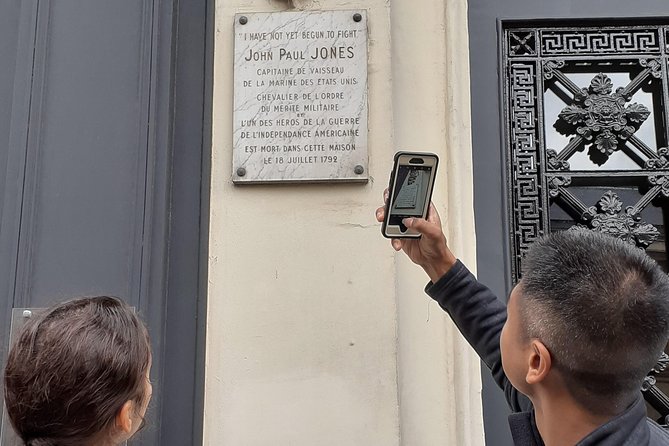
Rue Bonaparte is a classic “follow the streets and you can almost picture the people” kind of Paris moment. Here, the tour points you to where Jefferson lived briefly during his five-year stay in the city.
Then it connects the dots to his later role as Ambassador to France in 1784, explicitly linking him to Franklin’s earlier path. The guide keeps the story from becoming a timeline blur by using the route itself. You’re not only learning dates, you’re learning how long periods of contact and influence flowed across the years.
I like this stop because it’s practical for your own independent exploring. If you’re walking around Saint-Germain and the Left Bank, Rue Bonaparte gives you a mental map marker. Later, when you see other buildings nearby, you’ll remember that this was the neighborhood where important relationships played out.
Tip: if you want to get the most out of this stop, pause for a minute and look around before you move. Street level detail is part of the point.
What the audio commentary adds, and how to use it well

Audio commentary can be hit or miss on tours. On this one, it supports the walking rhythm. You’re not forced to stare at your phone constantly, but you do have a backup layer to catch key points.
Since the stops are brief, audio helps you hold onto the thread, especially when the guide covers several different Founders. It’s a useful tool if you like learning by listening and then taking one or two notes for later.
Here’s how to use it well: don’t treat it like background noise. Wait until you’re at a stop, then listen with the landmark in your line of sight. That’s when the context actually clicks.
And since the group is small, you can also ask questions at natural pauses. One of the best parts of small-group tours is the permission to slow down for your curiosity, without derailing the whole day.
Walking pace, what to wear, and how to plan around 2.5 hours
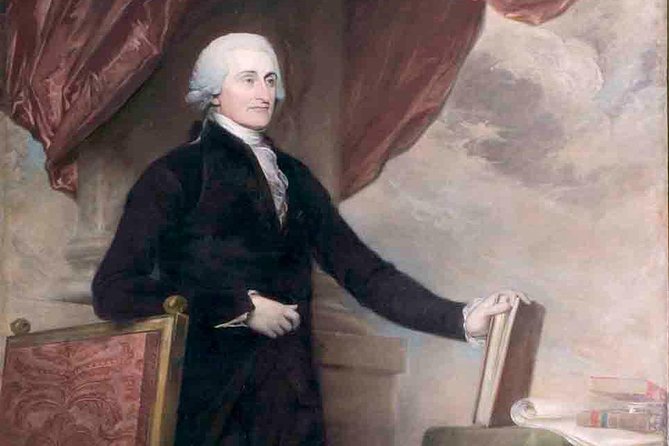
This experience involves about 2 hours of walking, and it’s not recommended for people who have walking difficulties. The good news is that the stop pattern is manageable, with short time at each location and frequent story beats.
Still, it’s smart to plan your day so you don’t stack it back-to-back with long, exhausting sightseeing. I’d schedule it earlier in the day when your energy is higher, then build in a slower activity afterward.
What to wear:
- Comfortable walking shoes you already know work
- A light layer, because weather can change fast
- Something small for hydration, since coffee and/or tea, bottled water, and snacks are not included
Also, the tour is designed for being outside. If you’re prone to getting chilly or wet, plan for it. If weather forces a change, the provider will offer another date or a full refund.
Who this tour suits best (and who might want a different plan)
This tour is a great match if you:
- Want Paris through American Revolutionary connections, not just French highlights
- Enjoy walking tours with a more personal pace and room to ask questions
- Like history that you can see on street corners, not only in indoor rooms
It may be less ideal if you:
- Have limited mobility or want minimal walking, since it’s built around a walking route
- Prefer long stops at a single museum or site, since each landmark is brief and the flow stays moving
A helpful detail from real-world experience: when someone had an ankle sprain and could not keep walking, the guide arranged to meet separately for a non-walking version. That doesn’t mean every day will work the same way, but it does suggest the guide is willing to be thoughtful if you communicate your needs early.
Should you book America’s Founding Fathers in Paris?
Book it if you want a small-group walk that turns Franklin, Jefferson, Paine, and John Paul Jones into street-level stories. The mix of Le Procope, the Luxembourg area, Odéon, and Rue Bonaparte is a smart way to learn the “how” of the Franco-American friendship without turning your day into a checklist.
Skip or choose another option if walking is a strain for you. And if you love staying planted in one place, this route will feel too active.
If you do book, go in with comfortable shoes and a curiosity for the less-famous turns of the story. That’s when this tour feels like Paris showing you its hidden connections, not just a set of historic stops.
FAQ
How long is the tour?
It runs for about 2 hours 30 minutes.
How many people are in the group?
The maximum group size is 8 travelers.
Where does the tour start and end?
It starts at Place Saint-Germain des Prés (75006) and ends at Rue de Tournon (75006), near the Luxembourg Gardens.
Is coffee, tea, water, or snacks included?
No. Coffee and/or tea, bottled water, and snacks are not included.
Is admission included for the stops?
Admission tickets are listed as free for the stop locations included on the tour.
What’s included in the tour price?
You get audio commentary.
Is the tour suitable if I have trouble walking?
The tour requires about 2 hours of walking and is not recommended for those with difficulties in walking. In at least one case, the guide arranged a separate non-walking version when someone sprained an ankle.
What is the cancellation policy?
You can cancel for a full refund up to 24 hours before the experience starts. If you cancel less than 24 hours before, the amount paid is not refunded. The experience requires good weather, and if canceled due to poor weather you’ll be offered a different date or a full refund.
Final note: the best way to enjoy this walk
If you want to make the most of it, treat it like a guided “map of ideas.” Follow the route, listen to the audio at the stops, and ask questions when something surprises you. That’s where the tour feels most worth the ticket price.
More Walking Tours in Paris



More Tours in Paris





More Tour Reviews in Paris



Not for you? Here's more nearby things to do in Paris we have reviewed












Paris City Tours, side by side.
 ★ 4.6Louvre Museum Timed-Entrance TicketTickets from $2671,977 guest reviews
 ★ 4.6Disneyland® Paris 1-Day TicketTickets from $6149,412 guest reviews
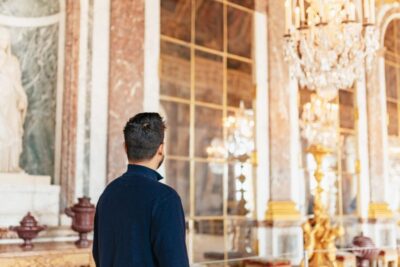 ★ 4.6Versailles Palace and Gardens Full Access TicketTickets from $1741,579 guest reviews
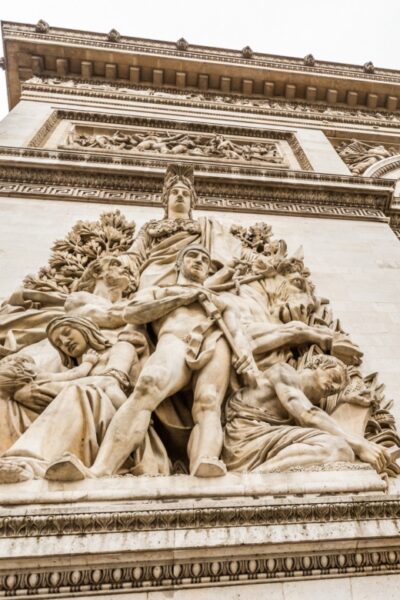 ★ 4.6Arc de Triomphe Rooftop TicketsTickets from $1834,264 guest reviews
 ★ 4.7Orsay Museum Entry TicketTickets from $1525,647 guest reviews
 ★ 4.4Evening River Cruise with MusicTickets from $2722,721 guest reviews
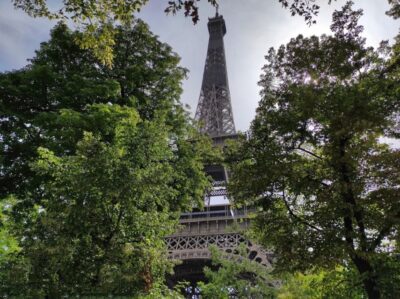 ★ 4.4Eiffel Tower Entry Ticket with Optional Summit AccessTickets from $2920,035 guest reviews
 ★ 4.3Eiffel Tower Summit or Second Floor AccessTickets from $5917,248 guest reviews