
Review · PARIS 2CV TOURS
All of Paris Tour in a Vintage Open-Top French Car Citroen DS
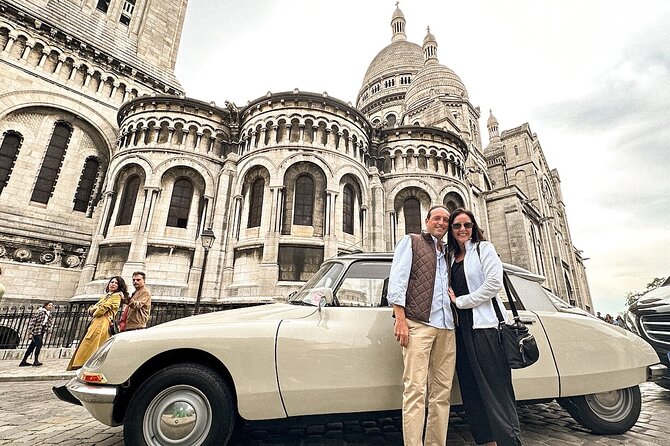
Paris looks best from a street level seat. This private ride in a vintage Citroen DS turns famous landmarks into something you can actually feel. You get a tight 3-hour loop with your guide Benjamin giving context as you roll past the icons, then you even get the kind of road moment most tours never include.
I especially love the combination of hotel pickup ease and Benjamin’s full attention on a private outing for up to four people. The second big win is comfort, too, since the car has heating and roomy seating, so the open-top look does not mean you freeze.
One thing to consider: it’s a highlights drive, not a museum day. You’ll spend short stretches at each stop, so if you want long interior time, this is more of a get-your-bearings-fast tour than a slow sightseeing marathon.
Key Highlights to Know Before You Go
- Private, up to 4 people with your own guide Benjamin, so you can ask questions and set the pace.
- Heated, comfortable open-top Citroen DS seating, with plenty of legroom.
- Hotel pickup and drop-off in central Paris (with some arrondissement limits), so you spend less time stuck on metros.
- A standout road moment at the Arc de Triomphe area, including a 12-lane roundabout ride.
- Photo stops at the big hits (Eiffel Tower, Louvre, Notre-Dame area) plus a few culture and local-life surprises.
A 3-Hour Best-Of Paris Ride, With Real Street Feel
This is the kind of tour that works on day one. You roll out into Paris in a vintage open-top Citroen DS, then come back with a map in your head and the city’s story in your ears. The whole format is built for orientation: landmarks, neighborhoods, and quick explanations while the skyline keeps changing around you.
The classic DS look is part of the fun. It turns every stop into a mini moment, like people slow down to look and you get the sense you are doing something a little different. But the real value is how the guide stitches scenes together. Instead of memorizing a list, you learn what to look for next when you walk on your own.
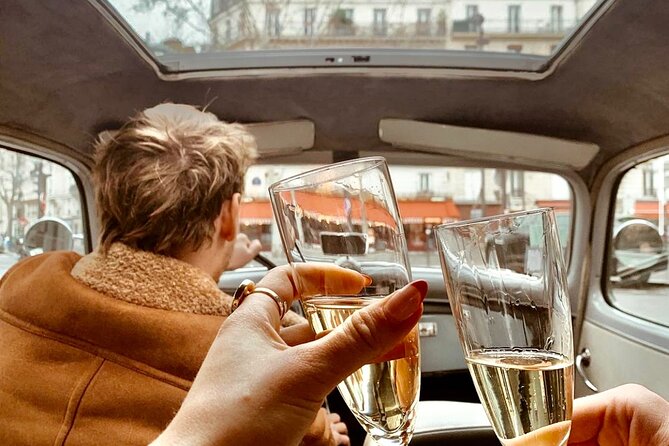
Comfort matters here because it is open-top. Even with the top style, the car includes heating, and the seats are described as comfortable with plenty of legroom. That combo makes it easier to handle a cool morning or late afternoon, and the tour timing also tries to avoid the worst traffic.
You can also read our reviews of more tours and experiences in Paris.


Price and What You Get for a Private Group Up to Four
The price is $478.90 per group for up to four people, which can be a solid deal if you have a small family or two couples traveling together. Split it four ways and you are roughly in the neighborhood of $120 per person for a private 3-hour ride with both a professional driver and a dedicated local guide.
You are paying for four things that add up fast in Paris:
- Private time with Benjamin, not a crowded group format.
- Driver + car that handles streets and getting you quickly from area to area.
- Pickup and drop-off to a location of your choice in much of central Paris.
- A guide-led story that helps you understand what you are seeing at street level.
If you are traveling solo or in a large group, the value is usually still strong because you get the private guide attention. But it is clearly most cost-effective when your group fills the four-person limit.
Benjamin’s Guide Style Makes the Difference
Benjamin runs the experience as the local guide, and that shows in the tone. The reviews highlight how patient and accommodating he was, including with teenage granddaughters, which matters because not every guide can handle mixed ages without turning the tour into a lecture.
What I like about this setup is that Benjamin is not just naming monuments. He connects them to why they matter in French life, politics, art, and daily culture. You also have an easy way to ask questions while you are moving, and that keeps the ride from feeling like a set of forced stops.
The practical side is good too. The reviews mention that Benjamin takes photos for you. That sounds small, but it is one less thing you have to juggle when you are standing on a busy Paris sidewalk trying to angle for a clean shot.
Central Paris Grandeur: Champs-Élysées to Arc de Triomphe
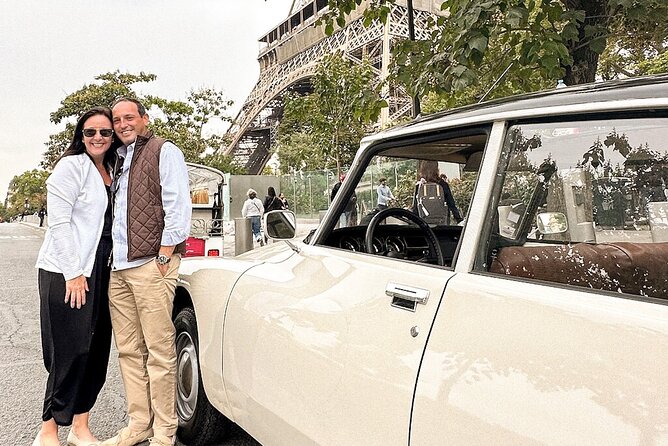
The tour starts in the classic showpiece zone, with the Champs-Élysées as the first major feel-good hit. This is where luxury storefronts meet big-city history, and doing it by car helps you notice scale fast. You get a short stop window (about 10 minutes is listed) that is perfect for a photo, a quick walk, and then back into the flow.
From there, you head toward the Grand Palais area. It is described as a glass-domed spectacle, and even if you do not go inside, you get a clear sense of why it is such a centerpiece in the city’s visual identity (a short stop is listed).
Next comes Place de la Concorde, with the Luxor Obelisk and the broad, monumental feel of the square. This stop is brief (about 5 minutes listed), so treat it like a snapshot moment. Look for the obelisk and the way the space opens up toward the major boulevards.
Then you move through the Invalides area, a reminder of French military history with its golden dome and the tomb associated with Napoleon Bonaparte. This is one of those spots where “just looking” still works, because the architecture does a lot of storytelling.
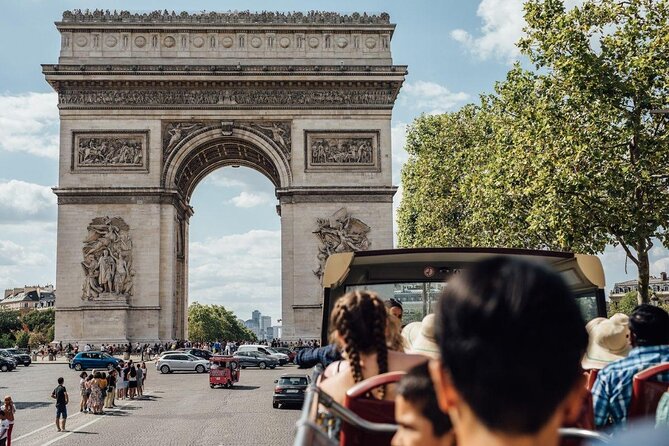
The highlight road moment is at the Arc de Triomphe. You get about 10 minutes near the arch, plus a ride on the 12-lane roundabout around the area. That is the kind of detail that makes this tour feel special. Most sightseeing is slow and cautious. This gives you the real Paris circulation vibe, with a guided sense of where you are and what the monument represents.
River Glamour and Opera Streets: Pont Alexandre III to Place Vendôme
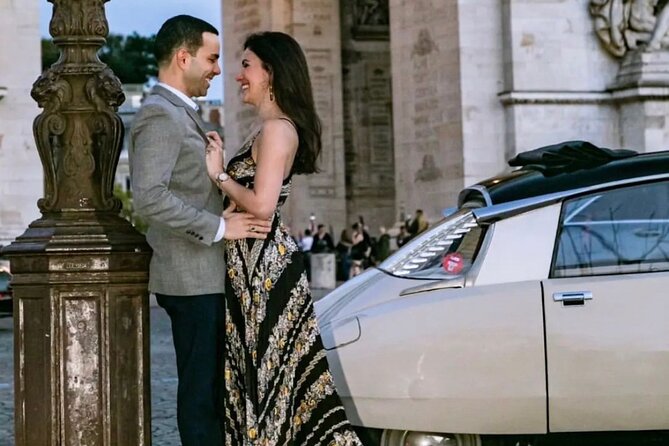
After the Arc area, you cross toward Pont Alexandre III. This bridge is known for its ornate sculpture work and grand views, and it is a great chance to shift from monuments to perspective. Seeing the city’s postcard angles from the river is the fastest way to understand how the neighborhoods line up.
Next, you roll through the Opéra Garnier area. This is the stop where Paris turns theatrical. The exterior design is the point, and even with a short stop (noted as a quick viewing window), it helps you spot the style of the 19th century in real space.
Place Vendôme is next on the route. Here you get a sense of what luxury shopping corridors look like when you are not just passing them on foot. The Vendôme Column makes it easy to remember where you are, and the square layout is also practical for quick photos.
Then you head toward the Eiffel Tower area via Rue de l’Université and nearby streets. You get about 15 minutes here, which is enough time to do what most people want: take pictures, soak up the street scene, and orient yourself for future visits without feeling rushed.





Louvre and Notre-Dame Area: Quick Stops That Still Land
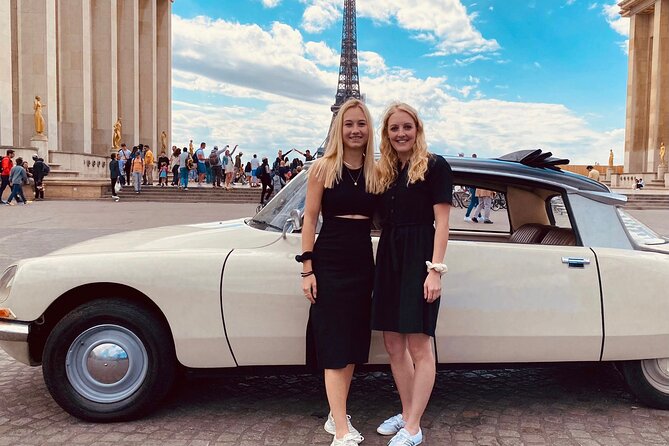
The Louvre is the kind of place where a quick stop can still work, because the scale is obvious immediately. You get a short viewing window (about 5 minutes listed) and a chance to see the glass pyramid setting. Even if you skip the inside museum time, you learn where the museum sits in the larger city geometry.
From there, you head to Île de la Cité and the Notre-Dame area. This is where Paris gets emotional for a lot of people, and it is also where the guide context helps. You get about 15 minutes here, which is a solid block for seeing the cathedral presence and the way the Seine wraps around the island.
You might also notice the surrounding historic street feel, because the tour text points you toward the Seine-side atmosphere and nearby landmarks like Sainte-Chapelle. Even without a long inside stop, being in the right place matters when you later plan your own walking routes.
Latin Quarter and Saint-Germain: Books, Churches, and Coffee Stops
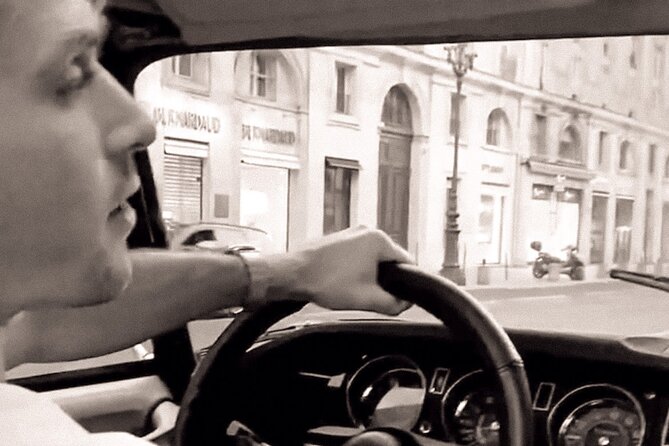
After the core landmarks, the tour shifts into neighborhoods where Paris feels like a living city, not only a photo set. The Latin Quarter appears with key points like the Panthéon area and references to Ernest Hemingway’s Paris apartment in that district. That kind of detail is useful because it helps you picture what writers, students, and locals were doing in these streets.
You also spend time around Place de la Contrescarpe. This is a practical kind of stop, because it gives you a sense of the Left Bank rhythm, where cafés and small streets do the work.
Saint-Sulpice Church is another strong point. It is noted for grand Baroque architecture and intricate murals, and it is a calmer pause while you are still surrounded by city motion. Even with a short stop, churches like this can reset your energy.
Then you get the Jardin du Luxembourg area. That is a good “breather” stop on a driving tour because you can relax for a moment and look at fountains and garden layouts, even if you are not staying long.
You may also pass Pont Neuf, described as the oldest standing bridge, and it is the kind of landmark that helps you connect Paris now to Paris long ago. A short stop window (about 5 minutes listed) is enough for a view and a few photos of the historic riverbanks.
Moulin Rouge, Café Culture, and the Saint-Germain Classics
The route also touches Moulin Rouge, a short viewing stop (about 5 minutes listed) that lets you connect the broader Belle Époque story to something you have seen in films. It is one of the easiest “this is Paris” moments to recognize from a distance.
You then get references to literary and café landmarks like Les Deux Magots and Le Café de Flore in Saint-Germain-des-Prés. These are not just names. They represent Paris as an idea, the place where writing, debate, and late conversations are part of the daily rhythm.
Saint-Germain-des-Prés also connects with other historic points on the route, like the Abbey of Saint-Germain-des-Prés. If you are the kind of traveler who likes to understand the religious and educational layers of a city, you’ll appreciate how these stops offer multiple angles on the Left Bank.
The Palais Bourbon and the Palais du Luxembourg show up as well, adding a political layer. Seeing these buildings as part of the city, not only as labels on a map, gives you context for how power and public space sit side by side.
Montmartre in the Open-Top DS: Views, Windmill-Era Streets, and Art Corners
The Montmartre segment is where the vintage-car idea really pays off. The streets feel like a different neighborhood world, and the open-top ride makes the climb and curves feel more personal.
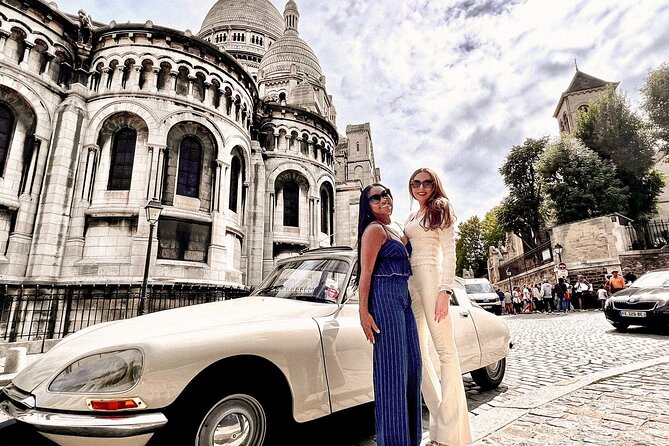
You reach Sacré-Cœur and get about 15 minutes to take in the gleaming white domes and the panoramic views over Paris. This is a big payoff stop because you get both the monument and the look-out perspective.
Around Montmartre itself, the tour includes stops connected to local art energy. Place du Tertre is mentioned as an area where painters show their work, and it is a great place to observe how tourism and street creativity coexist.
You also get Montmartre stairs, described as narrow alley climbing with charming views. If you want the “old village in a big city” feeling, this is the stop style that creates it.
Other Montmartre highlights named in the route include Pigalle, Le Mur des Je t’aime, and classic links to cabaret history like Le Chat Noir. The Wall of Je t’aime is especially memorable because it is playful, and the fact that the words appear in many languages gives it a modern Paris touch.
The itinerary also points to areas tied to famous artists, including Van Gogh’s House in Montmartre and Renoir’s House. There is no claim of a long visit window for these homes, but even a short look or pass-by can help you connect the streets to the painters’ era.
You may also see references to the Moulin de la Galette and Clos Montmartre, which adds a food and wine-making angle to a district people often only think of for nightlife.
Palais-Royal, Galerie Vivienne, and a More Peaceful Paris Core
After Montmartre, the tour drifts back toward central areas with a calmer vibe. Palais-Royal is listed, with elegant gardens and arcades, plus the famous striped columns by Buren. This stop is one of those “slow down” moments on a driving tour because the geometry feels designed for strolling.
Galerie Vivienne appears next. It is a 19th-century covered passage, and it is the sort of place you notice even without long time inside, since the glass roof and corridor feel different from open boulevards.
You also get nearby squares like Place Valois and Place des Victoires. These aren’t just decorative. They help you understand how Paris distributes space, statue, and civic identity across small radiating streets.
If you like architecture with layers, Saint-Étienne-du-Mont shows up near the Panthéon area. It is noted for Gothic and Renaissance style details, which makes it a good stop when you want something a little different from the major-brand monuments.
The Seine Finale: Ports, Obelisks, and a Liberty Workshop Plaque
The tour continues to point you toward the Seine for river views and photo chances. Pont de la Concorde is mentioned, connecting Place de la Concorde to the Jardin des Tuileries. That river-crossing angle is useful because it shows the city’s layout in a way sidewalks sometimes hide.
You might also pass by the Musée d’Orsay area and Tuileries Gardens. Even if you do not enter, you get the “where would I walk next” sense that makes independent planning easier.
Élysée Palace and other government buildings appear too, reminding you this is not only a tourist city, it is a working seat of national life.
One unusual detail that stands out is the statue-making link at Rue de Chazelles. The tour text mentions a workshop where the Statue of Liberty was built between 1881 and 1884, and a plaque honors that origin in Paris before its journey to New York. It is the kind of fact that makes the tour feel more like real history, not only landmark branding.
The route also mentions the Quai de Seine for riverside walking vibe. This is a perfect “last photos” segment because the bridges give you frames and the water gives you that Paris blur effect.
Who This Tour Suits Best (and Who Might Want Something Different)
This tour is ideal if you:
- Want a first-day orientation to major Paris landmarks.
- Care about comfort, especially with open-top sightseeing.
- Enjoy private guiding and asking questions without a group pace.
- Like the idea of mixing iconic places with a few culture stops like bookshops and famous cafés.
It is less ideal if you:
- Want deep time inside big museums like the Louvre.
- Prefer lots of long, unhurried walking in one area.
- Travel with children under 10, since children under 10 are not allowed due to no seat belt on the back seats.
If you are trying to do “Paris highlights plus personality” in one go, this fits well. If you want a multi-stop museum and neighborhood deep dive, you would likely pair this with a longer, on-foot day afterward.
Should You Book This Vintage Open-Top Citroen DS Paris Tour?
I think this is a strong booking when you want value from a private guide, comfort from a heated car, and the unique charm of a vintage DS ride. The Arc de Triomphe 12-lane roundabout moment is a fun differentiator, and Benjamin’s style seems to connect well with different ages without turning the experience stiff.
Book it if you want to:
- Get your bearings quickly in 3 hours.
- See the big hitters like Eiffel Tower, Louvre, and Notre-Dame area without spending your whole day in lines.
- Enjoy a guided story across multiple neighborhoods instead of staying in one zone.
Skip it if your travel priority is long museum time or slow wandering. In that case, you may want a longer format that trades road coverage for deeper stays. But if your plan includes follow-up days of walking, this is the kind of first move that makes the rest of your trip easier to navigate.
FAQ
How long is the All of Paris Tour?
It runs for about 3 hours.
Is this a private tour?
Yes. It is private, and your group will be the only participants, up to 4 people.
Do you offer hotel pickup in Paris?
Yes. Pickup and drop-off are offered to any location of your choice inside the city of Paris except in the 3rd, 4th, 10th, 11th, 12th, 19th, and 20th arrondissements. It also notes no pickup or drop-off at Le Marais, Bastille, République, and Gare du Nord.
What language is the tour offered in?
It is offered in English.
Is the car heated, and is it open-top?
The car has heating and comfortable seats with plenty of legroom, and it is described as a vintage open-top French car experience.
Is there an age limit for children?
Yes. Children under 10 years old are unfortunately not allowed because there are no seat belts on the back seats.
More Tours in Paris


More Tour Reviews in Paris
Not for you? Here's more nearby things to do in Paris we have reviewed






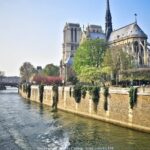


Paris 2CV Tours, side by side.
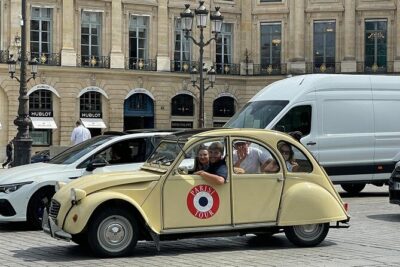 ★ 4.5Vintage 2CV Adventure: 2 -Hour Paris Secrets TourTickets from $344488 guest reviews
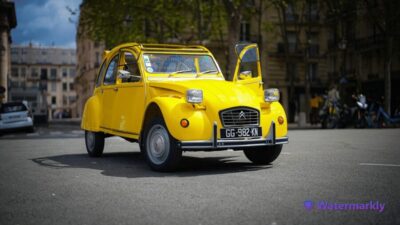 ★ 4.9Discover Paris 2CVTickets from $135472 guest reviews
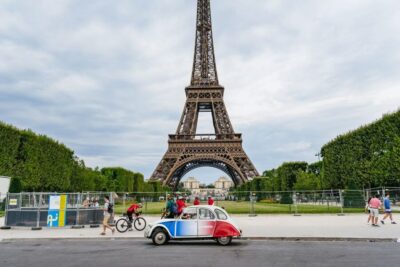 ★ 4.71-Hour Vintage Citroen 2CV TourTickets from $64314 guest reviews
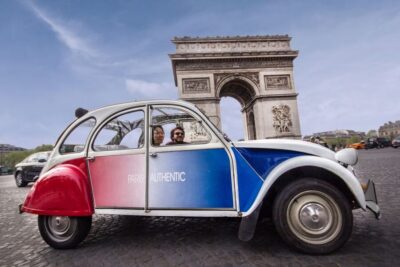 ★ 4.4Vintage 2CV tour + CruiseTickets from $100252 guest reviews
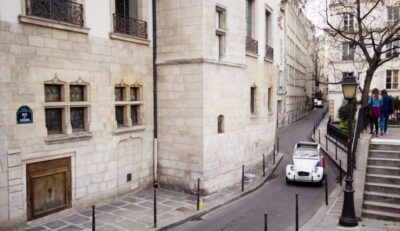 ★ 4.7Off-the-Beaten Track in Paris: 2-Hour Vintage 2CV TourTickets from $129236 guest reviews
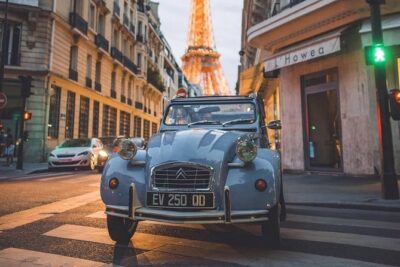 ★ 4.5Vintage 2CV Adventure: 2-Hour Paris Highlights TourTickets from $349214 guest reviews
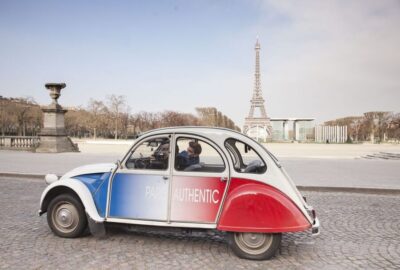 ★ 4.6Romantic Paris Vintage Citroën 2CV TourTickets from $140198 guest reviews
 ★ 4.9Private Sightseeing Tour in Citroën 2CVTickets from $246194 guest reviews
This tour also belongs to