
Review · PARIS 2CV TOURS
1.5 Hour Private Tour in Paris in a Classic Citroën
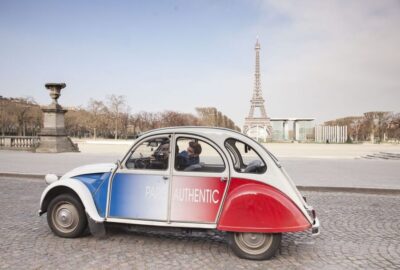
Paris by car, but make it charming. This private 2CV tour is a fast, fun way to orient yourself with standout sights, plus a roof-down ride that keeps photos easy. I like that the day timing helps you see the city’s rhythm while many major places are still open.
I also love how the route mixes big icons with very Paris details, from the Avenue Montaigne luxury stretch to Left Bank literature-and-café stops. The main drawback is that this is a sightseeing drive, not a walking tour, so you will pass a lot quickly, with limited time for lingering unless your guide builds in extra stops.
Key highlights worth planning for
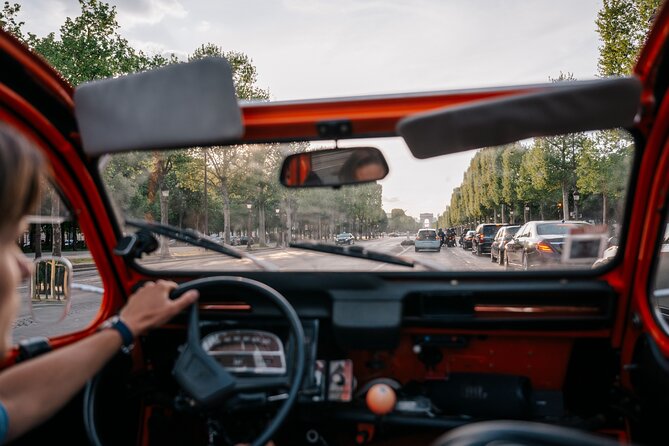
- Classic Citroën 2CV with a convertible roof, made for unobstructed views and street-level photos
- A compact 1.5-hour private loop, best for first-time orientation and people who want less walking
- Daylight pacing, so you catch landmarks when the city feels alive and many sights are open
- Saint-Germain café stops and classic bookstores, for the Paris you see in books and movies
- Top-off rain handling and comfort touches, including warm blankets when weather turns
- Small-group value, priced per group up to 3, not per person
Why the Citroën 2CV changes how you see Paris
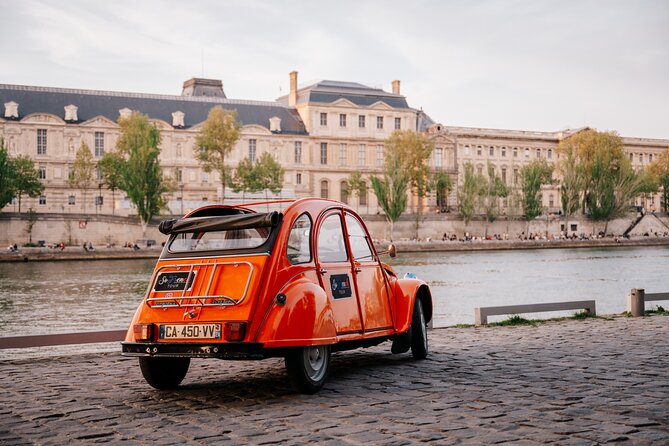
A regular bus tour makes Paris feel like a list. A classic Citroën 2CV does the opposite. It moves slowly enough to notice details, and it attracts attention in a good way, like people want to smile and point as you roll by.
The convertible roof is the secret sauce. When it’s open, you get a cleaner sightline at big landmarks, and you can take photos without the usual “window glare plus crowd wall” problem. It’s also just fun. Paris can be intense. This ride gives you a lighter feeling right away.
One more thing I’d plan around: since it’s a short private tour, you’re not going deep on any single monument. You’re here to see and feel the city, then decide what you want to return for later.
You can also read our reviews of more private tours in Paris



Price and value for a private 1.5-hour drive (up to 3 people)
This tour costs $289.73 per group, for up to 3 people, and lasts about 1 hour 30 minutes. If you go with two friends, your per-person cost drops a lot compared with typical guided sightseeing. If you’re traveling solo, it’s still a solid choice because it’s private and you get pick-up help, so you spend less time figuring out logistics.
You’ll also get:
- Pickup offered (so you’re less dependent on navigating the city at the start)
- A mobile ticket
- Commentary in French, English, or Spanish
- A private setup where only your group participates
It’s booked about 55 days in advance on average, which tells me it’s popular enough that you should not wait until the last minute if your dates are fixed.
From Galeries Lafayette to the Eiffel Tower: the iconic starter pack
This route begins with a big visual wow, and it’s timed for a day-drive feel rather than a deep museum day.
Stop 1: Galeries Lafayette Paris Haussmann
You’ll pass in front of one of Europe’s best-known department store buildings. It’s an Art Nouveau style landmark with a grand presence, and even if you don’t go inside, it’s a great “welcome to Paris” moment. This is also a good place for a quick photo because it’s visually strong from the street.
Stop 2: Palais Garnier (Opera)
Next is Palais Garnier, the famous opera house built in 1861. You’ll see the impressive façade and get the chance to spot the Café de la Paix nearby, with its Napoleon III era look. This stop is mostly about the architecture vibe, not entry.




Stop 3: Place Vendôme
Then the tour moves to one of Paris’s royal squares. Look for Napoleon’s column, made from melted cannonballs of his enemies. It’s a wild origin story, and that context gives the square more bite than it would have otherwise. You’ll also pass the Ritz area, a classic “Paris glamour” marker.
Stop 4: Jardin des Tuileries
At the Tuileries Garden, you’ll get a sense of how Paris ties museums, palaces, and public space together. It’s a quick pass, but if you’re jet-lagged, this kind of open garden break helps you reset.
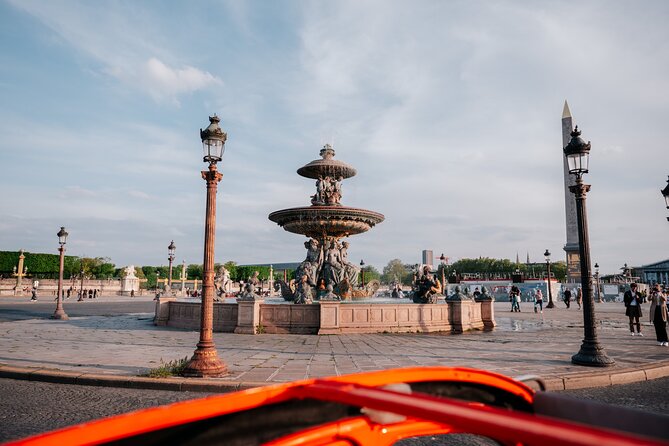
Stop 5: Place de la Concorde
Place de la Concorde is huge and dramatic. You’ll pass by the Luxor Obelisk, a massive Egyptian monument, and the surrounding grand buildings. This is one of those places where the scale hits you even when you’re just riding by.
Stop 6: Palais-Bourbon
You’ll then pass the Parliament area, the Palais Bourbon. From the street, it’s a “politics and power” contrast to all the romance you’ve been seeing. It’s also useful for orientation, because you start to recognize the larger governmental and boulevard grid.
Stop 7: Arc de Triomphe
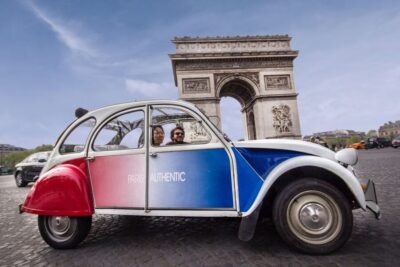
Arc de Triomphe is next, high drama in stone. Even without going up, it’s a key Paris anchor. You’ll see the commemorative names carved into the façade, and it makes the surrounding boulevard axis make more sense.
Stop 8: Avenue Montaigne
Avenue Montaigne is luxury fashion territory. You’ll pass by designer storefront culture and get a feel for the right-bank “old money” styling that Paris does so well.
Stop 9: Eiffel Tower
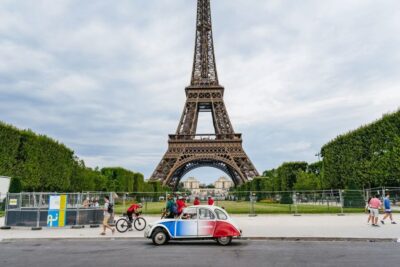
Finally, the Eiffel Tower, the 300m tower nicknamed that way for good reason. The key here is not trying to conquer it in an hour. It’s the highlight payoff for the first stretch, and it sets you up to plan whether you want a second visit for views, tickets, or a longer photo session.
Saint-Germain, Notre-Dame, and the Champs-Élysées axis
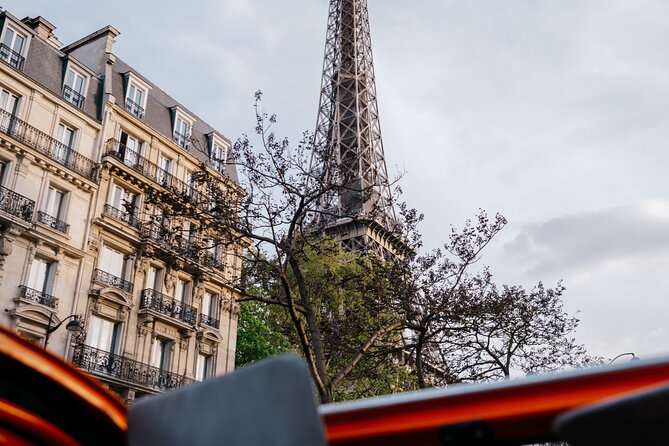
After Eiffel Tower, the route pivots toward Paris’s Left Bank mood and the classic central spine of the city.
Stop 10: Saint-Germain-des-Prés quarter
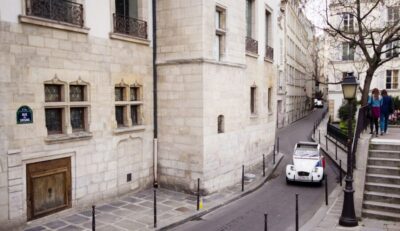
This is where the day tour becomes more than landmark spotting. You’ll circle Saint-Germain streets and get that “Midnight in Paris” feeling, the literary Paris with real names attached. The route mentions places tied to writers and thinkers, and what you’ll really get is a sense of neighborhood character: smaller streets, café energy, and Paris that feels lived-in.
Stop 11: Cathedrale Notre-Dame de Paris
You’ll pass Notre-Dame from the right side of the city and get a clear sense of its long Gothic build story, begun in 1153 and built over centuries. Even if you’ve seen photos before, the scale is what hits you when you’re close.
Stop 12: Champs-Élysées
Then it’s the iconic long avenue, about 2 km, built along a historic axis. It’s famous for a reason. On a short drive, it helps you connect the dots between major monuments. But this is also one of the areas where you might wish you had more time on foot, since street-level views and side streets are part of the experience.
Invalides, Pont Alexandre III, and the Grand and Petit Palais
This section shifts you into the “Paris looks like a gallery” zone, where architecture takes center stage.
Stop 13: Musée de l’Armée des Invalides
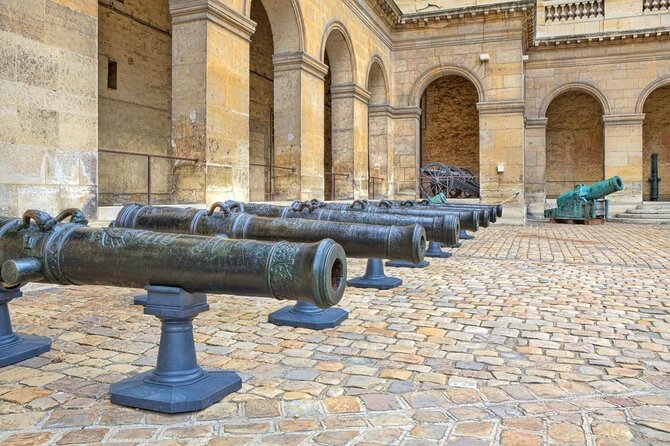
You’ll pass the Invalides complex, built under Louis XIV to house disabled soldiers. The standout feature is the area’s association with Napoleon, including Napoleon’s tomb. From the street, it’s the grand classical French style that lands first, and it’s also a useful way to orient yourself for the nearby river crossings.
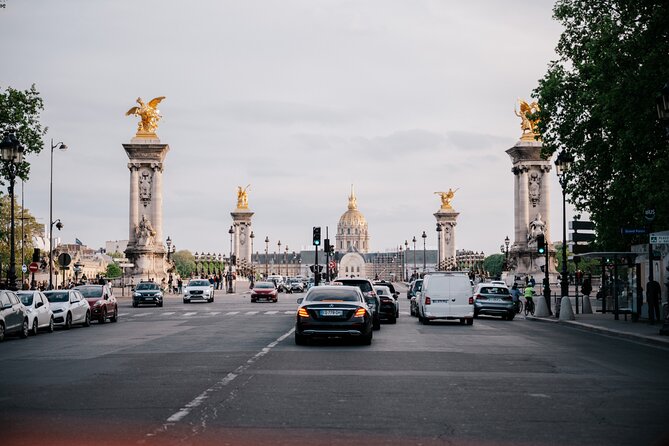
Stop 14: Pont Alexandre III
This bridge is one of the most photographed in Paris for a reason. You’ll pass it along the Invalides axis and learn the idea behind it, Franco-Russian friendship. Even riding by, you can spot why this bridge feels ceremonial.
Stops 15 and 16: Grand Palais and Petit Palais
Grand Palais and Petit Palais are both from the Universal Exhibition era. Grand Palais was dedicated to French art, and the structure’s glass-like roof and light concept is the talking point. Petit Palais is the smaller sibling across the way, and it’s known for its self-cleaning stone after rain and the presence of a garden and a Golden Gate. This is a great stretch to keep your eyes up. Paris hides big details when you stare only at the skyline.
Stop 17: Élysée Palace
You’ll pass by the Élysée Palace, the President of the Republic residence. The tour frames it as a former private mansion from 1720. Even if you cannot see inside, the location reinforces how Paris mixes power, grand architecture, and everyday street life.
Stop 18: La Madeleine
La Madeleine is a surprise for many people. It was designed as a Greek temple idea and looks like a classic. You’ll pass it fast, but it’s one of those stops that resets your brain. Paris is never only one style.
Shakespeare and Company, Odeon, and the Latin Quarter vibe
Now the route leans hard into bookshops and neighborhoods.
Stop 19: Shakespeare and Company
Passing by this world-famous bookstore, you get that literary Paris feeling tied to writers like Hemingway and F. Scott Fitzgerald. Even if you don’t enter, it’s a strong “I’m really here” landmark.
Stop 20: Odeon / Saint-Michel
You’ll reach a lively square with a fountain, and the area is known for evening energy. Riding by gives you the geographic cue, so later, if you want to wander, you’ll know where you are. This stop also helps bridge you from tourist landmarks toward the more human-scaled streets.
Stop 21: Place Dauphine
Next is the triangular square, one of the royal squares. It’s associated with pétanque and people lounging, which is classic Paris: the city built for strolling and then turned into an outdoor living room.
Stop 22: Church of Saint-Germain-des-Prés
You’ll pass this very old church, over 1500 years old. It’s framed as a royal abbey, and relic veneration is part of its story. The practical value is less about entry and more about connecting the neighborhood to deeper roots.
Stop 23: Café de Flore
Now you hit the café legend zone. Café de Flore is tied to Hemingway and Fitzgerald, and it’s the kind of place where the setting alone feels like you’re watching a film scene. Even without a long sit-down, it’s a meaningful stop for the Left Bank story.
Stop 24: Les Deux Magots
Right after Café de Flore, you’ll pass Les Deux Magots, another famous café with a long list of artists and thinkers. It’s strongly associated with names you’ve probably heard, which makes it an easy way to build context as you ride. For me, this is where the tour feels most “Paris is a character” instead of “Paris is a brochure.”
Rue de Buci, Le Procope, and finishing on the Seine bridges
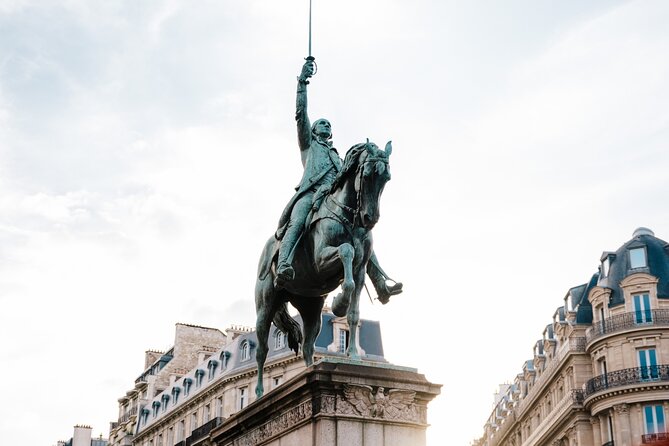
The final third becomes more like a guided stroll through memory, then it drops you toward the river views.
Stop 25: Place Furstemberg
This small square is tied to the Eugène Delacroix museum site and is described as one of the more romantic-feeling spots. Since you pass through quickly, focus on the street texture, trees, and the cozy square scale.
Stop 26: Rue de Buci
Rue de Buci is a classic Left Bank café street. It’s a good marker for where to return if you want a relaxed dinner crawl. Riding by gives you a shortlist of streets to explore later, without wasting your whole day wandering.
Stop 27: Le Procope
Le Procope is passed as the oldest restaurant in Paris, dating from 1686. The tour notes that Franklin Roosevelt and Napoleon ate there. Even if you don’t plan to dine during your visit, it’s a cool “Paris has been here a long time” reality check.
Stop 28: Quais de la Seine, under Pont Neuf and Pont des Arts
Then comes the river stretch. The tour describes it like cruise-on-wheels, and that’s a smart way to think about it. The Seine is a constant in Paris, and riding along its banks gives you an instant map in your head.
Stop 29: Pont des Arts
Pont des Arts is known as the Pont des Amoureux when romances were symbolized by padlocks. You’ll pass under it, which is enough to give you the feel of the bridge without turning this into an all-day detour.
Stop 30: Pont Neuf
Then, Pont Neuf, the oldest bridge in Paris in that you’ll recognize it fast and feel the history. It’s also one of the best “close out the sightseeing loop” moments because it’s a cinematic bridge in many films.
Stop 31: Palais de l’Institut de France (Mazarine Library area)
The finish is the Institut de France complex area, including the Mazarine library. It’s framed as the oldest library in France and a site where the dictionary idea is mentioned in the tour context. This ending works because it ties the whole trip together: Paris as art, literature, monuments, and institutions.
What day touring gets right, and how to handle rain
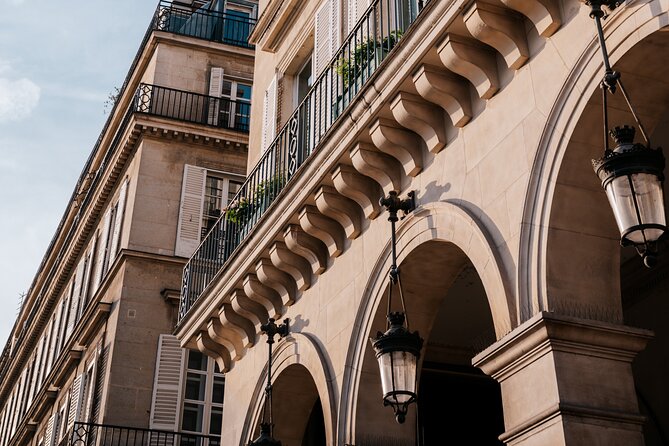
The big advantage here is that this is a daytime tour. It’s built around daylight views, and the tour explicitly mentions that monuments you pass are still open. Even when you’re not going inside, the vibe of Paris in the daytime helps you understand where things are and how they connect.
Now the weather part. This experience requires good weather, and rain can change the feel fast. In the best version of this tour, the guide adapts. One of the standout details from the tour experience is how the guide approach rain is practical, not just shrugging. The roof can be handled to keep the view as open as possible, and warm blankets can make a difference.
My practical advice: bring a light rain layer even if the forecast looks fine. And if you want photos, ask early how your guide plans to handle the roof in changing weather. Good guides think about it before you start worrying.
Who this classic Citroën tour fits best
This 1.5-hour private loop is ideal if:
- You want maximum Paris highlights with minimal walking
- You’re traveling in a small group, up to 3, and want private attention
- You’re first-time in Paris and want a quick mental map
- You care about both icons and neighborhood mood, especially Saint-Germain and its café-and-book culture
It’s less ideal if:
- You’re hoping for lots of museum time or interior visits, since this is primarily a pass-by driving experience
- You get frustrated with short stops. Some locations are just photo moments, not long explores
Should you book this 2CV private tour?
If your goal is to get your bearings fast and still feel like you’re doing something characterful, I’d say yes. The value is best when you split the cost in a group of up to 3, and the private format means your guide can steer the pace to match your questions.
I would not treat it as your only Paris plan. Treat it like a smart first chapter. Use it to decide what you want to return to on your own, whether that means a longer stop around Notre-Dame, a deeper wander in Saint-Germain, or a future evening stroll along the Seine bridges.
FAQ
What is the duration of the 1.5 Hour Private Tour in Paris in a Classic Citroën?
It runs for about 1 hour 30 minutes.
How many people can be in the group?
It is priced per group for up to 3 people, and it is private, meaning only your group participates.
Is pickup offered?
Yes, pickup is offered.
What languages are available for the tour comments?
The tour includes comments in French, English, or Spanish.
Do I need to buy monument tickets for the stops?
Monument entrances are not included, and the tour is focused on what you can see from the route and exterior passages.
Is a mobile ticket used?
Yes, a mobile ticket is provided.
What weather conditions are required?
This experience requires good weather. If it is canceled due to poor weather, you’ll be offered a different date or a full refund.
Are alcoholic drinks included?
No. Alcoholic beverages such as champagne are not included.
More Private Tours in Paris


More Tours in Paris


More Tour Reviews in Paris



Not for you? Here's more nearby things to do in Paris we have reviewed












Paris 2CV Tours, side by side.
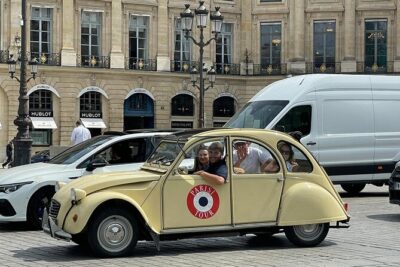 ★ 4.5Vintage 2CV Adventure: 2 -Hour Paris Secrets TourTickets from $344488 guest reviews
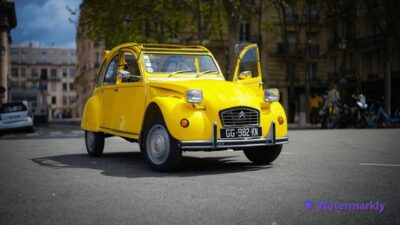 ★ 4.9Discover Paris 2CVTickets from $135472 guest reviews
 ★ 4.71-Hour Vintage Citroen 2CV TourTickets from $64314 guest reviews
 ★ 4.4Vintage 2CV tour + CruiseTickets from $100252 guest reviews
 ★ 4.7Off-the-Beaten Track in Paris: 2-Hour Vintage 2CV TourTickets from $129236 guest reviews
 ★ 4.5Vintage 2CV Adventure: 2-Hour Paris Highlights TourTickets from $349214 guest reviews
 ★ 4.6Romantic Paris Vintage Citroën 2CV TourTickets from $140198 guest reviews
 ★ 4.9Private Sightseeing Tour in Citroën 2CVTickets from $246194 guest reviews
This tour also belongs to