
Review · PARIS CITY TOURS
Paris: Pompidou Centre Private Guided Tour
Pipes, politics, and art in one lesson. This Paris private guided tour at the Centre Pompidou is interesting because it treats the building itself like the main exhibit, then uses modern art history to make you see it differently. I also like that it’s private, so the guide can pace the story to your questions and attention span.
What I like most is the way the tour connects big ideas you often hear in museum reviews, but rarely feel in your body. You’ll walk through the Pompidou’s construction story and learn how it ties into urban planning and gentrification, not just aesthetics. Then the guide ties it back to 20th-century art with clear context, including an arc that reaches from the end of the 19th century into the late 1980s.
One possible drawback: the museum itself is closed during reconstruction, so this visit is mostly about the Centre Pompidou as an architectural artifact, not a deep, inside look at the collection. If you mainly want galleries and artworks, you may need to adjust your expectations.
Key Highlights You Can Actually Feel
- Building first, art second: the exterior becomes the teaching tool, especially during reconstruction closure
- Architecture and city planning together: you learn how the Pompidou relates to its neighborhood, not in theory but in perspective
- Gentrification context that makes sense: you’ll understand how the museum shaped its surroundings in the 1970s
- The Notre Dame of Pipes framing: a local nickname that gives you a grounded way to interpret the design
- Guides who explain, not lecture: strong review notes on clarity, pacing, and putting modern art in context
Centre Pompidou as an Architectural Argument
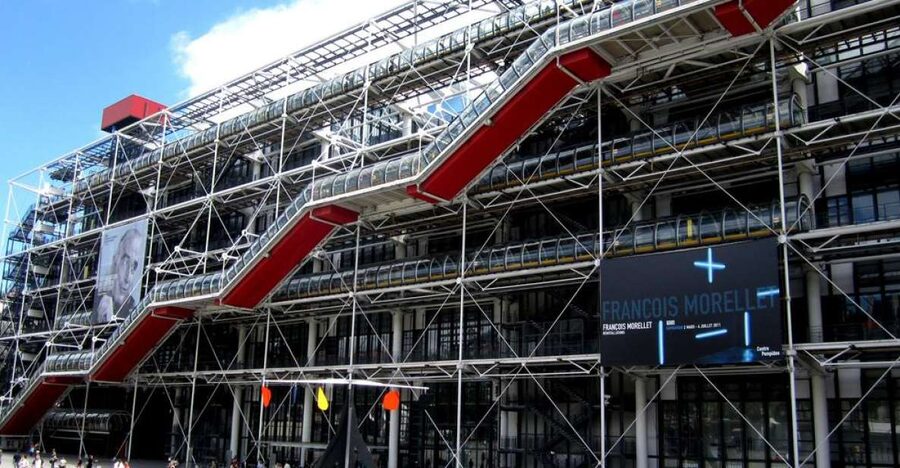
The Centre Pompidou can feel like a contradiction at first glance. You come for modern and contemporary art, but the tour setup flips the script and starts with the building. That choice matters, because once you understand the structure as an idea, the art context lands with less effort.
In this experience, you’re not just staring at pipes and shapes. You’re learning why the building became a famous example of architectural provocation, and how that provocation connects to the way cities grow and change. The guide also explains how the Pompidou challenges its surroundings, which helps you see it as part of a larger urban story, not an isolated landmark.
And then there’s the local nickname, Notre Dame of Pipes. That phrase is useful, because it makes the design feel like it has a relationship with everyday Parisians, not just with design students and architecture books.
You can also read our reviews of more guided tours in Paris


What You Get From a Private 90-Minute Format
Ninety minutes sounds short until you realize how well it fits the Pompidou’s main teaching goal: comprehension. This isn’t about rushing through everything. It’s about giving you keys you can use while you stand outside the building and look at it with new eyes.
Because it’s a private group, you’re more likely to get a tour that responds to you. If you’re traveling as a couple, with a friend, or bringing a child, the guide can adjust the pace. One highlight from the feedback is how the narration works even for a 12-year-old, meaning the story doesn’t get stuck in jargon.
Also, the tour runs rain or shine. That sounds minor, but it changes how you plan. You’re choosing a guide-led experience that doesn’t vanish when the weather does.
Finding Your Guide at Stravinsky Fountain With a Red Tote
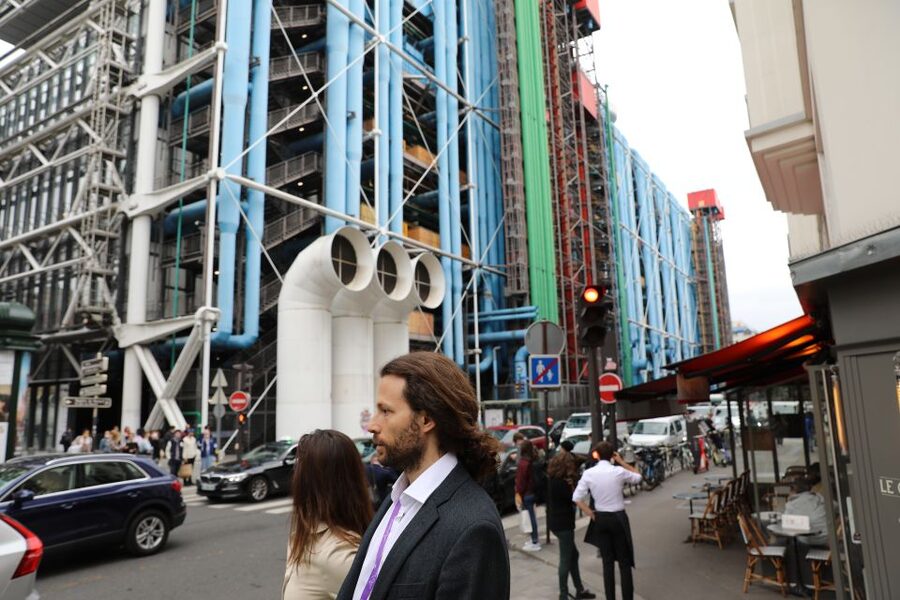
Your meeting point is the Stravinsky Fountain on Rue Saint Merri, 75004 Paris. The guide will be carrying a red tote canvas bag, which makes it easier to spot the right person quickly.
This matters more than it seems, because Pompidou area walking can get confusing if you arrive without a plan. Starting at a clear landmark helps you get oriented fast, and then the tour can jump into explanation rather than spending time figuring out where to go next.
If you’re arriving early, I’d use the extra minutes to watch the area around the fountain and pick out nearby streets. You don’t need a lot of time, just enough to feel steady before the tour begins.
Reconstruction Closure Changes the Whole Experience
Here’s the key detail that shapes everything: during the reconstruction of the building, the museum itself will be closed. Your visit focuses on the building, which many art historians and architects consider more important than the works of art it normally houses.
That sounds abstract, but it translates into something practical. You won’t experience the tour as a gallery sprint. You’ll experience it as an architectural walkthrough with modern art context attached. The guide’s job becomes helping you understand why the building is the subject, and how that influences what you think about modern art in the first place.
If you’re the type who gets lost when there’s too much to look at, this is a smart approach. It also helps if you’ve already seen big museums like the Louvre or Orsay and want something that feels more argumentative and city-based than collection-based. The Centre Pompidou is still presented as the city’s third most important gallery, but in this moment, the building is the show.
Construction History and the Meaning of the Provocation
The tour explores the history of the construction of the Pompidou. That might sound like trivia, but it actually builds a foundation for how the design works.
When a building is built to provoke, you need to know what it was reacting to. You also need to understand why architecture can be political, even when it’s just steel, pipes, and layout. As you learn the construction timeline and development, you start seeing the exterior as a set of choices with consequences.
The guide also helps you connect architecture to urban planning. That connection is the difference between looking at the building and understanding it. Instead of calling it weird, you learn what kind of statement it makes, and how it plays with the surrounding streets and public space.
You can also read our reviews of more private tours in Paris






How the Pompidou Shaped Its Neighborhood in the 1970s
One of the most valuable parts of this tour is the focus on the neighborhood relationship. The guide looks at how the city of Paris changed in the 1970s and how this museum became a key aspect of that shift.
That matters for you because it turns the Pompidou from a postcard to a cause-and-effect story. You learn about the history of gentrification and how it shaped the museum’s role. This isn’t only about real estate. It’s about what cultural institutions do to a place, how they attract attention, and how that attention changes who feels welcome.
You also get a clearer sense of why locals call it Notre Dame of Pipes. Nicknames like that often come from lived experience, and this one gives the building a human temperature. The result is a tour that helps you read the urban vibe as you walk around.
Seeing Modern Art With New Eyes
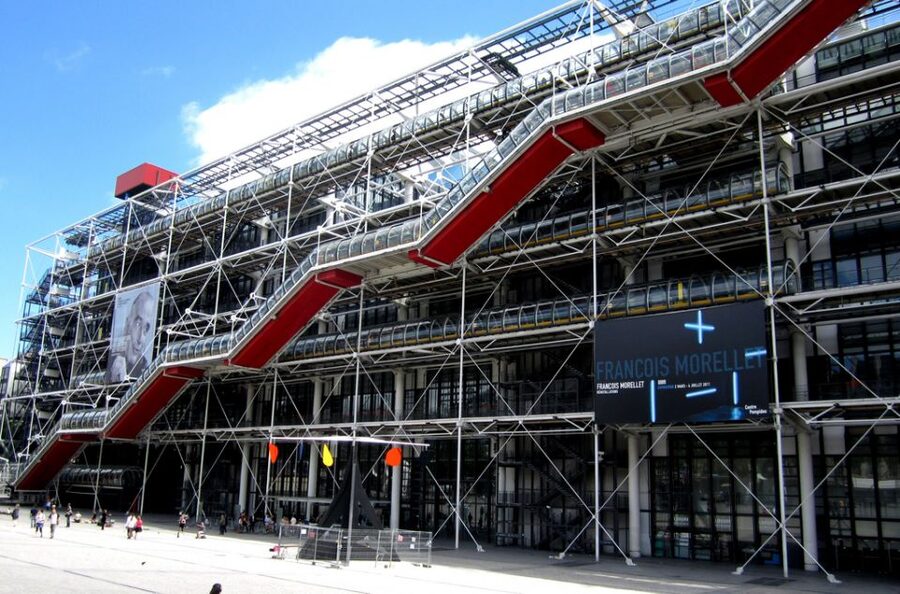
This experience is built for people who want modern art explained without it becoming homework. The tour aims to help you see post modern architecture and 20th-century art with completely new eyes.
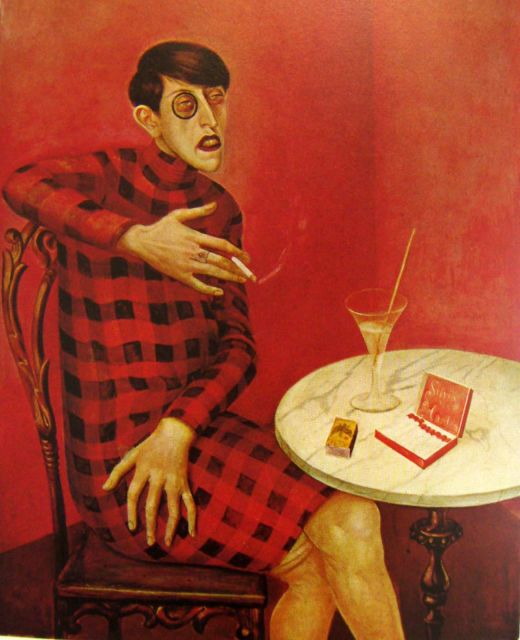
One review described an excellent lecture starting from the end of the 19th century and moving through modern art evolution into the late 1980s. That kind of arc is helpful because modern art can feel like a pile of styles until someone connects the dots. Here, you’re not just naming movements. You’re learning how the cultural and architectural atmosphere influenced what artists did.
Even though the museum is closed during reconstruction, the tour still serves the art-history purpose. It does it by treating the building as a mirror of modern thinking, then using the exterior as a visual anchor for ideas you hear about in museum lectures.
If your goal is to leave with better instincts, this is exactly the kind of tour design that supports that.
Guide Quality: Milica, Bella, Boris, and Stephanie
The guides seem to be a standout strength. Milica received glowing feedback for a marvellous explanation of the start and evolution of modern art. Bella was praised for bringing context to artwork and adding historical information that made the understanding stick. Boris earned some of the strongest comments, including that he gave a lot of background, put things in perspective, and shared knowledge happily. Stephanie also impressed people with clear explanation of history and art movements.
What you should take from this is not just that the guides are good. It’s that they teach in a way that matches real visitors. The common thread is clarity, context, and a sense of pacing. In particular, the feedback highlights that the tour doesn’t feel like a rigid, one-way lecture. It feels like a guided story that helps you keep up.
If you care about explanation quality, this is one of the best places to spend money because the guide is the product. Without that, Pompidou architecture can be visual noise. With it, it turns into a meaningful conversation with the city.
Practical Tips That Keep the Day Easy
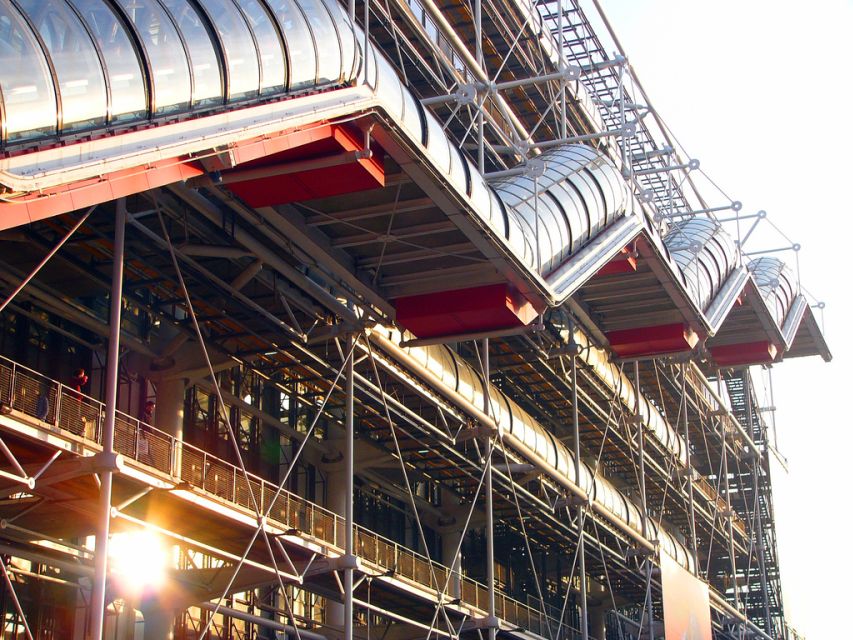
Since the tour runs rain or shine, plan like you’re going to stand outside. Bring something to cover yourself and keep your hands free, especially if you’ll be taking notes or using a phone for quick references.
You should also know the tour focuses on the building and its relationship to the surrounding neighborhood. That means comfort matters more than it might in a traditional museum tour. Wear shoes you can stand in for long stretches, and avoid relying on “I’ll be fine” footwear.
Food and beverages aren’t included. If you’re doing this as part of a longer day, I’d plan a nearby snack stop before or after, so you don’t lose focus when your energy dips.
Wheelchair accessibility is listed, which is good to know if you’re planning with mobility needs in mind.
Price and Value for a $176 Private Tour
At $176 per person for 90 minutes, this is not a casual bargain. But it is also not overpriced if you treat it like what it is: a private guided lesson where the building becomes the exhibit.
Here’s why the value can be strong. First, you get a live guide included in the price. Second, the tour is private, so you’re paying for personalized pacing rather than sharing attention with a large group. Third, you’re getting a structured way to interpret a site that can otherwise feel confusing or purely aesthetic.
The reconstruction closure also affects value in a good way for certain travelers. If you’re visiting during that period, you might otherwise be stuck with a closed museum and disappointment. Instead, you’re still getting something substantial: architecture as meaning, plus modern art context to support it.
If you’re a solo budget traveler who would happily read signs and do it on your own, you might skip this. But if you want interpretation, this price can feel fair because you’re buying understanding, not just entry.
Should You Book This Private Pompidou Tour?
Book it if you want a smarter way to experience the Pompidou during reconstruction, or if you like modern art but struggle to connect styles to context. It’s also a great fit if you prefer guided explanation over reading silently, and if you appreciate tours that connect architecture to how cities change.
Skip it if your main goal is seeing a lot of artworks inside galleries. The museum is closed during reconstruction, and the tour focuses on the building. Also, if you already feel confident about modern art and architecture and you mainly want time for independent exploring, you may get less out of the guided structure.
For most visitors who want clarity, this private, 90-minute approach is a solid way to experience the Centre Pompidou with better eyes.
FAQ
Where do I meet the guide?
Meet your guide at the Stravinsky Fountain on Rue Saint Merri, 75004 Paris. The guide will be carrying a red tote canvas bag.
How long is the tour?
The tour lasts 90 minutes.
Is this tour private?
Yes, this activity is a private group.
What languages are offered?
The tour is offered in English, French, and Serbo-Croatian.
Is the tour wheelchair accessible?
Yes, wheelchair accessible information is listed for this tour.
Does it run in bad weather?
Yes, it operates rain or shine.
Is food included?
No, food and beverages are not included.
Can I cancel for a refund?
Free cancellation is available up to 24 hours in advance for a full refund.
More Guided Tours in Paris

More Tours in Paris



More Tour Reviews in Paris




Not for you? Here's more nearby things to do in Paris we have reviewed











Paris City Tours, side by side.
 ★ 4.6Louvre Museum Timed-Entrance TicketTickets from $2671,977 guest reviews
 ★ 4.6Disneyland® Paris 1-Day TicketTickets from $6149,412 guest reviews
 ★ 4.6Versailles Palace and Gardens Full Access TicketTickets from $1741,579 guest reviews
 ★ 4.6Arc de Triomphe Rooftop TicketsTickets from $1834,264 guest reviews
 ★ 4.7Orsay Museum Entry TicketTickets from $1525,647 guest reviews
 ★ 4.4Evening River Cruise with MusicTickets from $2722,721 guest reviews
 ★ 4.4Eiffel Tower Entry Ticket with Optional Summit AccessTickets from $2920,035 guest reviews
 ★ 4.3Eiffel Tower Summit or Second Floor AccessTickets from $5917,248 guest reviews