
Review · LOUVRE MUSEUM TOURS
Paris: Semi-Private Tour of the Louvre Museum and Mona Lisa
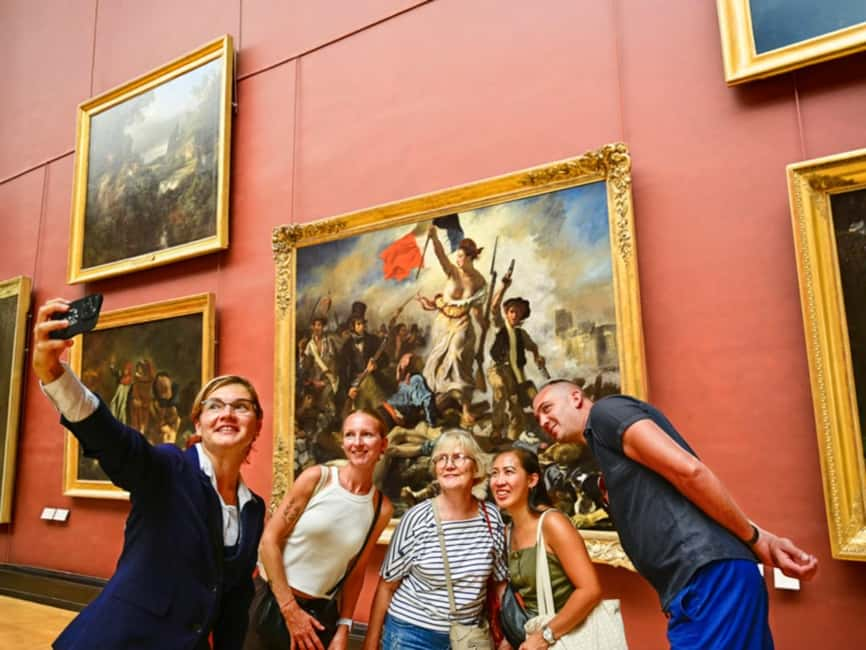
The Louvre can feel like a maze. This small-group version helps you see the right rooms, understand what you are looking at, and skip most of the worst crowd friction. You get a skip-the-line start with a real art history guide, then focus on the museum’s biggest hitters in about 150 minutes.
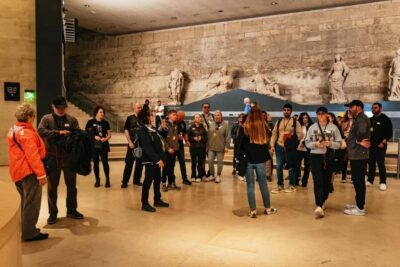
I love two things most. First, the group stays small, max 6 people, so the guide can actually shape the route to what you want to see. Second, you get guided time at the Mona Lisa moment, plus the major surrounding works like Napoleon’s coronation and other big, story-driven scenes.
One consideration: the Louvre is still the Louvre, security can mean a short wait even with skip-the-line, and the tour is not suitable for wheelchair users or people with mobility impairments. Also, plan to leave large bags behind since there is no coat check and lockers are not available for this small-group format.
Key points
- Max 6 people keeps the pace human and the route focused on the highlights.
- Skip-the-line entry saves time, though you may still face security screening.
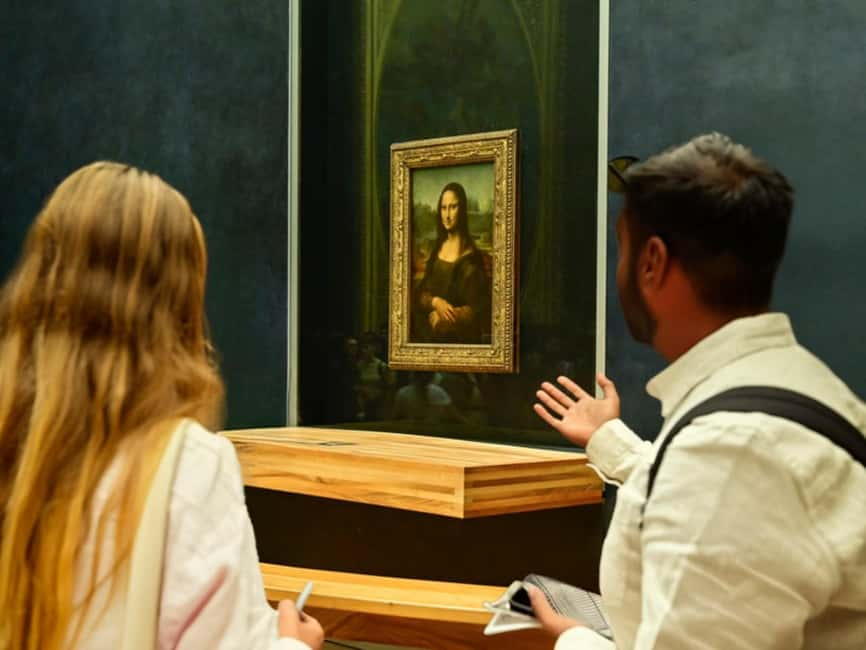
- Mona Lisa and major companion works are handled in context, not just a photo stop.
- Expert English guide with art history knowledge helps you connect scenes to artists and eras.
- Napoleon and Crown Jewel moments bring big French history to life inside the museum.
- You can stay after the tour until closing time, with limits on re-entering the guided areas.
Why a semi-private Louvre tour works so well
The Louvre is not just famous, it is huge. Without a plan, you can end up sprinting between random rooms and still feel like you missed the point. This format fixes that. A max group size of 6 means you get real guidance, not a headset shuffle.
You also get better “looking” time. A guided visit changes how you scan each painting or sculpture. Instead of just reading the label and moving on, you learn what to notice in the composition, the symbolism, and the artist’s choices. That is where the museum becomes more fun and less intimidating.
And yes, the classics are here. You are going to stand in front of the Mona Lisa, but the smarter part is what comes around it. The tour builds meaning by pairing major works with the stories and historical context that shaped them.
You can also read our reviews of more private tours in Paris



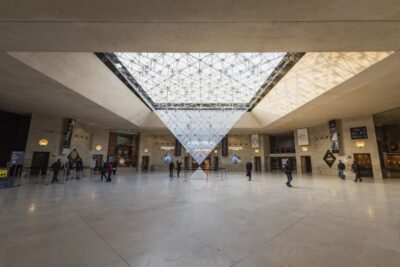
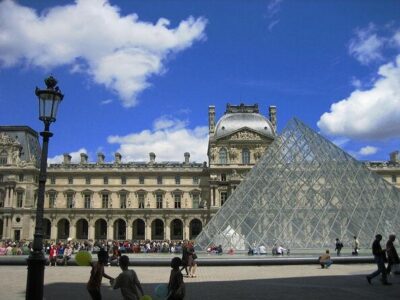
Meeting at the Louvre Pyramid, then getting oriented fast
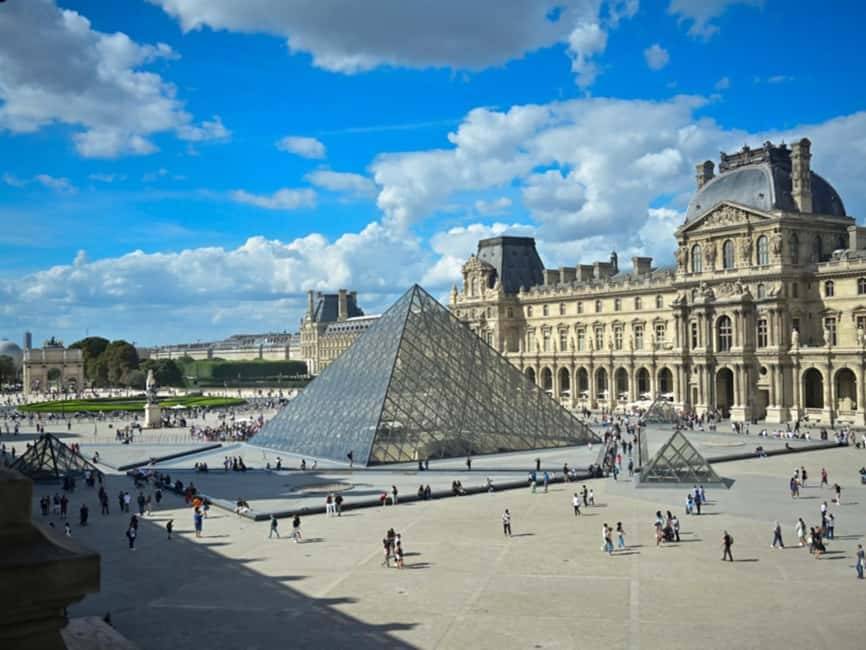
Meet at the equestrian statue of Louis XIV, right in front of the Louvre Pyramid. Arrive about 10 minutes early, since you will want to find the guide calmly before the line chaos starts.
A representative will be holding a sign with The Tour Guy. Once the group gathers, the timing is tight and efficient, which matters in a place where crowd density can jump minute to minute.
What I like about this start is that it sets you up to navigate the museum without second-guessing every turn. If you show up tired or wearing uncomfortable shoes, the Louvre will punish you quickly. With the right start, you can spend your energy on art instead of logistics.
Ancient foundations and the Greek-Roman statues you can actually place
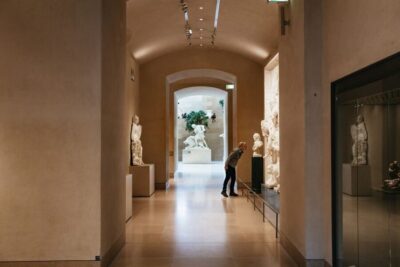
Your guided walk begins with the Louvre’s older layers, the ancient foundations beneath the palace. Even if you already know the Louvre is a former royal seat, it helps to see how the museum’s story stretches back beyond the famous gallery walls.
One of the most satisfying parts is standing before Greek and Roman statues in a setting that feels lived-in by centuries. The guide’s job is not to recite dates like a homework assignment, it is to help you “read” the forms. You learn what makes certain pieces feel idealized, realistic, or intentionally dramatic.
Practical tip: bring comfortable shoes and expect to stand. This is a walking tour through galleries, not a seated lecture. If you need frequent breaks, this may not be the best match because the route moves continuously through multiple major rooms.
Raphael, Botticelli, Bernini, and da Vinci: seeing the connections
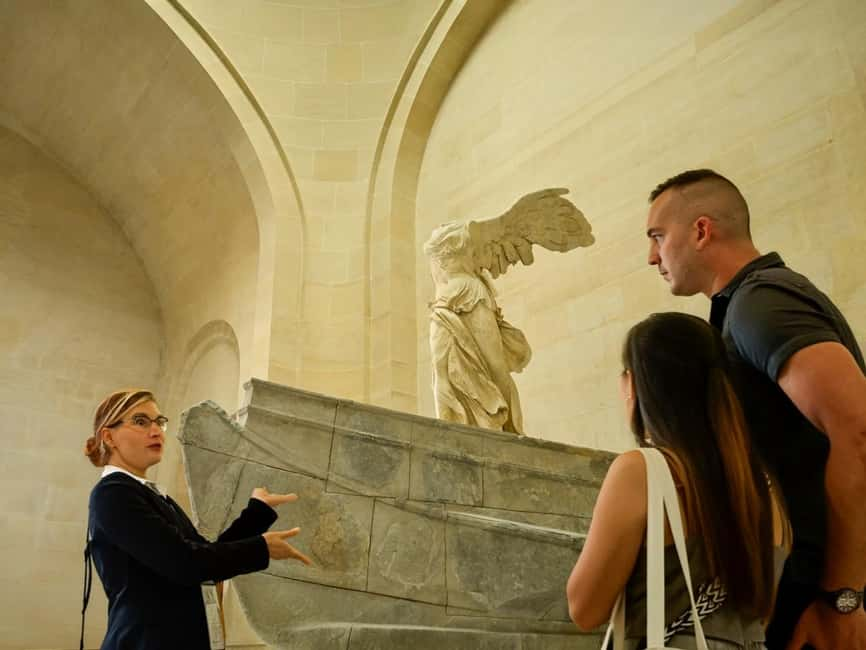
This tour is built to cover major names you recognize, but it is not just a checklist. You go past works by artists including Raphael, Botticelli, Bernini, and da Vinci. The value is in the guide’s explanations, which help you notice why these works felt important at the time they were made.
For example, different artists push different ideas of beauty and storytelling. A sculptor like Bernini often feels more physical and theatrical, while a painter like da Vinci invites you to slow down and look for subtle cues. The guide helps you shift your attention accordingly.
You will also see the Louvre as more than an art museum. It is a collection of eras, each one leaving behind a style, a set of priorities, and a way of making meaning. That is why it is worth having someone steer you through the crowded rooms.
Napoleon’s France and the Crown Jewels moment
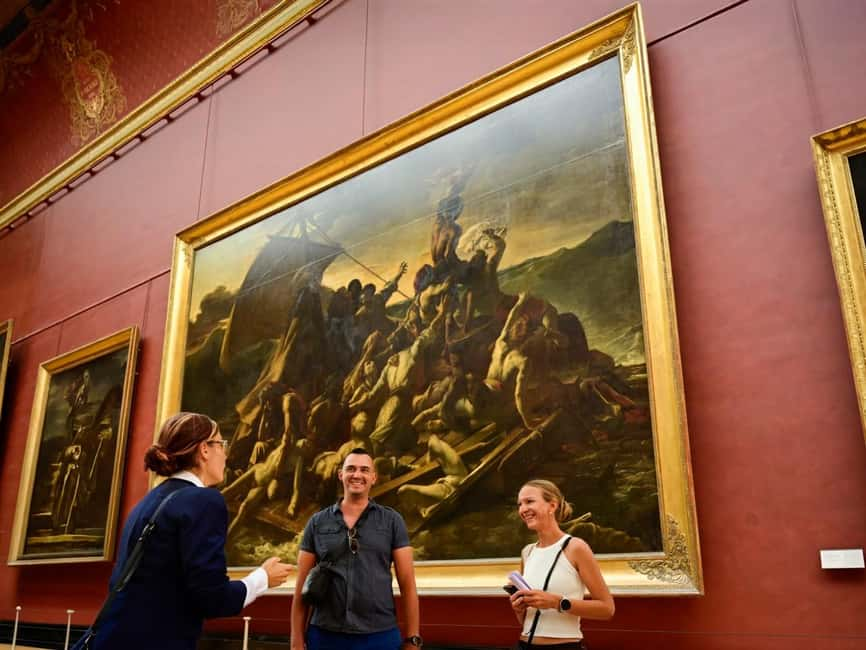
French history inside the Louvre can hit differently than history from a textbook. You get points in the tour where the museum feels like a stage for power and ceremony, not just display cases.
Two highlights specifically fit this: the French Crown Jewels and the Coronation of Napoleon. You also get the surrounding context that makes those pieces feel less abstract. Instead of seeing them as just ornate objects, you see them as symbols of rule, legitimacy, and public theater.
Then there is the added payoff of encountering large-scale, dramatic artworks like the Raft of the Medusa. Big scenes like that can feel overwhelming on your own. With a guide, you understand the story beats, why the composition is arranged the way it is, and what the painting is trying to communicate beyond the surface drama.
If you like history that has costumes, politics, and spectacle, this section is a strong reason to choose the semi-private format. You get the meaning without losing time.
You can also read our reviews of more museum experiences in Paris






The Mona Lisa stop, plus other crowd favorites with context
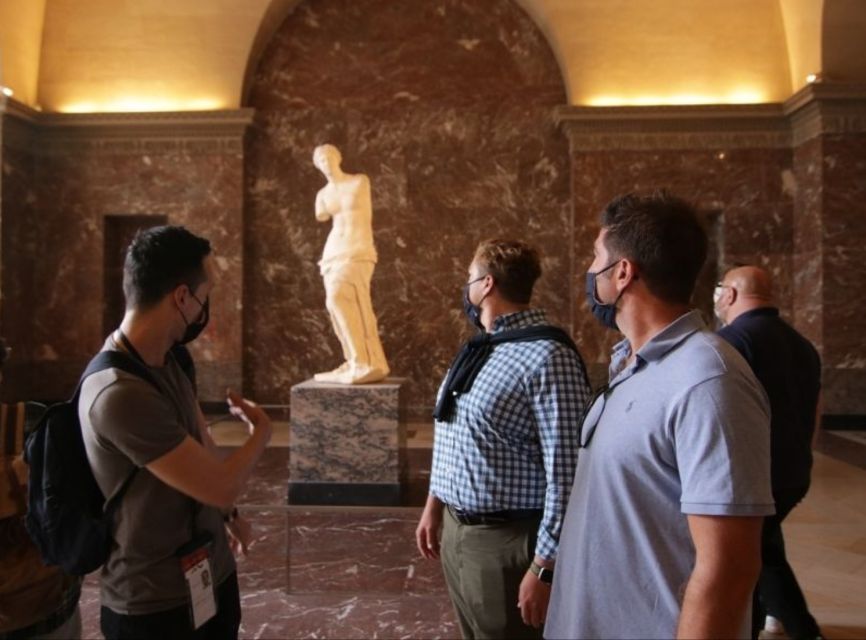
Of course, the headline is the Mona Lisa. You will stand before her and learn the mystery behind her smile, not just the facts you can find on a basic label. The guide’s art history background helps you notice why people can get obsessed with a single face.
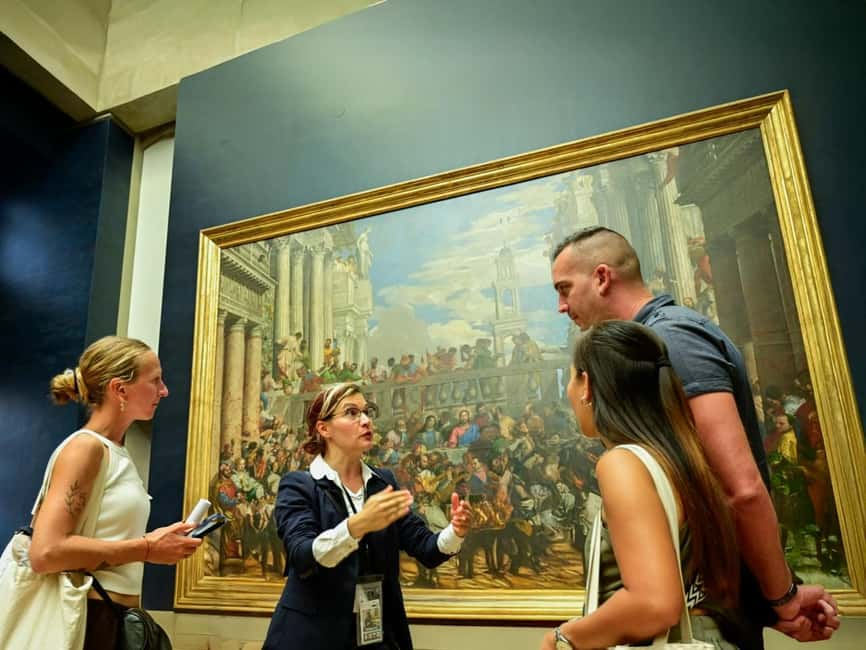
But do not treat the Mona Lisa as the whole trip. The tour intentionally sandwiches that moment with other recognizable works that help you compare styles and storytelling approaches. You can also catch the Wedding Feast at Cana, a scene so grand it helps you grasp how religious and historical narratives could be staged for maximum impact.
This is where the small-group advantage shows. With only a handful of people, it is easier to pause, look longer, and keep your place as the group moves on. You are less likely to feel like you are being dragged away mid-stare.
How 150 minutes plays out, and what you should do after
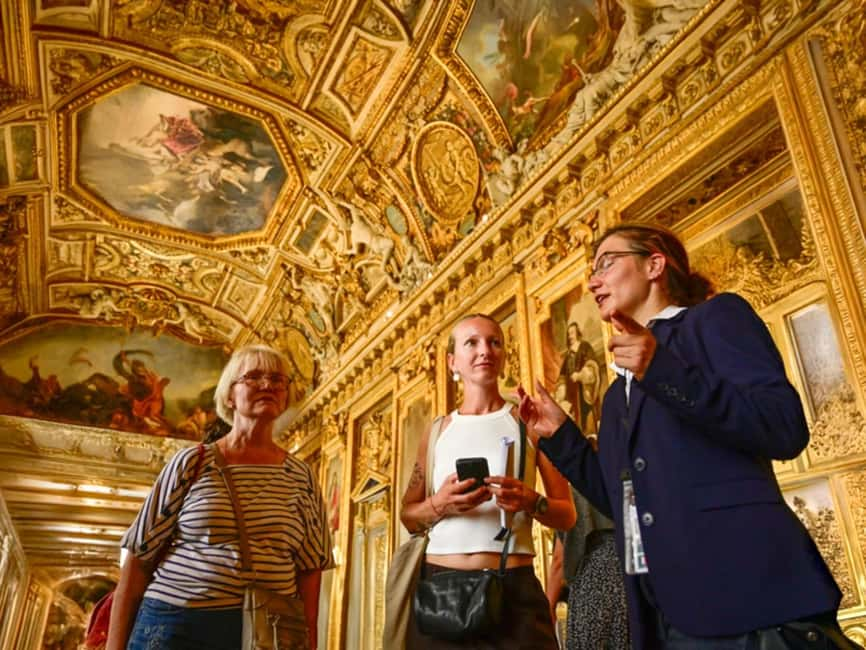
The tour runs 150 minutes, which sounds short until you remember how much the Louvre includes. You are not going to see everything. The point is to see the essentials with guidance and walk away with a mental map.
A key detail for your planning: after the guide says goodbye, you are allowed to stay inside until closing time. There is one important catch. Once you exit the area where the artwork you saw is located, you will not be allowed to re-enter that specific area.
So your best move is to use the guided portion to train your eye and then decide quickly what you want next. If you are the type who likes to wander, this is a good tour to take first. It gives you enough context to make your self-guided choices feel intentional, not random.
Skip-the-line, security waits, and photo rules that matter
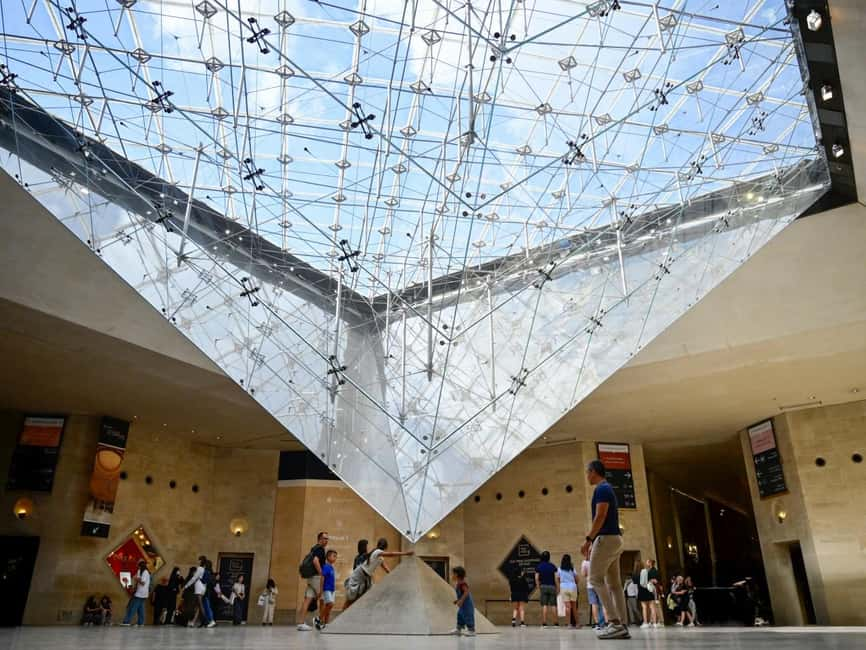
Yes, skip-the-ticket-line entry is included. That is the main time saver, especially at peak hours. Still, you may face a wait at security even with skip-the-line access.
During high season, this security wait can be up to 20 minutes. That is not nothing, but it is usually a smaller headache than dealing with ticket lines.
Also note the photo rule: photography and filming are strictly prohibited in temporary exhibition rooms. Plan on being phone-free in those areas so you do not get stopped mid-visit.
What to wear and bring, and what you must leave behind
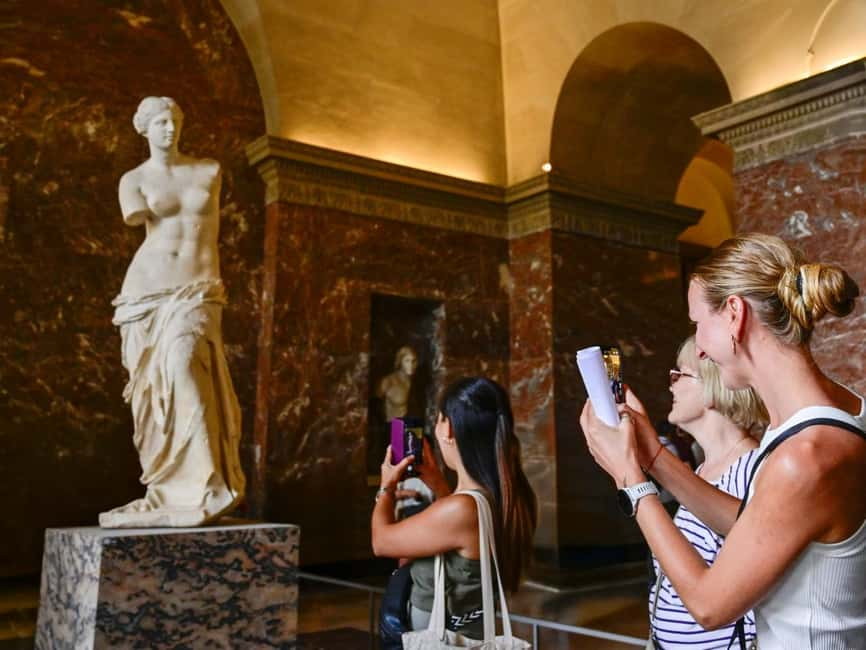
Bring a passport or ID card and wear comfortable shoes. That part is simple, but it is also the difference between enjoying the day and being miserable by the second gallery.
Bags are the big issue. Large bags, backpacks, luggage, umbrellas, tripods, and any item exceeding 55 cm x 35 cm x 20 cm cannot be brought into the Louvre. There is no coat check on site, and lockers are not accessible to the group on this small-group tour. The practical move is to leave anything oversized at your accommodation.
Also, no weapons or sharp objects. No baby strollers. And smoking is not allowed.
If you are traveling light already, you will love how smooth this day feels. If you are the “I bring everything” traveler, the Louvre will make you rethink that habit fast.
Who this tour suits best, and who should consider another option
This is a great fit if you want:
- a structured highlight route in a place that otherwise overwhelms you
- guided art history explanations that make major works easier to understand
- a small group experience that feels personal, not crowded and rushed
But it is not suitable for people with mobility impairments, and it is not for wheelchair users. If walking is difficult for you, choose a different Louvre experience that is designed with accessibility in mind.
Also keep in mind you are moving through galleries and standing in front of major works. If you need a mostly seated format, this is probably not the right match.
Price and value: is $123 a fair deal for a 6-person group?
At $123 per person for 150 minutes, the value depends on what you want out of your Louvre day.
You are paying for three things that add up fast in a museum like this:
- a small group (max 6) so the guide can manage pacing and attention
- skip-the-line entry, which matters when the museum is packed
- an English-speaking guide with art history expertise who turns highlights into stories
If you plan to do the Louvre on your own, you can absolutely spend less money. But the “hidden cost” is time and confusion. When you have an expert guide, you spend less effort figuring out what to see next and more time learning what you are looking at.
Food and beverages are not included. So budget for a snack or a meal before or after. The good news is you can then decide what to do next with the energy you save.
Should you book this semi-private Louvre tour?
Book it if you want a focused, high-impact Louvre visit with a guide who helps you connect the dots. The small group size, the skip-the-line entry, and the guided stops at the Mona Lisa, the Crown Jewels, and major masterworks make this a strong value for first-timers and returning visitors who want a fresh angle.
Hold off if you need accessibility support, plan to bring oversized bags, or you want to roam at your own pace from start to finish. Even though you can stay after the tour until closing time, the guided portion is still a route you follow.
If you like your Paris trips planned but not rigid, this is a smart way to spend 2.5 hours in the Louvre and leave with the sense that you actually understood what you saw.
FAQ
How long is the Louvre semi-private tour?
The tour lasts 150 minutes.
What is the group size?
The group is limited to a maximum of 6 participants.
Where do we meet for the tour?
Meet at the equestrian statue of Louis XIV in front of the Louvre Pyramid. Please arrive 10 minutes early, and look for a representative holding a sign with The Tour Guy.
Does this tour include skip-the-line entry?
Yes. Skip-the-line entry to the Louvre Museum is included. You may still wait at security.
Is there hotel pickup or drop-off included?
No, hotel pickup and drop-off are not included.
What language is the tour guide?
The live tour guide is English speaking.
What should I bring to the tour?
Bring a passport or ID card and wear comfortable shoes.
Are there limits on luggage or bag size?
Yes. Large bags, backpacks, luggage, and certain items are not allowed. Items exceeding 55 cm x 35 cm x 20 cm cannot be brought in, there is no coat check, and lockers are not accessible for this small-group tour.
Is photography allowed?
Photography and filming are strictly prohibited in temporary exhibition rooms.
Is the tour refundable if my plans change?
You can cancel up to 24 hours in advance for a full refund. You can also reserve now and pay later.
More Private Tours in Paris



More Tours in Paris






More Tour Reviews in Paris




Not for you? Here's more nearby things to do in Paris we have reviewed












Louvre Museum Tours, side by side.
 ★ 4.6Louvre Museum Timed-Entrance TicketTickets from $2671,977 guest reviews
 ★ 4.3Louvre Guided Tour with Reserved Access & Boat CruiseTickets from $8116,353 guest reviews
 ★ 4.5Louvre Museum Masterpieces Guided Tour with AccessTickets from $8612,023 guest reviews
 ★ 4.6Louvre Museum Entry Ticket With Host and River CruiseTickets from $1009,926 guest reviews
 ★ 4.1Priority Access Louvre with Host -Direct to Mona LisaTickets from $748,387 guest reviews
 ★ 4.6Mona Lisa & Louvre Masterpieces Tour with Reserved AccessTickets from $806,812 guest reviews
 ★ 5.0Louvre Museum – Exclusive Guided Tour (Entry Included)Tickets from $1816,296 guest reviews
 ★ 4.0Louvre Reserved Ticket and River Cruise ComboTickets from $376,054 guest reviews
This tour also belongs to