

Review · PARIS CITY TOURS
3-Hours Walking Tours Around Paris – Choose your own!
Paris feels different when you walk it. This private, English-guided route stacks major sights and classic neighborhoods into one smooth 2-hour loop, with built-in time to understand what you are seeing. The title says choose your own, and in practice you can steer the pace toward the parts you care about most while the guide keeps the big picture clear.
I love the private group setup, because it feels like Paris with your own translator for history and street-level context. I also like the stop-by-stop flow that mixes monuments (Louvre, Notre-Dame) with neighborhoods (Quartier Latin, Le Marais), so the walk explains not just what, but why.
One possible drawback: some of the top sights are not included with admission, so you may want to plan ahead if you expect to go inside the Louvre or Notre-Dame during your time window.
Key highlights at a glance
- Private pacing for just your group, not a big crowd shuffle
- Two hours on foot with logical timing across iconic areas
- Free admission stops mixed with sights where tickets are on you
- Neighborhood storytelling (Quartier Latin, Saint-Germain-des-Prés, Le Marais)
- Montmartre focus with legendary local characters and viewpoints
- English guidance with mobile ticket convenience
What this “choose your own” Paris walk gets right
This is a private walking tour built around the way Paris actually feels in real life: monuments are only half the story. The other half is the neighborhood around them, the street names, and the way different corners of the city evolved for different eras.
The route is structured, not random. You start with the Louvre area and then work through Île de la Cité, Notre-Dame, and a set of famous districts that most visitors would otherwise hit in separate trips. The choice part comes from how your guide can prioritize what matters most to you in the time you have, instead of pushing one fixed checklist on everyone.
Because it is private, you can ask questions that would be awkward in a larger group. If you care more about wartime Paris than art, you can steer there. If you want the culture layer, you can focus on what makes Quartier Latin feel like a student city or why Le Marais has that reputation for stories and surprises.
And since the walking time windows are tight, you get a useful “first pass” through the city. You will leave with names, context, and a mental map that makes the next day in Paris easier.
You can also read our reviews of more walking tours in Paris



Price and value: what $180.24 per person buys you
At $180.24 per person, this is not a budget tour. But it also is not priced like a full-day museum binge with lots of admissions. The value is in three things you can feel during the walk:
First, you are paying for a private guide. In a city where you can wander aimlessly for hours, a good guide keeps your time from leaking out of your day.
Second, the price covers the “why” behind the landmarks. The tour format is designed to move from big picture to street level, so you understand what you are seeing at Louvre, why Île de la Cité matters for origins, and why Montmartre has such a legend-building reputation.
Third, the time efficiency is real. The stop durations add up to about 2 hours. That means you can do this early in your trip to get oriented, then use the rest of your days for deeper museum visits or repeat strolls.
Is it worth it? If you want a guided overview and you do not want to play museum detective on your own, it often is. If you prefer independent exploring with no structure, you could get by without a guide, especially since some stops have free admission.
Timing, tickets, and how to plan your expectations

This tour runs about 2 hours. That is long enough to feel like a real walk, but short enough that you should treat it as an orientation and storytelling experience rather than a comprehensive museum tour.
Ticket planning matters. The Louvre and Notre-Dame are called out as stops where admission tickets are not included. So while you will learn a lot looking at these places, you should not assume you can simply enter and go inside during the allotted time unless you have tickets and the logistics are favorable.
On the positive side, some parts of the route are explicitly marked as free admission (Île de la Cité and the Tour Eiffel / Invalides area in this set). That helps you keep the experience flexible and more budget-friendly than a tour that charges you at every stop.
Also note the practical vibe: it is near public transportation, so if you need to adjust plans, you usually can. Service animals are allowed, and most travelers can participate, which is good news if you are traveling with mobility considerations.
One more thought about the “2 hours” promise: it is fast. You will see a lot of Paris in a short window, so wear comfortable shoes and keep your expectations focused on learning and seeing, not on lingering for photos every 30 seconds.
Stop-by-stop: what you will actually experience
You move through central Paris by foot, with short time blocks at each place. That means each stop is designed to be a highlight conversation, not a long museum session.
Louvre Museum: power, art, and royal leftovers (about 15 minutes)
The Louvre stop is the big start. You will get the framing of the museum as the world’s largest in scale and also as a famous former residence of French kings. That combo matters because it changes how you look at the building.
What you will likely focus on here is context. In 15 minutes, your guide cannot make you an art expert, but they can help you understand what the Louvre is, why it became a museum, and why it sits at the center of so much French history.
Possible drawback: since admission is not included, you may feel like you are only grazing the surface if you expected to enter and roam.
Tip: if you want inside time, plan that for another day when you are not competing with a walking schedule.






Île de la Cité: the origins of Paris (about 20 minutes, free admission)
This is one of the most meaningful sections of the walk because it anchors the story in where Paris began. You spend about 20 minutes learning the origins of Paris, and admission is free.
This stop also sets you up for Notre-Dame. When you understand the island’s role early on, the later stop makes more emotional and historical sense. You are not just seeing a landmark, you are seeing a place where layers of the city’s identity were stacked.
Why it works on a walking tour: Île de la Cité is not just about one building. Even if you do not go inside, the island helps your guide connect geography to history.
Notre-Dame de Paris: 800 years of what a city becomes (about 10 minutes, admission not included)
Notre-Dame gets a shorter time block, about 10 minutes. The focus is the cathedral’s 800-year history.
Because admission is not included, this is mostly an outside perspective and narrative stop. You are there for understanding and orientation: why the cathedral mattered across centuries, how it became a symbol, and how Paris built cultural meaning around it.
Consideration: 10 minutes is not enough to do justice to the site if you are hoping for deep inside time. If you want that, add a separate visit.
Quartier Latin: why it is called Latin (about 20 minutes)
Then you shift from major landmarks to student-era energy. Quartier Latin is given about 20 minutes, with the theme of why the area is called Latin.
This kind of stop is great when you like stories that explain how names preserve history. A neighborhood name is often a shortcut to understanding who lived there, why they gathered there, and how language and learning shaped the city.
In practical terms, this is also a good breathing section. After heavy monument time, you get a sense of daily life and identity.
Saint-Germain-des-Prés: the nouveau riches flavor (about 15 minutes)
Saint-Germain-des-Prés is next, around 15 minutes, with the angle of the quarter’s nouveau riches energy.
This is the kind of stop that helps Paris feel less like a postcard set and more like a changing social map. The guide’s job is to connect who had money, who wanted status, and how the city’s corners reflected that shift.
In a 2-hour tour, you do not get every detail, but you do get enough to make the neighborhood make sense when you see it again later.
Le Marais: 1,001 mysteries (about 20 minutes)
Le Marais gets about 20 minutes, framed as full of mysteries and entertaining stories. This district is made for this kind of tour because it rewards curious walking: streets feel older, corners feel story-heavy, and there is always something to notice.
Even if you do not go inside any particular site here, your guide can point you toward the kind of details that make Le Marais fun to explore on your own after the tour. Think architecture clues, street layout, and why the neighborhood developed its character.
One small caution: if you are a “photo at every stop” person, Le Marais is where the time can evaporate fast. Keep your photos intentional.
Montmartre: legendary rebels and a big viewpoint payoff (about 15 minutes)
Montmartre closes strong with about 15 minutes, centered on 10 legendary rebels who teach you to think differently. This is also where the practical side of the walk can become memorable, because Montmartre is a viewpoint-driven neighborhood.
From the guide style shown in prior groups, Montmartre often becomes the highlight. People talk about panorama moments from the hill, the Sacré Coeur church area being a standout, and the way a guide can connect places to characters like painters and others tied to the district.
What I would expect you to get in 15 minutes is a story-first walk through key cues: why rebels clustered here, what the neighborhood symbolizes, and how to orient yourself so a longer Montmartre visit later feels easier.
Tour Eiffel / Invalides: the Iron Lady and war history (about 5 minutes, free admission)
The ending is quick, about 5 minutes, covering the Tour Eiffel / Invalides theme. The description frames it as the Iron Lady of Paris and the history of wars.
This is more of a wrap-up stop than a deep dive. In a short window, you are using it as an emotional period ending: modern Paris meets military memory, and your guide can tie it back to how the city changed through time.
The free admission note here is helpful, but with only 5 minutes, your focus should be on the perspective and the story, not on planning an extended visit.
How the guide quality shows up in real moments
In Paris, the difference between a good tour and a great tour is often tone. The people leading this walk have a strong track record for combining humor with historical clarity, and that matters because a lot of these topics can get heavy if the guide lets them.
Names that come up often include Nataly, Maryan, Valentin, Helene, Elena, and Emy. Each of them is described as doing more than listing facts. In particular, Emy’s Montmartre groups stand out for making a busy hill manageable while pointing out what to look at for the best views and the best stories. Valentin’s groups are described as blending history with the cultural angle of ballet and the arts, which is a nice reminder that Paris is not only buildings and battles.
What does that mean for you? It means you can get real conversation during the walk. Ask one or two questions you actually care about, then listen for how your guide connects them to what you are seeing at that exact moment.
And because you are private, you can pivot if your energy shifts. If you want more explanation in Saint-Germain-des-Prés and less in another zone, you can usually request that kind of adjustment.
What to wear, bring, and do right after
This walk is short, so you do not need a giant plan. You do need comfort.
Wear shoes you can handle on sidewalks and uneven streets. Bring water, especially if you are doing this on a warm day. If you plan to enter the Louvre or Notre-Dame, treat it as a separate step with its own ticket and timing, since admission is not included.
After the tour, use what you learned immediately:
- Go back to the neighborhood you liked most and linger on your own
- Use the names you heard to guide your next walk, like Le Marais for stories or Quartier Latin for the learning vibe
- Save a longer museum visit for days when you have fewer moving parts
This tour is especially useful as a first or second day activity, when you still need bearings. Once your mental map clicks, Paris becomes easier to explore without second-guessing.
Who should book this Paris private walking tour
This is a strong fit if you:
- Want a guided overview without spending your whole day inside museums
- Prefer a private group experience where you can ask questions and adjust the pace
- Like a story-driven tour that mixes big icons with neighborhoods
- Are traveling in a small group or with family and want clear structure
It may be less ideal if you:
- Only care about entering buildings and spending lots of time inside (because key admissions are not included)
- Hate walking and want long transit breaks between stops
- Plan to do every major museum the same day (you will likely want more time than 2 hours)
Should you book it
If you want a high-value orientation to Paris that connects landmark sightlines to neighborhood identity, I would book it. The private format plus the tight 2-hour pacing makes it a smart use of time, and the mix of major sites (Louvre, Notre-Dame) with districts (Quartier Latin, Le Marais, Montmartre) gives you more than a simple photo walk.
The only real reason to hesitate is admission expectations. If your goal is inside-the-Louvre or inside-Notre-Dame time during this same window, you may feel rushed. But if you view those as highlights you will plan separately, you will get a lot from this kind of guided storytelling walk.
FAQ
How much does the Paris walking tour cost?
It costs $180.24 per person.
How long is the tour?
The duration is about 2 hours.
Is the tour private?
Yes. It is a private tour/activity, so only your group participates.
Is the tour offered in English?
Yes. The experience is offered in English.
Are admission tickets included for the Louvre and Notre-Dame?
No. Admission tickets are not included for the Louvre Museum and Cathedrale Notre-Dame de Paris.
Is lunch included?
No. Lunch is not included.
What is the cancellation policy?
Free cancellation is available. You can cancel up to 24 hours in advance for a full refund. If you cancel less than 24 hours before the start time, the amount paid will not be refunded.
More Walking Tours in Paris



More Tours in Paris





More Tour Reviews in Paris



Not for you? Here's more nearby things to do in Paris we have reviewed












Paris City Tours, side by side.
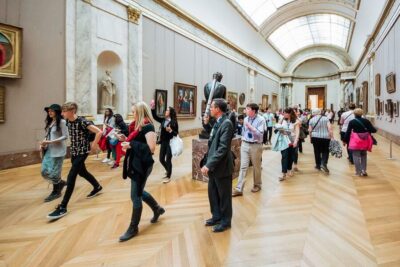 ★ 4.6Louvre Museum Timed-Entrance TicketTickets from $2671,977 guest reviews
 ★ 4.6Disneyland® Paris 1-Day TicketTickets from $6149,412 guest reviews
 ★ 4.6Versailles Palace and Gardens Full Access TicketTickets from $1741,579 guest reviews
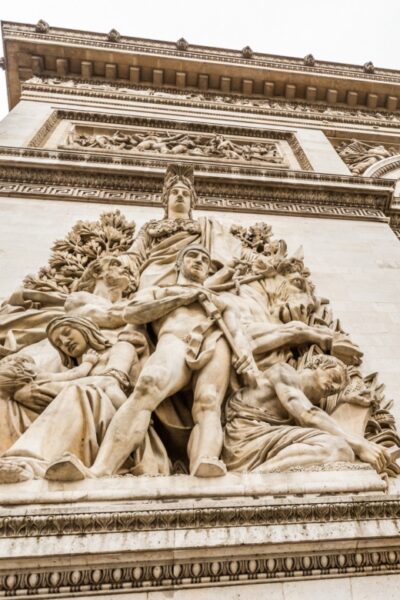 ★ 4.6Arc de Triomphe Rooftop TicketsTickets from $1834,264 guest reviews
 ★ 4.7Orsay Museum Entry TicketTickets from $1525,647 guest reviews
 ★ 4.4Evening River Cruise with MusicTickets from $2722,721 guest reviews
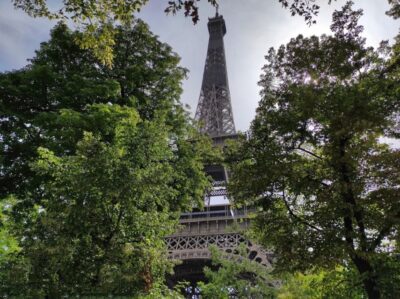 ★ 4.4Eiffel Tower Entry Ticket with Optional Summit AccessTickets from $2920,035 guest reviews
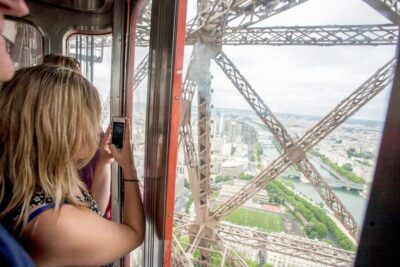 ★ 4.3Eiffel Tower Summit or Second Floor AccessTickets from $5917,248 guest reviews