
Review · PARIS CITY TOURS
World War two : The Occupation of Paris
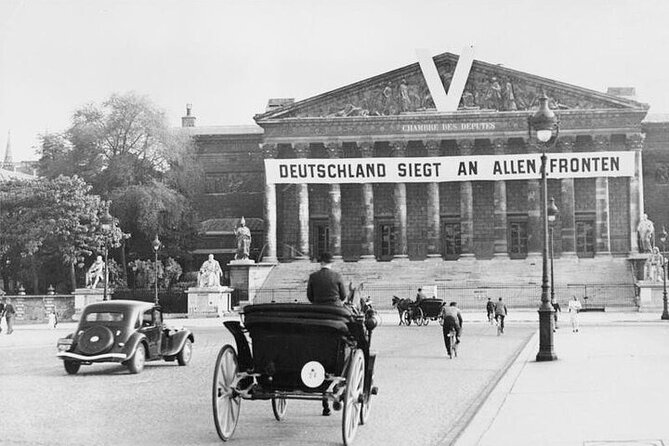
History hits differently on a street-level walk. This tour strings together the occupation and liberation of Paris through real places you can see today, with a guide who explains what happened where you are standing. You start near Bd des Italiens and finish at Place de la Concorde, with a steady flow of dramatic, human-scale stories.
I like two things a lot: the local guide-led route, which keeps you from getting lost, and the way the stop list blends daily life, art, banking, and resistance into one clear picture. Another real plus is the small scale, with a maximum of 15 people, so it feels like a guided stroll rather than a cattle drive.
One possible drawback: if you want a super academic, deep, topic-by-topic lecture, you may find the tour moves fast from place to place. The format is location-based and conversational, not a long form museum talk, so bring questions if that’s your style.
Key Things You’ll Really Feel on This Walk
- A guide who explains what you’re looking at, so you do not have to connect the dots on your own
- A tight route across major occupation sites, from theaters and passages to auctions and government buildings
- Culture under pressure, with stops tied to entertainment, movie halls, and the Nazi propaganda machine
- Economics of occupation made practical, including what banks and auctions meant during the war
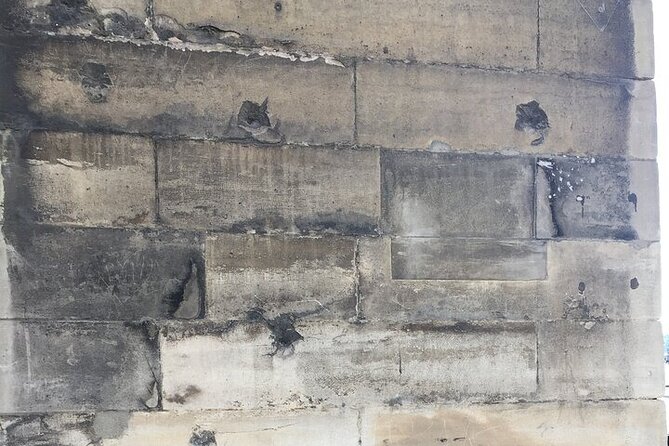
- Liberation scars at Concorde, with memorial plaques and photo points that anchor the story
World War II in Paris, Not in a Book
Paris during WWII is often taught as big dates and famous names. This experience shifts it into streets, storefronts, and public buildings, where occupation looks less abstract. You walk past places linked to daily routine, stolen art, coerced institutions, and the different ways people responded.
That street-level approach matters because it changes how you remember what you learn. Instead of facts you forget, you end up with mental “photo files” tied to specific corners. And that makes your later Paris sightseeing feel sharper, even when you are off this route.
You can also read our reviews of more tours and experiences in Paris.


Price and Time: Is It Good Value?
The price is $83.40 per person for about 2 hours 15 minutes, in English. That is not the cheapest way to learn WWII history in Paris, but the value comes from two things you rarely get together: a focused walking route and a guide who leads you door to door.
Also, the tour stops are listed with free admission for the segments described. So you are paying mainly for interpretation, guidance, and the time savings of not having to research each site yourself on the fly.
One practical note: the tour is typically booked about 41 days in advance on average. If you want a specific date, it can be smart to plan ahead rather than assuming last-minute availability.
Group Size and Meeting Point, So You Start Stress-Free
This is a max 15 travelers experience, and the group stays small enough for the guide to keep it moving without losing you. You get a mobile ticket, and the tour starts at 10:30 am at 38 Bd des Italiens, 75009 Paris.
It ends at Place de la Concorde, 75008 Paris, with the finish right next to the Concorde metro station. That end point is handy because you can hop to your next plan without crossing the city.
If you come by transit, you are in good shape. The tour is described as near public transportation, and service animals are allowed. So it is built for real travel days, not just perfect ideal days.
Stop 1 to 3: Bouillon Chartier, Folies Bergere, and Passage Verdeau
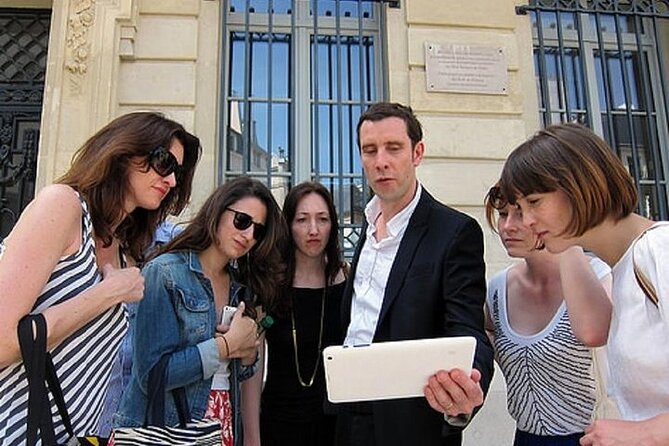
Bouillon Chartier Grands Boulevards, where the story begins
You start at Bouillon Chartier Grands Boulevards with the early phase of WWII and how Paris moved into occupation. This stop sets the tone fast, because it connects the start of the war with what people actually faced afterward.
What I like here is the way the guide balances big events with everyday life under occupation. You get dramatic anecdotes, but the goal is understanding the human pressure on ordinary Parisians.



Folies Bergère, entertainment under control
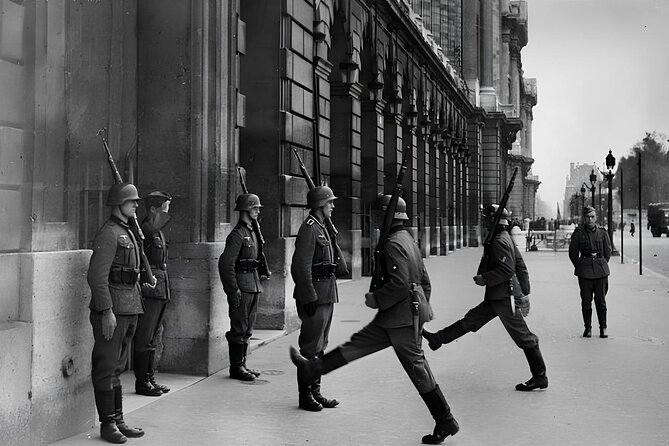
Next comes Folies Bergere, where you hear about artistic life under occupation. This is where the contrast gets real: movie stars, music-halls, and public entertainment continue, but under a shadow you can feel in how the institutions operate.
The practical benefit of this stop is that it teaches you to watch for power dynamics in cultural spaces. Even when a theater looks like a theater, the people running it and the incentives behind it may not be neutral.
Passage Verdeau, a preserved atmosphere with darker ties
Then you move through Passage Verdeau, learning how covered passages kept their atmosphere and decor during the period. You also hear about a specific, darker detail tied to the occupation: a bordello requisitioned by the German army, across the way from the stop.
This is an important reminder that “beautiful Paris” sometimes includes forced uses. Your eyes will not just admire the architecture anymore. They will also ask what happened behind it.
Stop 4 to 6: Hôtel Drouot, Resistance at Mairie du 9e, and the Bank Stories
Hôtel Drouot, where auctions turned into a system
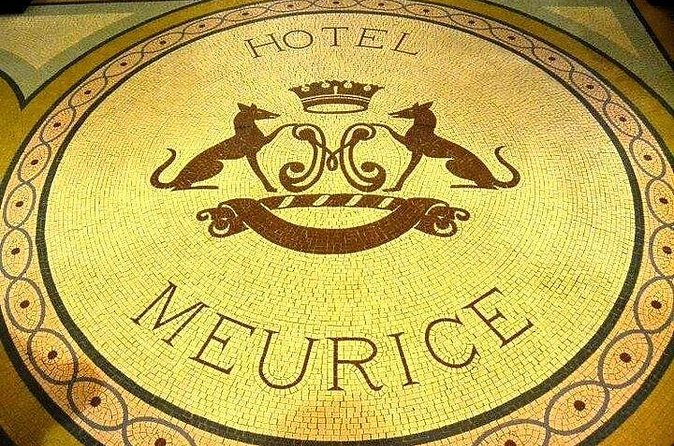
At Hôtel Drouot, the focus shifts to how art and objects were sold during the occupation. The stop highlights the mass stealing of Jewish property and connects it to the auction world.
You also hear about the story of a German art dealer working for the Reich. Even if you know the broad outline of WWII theft, this stop helps you picture the mechanism: acquisition, sale, and the way bureaucracy and commerce can hide cruelty behind paperwork and pricing.
Mairie du 9e, the Resistance and the messy middle
At Mairie du 9ᵉ arrondissement de Paris, you speak with a local employee about the Résistance. The story also covers denunciation and a form of resistance that is quieter and harder to measure, called passive resistance.
This is one of the most psychologically grounded stops. It stops the history from being only heroes and villains. You learn how fear, opportunism, and everyday choices shaped what people did, and why resistance took different forms.
BNP Paribas, where the economy and politics tangled
Next is BNP Paribas | Maison Dorée, and this stop explains the role of banks under the occupation. You connect the occupation to the armistice convention between France and Germany and the economic and political situation that followed.
This matters because it shows occupation is not only soldiers and rules. It is also money flows, approvals, and leverage. By the time you leave this stop, you will likely understand why post-war reckoning was not only about battles, but also about financial systems.
Stop 7 to 9: Pathe Opera Premier, Kommandantur Landmarks, and Place Vendôme
Pathe Opera Premier, a movie theater requisitioned
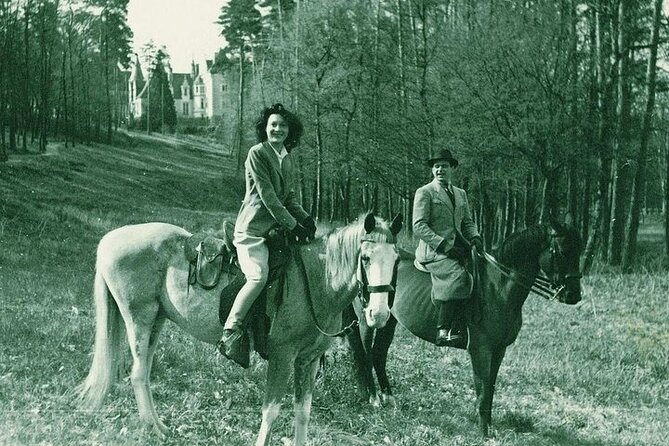
At Pathe Opera Premier, you hear how a movie theater was requisitioned for German soldiers. It is a short stop in time, but the idea lands: popular entertainment space can be repurposed quickly when an occupying power changes the rules.
This stop is also useful for visual memory. You learn how occupation can take a familiar leisure building and turn it into a tool of control.
The propaganda shadow near the theaters
Nearby, you hear about an exhibition organized by Nazi propaganda, tied to antisemitism, called The Jews and France. The tour uses this proximity to show how culture and propaganda were not separate tracks.
Even without seeing the exhibit itself, you gain a way to read the area: public spaces can be used for both spectacle and manipulation.
BRED-Banque Populaire, Place de l’Opéra symbolism
Then you reach BRED-Banque Populaire – Espace patrimonial, with a focus on how Place de l’Opéra became symbolic. The stop mentions the Kommandantur nearby and throws in anecdotes tied to places like the Café de la Paix and the Opéra.
I like this kind of connective storytelling because it links history to the geography you might already recognize. It makes your future self-sightseeing more informed, even if you take a different walking route later.
Place Vendôme and the Ritz, power, laws, and spies
At Place Vendôme, the guide talks about the fate of Rue de la Paix jewelry stores, the law ministry occupied by the German army, and an early resistance network nearby. Then the story touches the Ritz Hotel as a key occupation and collaboration location, tied to celebrities, spies, and militaries.
This is a heavy stop, but it is also one of the most instructive for how occupation shaped the social layer. You see how power concentrates around certain addresses, and how people move toward it, with consequences.
Stop 10 to 11: Rue de Castiglione and Concorde’s Liberation Marks
Rue de Castiglione, palace hotels as headquarters
On Rue de Castiglione, you learn how palace hotels were used as headquarters for the German army. Behind Hotel Meurice, the guide brings in the fights of the Liberation that ended there.
This stop helps you understand why certain streets feel “grand.” In occupied Paris, grandeur often meant access, security, and administrative control.
Place de la Concorde, where the war leaves physical traces
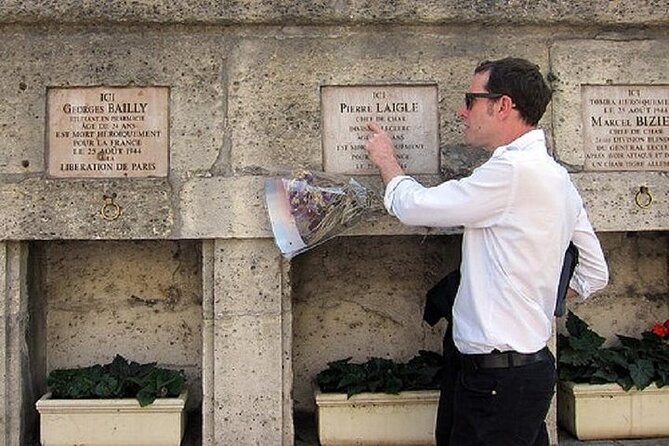
Your final stop is Place de la Concorde, where the square shows marks of Liberation fighting. You also see memorial plaques dedicated to soldiers, resistance fighters, and civilians involved in the battle.
The tour also points you to a terrace with photos that help you understand the square and nearby places in context. And in addition to the plaques, you learn about a museum behind the square that was used by the Germans to store stolen art sent to Germany.
This closing sequence matters because it shifts you from stories of occupation control to the visible record of liberation. It is the right way to end, especially if you are trying to make sense of how wartime decisions play out in real places.
Why the Guide Experience Makes or Breaks This Tour
The strongest feedback on this walk is simple: the guides bring awesome, detailed knowledge and they stay friendly and helpful. People have specifically praised guides for explaining how Paris looked and worked under occupation, while also helping you understand how the story connects across sites.
You will also see examples of named guides getting credit for their style, including Leo and Dirk, called out for being informative and thorough. That is a good sign for what you can expect, assuming your day’s guide matches the same high standard.
Still, there is one fair caution to keep in mind. One past experience noted a script-like flow that did not always feel like expert-level depth for the price. If you are the type who wants heavy historical sourcing and deeper analysis at every stop, show up with questions and be ready to ask them on the spot.
Tips to Get More Out of Every Stop
If you want your money’s worth, treat this like a guided “look closer” exercise. Before you reach each place, glance at the façade and think: Who would want this building during occupation, and how would they use it?
A small, smart move is to ask one follow-up question per stop, even if it feels basic. With a small group, your guide can usually answer without the tour derailing.
Also, wear shoes that handle repeated street crossings and short walking segments. The stops are short, so your time is spent moving through areas of Paris, not sitting in one museum room. Plan your next activity with enough buffer so you can keep processing what you learn.
Who This Tour Is Best For
This is ideal if you want WWII history tied to architecture and daily life, not just war dates. It fits travelers who like walking tours, enjoy city context, and want a clear route with a guide leading the way.
It is also a good choice if you are pairing your visit with classic Paris sights and you want a darker counterpoint that explains why certain places matter. After this, you will likely recognize that Paris was not only rebuilt after the war, it was also interpreted and reinterpreted through memory.
If you are traveling with limited time, the 2 hours 15 minutes format is a workable chunk. And because it runs in English and keeps the group small, it is set up for people who want clarity instead of chaos.
Should You Book It?
I think you should book this tour if you want WWII occupation and liberation explained through the real city, with a guide who can connect entertainment, resistance, auctions, and banking into one coherent story. The strong guide experience is the standout, and the walk covers a wide slice of occupation life, not just one theme.
You might skip or reconsider if you know you want deeper subject matter at a slower pace, with lots of time for extended discussion. In that case, come ready to ask questions, or choose a tour that promises longer, more lecture-style content.
Overall, this is a solid, practical way to see Paris with wartime eyes, and still feel oriented for the rest of your trip.
More Tour Reviews in Paris
Not for you? Here's more nearby things to do in Paris we have reviewed







Paris City Tours, side by side.
 ★ 4.6Louvre Museum Timed-Entrance TicketTickets from $2671,977 guest reviews
 ★ 4.6Disneyland® Paris 1-Day TicketTickets from $6149,412 guest reviews
 ★ 4.6Versailles Palace and Gardens Full Access TicketTickets from $1741,579 guest reviews
 ★ 4.6Arc de Triomphe Rooftop TicketsTickets from $1834,264 guest reviews
 ★ 4.7Orsay Museum Entry TicketTickets from $1525,647 guest reviews
 ★ 4.4Evening River Cruise with MusicTickets from $2722,721 guest reviews
 ★ 4.4Eiffel Tower Entry Ticket with Optional Summit AccessTickets from $2920,035 guest reviews
 ★ 4.3Eiffel Tower Summit or Second Floor AccessTickets from $5917,248 guest reviews