
Review · PARIS CITY TOURS
Somme Battlefields from Paris with Australian memorial & Amiens Cathedral
Stone names and muddy trenches, right after breakfast. This Somme battlefields tour links WWI memorials with key Australian sites, then closes the day at Amiens Cathedral. It runs as a small-group experience, max 8 people, with air-conditioned minivan transport and an English-speaking driver-guide.
I love the tight pacing of the stops, because each place has a clear purpose and you are not just driving past it. I also love how the Sir John Monash Centre uses video testimonials and interactive displays to turn dates and strategy into personal stories.
The main drawback is simple: this is an 11-hour day, and the Somme area can feel brutally cold and wet. If you are not ready with layers and waterproof shoes, the experience can be harder than it needs to be.
Key highlights you should care about
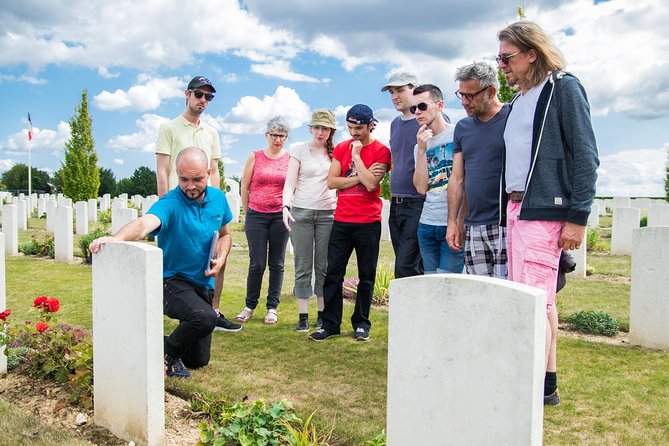
- Max 8 people in an air-conditioned minivan, so the day feels personal instead of rushed
- Thiepval, Lochnagar, Beaumont-Hamel give you the most iconic Somme sights in a single loop
- Villers-Bretonneux Military Cemetery centers the Australian sacrifice, including the 10,738 men with no known grave
- Sir John Monash Centre adds context through video testimony and hands-on exhibits
- Amiens Cathedral caps the day with a major 13th-century landmark after a very heavy morning
A sobering Somme day, built for focus, not speed
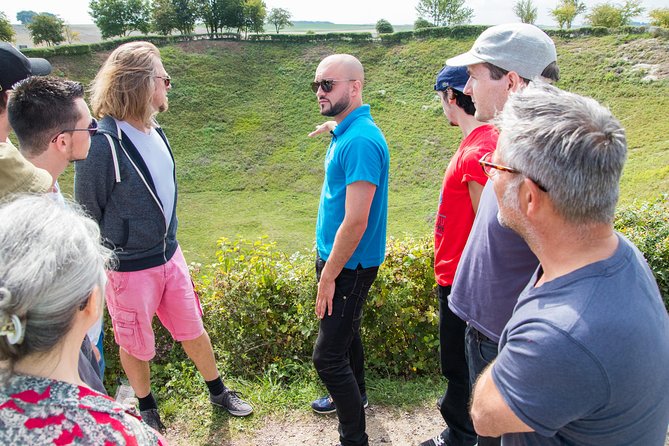
This is a full-day route that takes you from Paris to the Somme battlefield sites that matter most if you want the story to connect. You are looking at memorials for the missing, craters that still mark the scale of the opening bombardment, and preserved trench ground where the war is no longer abstract.
What makes the day feel well designed is the mix of kinds of stops. You get names carved into stone. You get one of the famous craters that changed the map on July 1, 1916. You also get an Australian-centered ending at Villers-Bretonneux, plus a museum stop that explains why Monash is such a key figure in the Allied effort.
It is not a “drive-by” tour. Even with short time windows at some sites, each stop has a clear role in the narrative, so you are not bouncing between unrelated monuments.
You can also read our reviews of more tours and experiences in Paris.



Paris to the Somme: early start, small group comfort
Departure is 7:00 am from Dada12, Av. des Ternes in Paris (then you return to the same meeting point). The duration is about 11 hours total, so you should treat this as a true day trip, not an extended stroll.
The comfort factor is real. You are traveling by air-conditioned minivan, and the tour holds a maximum of 8 participants. That small group size matters on a long day because it keeps the pacing human. You also spend less time herding a crowd, which helps at sites where you need quiet and time to look.
A practical tip: the tour operates in all weather conditions, so plan around rain and cold. The Somme can be wet even when Paris feels mild. Bring a warm layer you can actually breathe in, and waterproof shoes with decent tread.
Thiepval Memorial: when the missing become names
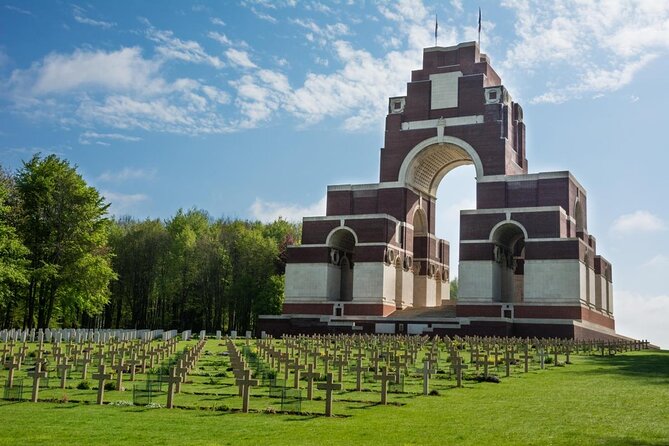
Your first stop is the Memorial de Thiepval (Thiepval Memorial of the Missing). This memorial lists more than 72,000 UK and South African men who died and have no known grave.
This stop is powerful because it is not about one battlefield moment. It is about uncertainty made permanent. You see the scale of loss immediately, then you realize how many lives are represented by families who never had a final resting place.
You only get about 30 minutes, which is enough to walk the memorial grounds, read a few panels carefully, and absorb what it is doing. If you want to do more, take your time before you get overwhelmed. Pick one or two names or sections, not everything at once.
Lochnagar Crater: the Day One shock in physical form
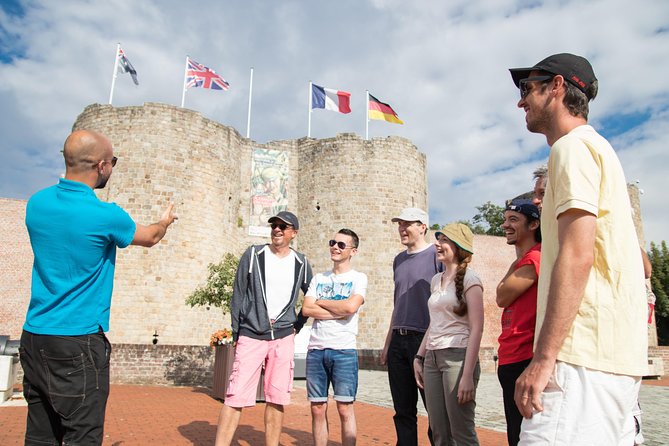
Next comes Lochnagar Crater, created on July 1, 1916, the first day of the Battle of the Somme. The crater is about 30 meters deep and 100 meters wide, and that size is hard to grasp until you stand near it.
This is the kind of stop where your brain goes quiet for a second. The crater is not a symbol, it is the aftermath of decisions made far away, carried out at ground level by people you cannot picture until you try.
You get about 30 minutes here too. I like this amount of time because it lets you walk around and still have space to look longer when something clicks, without forcing you out before you are ready.
Beaumont-Hamel Newfoundland Memorial: trenches you can actually walk
Then you move to Memorial Terre-neuvien de Beaumont-Hamel (Newfoundland Memorial). This site preserves the largest Somme battlefield ground in the area and includes preserved trenches where you can still see and walk them.
What makes Beaumont-Hamel special is that it lets you imagine the battle from ground level. You are not just looking at a monument; you are moving through terrain shaped by bombardment, mud, and human movement under pressure. Even in a short window, it helps you understand why living conditions were a weapon in themselves.
You get about 30 minutes. Use it to slow down at least once. Step into the trench lines, look where a soldier would have had to turn, and notice how survival depended on very small choices.






Pozieres Memorial: a short stop with long emotional weight
Pozieres Memorial is listed as a shorter stop, around 10 minutes. That sounds quick, but it can work if you treat it as a “read and absorb” moment rather than a sightseeing break.
This is one of those places where your time matters because the memorial is built for legibility. You do not need to rush through it, but you also should not try to solve the whole battle in 10 minutes. Walk, look, and let it land.
If you feel the urge to take notes, do it on your phone or on paper quickly. Otherwise, you will spend the whole stop trying to record everything and you will miss what the site is asking you to feel.
Villers-Bretonneux: Australia’s memorial, and why April 25 hits differently
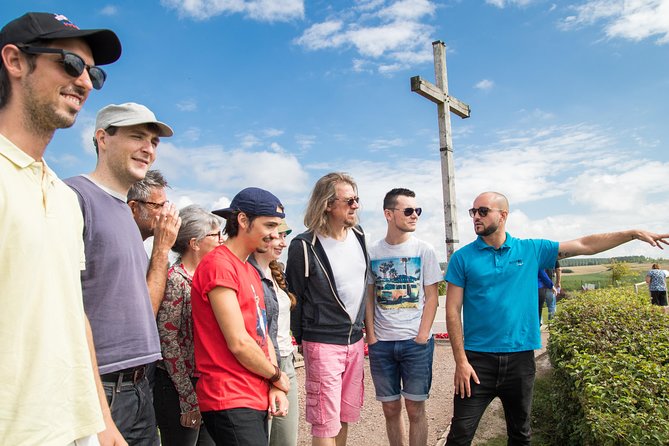
Next you visit Villers-Bretonneux Military Cemetery. This is tied directly to Australian remembrance. The cemetery commemorates 10,738 Australian servicemen with no known grave.
The emotional impact here is not just personal. The town also holds Anzac Day celebrations every April 25 at this memorial. That matters because it connects the Somme to living remembrance, not just a museum date on a calendar.
Your time is about 30 minutes. That is enough to walk the cemetery layout, find the meaning in the names, and then transition to the Monash Centre without your head spinning.
If you are Australian, you will likely feel this stop in a different way, because Villers-Bretonneux is close to the heart of how Australians talk about the war in everyday terms.
Sir John Monash Centre: the museum stop that ties the whole day together
After the battlefield sites, you get one hour at the Sir John Monash Centre. The format here is different from the memorials. You get video testimonials and interactive displays designed to help you connect personal stories to the bigger events.
This is where the day stops feeling like a checklist. You start understanding why the Somme matters in military terms, and why Monash’s role is so often discussed in Australian WWI history.
One practical thing: if you feel moved already, give yourself permission to be moved again here. The centre is set up for that. If you treat it like a quick look and rush out, you will miss the emotional logic of the exhibits.
Lunch at Le Tommy in Pozières: good food, plus a special artifact angle
You then have about one hour of free time for lunch at Le Tommy (lunch cost not included). The restaurant is owned and operated by Dominique, who is described as a local legend for his strong character and passion for the Somme.
The best part of this meal stop is not just the food. You can also explore the owner’s private collection of artifacts from the Battle of the Somme. In practice, this can turn a simple lunch into a short, self-paced “history in objects” moment.
Two considerations:
- Food is not included, so factor that into your total day cost.
- If you have strict dietary needs, plan to ask what is available before you order. The restaurant is described as rural and classic, so options might be limited.
Still, it is an easy, time-friendly break that keeps you in the spirit of the area instead of dropping you back into tourist-mode.
Amiens Cathedral: a 13th-century finish after the heavy stops
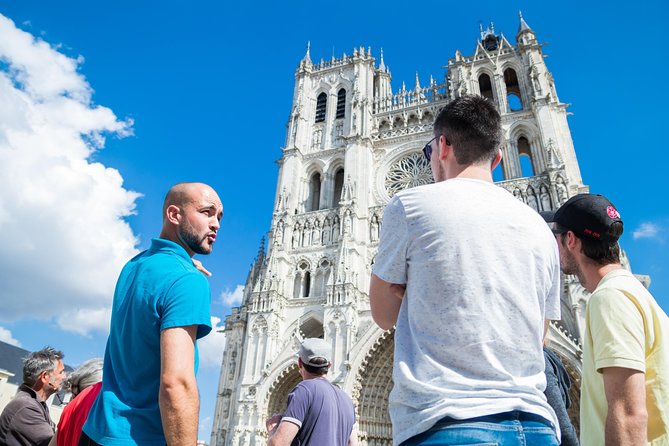
You wrap up at Cathedrale Notre-Dame d’Amiens, a 13th-century cathedral and described as the largest cathedral in France. Your stop here is around 20 minutes.
Amiens works as a closing note because it is built on stone skill and human effort, but the mood is different from the Somme. After names, craters, trenches, and commemoration, you get a soaring space that lets your body unclench.
One more reason this cathedral lands well: it ties to the war era you just left. The cathedral was damaged by German bombings in 1918, and knowing that while you look at it adds an extra layer without turning the site into another battlefield.
Price and value: what you’re really paying for
The price is $278.26 per person for about 11 hours. That sounds like a lot until you break it down.
You are paying for:
- Round-trip transport from Paris by air-conditioned minivan
- A driver/guide
- A format designed for small groups (max 8)
- Guaranteed skip-the-line handling
- Included taxes, fees, and handling
- Admission ticket costs are listed as free for each stop on this schedule
The big expense that is not included is food. Lunch at Le Tommy is on you, and it is stated that lunch price is not included.
So the value math is strong if you want zero hassle: you do not have to plan logistics across multiple sites, and you get a guided framework so you are not wandering with half-understood context.
If you are traveling solo, a day like this can still feel worth it because you are not paying for private transport just to reach one or two places. The small-group cap also means you are not stuck in the middle of a big bus crowd.
Who this tour suits best
This tour is a good match if:
- You want a Somme day that centers the Australian story at Villers-Bretonneux and adds context through the Sir John Monash Centre
- You value short, purposeful stops rather than long drives between unrelated sights
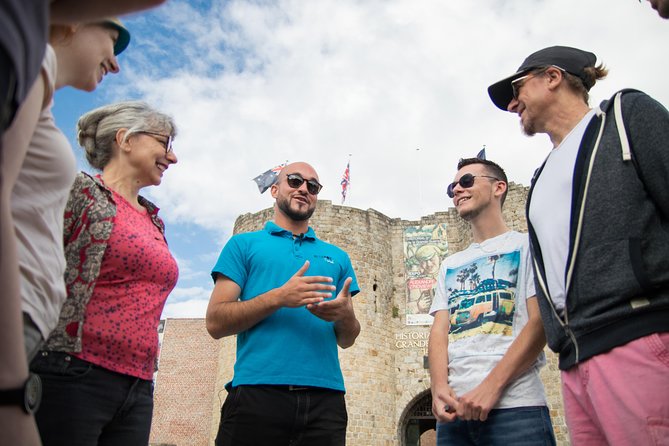
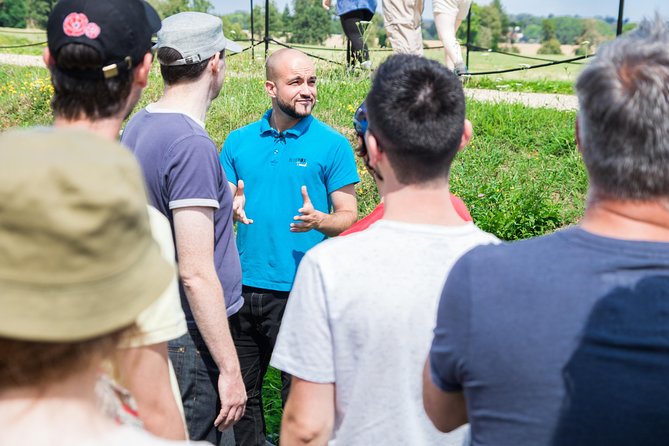
- You prefer a small-group format where you can actually hear the guide’s explanation at each stop
It may be less ideal if:
- You need lots of free time to roam, because most battlefield and memorial stops are around 30 minutes or less
- You dislike emotional sites tied to mass loss, because the route is built around commemoration and remembrance
If you are bringing kids, this can still work. The minimum age is 7 years, and several family-focused experiences emphasize that the day is educational and respectful, though you should bring patience and warm layers because it is a long outing.
Tips to make your day easier (and more meaningful)
Bring what you need for comfort first, because the Somme sites are outdoors.
- Pack layers you can handle changing temperatures.
- Wear waterproof shoes with tread, especially if rain is on the forecast.
- If you are sensitive to crowds at memorials, plan to pause quietly rather than rushing to take photos.
- Since food is not included, decide whether you want to budget for Le Tommy or bring snacks in case the lunch rhythm runs later.
Also, go in expecting that the day will feel heavier than a typical museum day. That is not a downside, it is the point.
Should you book this Somme + Amiens day tour?
I’d book it if your priority is a structured, respectful way to see the Somme battlefield sites and understand why Australian remembrance at Villers-Bretonneux and the Sir John Monash Centre matters. The small-group cap, the air-conditioned transport, and the fact that admissions for the stops are listed as free make the day feel fair priced for what you actually get.
I would think twice if you want a relaxed day with lots of leisure time, or if you cannot handle cold and wet conditions. This route is for people who are ready for outdoor memorials, short walks, and meaningful context delivered stop by stop.
If that sounds like you, this is the kind of itinerary that tends to stick with you long after you get back to Paris.
FAQ
What time does the tour start, and where do I meet?
The tour starts at 7:00 am at Dada12 Av. des Ternes, 75017 Paris, France.
How long is the Somme and Amiens day trip?
The duration is about 11 hours.
Is the tour group small?
Yes. The tour has a maximum of 8 travelers.
Is the tour offered in English?
Yes, it is offered in English.
Are entrance tickets included?
Yes. The stops listed on the route show free admission (and the tour includes transport and related fees).
Is food included?
No. Food is not included, and lunch at Le Tommy costs extra (lunch price not included).
What transport is provided from Paris?
You get round-trip transport by an air-conditioned minivan.
Does it run in bad weather?
Yes. It operates in all weather conditions, so you should dress appropriately.
What is the minimum age?
The minimum age is 7 years.
What is the cancellation policy?
Free cancellation is available if you cancel up to 24 hours in advance for a full refund. If you cancel less than 24 hours before the start time, the amount paid is not refunded.
More Tour Reviews in Paris
Not for you? Here's more nearby things to do in Paris we have reviewed











Paris City Tours, side by side.
 ★ 4.6Louvre Museum Timed-Entrance TicketTickets from $2671,977 guest reviews
 ★ 4.6Disneyland® Paris 1-Day TicketTickets from $6149,412 guest reviews
 ★ 4.6Versailles Palace and Gardens Full Access TicketTickets from $1741,579 guest reviews
 ★ 4.6Arc de Triomphe Rooftop TicketsTickets from $1834,264 guest reviews
 ★ 4.7Orsay Museum Entry TicketTickets from $1525,647 guest reviews
 ★ 4.4Evening River Cruise with MusicTickets from $2722,721 guest reviews
 ★ 4.4Eiffel Tower Entry Ticket with Optional Summit AccessTickets from $2920,035 guest reviews
 ★ 4.3Eiffel Tower Summit or Second Floor AccessTickets from $5917,248 guest reviews