
Review · MONTMARTRE TOURS
Paris: Magical Montmartre, without the crowds. Small group
Montmartre feels like a village again. This 1.5-hour English small-group walk ties together the big icons and the side streets, with a local guide keeping you away from the densest crowds. I especially love the art-and-artist thread, with stories tied to names like Renoir, Van Gogh, and Picasso, plus the way you get actual neighborhood life, not just viewpoints. I also like that it is built for real conditions, you walk rain or shine with comfortable, photo-friendly pacing. One thing to consider: this is a hillside walk and it is not suitable for people with mobility impairments or wheelchair users.
The new 6:30 PM option is the twilight-hour pick, when daytime momentum calms down and locals start coming out. You still see the headline stops, but the vibe feels more lived-in, more Montmartrois, and less rushed.
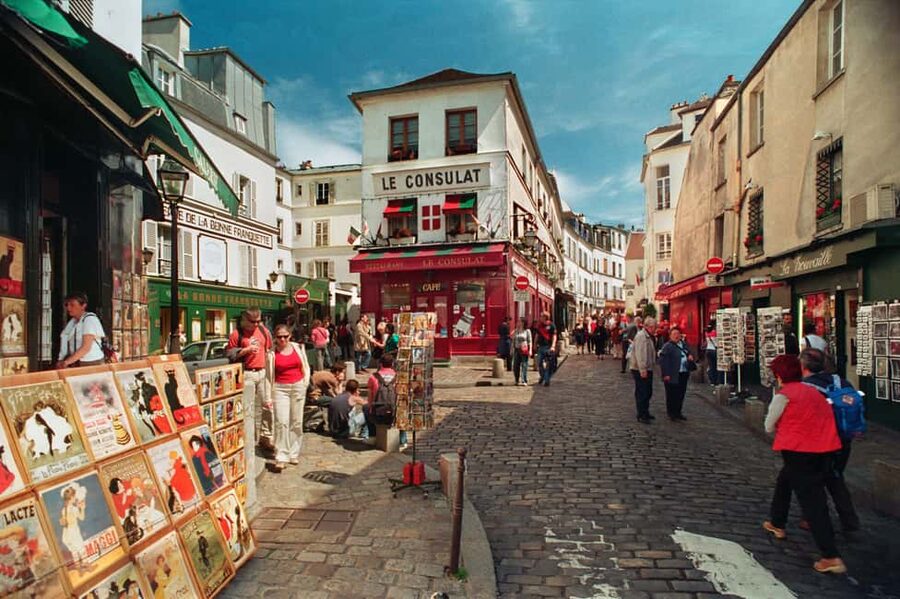
Beyond the famous sights, you also spend time on the spots where art history and daily Paris overlap, including Place du Tertre and the Moulin de la Galette area, plus a look at the Vignes du Clos Montmartre vines. If you want an overview you can build on for the rest of your trip, this is a strong match.
Key highlights you will feel right away
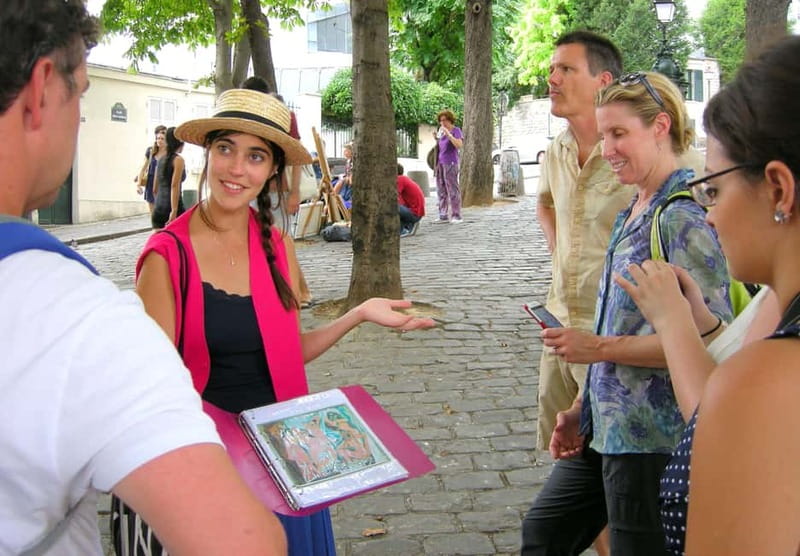
- A local guide in a pink vest, meeting you at the Blanche metro exit and starting on time
- Moulin Rouge to Sacré-Cœur route plus the mid-level stops that most people skip
- Art stories on the move, including Impressionism connections and Cabaret of the assassins lore
- Twilight-friendly timing, especially with the 6:30 PM tour for thinner crowds
- Rain or shine walking, so you do not lose a day to weather
- Vines and village texture, including the Vignes du Clos Montmartre and a traditional village segment
How the tour keeps Montmartre calmer near the icons
Montmartre is famous, which means it can feel like a theme park if you show up at the wrong moment or with the wrong plan. What I like about this tour format is that it is structured to give you the landmark hits, but it does not pretend every street will be empty. The real win is the guide’s focus on walking far from the crowds whenever possible, so you get breathing space for the stories and for the views.
You start at Place Blanche, then work your way through the district’s character zones. Along the way, you get just enough time at the major names, like Moulin Rouge and Sacré-Cœur, but the tour also spends time on places that help the neighborhood click in your head. That is where Montmartre becomes more than postcards.
One practical note from past groups: while the tour is billed as a small group, some departures can still run closer to a larger crowd level (around 20 in at least one group). If you are the type who hates being shoulder-to-shoulder, consider going earlier in the day or the 6:30 PM option for a calmer feel.
You can also read our reviews of more tours and experiences in Paris.



Price and time: is $17 worth it for 1.5 hours?
At $17 per person for a 1.5-hour guided walking tour, you are paying for something you cannot easily replicate on your own: a guided narrative plus on-foot timing. You are not just buying entry to sights. You are buying direction, context, and an efficient route that pulls in the right stops without you needing to map it all while your phone battery dies.
Value here is mostly about focus. You will see the big Montmartre names, but the guide also connects them to the creative energy of the area, including who painted where and how Impressionism took root there. That kind of storytelling often changes what you notice when you walk back later.
Also, this price does not include transportation, food, drinks, or entry fees. That is actually good information for planning. If you know you will want a snack or want to enter a specific paid space on your own schedule, this tour can be your orientation and then you decide what to add.
Route overview: Place Blanche to Sacré-Cœur, with key stops
This tour is a walk with a clear sequence. It starts on street level outside the metro station exit for Blanche (Metro Line 2). Your guide wears a pink vest. You are told to start right on time, and the route is designed for rain or shine.
Here is how the itinerary typically plays out, with what each stop does for your understanding of Montmartre:
Stop 1: Place Blanche, your starting point and orientation
Place Blanche is your launchpad. It is not glamorous, which is why it is useful. You begin where you can easily orient yourself, then the walk naturally climbs into Montmartre’s more distinct neighborhoods.
The biggest benefit at this stage is mental. Once you start walking, the area stops feeling like random hills and stairs. It starts feeling like a connected village.
Stop 2: Montmartre guided tour, the neighborhood “map” moment
Before you hit the headline icons, you get a guided Montmartre segment. This is the part that sets your eyes up. The guide helps explain how this district works, both physically (how the streets layer) and culturally (how Montmartre became a magnet for artists).
If you have only a limited amount of time in Paris, this kind of orientation saves you from wandering later with a vague sense of what you are looking at.






Stop 3: Moulin Rouge area, a quick look plus scenic views
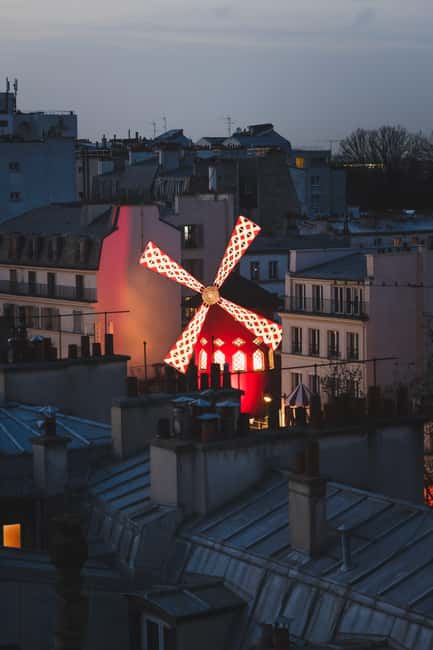
Moulin Rouge is a short stop, about 10 minutes. You get to see it, and you also get scenic views on the way. This is smart timing. Moulin Rouge can take over your attention if you let it, so the tour keeps it controlled, then moves you forward to deeper Montmartre.
What you should do here is simple: take a couple photos, look around for the direction of the streets, then listen to the guide’s context. If you only photograph, you miss the story link that gives the next stops meaning.
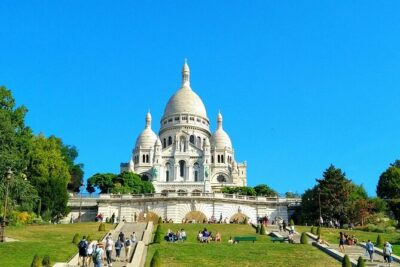
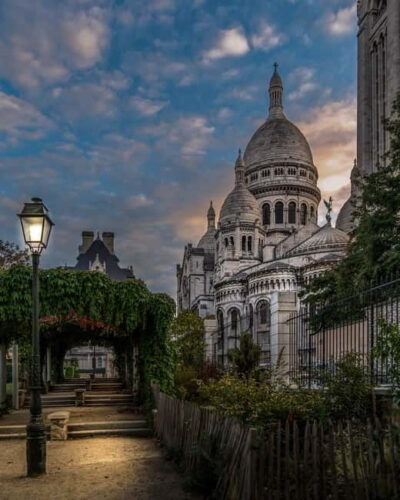
Stop 4: Sacré-Cœur Basilica, the viewpoint and the debate
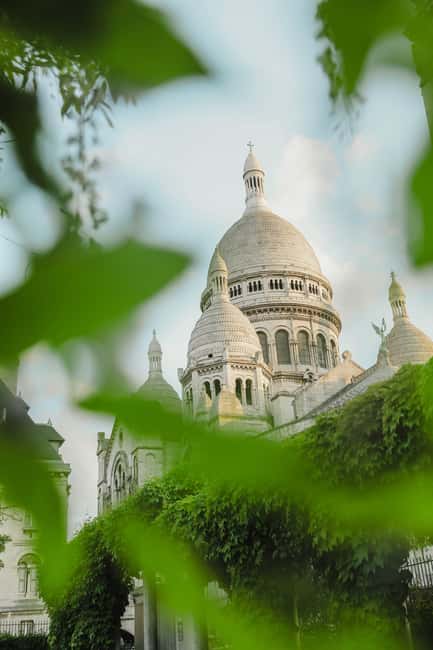
Sacré-Cœur is another 10-minute guided stop. This is where Montmartre’s hilltop identity lands. The basilica area is a visual anchor, and the tour uses it for more than views.
One of the more memorable story angles you will hear is why so many locals actually dislike Sacré-Cœur. That kind of local pushback matters, because it stops the basilica from being treated as a simple fairy-tale icon. You get a more honest picture of how Parisians think about their own landmarks.
Stop 5: Moulin de la Galette, where the creative reputation takes shape
Moulin de la Galette gets about 10 minutes as well. This stop is less about big crowds and more about the artistic vibe that made Montmartre such fertile ground for painters.
Even if you have not memorized Montmartre art references, the guide’s explanation helps you connect the “who painted here” theme to a place you can actually walk to.
Stop 6: Place du Tertre, the bohemian square
Place du Tertre is guided for about 10 minutes. This is the kind of square that most people recognize, but you might not understand why it matters until you hear the context.
This is also where the tour leans into the bohemian side of Montmartre and the everyday atmosphere, including the feeling of being around locals, bars, and cafés. You are not just standing in front of sights, you are learning how this neighborhood lives.
If you are prone to overplanning your day, you will appreciate that this stop gives you atmosphere fast. It is a useful “taste,” not a long detour.
Stop 7: Vignes du Clos Montmartre, the vineyard inside the city
The Vignes du Clos Montmartre stop lasts about 10 minutes and it is one of the more surprising moments in the route. Vineyards on a Paris hill can feel like a myth until you see the setting.
Even without getting too technical, it helps explain why Montmartre has always been more than a theater district. The area has had agricultural roots, and the guide ties that to how it transformed into an artist’s magnet over time.
Stop 8: Traditional village segment, village feel on foot
You get a guided stop described as a traditional village segment, around 10 minutes. This is where Montmartre stops acting like a museum and starts acting like a place you could actually live in.
You will hear stories and see the shapes of the streets that create that village feel. For me, this is where the tour earns its name. Montmartre is not only its icons, it is its texture.
Stop 9: One more guided stop before the finish
There is an additional guided stop around 10 minutes before the tour ends. The exact details of this segment are not spelled out in the route summary you provided, but it is clearly part of the guided flow that bridges the neighborhood’s upper areas and your finish.
Think of it as the “final context” piece. The guide is tying together the art, the rise and changes in the neighborhood, and what to notice next if you keep exploring on your own.
Finish: Sacré-Cœur area again
The walk finishes at the Basilica of the Sacred Heart of Paris. The route information also says the activity ends back at the meeting point, so I treat this as a loop design that returns you to the same general practical area so you can continue your day easily.
Either way, you end where your Montreal style day needs an easy reset. You will know where you are, you will know what you saw, and you will not feel like you walked in circles for 90 minutes.
The art-and-history stories you will actually remember
This is a story-driven tour, and it pays off because the stories are tied to places you walk to. You are not just hearing dates. You are hearing how Montmartre became the kind of district where artists showed up, painted, argued, and turned everyday life into art.
A few of the specific story themes you can expect include:
- Impressionism connections, including how Montmartre relates to artists like Van Gogh
- Renoir, Van Gogh, and Picasso referenced as part of the district’s creative footprint
- The Cabaret of the assassins story, used to explain the neighborhood’s past attitude
- A local perspective on Sacré-Cœur, including why it is controversial even among residents
- The guide pointing out spots where painters worked, so you can picture how art looked in that era
I like this approach for two reasons. First, it gives you something to look for when you walk later. Second, it prevents Montmartre from turning into a list of monuments you forget by dinner.
Where the views fit, without turning the walk into a photo marathon
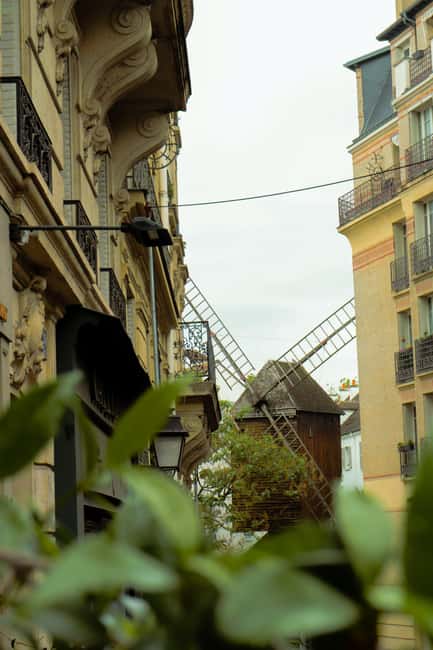
You will get views over Paris as part of the route. But the tour does not treat the entire experience like a scenic lookout circuit. It mixes viewpoints with neighborhood corners, squares, and streets so you keep moving and keep learning.
This matters because Montmartre is a place where it is easy to burn 90 minutes taking photos and then realizing you do not understand what you just photographed. Here, you pause, take in the scene, then move on with context.
Also, the time spent at each stop is short enough that you never feel trapped. You get a taste, then you roll forward.
What I think about the group size and guide style
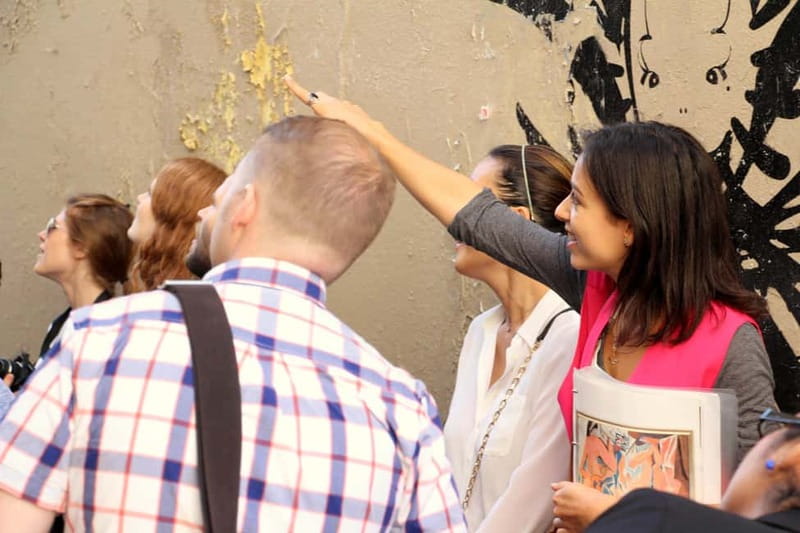
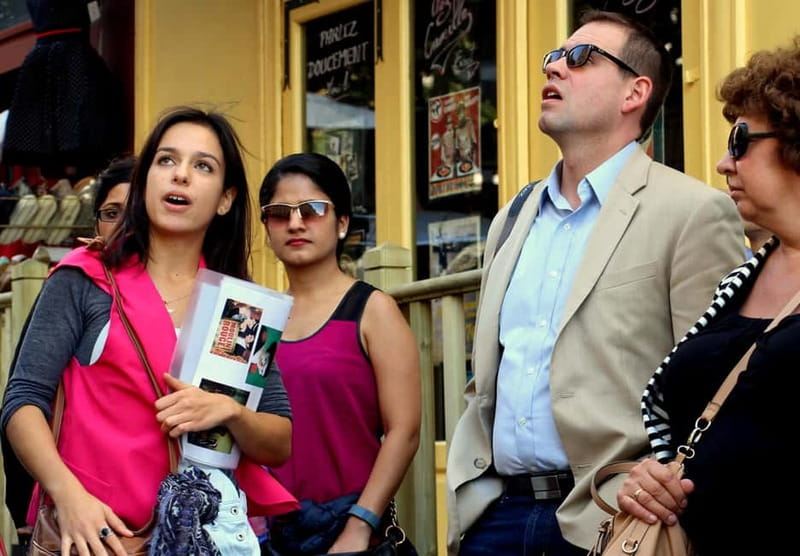
This tour is presented as an English-only, small-group experience. Your guide is local and uses the walking pace to keep the group engaged while finding routes that avoid the densest crowds.
The strongest theme in guide feedback is storytelling plus flexibility. Guides are described as engaging, funny, and able to keep people interested through multiple stops. Names that show up in the guide praise you provided include Matthew, Mathieu, Max, Anna, Leonie, and Floriane, among others.
There is one practical caution: if your personal travel style is very sensitive to group density, treat the small-group promise as a target, not a guarantee. Some groups have run around 20 people in a section. You may still find it enjoyable because the guide seems good at managing the flow, but it is worth knowing.
Practical tips before you go: shoes, weather, and what to expect uphill
This is a walking tour on real streets, on real slopes. Comfortable shoes are not optional, they are the whole plan.
Bring:
- Comfortable shoes
- Weather-appropriate clothing
- A reusable water bottle
The tour runs rain or shine. That is actually a big advantage. If Paris weather hits, you do not waste your day trying to decide. You just dress for it and walk.
Finally, it is not suitable for mobility impairments or wheelchair users. If that applies to you, you will want an alternative plan that matches your pace and access needs.
Who this Montmartre tour is best for
You will likely love this tour if:
- You are a first-time visitor to Paris and want an orientation to Montmartre without getting lost
- You care about art history and want it tied to real streets, not museum walls
- You want iconic sights like Moulin Rouge and Sacré-Cœur, but you also want the side streets and local texture
- You dislike crowds and like the idea of a guide steering you away from the worst congestion
- You want a 1.5-hour activity that fits easily into a fuller day
You might want to skip or reconsider if:
- You cannot do uneven uphill walking
- You want a totally independent experience with no structure at all
- You plan to spend a long time inside churches or other paid sites, since entry fees are not included
Should you book this Montmartre tour?
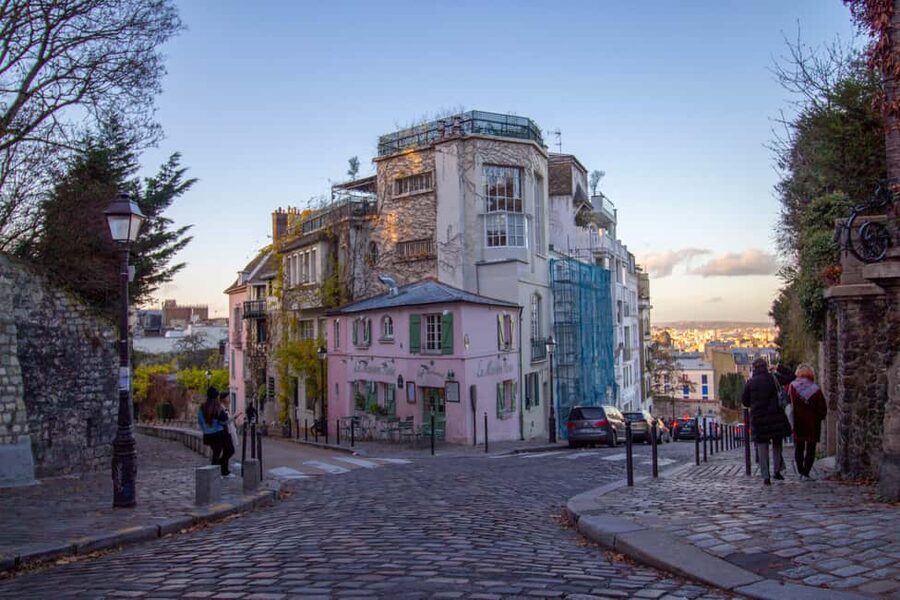
If you want a smart Montmartre overview with story depth and a route that aims to dodge crowds, I think it is a good buy. The price is low enough that you are not taking a financial risk, and the time is short enough that you can use it as a springboard for the rest of your day.
Book it if you like the idea of hearing how Montmartre became tied to artists and why the neighborhood still argues with itself, including the local take on Sacré-Cœur. Choose the 6:30 PM twilight departure if you want a calmer feel and less daytime push.
Skip it only if mobility is an issue, or if your style is very self-directed and you would rather map and explore without a guide. Otherwise, this is the kind of walking tour that makes a neighborhood feel legible fast, and that is what you need in a city like Paris.
FAQ
How long is the Montmartre tour?
The tour lasts about 1.5 hours.
Is the tour in English?
Yes. The tour is in English.
Where do I meet the guide?
Meet your guide on street level outside the metro station exit Blanche (Metro Line 2). Your guide will be wearing a pink vest.
What are the main stops during the walk?
You will visit and be guided through Montmartre highlights including Moulin Rouge, Sacré-Cœur Basilica, Moulin de la Galette, Place du Tertre, and Vignes du Clos Montmartre, with additional guided segments before finishing at the Sacré-Cœur area.
Is transportation or entry to attractions included?
No. Transportation, food, drinks, and entry fees are not included.
Does the tour run in bad weather?
Yes. The tour runs rain or shine.
Is the tour suitable for wheelchair users or mobility impairments?
No. It is not suitable for people with mobility impairments or for wheelchair users.
More Tour Reviews in Paris
Not for you? Here's more nearby things to do in Paris we have reviewed












Montmartre Tours, side by side.
 ★ 5.0Montmartre Hidden Gems and Scenic Highlights Walking TourTickets from $382,684 guest reviews
 ★ 5.0Montmartre Hill French Gourmet Food and Wine Tasting Walking TourTickets from $1452,588 guest reviews
 ★ 4.8Montmartre Cheese, Wine & Pastry Guided Walking TourTickets from $1272,255 guest reviews
 ★ 4.9Montmartre Highlights Walking Tour with a Local GuideTickets from $341,668 guest reviews
 ★ 5.0Private Montmartre Food Tour with Wine, Cheese & PastriesTickets from $3021,027 guest reviews
 ★ 4.1Sacré-Coeur and Montmartre Tour with Expert GuideTickets from $281,027 guest reviews
 ★ 5.0Paris Montmartre Food Tour – A Full French Meal by Do Eat BetterTickets from $95877 guest reviews
 ★ 5.0Hidden Montmartre: Paris’ Secret Streets Walking TourTickets from $44809 guest reviews
This tour also belongs to