
Review · SEINE RIVER CRUISES
Paris: Hop-On Hop-Off Seine Cruise Pass with 9 Stops
Seine views beat the gridlock. The Batobus hop-on hop-off pass turns a simple river ride into a flexible way to see Paris icons, with a 24 or 48 hour ticket you can start whenever you want. You hop on at one of the 9 stops, cruise the Seine, and get off exactly where you want to spend time on land.
I especially like the heated, glass-covered boats with a terrace, because you get sightseeing comfort even when weather is not cooperating. The included interactive webapp also helps you make sense of what you’re passing, with info and tips in multiple languages.
One thing to plan for: the boat direction matters, and you need to pay attention to which side of the river you’ll be on when you hop off.
Key things to know before you go
- Hop whenever you want: Your pass is valid for 24 or 48 hours after first use.
- 9 strategic stops: Eiffel Tower, Musée d’Orsay, Notre-Dame, the Louvre, and more.
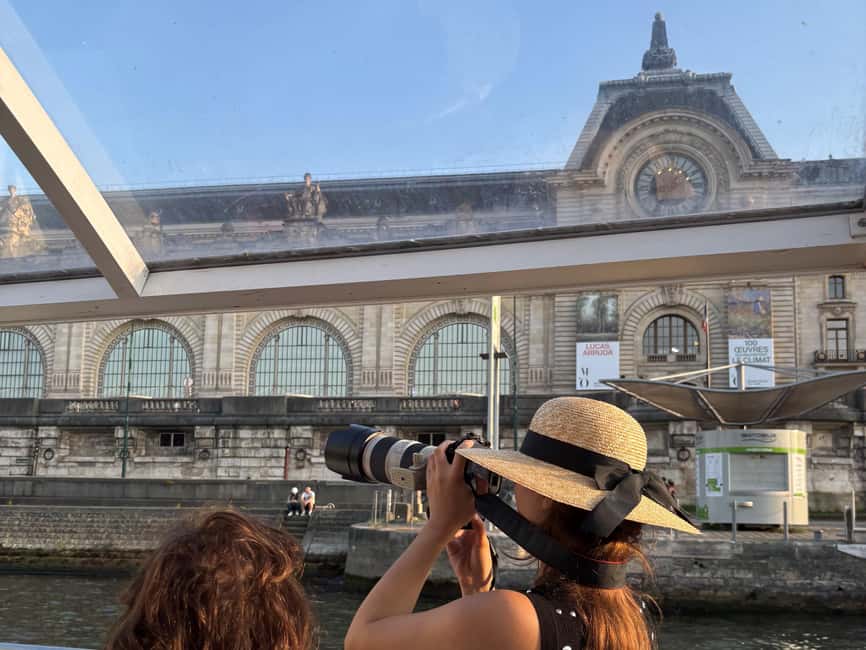
- Heated boats and a photo-friendly terrace: Better comfort, better angles.
- Use the webapp for context: It’s your best way to understand monuments from the water.
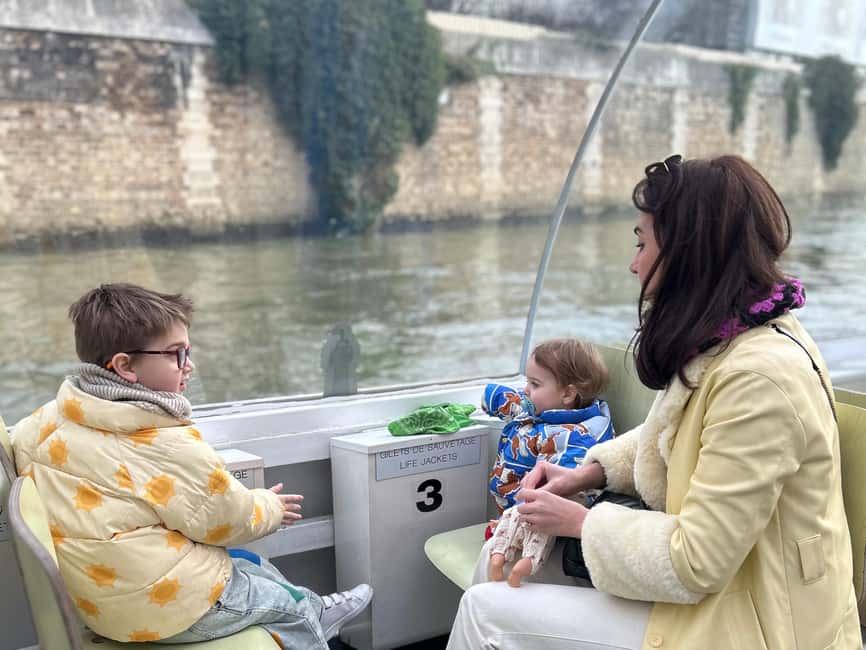
- It gets busy: Expect families and pushchairs at popular times.
Why this Seine hop-on pass is good value in Paris
Paris is famous for long walks and crowded lines, and this is a smart counter-move. For roughly the price you’d pay for one museum ticket, you buy transportation plus major sightseeing, and you can pace yourself instead of sprinting from stop to stop.
What makes the value real is the mix of “on the water” time and “off the boat” time. You’re not just sightseeing from behind glass, you’re also landing within walking distance of the big hitters, like the Eiffel Tower and the Louvre. That saves energy for the parts you actually want to explore up close, and it reduces the number of taxi or subway decisions you have to make.
Also, the pass format fits Paris travel. If your morning runs late, you are not stuck. The ticket stays valid for the full window (24 or 48 hours), starting when you use it for the first time. That means you can start when you’re ready, not when the schedule forces you.
You can also read our reviews of more boat tours in Paris


How the hop-on hop-off system works along the Seine
You board at one of the 9 Batobus stops, and then you scan your ticket each time you hop on. The important detail is this: your ticket validity starts when you board for the first time, so make that first hop count.
The service runs frequently, and many departures feel close to every 20 to 25 minutes. Do not treat it like a once-a-day boat. Instead, treat it like a moving transportation line that lets you pause your plans when you want a break, then continue when you feel like it.
A full loop is about two hours, so on a 24-hour or 48-hour pass, you can do a first circuit for orientation, then return to the stops you want to linger at. This is a great strategy if you are visiting for a short trip, or if you want to avoid the mental gymnastics of planning subway routes every day.
Your 9 stops, and what each one is really good for
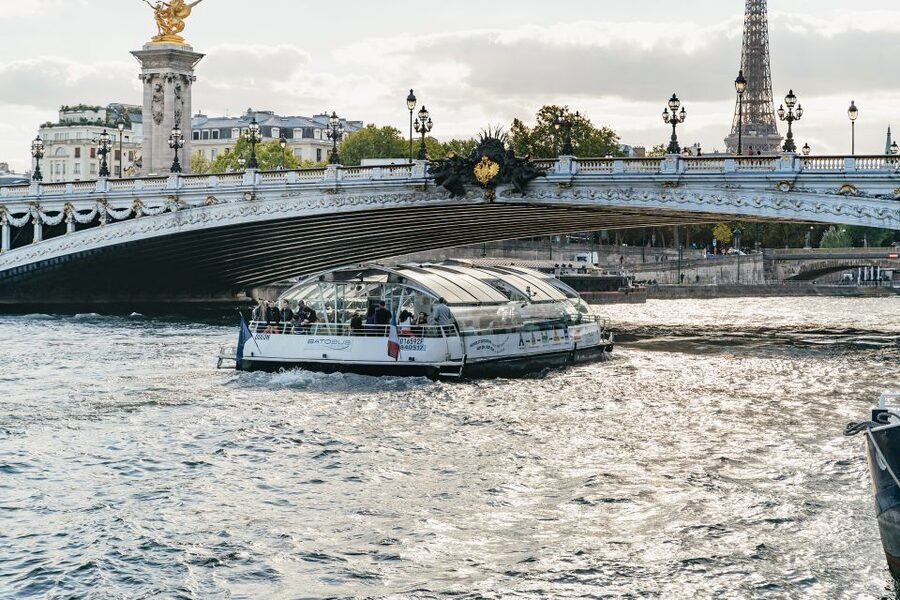
The route is built around the classic Paris postcard moments, but the real win is how walkable each stop is to different kinds of experiences: museums, neighborhoods, and major monuments.
Tour Eiffel stop: Port de la Bourdonnais
This is the natural starting point for most people, right at the Eiffel Tower area. One nearby bonus is the Cité de l’Architecture, which focuses on French architectural history from the 12th to the 18th century. Even if you do not go inside, the surrounding area is handy for quick photos and an easy first “wow” moment.
Tip: go for Eiffel views at different times of day if you can. One reviewer loved seeing the tower lit up around 7pm, and it’s the kind of moment that feels extra special from the river.
Musée d’Orsay stop: Quai de Solférino
If you want art without dealing with the most intense crowds at the Louvre, this stop is a smart land-off. Musée d’Orsay is a short walk away, and it’s a strong choice for Monet, Renoir, and Van Gogh fans.
Drawback to consider: this stop is popular because of the museum connection. If you’re getting off at a peak time, you might want to exit quickly, then set a clear meeting point with your group before the flow gets too crowded.



Saint-Germain-des-Prés stop: Quai Malaquais
This is for the Paris-with-cafés side of the city. The area is known as a literary and intellectual hub, and it’s a good place to mix a short walk with people-watching. Nearby you can spot famous institutions like Café de Flore and Les Deux Magots, plus the Institut de France area.
This stop is also a nice “reset.” If the morning was museum-heavy, Saint-Germain can be your lighter, stroll-friendly break.
Notre-Dame stop: Quai de Montebello
Notre-Dame is obviously the big draw, but the real value here is the Latin Quarter nearby. You can connect monument time with browsing, bookshops, and cafés, and it’s a convenient place to refuel.
Practical note: the Latin Quarter can be lively, so if you want calmer photos, time your stroll carefully. Get your river photos first from the boat, then plan the on-foot wandering.
Jardin des Plantes stop: Quai Saint-Bernard
This stop is a win if you want nature and design without leaving the sightseeing loop. You can relax in Jardin des Plantes, and you’re also near the Cité de la Mode et du Design.
If you prefer breaks that are not just sitting in a café, this is one of the better “change of scenery” stops on the route.
Hôtel de Ville stop: Quai de l’Hôtel de Ville
This is a strong stop for civic Paris and nearby modern culture. You’re close to Hôtel de Ville and you can also reach the Pompidou Centre area from here. If you want to wander instead of going in, the Marais zone is nearby and easy to explore on foot.
This is a good choice if your day is “museum for one, neighborhood for the rest.” It keeps options open without forcing you into one fixed plan.
Louvre stop: Quai du Louvre and Pont Royal
The Louvre connection is the obvious one, but the bigger advantage is that the boat puts you in the right area. If you’re planning a Louvre visit, this stop helps you avoid stacking multiple transit hops.
One caution: the Louvre is big. If you do not want to feel overwhelmed, treat this stop as your “arrive and orient,” then decide how long you want to commit once you’re on land.
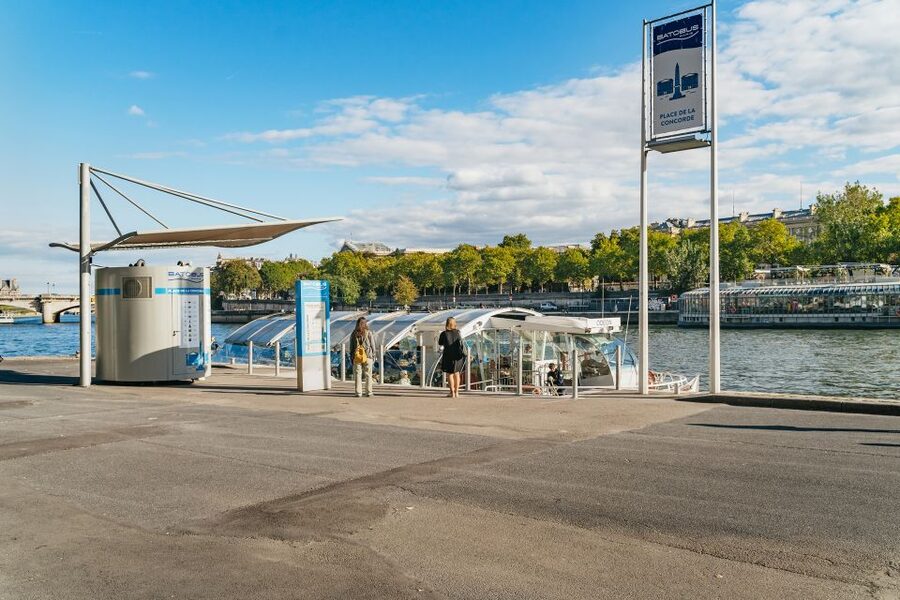
Place de la Concorde stop
This stop sets you up for grand Paris views and shopping streets. It’s connected to the luxury stretch near Avenue Montaigne and sits close to museum landmarks like Grand Palais and Petit Palais.
It’s also a pleasant place to pause and appreciate the wider streetscape. Instead of only seeing the Eiffel and cathedral types of landmarks, you get this more ceremonial, open-feeling section of the city.
Invalides stop: Port des Invalides
This is where you go for Napoleon history and some spectacular bridge scenery. Hôtel des Invalides is here, including Napoleon’s tomb, and the surrounding area sets you up for beautiful walking routes.
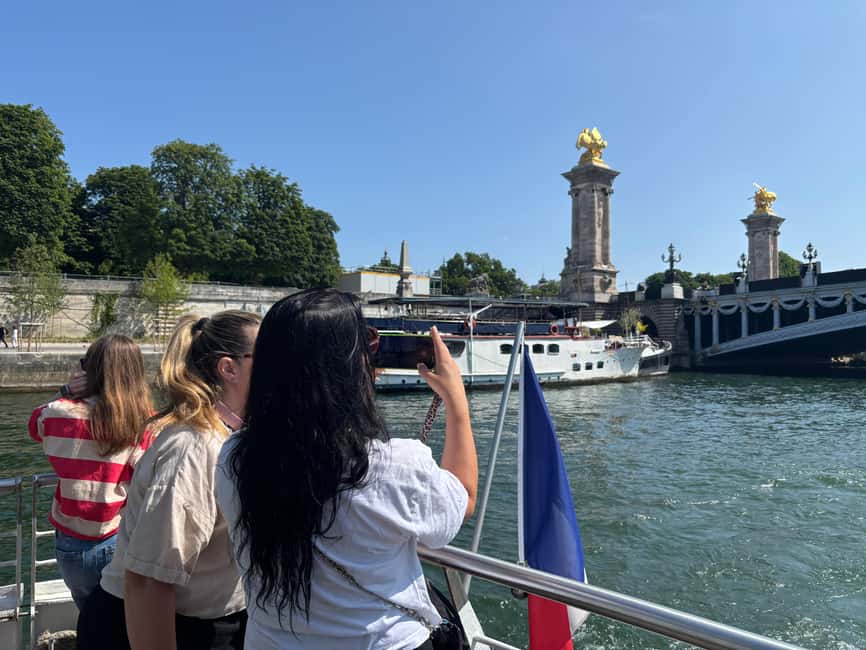
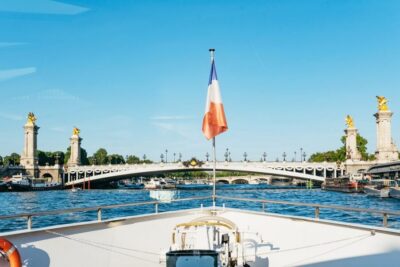
Also, as you cruise, you pass major bridge views like Pont Alexandre III, which is one of the more photogenic stretches from the water.
The terrace, glass, and photo angles that actually work
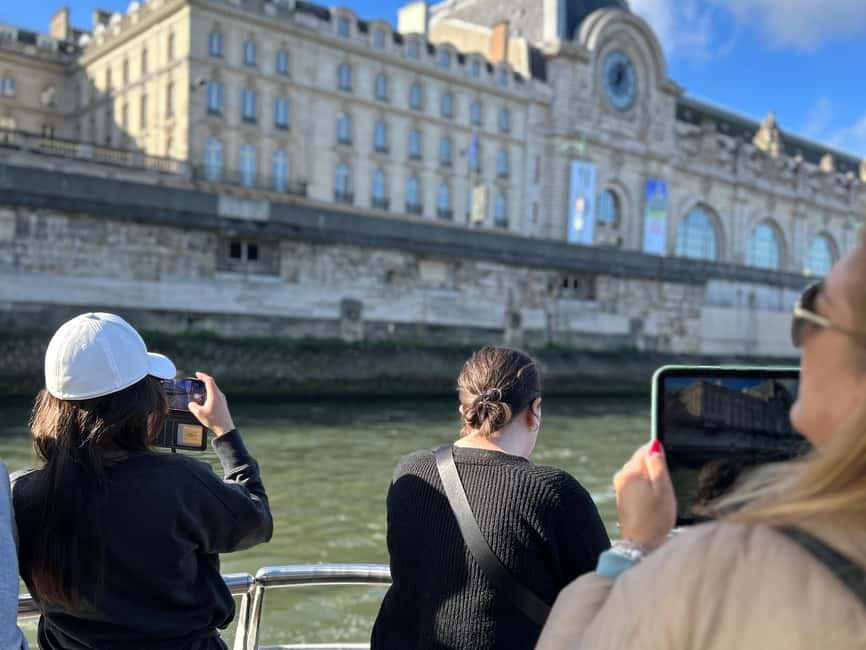
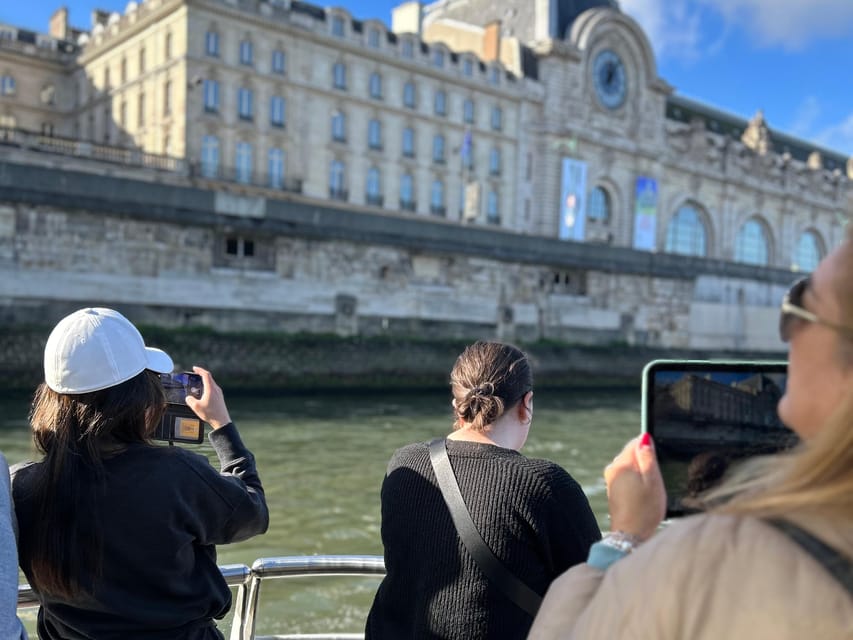
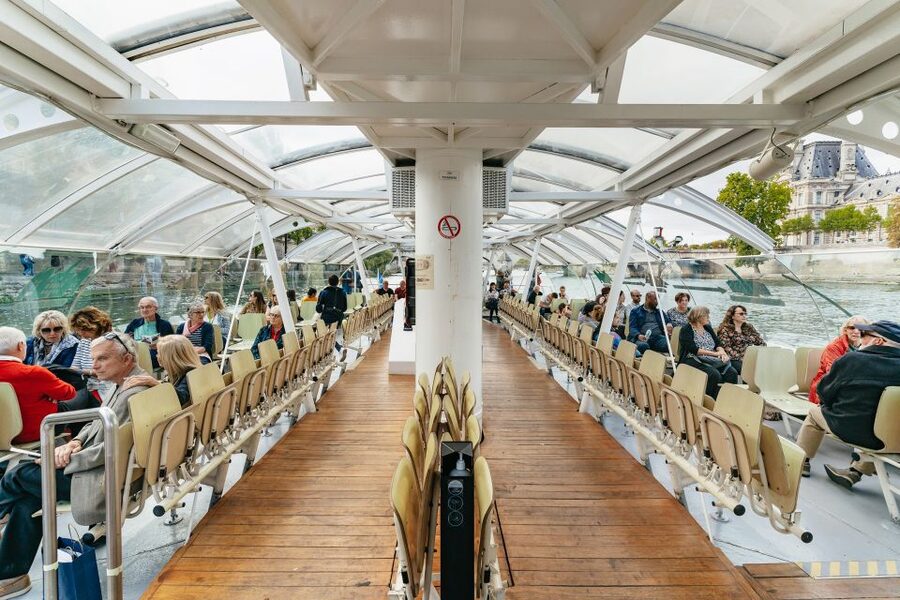
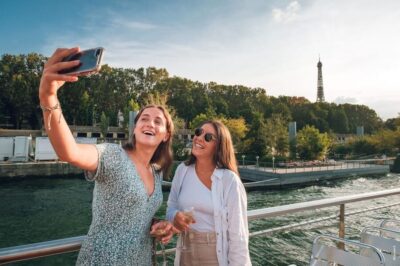
The boats are designed for viewing, not just transporting. You get a terrace space, and the heated interior helps you stay comfortable without feeling trapped indoors.
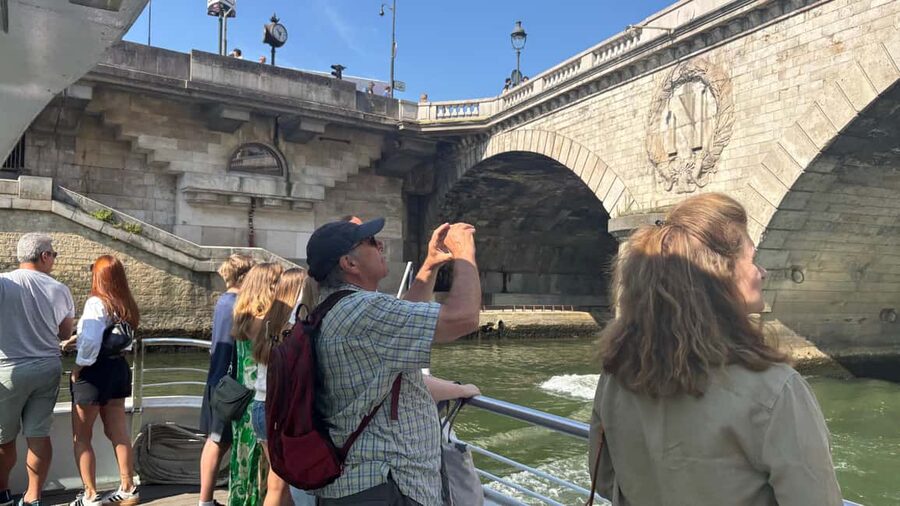
For photos, the terrace matters because it gives you a different shooting position than people who stay fully seated. One helpful review detail: there can be a small awning on the deck, so on a rainy day you may still be able to take pictures outside instead of giving up the moment clouds roll in.
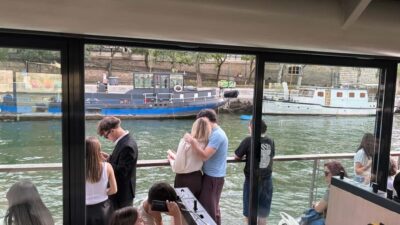
That said, glass can affect clarity. If you’re expecting perfectly crisp shots through thick panels, adjust your expectations. On some boats, the glass can look a little blurry from the angle you’re standing in. If that happens, move around for better sightlines, and try to shoot with the sun behind you when possible.
Using the interactive webapp so the cruise means more
This pass includes an interactive webapp with monument commentary and local tips around each stop. It’s available in English, French, Italian, Spanish, and German, which is great when you have a mixed-language group.
The best move is to treat the webapp like your guide for the water. Instead of guessing what you’re seeing from the river, you can read the context before or during the ride, then connect it to what you’ll see when you get off.
Also, do not rely on onboard audio. At least one passenger experience mentioned there is no audio you can count on, so download and test the webapp on your charged smartphone before you go. This is one of those tiny preparation steps that can make the whole trip feel smarter.
When a river cruise beats walking and the metro
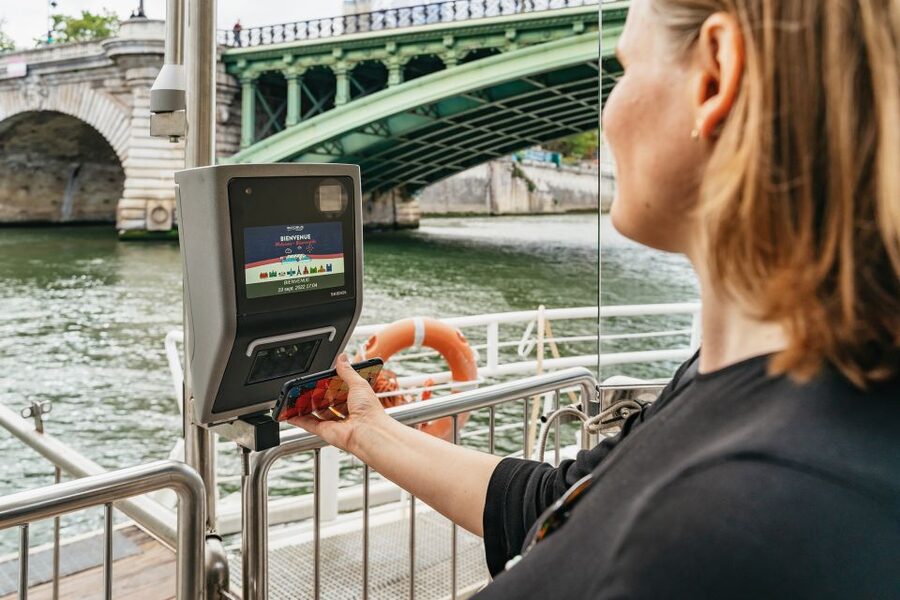
This is a practical Paris hack: water travel is calmer than transit stress. You avoid crowds of subway stations and you take a real break from sidewalks.
A lot of the stops are walkable to major sights, so you’re not stuck in a “ride only” situation. You can use the boat as your transportation backbone, then walk the short distances that let you actually enjoy the city street-level.
It’s also a good strategy if you have limited mobility or want gentler movement. One review specifically highlighted the Batobus as a more comfortable way for seniors with mobility issues compared to the subway, which can involve stairs and tight station navigation.
And for families with kids, the mix helps. You can let kids sit, reset, and then hop off for a short burst of sightseeing rather than forcing hours of nonstop walking.
Practical tips that save time and frustration
Here’s what I’d do to make this smooth from start to finish.
- Bring a charged smartphone. The webapp is part of the experience, and you’ll want it ready.
- Wear comfortable shoes. You’ll walk between the stops and nearby sights, even though the boat handles the longer stretches.
- Plan around crowds. The boats can get busy, especially with children and pushchairs. If you want a better viewing spot, aim to board a bit earlier rather than at the absolute peak moment.
- Keep bags light. Large luggage and non-folding strollers are not allowed, but baby carriages are allowed if they’re fold-up.
One more detail that matters more than people think: pay attention to the direction of the journey and which side of the river you’ll be landing on. If you hop off without checking, you might find yourself doing extra cross-town wandering. A quick glance before you get off can save half a day of backtracking.
Who should book this, and who should skip it
This pass is ideal if you want:
- an efficient way to see major sights without committing to one fixed walking route
- a comfortable break between museums and neighborhoods
- an easy plan for a short visit, especially if you like flexibility
You might want to skip it if:
- you need wheelchair access, because it is listed as not suitable for wheelchair users
- you want a fully guided, narrated walking tour experience with live direction turn by turn, since this setup leans on your webapp for context
Should you book the Batobus Seine Cruise pass?
If you’re spending 1 to 2 days in Paris and you want the biggest landmarks in the easiest format, I think this pass is a solid buy. The reason is simple: you get transportation plus a sightseeing loop, then you control how long you stay at each stop.
Book it if you like pacing, photos from the water, and the idea of returning to only the sights that truly catch your interest. Skip it only if your priorities are very narrow, or if accessibility needs make this route impractical for you.
FAQ
FAQ
How long is the Batobus pass valid?
The pass is valid for 24 or 48 hours, and the validity starts from the moment you use it for the first time.
How many stops are on the hop-on hop-off route?
There are 9 stops along the Seine route.
Where do I start if I want to begin at the Eiffel Tower?
One common starting point is Tour Eiffel at Port de la Bourdonnais.
Do I need to scan my ticket when I hop back on?
Yes. You scan your ticket each time you hop on the boat.
Are drinks or snacks included?
No, drinks or snacks are not included.
What’s included besides the boat ride?
You get a heated boat experience with a terrace, plus an interactive webapp with commentary about monuments and what to do around stops.
Which languages are available in the webapp?
The webapp is available in English, French, Italian, Spanish, and German.
What should I bring with me?
Bring a charged smartphone.
Is it suitable for wheelchair users?
No, it is listed as not suitable for wheelchair users.
More Boat Tours & Cruises in Paris



More Tour Reviews in Paris



Not for you? Here's more nearby things to do in Paris we have reviewed











Seine River Cruises, side by side.
 ★ 4.4Evening River Cruise with MusicTickets from $2722,721 guest reviews
 ★ 4.3Illuminations River Cruise with Audio CommentaryTickets from $2012,340 guest reviews
 ★ 4.3Tootbus Hop-on Hop-off with optional river cruiseTickets from $4911,924 guest reviews
 ★ 4.4Seine Cruise & Crepe Tasting near the Eiffel TowerTickets from $2311,231 guest reviews
 ★ 4.3Seine River Panoramic Views Dinner CruiseTickets from $6410,611 guest reviews
 ★ 4.6Louvre Museum Entry Ticket With Host and River CruiseTickets from $1009,926 guest reviews
 ★ 4.6Eiffel Tower Access by Elevator & Seine River CruiseTickets from $797,329 guest reviews
 ★ 4.73-Course-Dinner Cruise on the Seine with live musicTickets from $1357,248 guest reviews
This tour also belongs to