
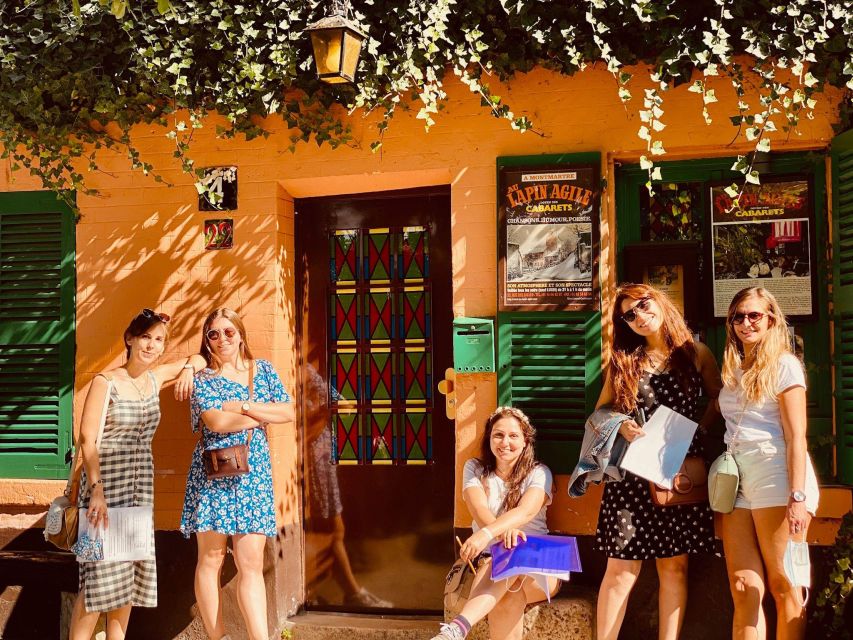
Review · MONTMARTRE TOURS
Paris: escape game in Montmartre
Montmartre turns into a game board. This outdoor escape game turns familiar streets into puzzle stops, with a guided tour woven in as you crack codes and collect letters along the way.
I love how the puzzles make you actually look at Montmartre’s highlights, not just walk past them. I also like the payoff: free souvenir photos plus a real French gift at the end. One thing to consider, the story focus can feel lighter at some stops depending on pacing, so go in expecting game first, anecdotes second.
Key points before you go
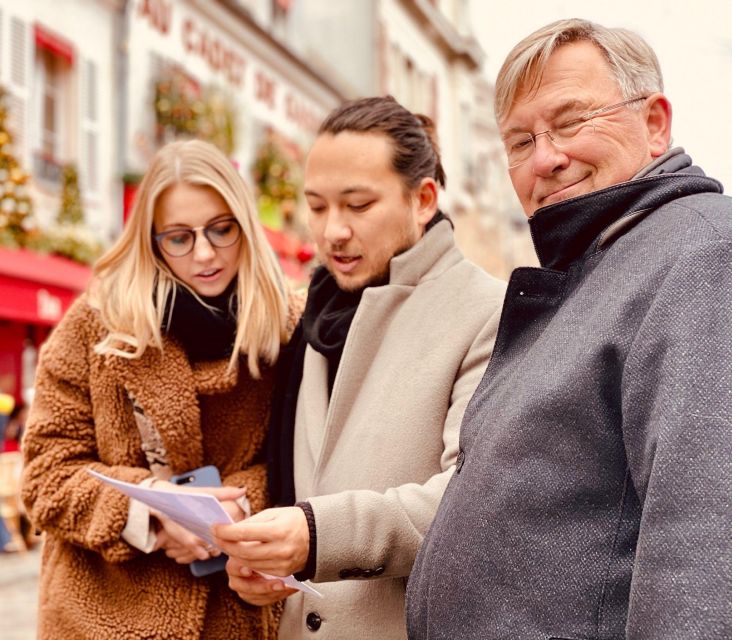
- 15 stages, one mystery sentence to solve, letter by letter
- Guided Montmartre tour while you play, so you learn without it feeling like homework
- Outdoor route through the hill, with active walking and short puzzle breaks
- Bowler hat game master who mixes local heritage with help when you need it
- Free professional photos plus rewards from a French master confectioner
- Family-friendly format, with children and adult versions
Montmartre by puzzle: what the game actually feels like
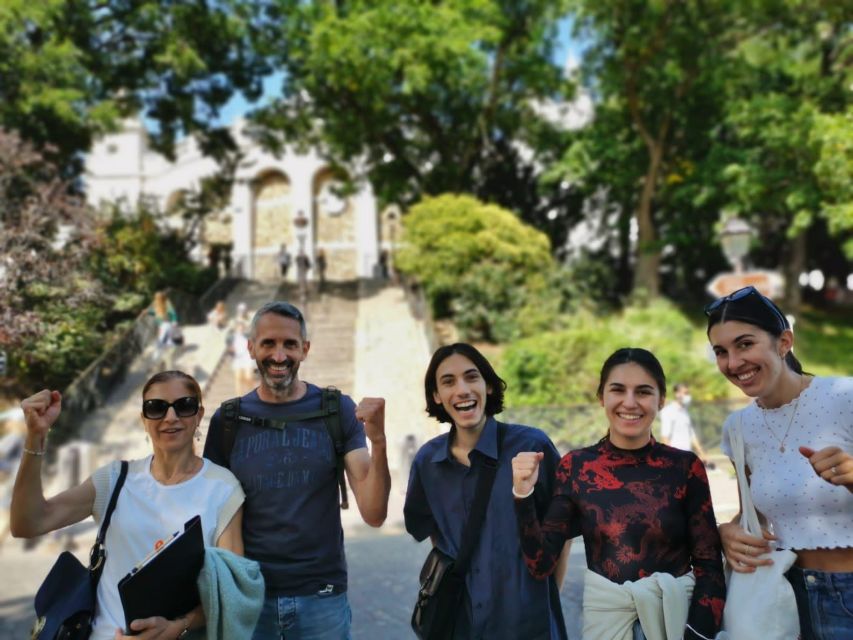
This is not the kind of escape game where you stay glued to one spot and squint at a screen. The whole idea is to take the energy of a real game and build it into a walk through Montmartre’s best-known corners. You move, you talk, you search, and you solve in a way that naturally slows you down just enough to notice details.
You get structured missions across 15 stages. At each one, you solve a riddle and earn a letter. Those letters combine into a mystery sentence. Once you find the sentence, you win, and you receive a real French gift.
What makes it work is that the puzzles are paired with a guided experience. Your game master wears a bowler hat, leads you through the area, and shares heritage notes and anecdotes as you go. So you are learning while staying in “play mode,” which is usually the best way to remember a neighborhood.
If you like group activities, this is a good fit. The design is built to feel unifying, with laughter and teamwork as people hunt for answers together. Even if you are not a “puzzle person,” you can still contribute, because the game is made for mixed groups, including families.
You can also read our reviews of more tours and experiences in Paris.



Where to meet by the funicular, and how to start smoothly
Your meeting point is Rue Saint Eleuthere, 75018 Montmartre, directly in front of the funicular upper exit. You will spot the host in the bowler hat.
There can be two starting location options, and the exact meet spot can vary depending on the option you booked. The important thing is that the day’s flow still starts around the funicular area, so plan to be in that zone a few minutes early.
Timing matters here because you are doing a 2-hour activity with multiple stages. If you show up late, you risk missing puzzle parts that were paced for the group.
Also, because this is an outdoor walk on a hill, treat it like a short walking outing. Comfortable shoes help. And if you’re traveling with kids, think about stamina and breaks, since you’ll be moving through several stages.
Sacre-Coeur as your first big anchor stop
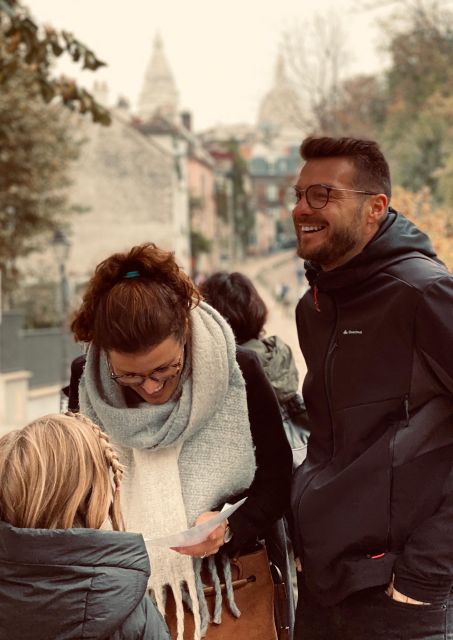
Most escape games throw you into the challenge immediately. Here, the route gives you a landmark anchor right away: Sacre-Coeur Basilica is one of your early stops, before you head toward classic Montmartre squares.
That matters because it sets context. Sacre-Coeur is the obvious headline, but the puzzle twist is how you use it as an orientation point. You are not just standing there for a quick look. You’re stopping, solving, and listening for clues from your host, which helps you connect what you see with what you learn.
If you want panoramic Montmartre views later, starting near Sacre-Coeur first usually gives you momentum. You are already in the “uphill mindset,” and you can relax once you know where the game is taking you.
One practical consideration: Sacre-Coeur and nearby areas can mean crowds. The game format helps because you’re moving in short bursts, solving and then continuing, instead of getting stuck waiting around for the perfect photo moment.
Place du Tertre: turning the artists’ square into a puzzle path
After your Sacre-Coeur start, you head to Place du Tertre, another Montmartre must. This is where the escape-game approach really earns its keep. Place du Tertre is full of visual stimulation, and it’s easy to feel like you’re just looking at everything at once.
The puzzle stages bring order to that chaos. You get a riddle, you look for what it’s asking for, and you earn letters toward the mystery sentence. That turns a square you may have visited before into something active and slightly competitive, even if you’re traveling casually.
It also changes how you experience the “scene.” Instead of treating artists’ square like a postcard, you start noticing specific details your host points out. Even if you only catch pieces of the heritage story, the act of solving makes those pieces stick.
If you’re traveling with kids, this is often the point where things click. The game has children and adult versions, and the structure makes it easier for younger players to participate without feeling lost. You can stay together and still have everyone working on the same sentence.
The in-between stages: why 15 steps are the right length
Fifteen stages is enough to feel like a real adventure, not a quick gimmick. But it’s also short enough that the whole thing still fits into two hours without dragging.
Here’s how it usually pays off for you: the stages prevent “tour fatigue.” You get mini goals. Finish a riddle, get a letter, move to the next spot. That rhythm is great for groups who get bored when tours turn into one long lecture.
It’s also useful if you’re traveling with people who are less interested in walking. The game creates a reason to move from viewpoint to viewpoint, and it keeps attention on the task. When you are solving, you are not just getting tired, you’re making progress.
Each stage includes some kind of prompt and letter earning. At the end, you put the letters together to reveal a mystery sentence. That final reveal is the moment people feel the “win,” and that’s usually when the tour turns from entertainment into a memory you carry home.






The game master and the learning style that keeps it fun
This experience runs on its host. Your game master helps with the puzzles and shares Montmartre heritage through stories and anecdotes. They are part coach, part storyteller, part referee when the group gets stuck.
In a few cases, you might get a guide like Nicolas or Sacha, who have been reported as friendly hosts for the activity. Even beyond names, the key is the tone: caring, supportive, and tuned to the group. That matters because riddles go faster when someone is ready to steer you back on track without spoiling the fun.
For you as a reader, the best mindset is to treat help as part of the game. If you get stuck, the host can nudge you so you keep moving toward the next stage. You’re aiming for teamwork, not solo stubbornness.
If you love learning, you’ll probably enjoy the way the host adds context about what you’re seeing. If you don’t, don’t worry. The guide isn’t just reciting facts. The learning is built into the action, and you get that “oh, that’s why that detail mattered” feeling.
Finishing at Place Émile Goudeau: the win moment and real rewards

The activity ends at Place Émile Goudeau. By the time you reach the finish, you’ve collected letters from the stages and used them to find the mystery sentence.
That sentence is your victory condition, and the reward is not just a pat on the back. You receive a real French gift after you win. There are also rewards made by a French master confectioner, which is a nice touch because it ties the payoff to a distinctly French experience.
This is also where the photos come in. Your host takes professional photos during the game, and you get free souvenir photos. That’s valuable for two reasons. First, you don’t have to play photographer while solving. Second, you get the group moment that is hard to capture in a puzzle walk where everyone’s spread out looking for clues.
Price and value at about $46 per person
At around $46 per person for a 2-hour interactive experience, you’re paying for more than a standard walking tour. The price covers the escape-game structure, the guided portion, the animation, the puzzles and stage design, plus the included prize and photos.
Here’s how I’d judge the value if you’re deciding today: you get multiple “packages” in one ticket. You get guided context, active problem-solving, and a physical souvenir at the end. Then you also get photos, which many walking activities do not include.
So if you want a Montmartre activity that feels like time well spent, this can be a strong pick. It’s especially worth it if your group wants to do something that doesn’t require museum patience, long lines, or sitting still.
Do keep one expectation in check. This format is game-driven, and the exact balance of story versus puzzle can vary. If you arrive expecting an in-depth anecdote every single stop, you might find the pace more playful than lecture-like.
Best for families, friends, and mixed-interest groups
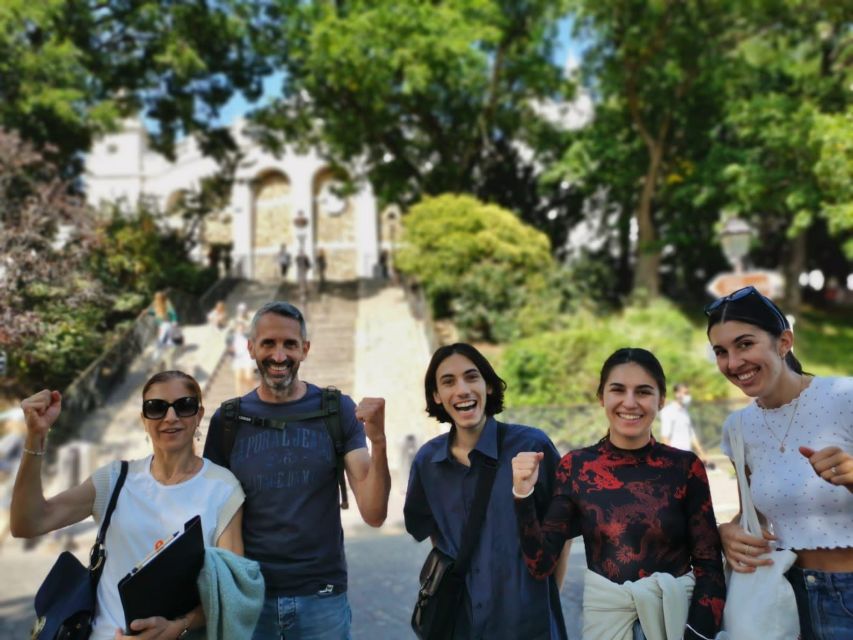
This is one of those activities that works even when your group is not all the same type of traveler. The structure helps.
- Families: there are children and adult versions, so kids can participate without being sidelined.
- Friends and couples: you can team up and compete lightly, then celebrate the final sentence together.
- Groups with different interests: one person who loves puzzles and another who loves sightseeing both have a job to do.
It’s also a solid “first Montmartre night” activity if you want to start exploring without getting overwhelmed by streets and stairs. You’ll end up learning the neighborhood’s rhythm, and you’ll remember the landmarks because you used them as clues.
If you’re traveling with grandparents or anyone with limited stamina, consider whether they can handle an outdoor hill walk for two hours. The game is designed for participation, but it’s still walking between stages.
What could disappoint, and how to protect your expectations
No tour is perfect, and this format is not for everyone. The main potential drawback is not the concept, it’s mismatch of expectations.
On rare occasions, someone reported a disconnect between what was expected and what happened in practice, including fewer anecdotes at some stops and uncertainty about the expected confectioner reward and photo package. That doesn’t mean it will happen to you, but it does suggest you should do one small thing to protect your experience.
Before you start, confirm what is included in your specific ticket version, especially around rewards and the photo deliverables. If your group cares about the confectioner prize and the photo set, ask the host at the start so you know what to look for at the end.
Also, since the game involves multiple stops and letter collection, it helps to keep a calm team mindset. If you go in expecting quiet, guided museum-style attention, you might find the group energy a bit louder and more chaotic than a traditional tour.
Should you book this Montmartre escape game?
Book it if you want a fun, active way to see Montmartre while learning enough to make the neighborhood feel real. I especially recommend it for families, friend groups, and anyone who enjoys puzzles or wants a more memorable alternative to a standard walking tour.
Skip it only if you need a slow, heavily narrated experience at every stop, or if your group cannot handle an outdoor hill walk for about two hours. If that describes you, you may prefer a traditional Montmartre guided tour.
If you do book, show up near the funicular upper exit at Rue Saint Eleuthere, bring comfortable shoes, and go ready to solve together. This is the kind of experience where teamwork turns into sightseeing, and sightseeing turns into stories you can tell later.
FAQ
FAQ
Where is the meeting point for the Montmartre escape game?
The meeting point is on Rue Saint Eleuthere, 75018 Montmartre, in front of the upper exit of the funicular. The meeting point can vary depending on the option booked.
How long is the escape game in Montmartre?
The activity lasts about 2 hours.
How much does it cost?
The price is listed at $46 per person.
Is this escape game indoors or outdoors?
It is a real outdoor escape game that takes you around Montmartre.
How does the game work during the 2 hours?
There are 15 stages. At each stage you solve a riddle to get a letter, and at the end you use the letters to find the mystery sentence.
Where does the activity end?
The game ends at Place Émile Goudeau.
Who leads the experience?
A live game master in costume leads the game and shares help and knowledge about Montmartre heritage.
What languages are available?
The live tour guide is offered in English and French.
What is included in the ticket price?
Included are the escape game, guided tour, animation, free memory photos, and rewards made by a French master confectioner.
Is it suitable for families?
Yes. The game is designed for both children and adults, with children’s and adult versions of the activity.
Is free cancellation available?
Yes, you can cancel up to 24 hours in advance for a full refund.
More Tour Reviews in Paris
Not for you? Here's more nearby things to do in Paris we have reviewed












Montmartre Tours, side by side.
 ★ 5.0Montmartre Hidden Gems and Scenic Highlights Walking TourTickets from $382,684 guest reviews
 ★ 5.0Montmartre Hill French Gourmet Food and Wine Tasting Walking TourTickets from $1452,588 guest reviews
 ★ 4.8Montmartre Cheese, Wine & Pastry Guided Walking TourTickets from $1272,255 guest reviews
 ★ 4.9Montmartre Highlights Walking Tour with a Local GuideTickets from $341,668 guest reviews
 ★ 4.1Sacré-Coeur and Montmartre Tour with Expert GuideTickets from $281,027 guest reviews
 ★ 5.0Private Montmartre Food Tour with Wine, Cheese & PastriesTickets from $3021,027 guest reviews
 ★ 5.0Paris Montmartre Food Tour – A Full French Meal by Do Eat BetterTickets from $95877 guest reviews
 ★ 5.0Hidden Montmartre: Paris’ Secret Streets Walking TourTickets from $44809 guest reviews
This tour also belongs to