Review · PARIS
Investigation game – Montmarte
Montmartre turns into a puzzle street-by-street. This investigation game mixes a light escape-room feel, a treasure-hunt style chase, and a real walk through the neighborhood, with teams racing a time pressure.
I like the team setup. You split into groups, solve clues together, and compete in a friendly way while still getting a guided route through Montmartre’s most recognizable sights.
One thing to keep in mind is the walking time and terrain. It’s doable with moderate fitness, but you should plan on being on your feet for about 2 hours 30 minutes, plus you need comfortable shoes since they are not provided.
Key Points I’d Circle Before You Go
- Two game formats, public competition or a private session with only your group
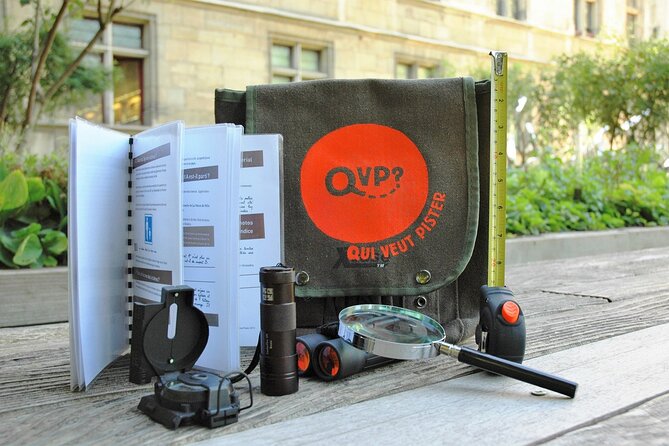
- English-language experience with provided equipment to run the game properly
- A structured route hitting Sacré-Cœur, the Vigne du Clos Montmartre, Rue de l’Abreuvoir, and Place des Abbesses
- Small-group feel with a maximum of 40 travelers
- A reward system for the best investigators
- Mobile ticket plus a clear start at Place Marcel Aymé, then back again to finish
Why This Investigation Game Feels Different in Montmartre
Montmartre is usually sold as a viewpoint and photo stop. This experience flips that. You’re still moving through the neighborhood’s big landmarks and classic streets, but your brain is doing the sightseeing, not just your camera.
The big win is the blend of styles. It’s part outdoor escape game, part treasure hunt, and part Montmartre stroll. That means you get the satisfaction of solving an investigation (clues, puzzles, a goal), but you also get the practical benefit of a set route that keeps you oriented in a maze of lanes and stairways.
I also like the “group identity” element. You’re not wandering separately with your own guidebook plan. You’re in a team, with shared tasks and a shared chase. That makes it a strong fit for friends, family, and bachelor or business-group challenges where everyone wants to do something besides stand around.
The one caution: because it’s a competition or timed investigation, the pace can be a little urgent at moments. If you’re the type who hates time pressure, choose the private format if that option is available when you book.
You can also read our reviews of more tours and experiences in Paris.



Place Marcel Aymé: Starting Where the Game Actually Begins
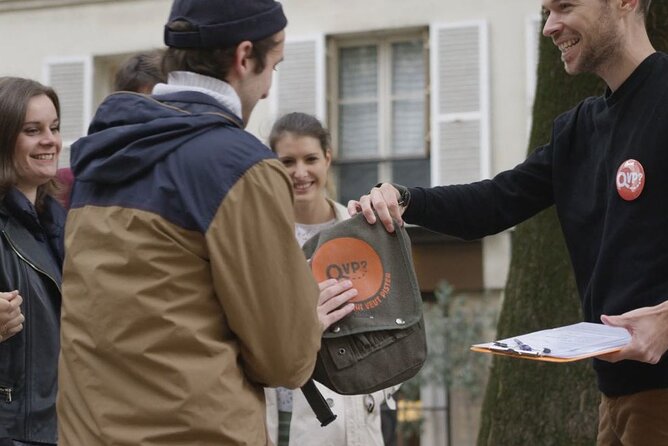
You meet at Place Marcel Aymé (75018 Paris). That matters more than it sounds. A lot of city games start in a vague transit spot. This one has a named square, and the game ends back at the same meeting point, so you don’t have to guess how you’ll exit your night.
The experience is designed for groups and teams. All fees and taxes are included, and the game provides the equipment needed for how it runs. Translation: you should show up ready to walk and think, not ready to troubleshoot tech or missing supplies.
Also, it’s near public transportation, so you can build it into a wider day or evening plan without needing a complex itinerary. If you’re staying in central Paris, Montmartre can feel like a world away. This reduces that stress because the meeting and ending are tight and predictable.
How the Clues, Teams, and Time Pressure Work
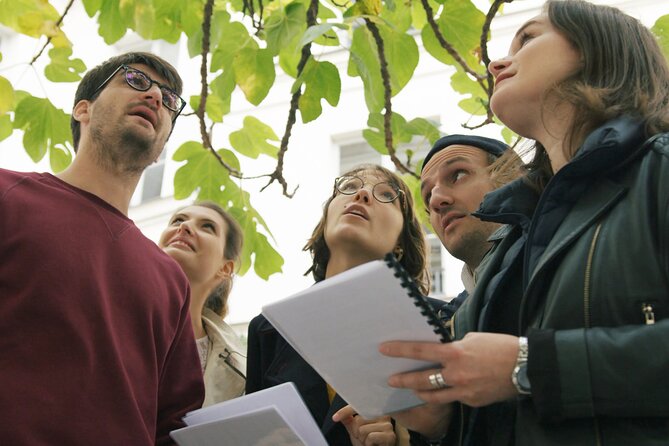
The core loop is simple: your team looks for clues, solves an investigation, and follows the route to discover places (some well known, some less familiar). You’re also working against an infernal chrono, meaning there’s a timing element that adds urgency.
Two formulas are offered:
Public session (competition day)
In a public session, you compete against other participants outside your own group. Saturdays at 2:30 p.m. are specifically noted for this format.
If you want energy, this is it. It’s more chaotic in the fun way, and you’ll feel that extra “keep up” pressure when another team seems to be making faster progress.
Private treasure hunt (just your group)
In a privatized treasure hunt, your group is alone on the game. No other participants outside your group are involved in your event.
Pick this if your priority is discovery and teamwork, not head-to-head competition. It’s also a better match if you’re traveling with mixed ages or want everyone to contribute without getting swept up by other teams.
Either way, the game is offered in English, so you’ll be able to follow the story and instructions without switching languages mid-riddle.



Stop 1: Sacré-Cœur Start and the Investigation Kickoff
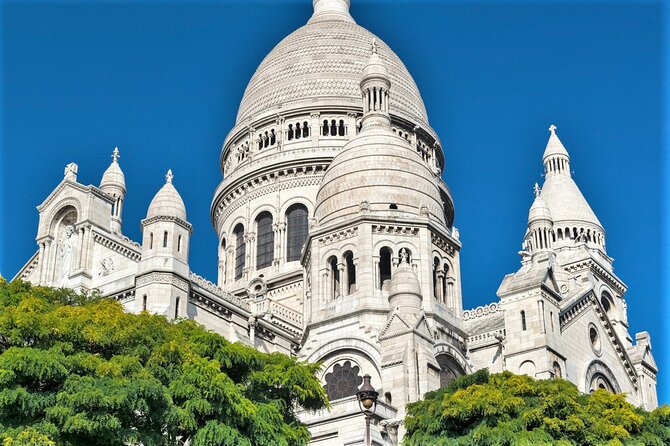
You begin at Basilique du Sacre-Coeur de Montmartre. Starting at a major landmark is smart because it anchors you. Even if Montmartre is new territory, you know you’re in the right neighborhood within minutes.
What I like about beginning at a recognizable site is the tone it sets. The game treats the neighborhood like a real investigation zone, and the first stop helps you transition from “tour mode” into “detective mode.” It’s also a reliable visual marker if your team needs to regroup quickly.
Potential drawback: because the first stop is a big-name location, it can be busier than the rest of your route. That can make clue hunting feel slightly more alert than relaxed. If you prefer quiet sightseeing, don’t worry, the route is built to move you onward through streets that feel less crowded later.
Stop 2: Vigne du Clos Montmartre and the Puzzle Break
Next you go to the Vigne du Clos Montmartre. Even just by name, you can tell this is different from a standard sight. It’s not a museum entry or a cathedral hall stop. It’s a vineyard space tied to Montmartre’s identity, and it gives the game variety.
This is where the structure starts paying off. The experience is not just “walk toward the next photo.” The clues and the route guide you to places that you might otherwise skip, or miss entirely if you’re only following the usual Montmartre checklist.
In practice, this stop also gives you a tempo shift. If your team has been racing mentally since the first location, the vineyard stop can feel like a breather while still staying inside the game flow.
One note to plan for: any outdoor stop can mean uneven ground. Wear shoes you trust. The tour explicitly does not include walking shoes.
Stop 3: Rue de l’Abreuvoir and the Less-Expected Montmartre Streets
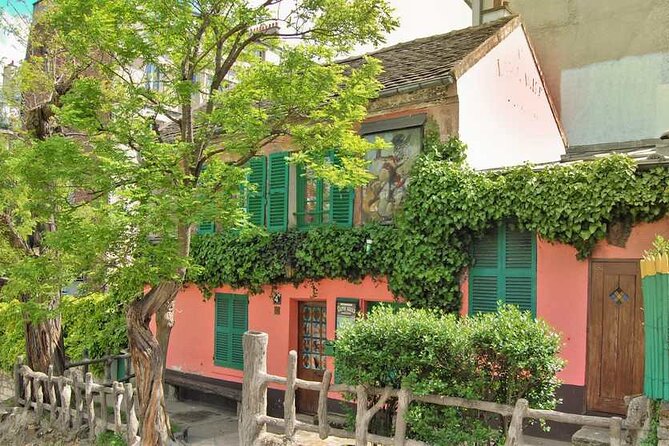
Then comes Rue de l’Abreuvoir. Streets like this are why an investigation format works so well in Montmartre. Instead of treating the neighborhood as a set of big monuments, the game nudges you into the everyday lanes where Montmartre feels more like a real place than a stage.
This is also where you’ll likely notice the benefits of being in teams. While one person checks for the next clue, another can scan the route details, and another can keep the pace when the timer feels tight. The goal is not just to arrive somewhere. It’s to notice, solve, and move.
Possible drawback: street segments can vary in slope and comfort. The experience calls for moderate physical fitness, so if you know you get uncomfortable on steep stretches, pace your team and be ready for a bit of effort.
Stop 4: Place des Abbesses and the Finish Back at the Start
Your last scheduled stop is Place des Abbesses. This is a strong closing location because squares naturally work as “reset zones.” Your team can stop, compare answers, and confirm you’re aligned on the final investigation steps.
Ending back at the meeting point, Place Marcel Aymé, is part of what makes this easy to slot into your day. You won’t need a complex end-game plan or last-minute transportation decisions.
The overview also mentions a reward for the best investigators. That matters, because it turns the closing moments into a finish line. You’re not just walking back to where you started without closure. You’re wrapping up with a result and a sense of accomplishment.
Also, at least some hosts have a reputation for clear explanations and good humor. Names like Clément, Manon, and Marcus show up in the feedback tied to the host team, and the vibe described is patient and funny, which can make a difference when your group hits a tricky clue.
Price and Value: Is $60.21 Worth It?
The price is $60.21 per person for an approximate 2 hours 30 minutes activity. That’s not a bargain-basement price, but it can be excellent value when you compare what you get.
Here’s what’s built in:
- Game fees and taxes included
- All equipment needed to run the activity properly
- A guided, structured route across multiple Montmartre points
- A choice between public competition and private team-only play
- English-language support
That package matters because you’re paying for more than a walk. You’re paying for a mission. If your group wants something active and interactive, it can feel like a higher-end alternative to a self-guided scavenger hunt where you’d have to do all the coordination yourself.
The best value will come if:
- your group enjoys puzzles and teamwork
- you want to see Montmartre without relying on a scripted museum visit
- you’re traveling with people who don’t all want the same type of sightseeing
If your group hates games, prefers quiet, or wants a purely scenic slow stroll, you might feel the time structure more than you enjoy it. But for puzzle lovers and social groups, this is the kind of experience that justifies the cost.
Timing, Group Size, and What It Means for Your Experience
This activity lasts about 2 hours 30 minutes. That’s the planned window, and real-world pace may vary with team progress.
The experience has a maximum of 40 travelers. That’s a helpful ceiling because it suggests you won’t be squeezed into an overwhelming crowd at the start. You still compete or cooperate within your team, and the rest of the group setting stays manageable.
If you pick a public session, remember it’s designed for competition against other teams. The energy will be higher. If you pick private, expect a calmer atmosphere with less external pressure.
What to Wear and Bring (Yes, Shoes)
The tour does not include walking shoes. That’s the one practical item you should treat as non-negotiable.
Aim for:
- comfortable footwear for uneven pavement
- clothing that can handle outdoor movement
- a light layer if you’re going in cooler months
Your physical fitness should be moderate. That phrase usually means some hills and longer stretches on your feet. It’s not described as extreme, but it is definitely not a sit-down activity.
You’ll also want to keep an eye on team tasks and clue steps. If you’re planning dinner or another reservation right after, build in a buffer. The activity ends back where it starts, but your group still needs that final wrap-up time.
Who This Is Best For in Your Paris Plan
This game is a strong match for:
- friends who want a shared activity with built-in banter
- families with kids who like puzzles (especially if you’re choosing the format that reduces outside competition pressure)
- bachelor parties and team outings where you want something social and structured
- anyone who has already seen the classic Montmartre highlights and wants a different way to walk the neighborhood
It’s also a great “revisit Montmartre” plan. If you know the area already, the clue route can push you toward streets you might not choose on your own.
Less ideal if:
- you want a fully relaxing sightseeing day
- you dislike any timed element
- you strongly prefer museum-style indoor stops
Should You Book the Montmartre Investigation Game?
Book it if you want Montmartre with a job to do. This is not a passive walk. It’s an active, team-based puzzle route that hits major landmarks, then keeps you moving through streets that feel more local.
I’d especially recommend it if your group includes at least a few people who enjoy investigations, riddles, and friendly competition. With English instruction, provided equipment, and a clear start and finish at Place Marcel Aymé, it’s also an easy add-on when you don’t want to overthink logistics.
Skip it if you’re looking for a purely scenic, slow-paced Montmartre experience with no timing pressure. The game structure is the whole point, and it shows up in how fast you move from stop to stop.
FAQ
How long is the investigation game in Montmartre?
It’s approximately 2 hours 30 minutes.
Where do we start, and does it end nearby?
You start at Place Marcel Aymé (75018 Paris) and the activity ends back at the same meeting point.
Is the game offered in English?
Yes, it is offered in English.
What’s included in the $60.21 price?
All fees and taxes are included, and all the equipment necessary to run the game is provided at the departure location.
What do I need to bring?
The activity does not include walking shoes, so you should plan to wear comfortable footwear.
Can I bring a service animal?
Yes, service animals are allowed.
Is there a choice between public and private formats?
Yes. In a public session, you compete against other participants outside your group (Saturdays at 2:30 p.m.). In a privatized treasure hunt, your group is alone with no other participants outside your group.
What is the cancellation policy?
You can cancel for a full refund if you cancel at least 24 hours before the experience starts. Free cancellation is available up to 24 hours in advance.