
Review · PARIS
Escape game Time machine
A broken time machine sets your group racing against the clock in a Paris escape game. At L’Antichambre Escape Games Blondel, you step into the story of Professor Laurentius Abe Sterling, who accidentally gets stuck in a spatio-temporal gap and needs you to operate his machine before the hour runs out. It is a classic team setup, but with a sci-fi premise that keeps the energy high.
I especially like the puzzle balance. The room is described as having a good mix of puzzles, hands-on manipulation, and searching, with clues that keep you moving. I also love the welcome and game-master energy, including a friendly approach that gets groups laughing fast.
One thing to consider is the room’s look and atmosphere may not satisfy everyone. One review called out that the decor did not feel immersive enough, even though other comments praised the effort put into the environment.
Quick hits before you play
- Central Paris address at 10 Rue Blondel, 75003, with public transportation close by
- Time Machine story involving Professor Laurentius Abe Sterling and a spatio-temporal problem to fix
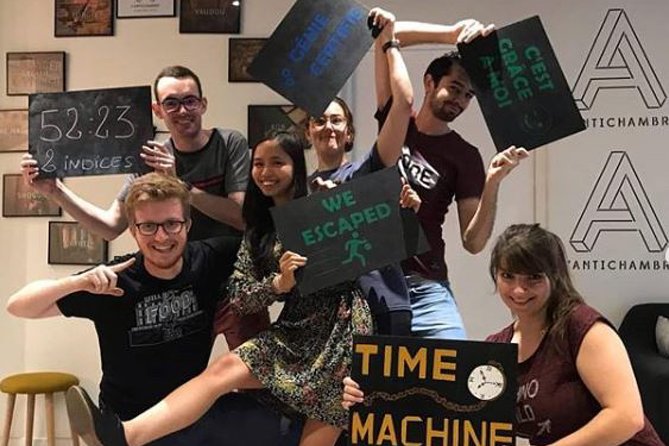
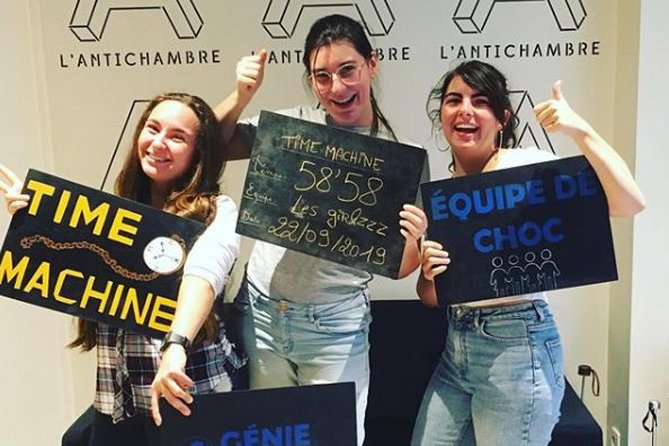
- Smart pacing: 15 minutes briefing before your escape time, then 15 minutes to debrief and take a team photo
- Puzzle mix that stays hands-on: puzzles plus manipulation and searching, not just locks and codes
- Difficulty is medium-ish: doable, but not the easiest option for absolute beginners
- Two sides to the decor: some praise the setting, one comment felt it fell short on immersion
Time Machine at L’Antichambre Blondel: the real-world vibe
Paris is packed with escape games, so your first job is picking the one that fits your group. The Time Machine room at L’Antichambre Escape Games Blondel has a clear hook: you are solving a science-fiction escape scenario built around time travel mishaps. That matters, because the best escape rooms do not only test logic. They keep you talking, pointing, and collaborating.
This one runs for about 1 hour once you are inside the game, and the organizers build in a soft landing on both sides. You get a 15-minute briefing before the start time, and plan 15 minutes after for a debrief and a team photo. That pacing makes a difference. It helps groups get oriented quickly, and it gives you a moment to reset after the stress of racing the clock.
You can also read our reviews of more tours and experiences in Paris.



The story setup you will be working with
Professor Laurentius Abe Sterling is your guide in the background, the kind of character who sounds delightfully off-kilter. The premise is simple enough to follow in a briefing: he built a machine to travel back in time, but a small calculation error stranded him in a spatio-temporal gap. Your team is locked into the room and given one job: solve the puzzle trail and operate the machine to escape before time runs out.
Why I like this setup for visitors: it is easy to jump into even if you are not an escape-room veteran. You do not need prior lore. You just need curiosity and teamwork.
The schedule that actually matters: 15 minutes in, 15 minutes out
The biggest practical thing you can control is timing. The experience is built around the start time, not when you arrive. You will want to be on time for the briefing, because that 15-minute window is where you learn how hints work, what the room wants from you, and how your group should communicate.
Here is how the flow works, in plain terms:
- Arrive and check in, then get briefed 15 minutes before your escape time
- Play the escape game for about 1 hour
- Spend 15 minutes after for a debrief and team photo
- Your activity ends back at the meeting point
For first-timers, this structure helps you avoid that common escape-room problem where everyone wastes time figuring out rules. You can focus on the puzzles instead.
What to do right away during the briefing
In the briefing, pay attention to how you can get help. Reviews point to regular hints and guidance during play, which usually means you can recover if you get stuck on a tricky section. I recommend assigning roles immediately, even before you enter the room: one person watches for details, one person tests anything that looks operable, and one person keeps an eye on the overall progress. That saves time when the room starts throwing tasks at you in multiple directions.
Puzzles, hands-on tasks, and clue rhythm
The heart of an escape room is the puzzle design, and Time Machine seems to hit a useful balance. One review specifically highlighted the good ratio between puzzles, manipulation, and search. Translation: you are not just solving a single sequence of number locks. You are expected to move your eyes around, try interactions, and keep your group working in parallel.
That multi-style approach is especially helpful for mixed groups. If you have one person who loves code cracking and another who likes physical interaction, this format gives both a job.






How hard is it, really?
The difficulty reads as medium. One comment labeled it of medium level and mentioned it can be a little hard for beginners, but also said it is doable. Another review described the puzzles as quite complex, yet achievable, which lines up with a room that expects effort but rewards teamwork rather than punishing trial-and-error.
If you are traveling with:
- Escape-room rookies: go in ready to use hints and communicate fast.
- Confident puzzle solvers: you will still have to work as a team, since the room uses multiple task types.
Clues that keep momentum
A practical benefit from the reviews is the way help appears to be handled. One review mentioned that clues are provided regularly. That tends to matter most during the moments when the room feels like too many parts are moving at once. The best escape rooms do not turn hints into spoilers, they turn them into steering. That looks to be the intent here.
The vibe and the welcome: why people leave smiling
A lot of escape games succeed or fail on the human factor: how the game master reads your group and sets the tone. The Time Machine room gets strong notes for welcome and atmosphere. Multiple comments describe a warm welcome and a lot of laughter with friends. Another review praised the game master as top tier after doing Time Machine, then immediately playing another room, Shogun.
That says something important for planning. If you like social energy and you want your group to feel comfortable fast, this is the kind of host style that can make the experience feel smoother, even if the puzzles are challenging.
A balanced caution: service can be variable
There is also a negative review that reports a poor experience tied to game-master competence and a dispute. I cannot judge what happened in that situation, but it is enough to flag a realistic consideration: if you are booking at a busy time or for a group that is sensitive to tone, go in with patience and be ready to communicate with the staff if something feels off.
That is not meant to scare you. It is meant to help you manage expectations, like you would in any service-based experience.
Decor and atmosphere: science-fiction fun, with mixed feedback
Escape rooms often try to create a mood. Time Machine has a sci-fi premise, so you can expect at least some themed visuals. Reviews are mixed on whether the decor fully lands. One comment mentioned the decor is not immersive enough. At the same time, another review called out that the room decorations are well worked and contribute to immersion.
So how should you interpret that? Treat it as a room-first experience: the puzzles and interactions seem to be the main event. If you are the type who cares a lot about visuals, you might want to look for recent photos before you commit, if the organizer provides them at booking. If your goal is teamwork and problem-solving, the room sounds like it delivers.
Where you meet: making the central Paris location work for you
The meeting point is 10 Rue Blondel, 75003 Paris, France. The activity ends back at the meeting point, which is convenient. The experience is also described as near public transportation. That matters in Paris, where crossing the city can eat your time.
How to plan around the 1-hour experience
Because the game is about an hour, plus the 15 minutes briefing and 15 minutes after, it is best to treat this as a roughly 1.5-hour block in your schedule. If you stack it back-to-back with other activities, give yourself buffer time for getting there on time.
Value for $26.52 per person in a 1-hour escape
At $26.52 per person, you are paying for more than a puzzle room. You are paying for:
- guided setup and a structured briefing
- a game master during play
- puzzle design that uses multiple interaction styles
- a debrief and team photo afterwards
Escape games are often priced per person, so your real value depends on group size and how much you plan to participate. If you are going with friends or colleagues who will actively solve and discuss, this is usually strong value because everyone is engaged for the full time.
Also worth noting: there are group discounts mentioned. If you are traveling with a larger group, it can be worth checking whether your booking qualifies, since that can lower the per-person cost without reducing the experience quality.
Who should book Time Machine
This room fits best when you want a fun group activity that feels like an adventure, not a passive show. I would book it if:
- you are traveling with friends or family and want everyone involved
- your group enjoys puzzles plus hands-on interaction
- you like a playful story concept with a quirky professor in the background
- you want a central Paris plan that is easy to fit into a day
It might be less ideal if:
- your group only likes very simple puzzle logic and hates being stuck
- you care more about set design than about problem-solving
- you are booking with strong expectations about a specific atmosphere, since decor feedback is mixed
Families with kids (ages 12 to 15)
Children between 12 and 15 must be accompanied by an adult in the escape game. If your group includes teens, plan around that adult participation requirement and make sure your team includes someone ready to guide collaboration without taking over.
Practical tips to improve your odds of escaping
You do not need to be a genius. You do need to work like a team that does not waste motion. Here are my go-to tactics for rooms like Time Machine, especially when puzzles are described as complex but doable.
- Assign roles early so you do not end up with four people staring at one spot.
- Test interactions quickly if something looks moveable or pushable. The room includes manipulation tasks.
- Share what you find out loud. Even if you think someone else noticed it, say it anyway.
- Use hints on time. Regular clue support can keep you from spiraling.
- Watch the clock. If you have 20 minutes left and no progress, switch strategies fast.
These are simple habits, but they matter a lot in escape games where multiple puzzle paths can overlap.
Should you book Time Machine?
If your goal is a lively Paris group activity with smart, mixed-style puzzles, Time Machine is a solid choice. The price feels reasonable for the full structure, especially with the built-in briefing, debrief, and team photo. The strongest themes across feedback are warm welcome, laughter, and puzzles that feel engaging and solvable.
I would book it with confidence if your group includes people who like hands-on tasks and collaboration. I would think twice only if your priority is flawless decor atmosphere, or if you have an unusually low tolerance for frustration without a perfect hint flow. If you are flexible and ready to work together, this is the kind of central Paris escape game that can turn into a highlight of your trip.
FAQ
Where is the meeting point for Escape game Time machine?
The meeting point is 10 Rue Blondel, 75003 Paris, France. The activity ends back at the meeting point.
How long is the Escape game Time machine experience?
The escape game duration is listed as about 1 hour, with 15 minutes for briefing before the escape time and 15 minutes after for debriefing and a team photo.
Is it a private activity?
Yes. It is described as a private tour/activity, so only your group will participate.
Do I get a mobile ticket?
Yes. The experience includes a mobile ticket.
Is it close to public transportation?
Yes, it is listed as near public transportation.
Can children participate, and do they need an adult?
Most travelers can participate. For children between 12 and 15, an adult must accompany them in the escape game.
When will I receive confirmation after booking?
Confirmation is stated as being received within 48 hours of booking, subject to availability.
Are there group discounts?
Yes. Group discounts are listed as a feature of the experience.
What is the cancellation policy?
This experience is non-refundable and cannot be changed for any reason. If you cancel or ask for an amendment, the amount you paid will not be refunded.











