
Review · WINE TOURS
Champagne & Terroir Treasures: Viator’s Terroir Gourmet Delight
Three sips, and Paris feels different. In a 17th-century cellar, this Paris experience pairs three champagnes with artisan cheese and ham, with a lesson on terroir, grapes, and blends. I like the pairing, it makes the tasting easier to understand. I also like the small-group pace, you get time to ask questions. The one watch-out is that the education may feel uneven depending on the guide, so you’ll want to keep your expectations realistic.
You start in central Paris and head to the Saint Germain area for the tasting, which runs about 1 hour 30 minutes. You’ll get three small 80 ml glasses and a plate featuring Comté cheese and ham, and you can buy bottles afterward for home. With a maximum of 12 people, the vibe is calm enough to actually taste, not just stand in line.
Key highlights you’ll care about
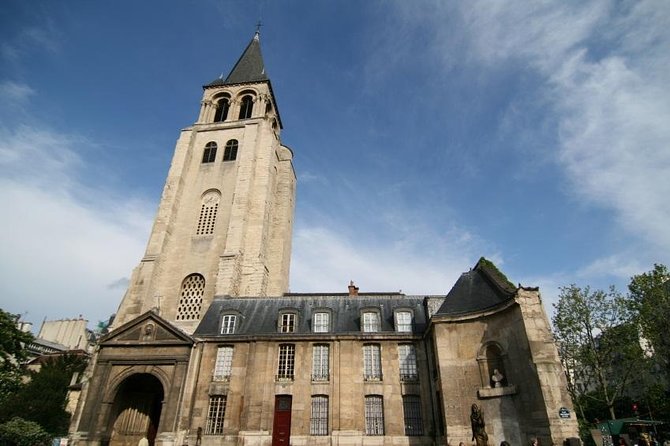
- A real cellar setting: tasting happens in a 17th-century champagne cellar atmosphere, not a loud bar.
- Three champagnes in one session: you sample a flight so you can compare styles back-to-back.
- Food pairings that guide your palate: the plate includes matured Comté plus ham.
- Terroir, grapes, and blends explained: you get the basic logic behind why champagne tastes the way it does.
- Buy bottles at the end: you can take champagne home, or arrange delivery if offered.
- Smell rules that protect the tasting: you’ll be asked to avoid perfume and strong mouth odors right before your session.
Entering the Saint Germain cellar from Rue de Savoie
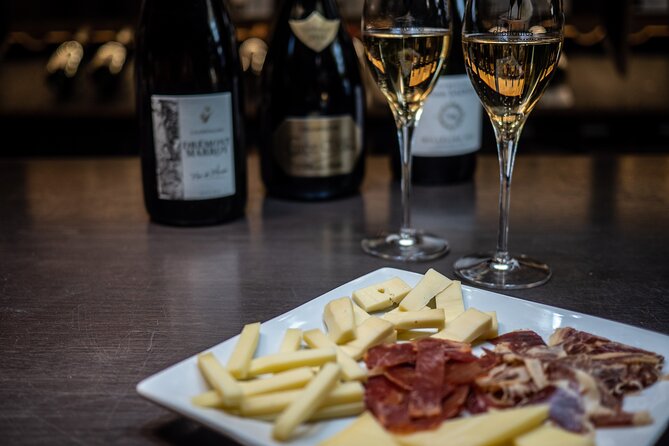
The meeting point is at 22 Rue de Savoie, 75006 Paris, in the 6th arrondissement. I like that it’s central, and it’s close to public transportation, so you’re not stuck planning a mini expedition just to start tasting.
Plan to arrive about 10 minutes early. This matters because the experience is timed, and you don’t want to rush your senses. Once you’re in, you’ll move from street Paris into a calmer world where champagne feels more like a craft than a product.
What makes this stop special is the setting. A champagne cellar gives you an instant mental switch. You stop thinking about labels and start thinking about storage, age, and how flavors settle. The vibe also keeps the group focused, which is useful when you’re comparing three different champagnes.
One practical note: the experience is run by a small operator (maximum 12 travelers), so if you’re late or disruptive, it’s likely to affect the whole flow.
You can also read our reviews of more wine tours in Paris
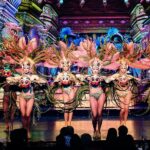
The tasting flight: three champagnes, 80 ml each
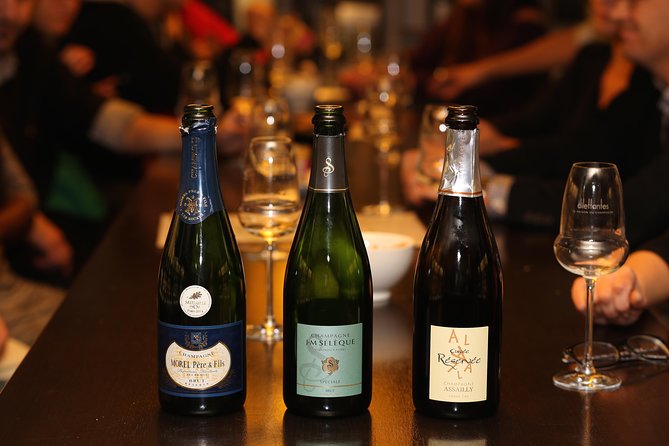
You’ll taste three distinct champagnes during the session. Each pour is about 80 ml, which is small enough to stay sharp, and big enough to notice texture, acidity, and how the bubbles change on your tongue.
A helpful way to think about this flight: you’re not just drinking. You’re training your palate to notice differences. When you sip one champagne, then immediately taste another, terroir and blending choices show up faster. You can compare:
- how dry or fresh it tastes
- how the acidity hits
- whether the style feels more fruit-forward or more reserved
This format is great for a first-time champagne drinker. It’s also good for experienced tasters who want a structured way to compare rather than free-pouring at a bar.
A possible downside is that three glasses can feel short if you’re hoping for long, deep instruction. You’ll get explanations, but the main action is tasting and comparing, not a classroom lecture.
Terroir, grapes, and blends: how the lesson helps you taste
The teaching focus is on what goes into making champagne: terroir, grapes, and blend. The goal is to help you connect what you smell and taste with why the wine was made that way.
Here’s what that means for you in plain terms. Champagne can taste different even when you’re using the same general process. The reasons usually come down to:
- grape variety choices (and how those grapes ripen)
- where the grapes grew (soil, slope, and climate factors)
- how the winemaker balances the blend
In a tasting like this, those concepts become more than trivia. When you know what the producer is trying to do, you can taste with more intention. Instead of saying, This one is better, you start noticing, This one has higher perceived acidity, or This one feels more structured, or This one tastes rounder.
One review note is important for expectation-setting: one guest felt there was very little education about champagne making. Another guest felt the guide, Julie, was knowledgeable and friendly and helped them learn a lot. So you should treat the lesson as a helpful guide, not a guarantee of technical depth.
My advice: come ready with a couple questions. If your guide is talkative, you’ll get more. If your guide is more brief, you’ll still get your money’s worth because the tastings and pairing do the heavy lifting.
The Comté and ham pairing that makes tasting easier
You’ll snack on a plate built around matured Comté and ham. This pairing is practical for one reason: it helps you read the wine.
Cheese and charcuterie do two jobs at once:
- they add salt and fat, which soften harsh edges in wine
- they change how you experience bubbles and acidity
When you taste champagne with food, you often notice more fruit or more creaminess in the mouthfeel. You also learn what kind of champagne works with savory flavors. That’s useful if you plan to buy bottles and actually serve them at dinner.
One guest also pointed out a desire for the plate to feel more French for the tasting. That doesn’t mean the food is bad. It just means if you’re looking for a strictly traditional French presentation beyond the cheese and ham, you might want to grab a nearby French bistro after the session to complete the meal.
How to prep your senses, perfume-free and coffee-free
This is one of the most unusual parts of the experience, and it’s also one of the most important. The tasting emphasizes smell because champagne notes can be subtle, and strong scents can interfere with the group experience.
You’re strongly recommended to:
- skip lipstick
- avoid gum
- do not brush your teeth right before, because you might only taste acidity and bitterness
- avoid drinking coffee or other strong flavored drinks beforehand (soft drinks are also mentioned as not ideal)
- do not wear perfume or aftershave
The operator may refuse entry if your perfume disturbs the tasting, and there is no refund. That’s serious, so treat it like a food event, not a casual stop.
For best results, plan a simple morning or early afternoon:
- wear your normal clothes, but skip fragrance
- eat lightly before you go
- avoid coffee until after the tasting
This is the kind of rule set that makes the tasting feel fair. Everyone starts on the same sensory footing.

Getting bottles to take home, or ship
After the session, you can purchase champagne to go, and the experience also mentions delivery options. That part is more valuable than it sounds.
Why? Because you’re tasting three bottles under the same roof and learning what you actually like. If you only tried one champagne in a bar, you might guess wrong later. Here, you can buy with confidence because you compared styles right then.
If you like one of the champagnes in the flight, ask what pairs well with food. It’s the fastest way to turn a tasting into a purchase that makes sense at home. Also, if delivery matters to you, ask before you decide what to buy, since delivery options can depend on local setup.
Price and value in central Paris at $86.82
At $86.82 per person, you’re paying for three things: the cellar setting, the guided tasting, and the included food and pours.
You get:
- three small glasses (about 80 ml each)
- a plate of Comté cheese and ham
- time with an instructor explaining terroir, grapes, and blends
- the chance to buy bottles afterward
Is it a deal? For central Paris, it can feel fair, especially because it’s not just pouring drinks. It’s structured comparison. The food also adds real value. Wine tastings without food often make you spend extra later. Here, the plate is part of the experience.
The main value question comes down to education expectations. If you want lots of detailed, technical background, one review experience suggests it may not always go deep. If you want a friendly tasting in a beautiful cellar, with enough explanation to help you choose, it’s strong value.
Also, the group size cap at 12 helps. When you’re not packed in, you can hear and compare, which is what you’re actually paying for.
Who this tour suits best (and who should rethink it)
This experience fits best if you want:
- a structured champagne comparison in about 90 minutes
- a classic pairing with matured Comté and ham
- a calmer environment in a 17th-century cellar
- enough guidance to connect terroir and blends to what you taste
It may be less ideal if:
- you expect a long, step-by-step champagne making course
- you’re counting on a specific language like Spanish for the whole explanation, since one guest suggested adding it
- you tend to wear perfume or come straight from a coffee shop, because smell rules are enforced
If it’s Valentine’s Day or you’re traveling as a couple, the small group format can feel extra special. One guest described it turning into a private feeling session for two people.
Final decision: should you book it?
I’d book this if you’re the kind of traveler who likes tasting with context. The setting plus the flight format gives you an easy way to learn what you enjoy, and the Comté and ham pairing makes the tasting more meaningful than sipping alone.
Skip it, or at least temper expectations, if your top goal is heavy technical education. The experience seems capable of strong guidance, but language and depth can vary based on who leads your session. If you do book, come perfume-free, ask a couple questions, and treat the three tastings as your guided path to choosing bottles you’ll actually want to drink at home.
FAQ
How long is the Champagne & Terroir Treasures tasting in Paris?
It lasts about 1 hour 30 minutes.
Where does the tour start and end?
It starts at 22 Rue de Savoie, 75006 Paris, France, and ends back at the same meeting point.
What is included in the price?
You get a plate of Comté cheese and ham, plus three small glasses of Champagne (about 80 ml each).
How many champagnes will I taste?
You’ll taste three different champagnes during the session.
Is transportation included?
No. Transportation to and from the area is not included.
Do I need to bring a ticket?
You’ll use a mobile ticket.
What is the minimum age?
The minimum age is 18.
Is this tour limited in group size?
Yes. The maximum group size is 12 travelers.
Is there anything I should avoid before the tasting?
Yes. You’re strongly recommended to avoid perfume or aftershave, skipping gum and lipstick, and not brushing your teeth right before. You’re also advised not to have coffee or other strong flavored drinks beforehand.
Can I get a refund if I cancel?
No. The experience is non-refundable and cannot be changed for any reason.
Is the experience suitable for most people?
Most travelers can participate.
More Wine Tours in Paris

More Tour Reviews in Paris

Not for you? Here's more nearby things to do in Paris we have reviewed




Wine Tours, side by side.
 ★ 4.7Moulin Rouge Cabaret Show Ticket with ChampagneTickets from $11516,088 guest reviews
 ★ 5.0Authentic Parisian Gourmet Food Tour with 10 Local Dishes & WinesTickets from $1024,754 guest reviews
 ★ 4.5Loire Valley Castles Day Trip from Paris with Complementary WineTickets from $1493,907 guest reviews
 ★ 5.0Montmartre Hill French Gourmet Food and Wine Tasting Walking TourTickets from $1452,588 guest reviews
 ★ 4.8Montmartre Cheese, Wine & Pastry Guided Walking TourTickets from $1272,255 guest reviews
 ★ 4.6Paradis Latin Cabaret Show with Optional ChampagneTickets from $1062,231 guest reviews
 ★ 4.6From Paris: Loire Valley Castles Day Trip With Wine TastingTickets from $1041,727 guest reviews
 ★ 4.0Paris 3-Courses Gourmet Dinner Seine River Cruise with ChampagneTickets from $1361,659 guest reviews
This tour also belongs to