
Review · SEINE RIVER CRUISES
Side-car Paris Visit with a River Cruise
Paris feels like a movie when you go underground.
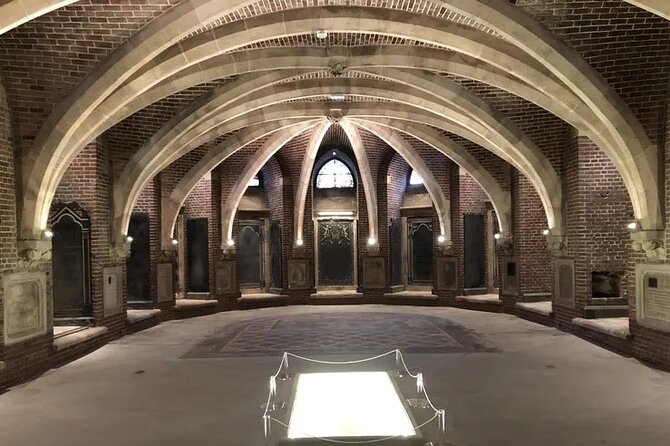
This small-group side-car circuit pairs prebooked Notre-Dame archaeological crypt time with quick hits at major landmarks, then relaxes you on the Seine.
I love the mix of storytelling and logistics. Raphael (and other guides like Claire) make the underground stop feel lively, and you also get comfortable transport between the crypt and the river cruise so you are not scrambling across town. One thing to consider: the sightseeing is intentionally fast, with several stops lasting only a few minutes, so you should be ready for photos, not long museum time.
Key highlights and why they matter
- Prebooked Notre-Dame archaeological crypt access saves you from the worst lines and lets you focus on the history.
- A tight, side-car style route means you see a lot without spending your whole day commuting.
- Guides like Raphael and Claire bring the stones to life with clear English and humor.
- Seine cruise time gives you a calmer second act after walking in and around Île de la Cité.
- Admissions vary: Notre-Dame crypt is covered, but many other famous stops are outside views only.
- A private feel since it is set up for only your group, not a mixed crowd.
The Point of This Side-Car Paris Circuit
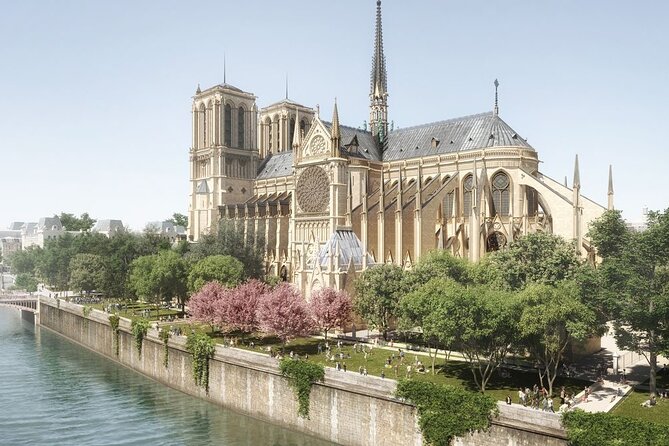
This experience is designed for travelers who want the biggest Paris hits, without losing half a day to transit. You get a guided story stop under Notre-Dame, then a sequence of major monuments, and finally a Seine cruise that lets you reset.
The pacing is the big clue. Several landmarks are scheduled as quick photo and orientation moments. That is not a flaw if you come with the right expectations: you are buying momentum, not lingering.
Also, you are not fighting for space with strangers. It is run as a private tour for your group, which usually makes questions easier and keeps the vibe focused.
Notre-Dame Archaeological Crypts: The Underground Story You Might Miss
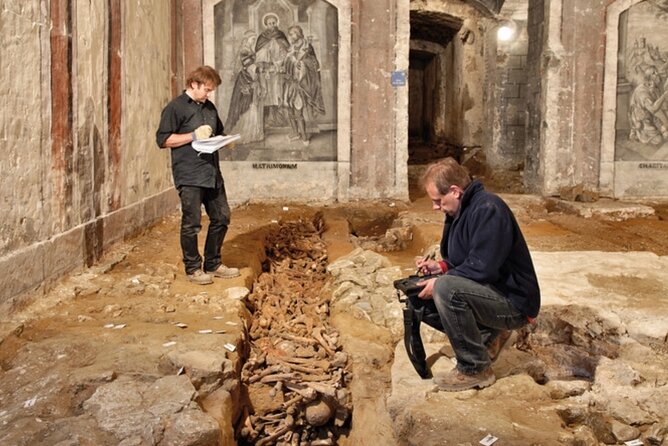
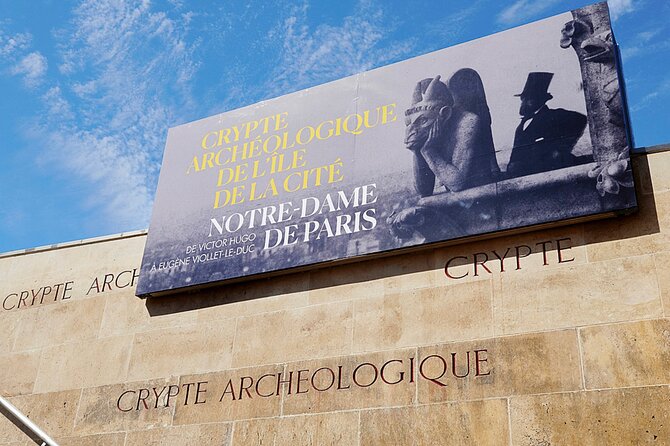
The tour starts at Cathedrale Notre-Dame de Paris, where the archaeologist leads a walking-style introduction around the cathedral. In the process, you get the big picture first, then you go down into the place most people never see.
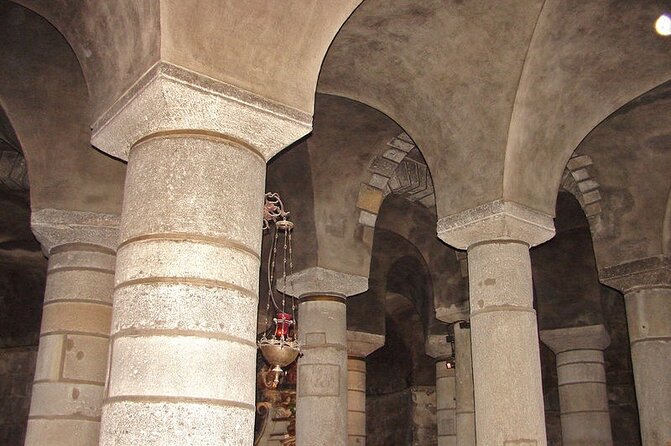
The best part is the archaeological crypt visit itself. The guide is there to explain what you are looking at, including the layers of Paris time that sit under the cathedral. One review described the guide showing Roman traces, medieval layers, and how the ruins help you understand how the site evolved.
You also get those small details that make history stick. For example, one traveler called out storytelling like the beehives on Notre-Dame’s rooftop and the way certain facial details were misunderstood during the French Revolution. Even if you do not spot everything yourself, a good guide helps you notice what matters.
You can also read our reviews of more boat tours in Paris

A quick reality check: crypts are not catacombs
If you have ever confused Paris underground sites, read this twice. The experience is about the archaeological crypt beneath Notre-Dame, not the Catacombs. More than one review hinted at confusion from pictures or expectations, so make sure you are targeting Notre-Dame underground if that is what you want.
If you later decide to add the Catacombs, do it with the format clarified. Some guests found that add-ons were not a live guided walk the way they assumed.
The Small-Group Rhythm: What the 1.5 Hours Feels Like
The stated time is about 1 hour 30 minutes, but what you actually feel is a sprint with a payoff. The schedule works because the guided part is concentrated where it counts, and the landmark stops are brief.
That is why you should arrive ready. Wear comfortable shoes and bring a camera that can handle frequent stopping. You are moving through areas near major sights, and even a few minutes per stop can add up when you are weaving between viewpoints.
What to do during the short stops
When a stop is only a few minutes, your job is simple:
- Get one solid photo angle.
- Read one sign or listen to one pointer from the guide.
- Move on before you fall behind the group.
This is how you end up enjoying the route instead of feeling rushed by it.
Eiffel Tower, Musée d’Orsay, and the Arc Photo Pause
After Notre-Dame, you hit the skyline classics fast.
Eiffel Tower gets a short window. The goal is not a long visit. It is the iconic first sight and quick context, plus the chance to see how the tower sits along the Seine corridor.
Musée d’Orsay is similarly time-limited, with the point being the building and the neighborhood setting. Even if you do not go inside, the Beaux-Arts feel of the former railway station is part of the “Paris wow” factor.
Then you get a photo stop at the Arc de Triomphe. The Arc is famously hard to appreciate from a single angle because the city flows around it. A timed photo pause helps you get oriented so that later, if you want more time, you know where to return.



Conciergerie, Pont des Arts, and the Seine View Logic
Some stops are famous for specific reasons, and the guide framing helps you clock them quickly.
At the Conciergerie, you are looking at a former royal palace turned prison in the French Revolution. This is one of those places where the stone already tells a story, but the guide adds the key timeline so it lands emotionally, not just visually.
Pont des Arts is all about the Seine romance and the classic view lines. You get a pedestrian crossing moment where the guide helps you line up what you are seeing, including views toward major districts and bridges.
If you like quick landmark “beats,” this is a strong stretch of the day.
Invalides, Palais de Chaillot, and Grand Palais: Big Architecture, Fast
Paris has a way of making you feel tiny in front of major monuments. This part leans into that feeling.
At Musée de l’Armee des Invalides (Les Invalides), the headline is Napoleon’s tomb, but the complex also signals grandeur through its gilded dome. Even in a short stop, you get the sense this is not just a museum building, it is a national statement.
Across the river area, Palais de Chaillot gives you terrace-level vibes, especially with its position opposite the Eiffel Tower. It is a nice “pause and look” segment.
Then Grand Palais brings you the glass-domed roof and the event-hall scale. One review called out the importance of architecture context, and Grand Palais is perfect for that. You do not need long museum hours to get the point.
Place de la Concorde and Louvre Orientation Without the Stress
This tour keeps you moving, so it does not pretend you will get full museum time.
At Place de la Concorde, you get the square scale and the historical weight, including the Egyptian obelisk connection. It is a helpful way to understand how Paris organizes its grand spaces.
The Louvre stop is presented as a landmark moment, not an entrance-and-gallery marathon. You get the exterior context, including the famous pyramid entrance. This can be a smart strategy if you hate the idea of spending your whole day in queues. You leave knowing what you want to return for later.
Île Saint-Louis, Hôtel de Ville, and the Bridges That Connect the Dots
This route also uses the Seine like a map. Crossing points are part of the story.
Île Saint-Louis is a quieter counterpoint. Instead of the constant tourist churn, this island reads as residential and calmer. That contrast makes the whole day feel less monotonous.
Hotel de Ville provides the city-soul moment through its Renaissance facade and its role in French government history. Even if you just skim it from outside, it helps you understand Paris as a living political center, not only a postcard.
Then Pont Alexandre III adds the Belle Époque glow. The bridge is ornate and photogenic, and it is easier to appreciate when you have already seen several other “bridge beats” earlier in the circuit.
Sainte-Chapelle and Île de la Cité: The Medieval Center of Gravity
This is where the tour’s underground theme keeps paying off.
Sainte-Chapelle is famous for its stained glass, and the short visit still gives you the key impression: Gothic architecture that feels made for light. If you have one “must return” stop later, this is a strong candidate because it is usually hard to understand quickly without time.
The tour also revisits Île de la Cité, the historic heart where Notre-Dame sits alongside other major landmarks. It is a logical way to end a sightseeing rhythm that started with the cathedral and went outward along the Seine.
The Seine Cruise Portion: Why It Pairs With the Crypt
The standout emotional contrast is simple: underground history first, then open-air views. More than one review described an hour-and-a-half style Seine boat tour, and that time window is long enough for the city to feel like it is unfolding, not just passing by.
You also get practical relief. Some guests mentioned that transportation between the crypt and embarkation point was handled smoothly, even with motorcycle-style transport. That matters because the distance between Notre-Dame and typical cruise departure areas can be annoying when your feet are already tired.
If you want the day to feel like a complete story, the cruise is the right final chapter. It is also an easy way to spot landmarks from water, which helps you remember the names later.
Guides, Storytelling, and How to Get More Out of the English Commentary
One theme in the feedback is that the guides do more than recite facts. They narrate.
Raphael comes up again and again for being personable, humorous, and especially good at explaining what you are seeing beneath Notre-Dame. Claire was also highlighted as friendly and excellent, and another name, Maleziux, appeared as well. You might not get the exact same guide every time, but the guiding style is part of the value: clear English, and explanations that connect the ruins to the city above.
A tip for listening
If you are in a group setting, you will hear people talking, phones buzzing, and traffic noise. A couple of reviews mentioned an earbud setup with a wireless speaker. If that is offered for your group, it can really help you catch the archaeology details without craning your neck.
Price and Value: Is $170.05 Per Person Fair?
At $170.05 per person, this is not a “budget only” sightseeing add-on. You pay for three things that are hard to replicate alone:
- Prebooked admission for the Notre-Dame archaeological crypt, which helps avoid the biggest line headaches.
- A guided archaeology-focused experience, led in English, with a human who can answer questions.
- The operational piece, transport between key points, plus the Seine cruise connection.
The quick landmark stops also protect value. Instead of paying for multiple separate guided tours for each attraction, you get an efficient sampler, with enough context that you can decide what to revisit later on your own time.
The drawback you should price in
Because many stops are brief, you may feel like you are seeing exteriors more than interiors. That can be totally fine if you plan it that way. It is not ideal if you booked expecting museum-length visits at every named landmark.
Practical Considerations Before You Go
A few things are worth deciding in advance so the day feels smooth.
1) Know which admissions are included
Notre-Dame crypt access is part of the plan. Other landmarks like the Eiffel Tower and Musée d’Orsay are listed as stops with tickets not included. So think of them as photo and orientation moments.
2) Expect a tight walk-and-ride schedule
The tour design uses short durations at many sites. That means you should keep your expectations realistic and avoid layering in extra plans immediately after.
3) Double-check what underground you are getting
Some confusion in feedback came from mixing up Notre-Dame archaeological crypts with the Catacombs. If underground history is your goal, confirm Notre-Dame crypts are the focus you want.
Should You Book This Side-Car Paris Visit?
Book it if you want:
- A concentrated Notre-Dame underground experience with clear guidance.
- A small-group, private feel that makes questions easy.
- A balanced plan where the Seine cruise gives you a calmer finish.
Skip it, or consider another option, if you:
- Want long museum time at each landmark stop.
- Have your heart set on a guided Catacombs experience as part of the same ticket, since underground sites can get mixed up and add-ons may not match expectations.
If your ideal Paris day is fast landmark context plus one deep dive that you actually remember, this is a strong match.
FAQ
How long is the side-car Paris visit with a river cruise?
It lasts about 1 hour 30 minutes.
What is the price per person?
The price is $170.05 per person.
Does the tour include pickup?
Yes. Pickup is offered and the guide meets you at your address.
Is the Notre-Dame archaeological crypt admission included?
Yes. The crypt admission ticket is listed as included (free).
Are tickets for stops like the Eiffel Tower and Musée d’Orsay included?
No. Those stops are listed as not including admission tickets.
What language is the tour offered in?
The tour is offered in English.
Is weather important for this experience?
Yes. The experience requires good weather, and if it is canceled due to poor weather, you will be offered a different date or a full refund.
More Boat Tours & Cruises in Paris



More Tour Reviews in Paris


Not for you? Here's more nearby things to do in Paris we have reviewed









Seine River Cruises, side by side.
 ★ 4.4Evening River Cruise with MusicTickets from $2722,721 guest reviews
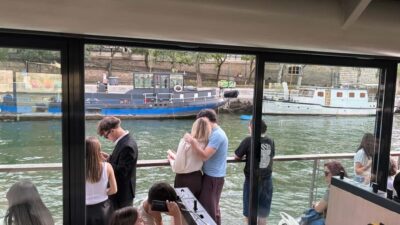 ★ 4.3Illuminations River Cruise with Audio CommentaryTickets from $2012,340 guest reviews
 ★ 4.3Tootbus Hop-on Hop-off with optional river cruiseTickets from $4911,924 guest reviews
 ★ 4.4Seine Cruise & Crepe Tasting near the Eiffel TowerTickets from $2311,231 guest reviews
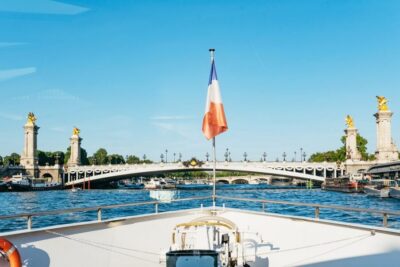 ★ 4.3Seine River Panoramic Views Dinner CruiseTickets from $6410,611 guest reviews
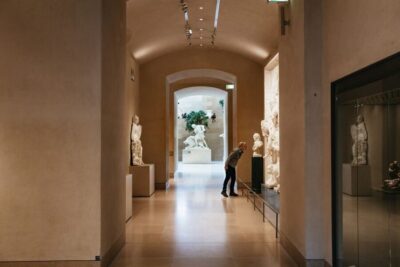 ★ 4.6Louvre Museum Entry Ticket With Host and River CruiseTickets from $1009,926 guest reviews
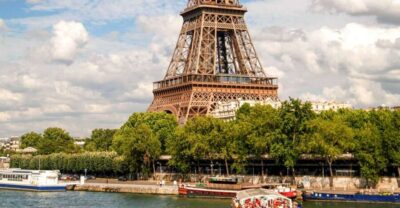 ★ 4.6Eiffel Tower Access by Elevator & Seine River CruiseTickets from $797,329 guest reviews
 ★ 4.73-Course-Dinner Cruise on the Seine with live musicTickets from $1357,248 guest reviews
This tour also belongs to