
Review · EIFFEL TOWER TOURS
Paris Treasure Hunt – Explore the Seine from Louvre to Eiffel
Riddles along the Seine turn Paris into playtime. This self-guided treasure hunt runs a scenic route from the Louvre area toward the Eiffel Tower, using clue cards and cultural notes instead of a traditional lecture. What I especially like is the kid-friendly challenge level that works for mixed ages, and the fact that you can keep your own pace rather than being herded along. The one thing to watch is the built-in time limit, because breaks for photos and snacks eat into your 2.5-hour target.
You start at 19 Pl. du Carrousel (near the Louvre) and follow a chain of clues past major landmarks like Musée d’Orsay and Pont Alexandre III. The activity includes an actual game booklet with a map, riddles, and answer sheets, plus physical assistance if you get stuck, so you are never left completely hanging. If you want a relaxed stroll with no pressure, just plan your timing so you are not rushing at the end.
Key points to know before you go
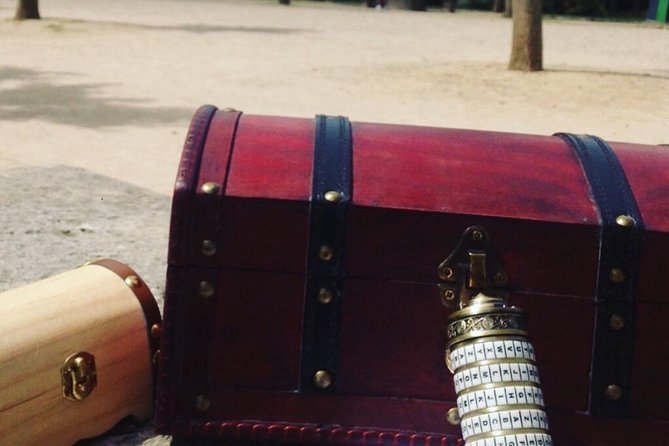
- Self-guided, no app required, using a booklet with map and riddles
- Seine River route designed to connect famous stops from Louvre area to Eiffel Tower area
- Family-focused clues that can challenge both kids and adults
- No rush format, but it ends automatically after 3 hours
- On-site help is physically here, so you can get a hint instead of stalling
- Small group size, capped at 20 travelers
Why this Louvre-to-Eiffel treasure hunt beats another sit-and-listen tour
Paris is full of tours. This one is built around doing, not watching. Instead of spending your time trying to keep your eyes on a guide while you fight your own attention span, you and your group work through short riddles that point you from spot to spot along the river.
I like that the experience is structured but not rigid. You can pause for a photo, regroup as a family, or take a café break if you are traveling slow that day. The game format also tends to make sightseeing more memorable because you are actively thinking about what you see, not just hearing about it.
The other big win is how well this style works for families. One review highlighted that clue difficulty was smart enough for both younger kids and older participants, including a mixed group with kids in elementary school and a college-age participant. If you have ever had a child get bored halfway through a classic walking tour, this format is often the difference between a hit and a hard sell.
You can also read our reviews of more tours and experiences in Paris.



Start at 19 Pl. du Carrousel, then follow the Seine clues
Your meeting point is 19 Pl. du Carrousel, 75001 Paris. You start in front of the Louvre, then follow clues along the river corridor with several iconic stops in the mix. The route is about 4.5 km, and it typically takes around 2.5 hours, though the game is set to stop automatically after 3 hours wherever you are on the route.
That timing detail matters. If you plan to stop often for pictures, snack runs, or leisurely river views, you will want to move quickly between clues so you still finish most of the investigation. The experience also ends back at the meeting point according to the activity description, but it is designed so the walking route takes you toward the Eiffel Tower area, so expect the day to feel like a one-way story from the Louvre side into the Eiffel side.
Logistics are refreshingly simple. It is a mobile ticket, and you do not need any downloads or a phone app. It is offered in English and French, and you also get on-the-ground help if you need it during the game.
What you’ll pass on the route, and how each stop feels in a game
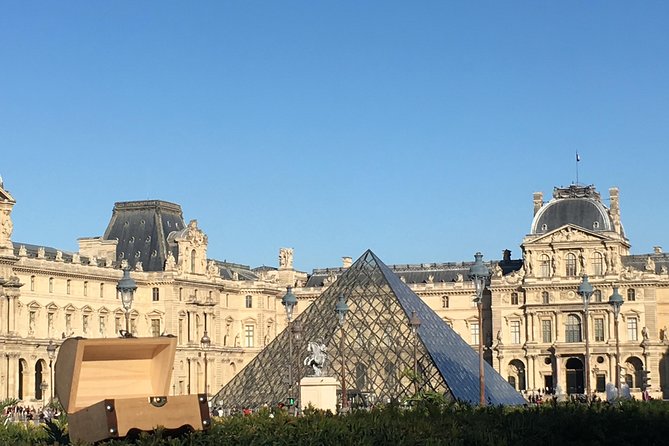
The route is designed to link together some of the most photogenic and historically meaningful spots in central Paris. You will move past the Louvre Museum area, then through the scenic riverside stretch where a clue makes you look twice.
Here’s how the major stops tend to land when you are solving riddles instead of just walking by:
Louvre area to Musée d’Orsay: start with big art energy
You begin near the Louvre, then follow clues that guide you toward Musée d’Orsay. This is a smart opening choice because the Louvre area is already visually loud and iconic. In a treasure hunt format, that matters because the first clues help you get oriented fast, both with where you are and what the game expects from you.
If your group is new to scavenger-style activities, this early stretch is usually where you build confidence. You learn how answers relate to what you see, and your team momentum kicks in before the route gets longer.
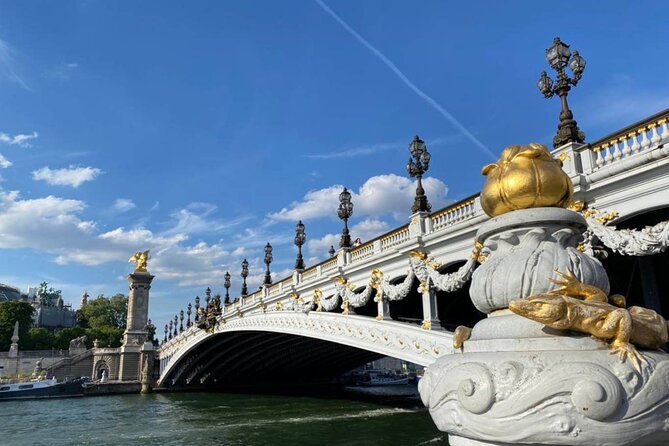
Pont Alexandre III: the “look for the details” moment
Pont Alexandre III is the kind of bridge that rewards slow observation. In this treasure hunt, that becomes part of the fun. Instead of walking over a landmark, you approach it with a question in your hand, so you naturally scan the structure and surroundings for the clue logic.
Expect this to be a good checkpoint for families. It gives kids something concrete to focus on, and it gives adults a reason to look beyond the obvious postcard angle.





Les Invalides: history you can pace
Les Invalides shows up as another key stop along the way. The treasure hunt approach keeps you from turning it into a rushed photo stop. Because the clue is tied to the location, you naturally spend a few extra minutes there, reading the cultural notes and comparing what the clue asks for with what you see.
A drawback to keep in mind: if your group is very photo-heavy, you might spend longer here than planned. That is not wrong, but it can steal minutes from later clues if you are not careful about the 3-hour auto-end.
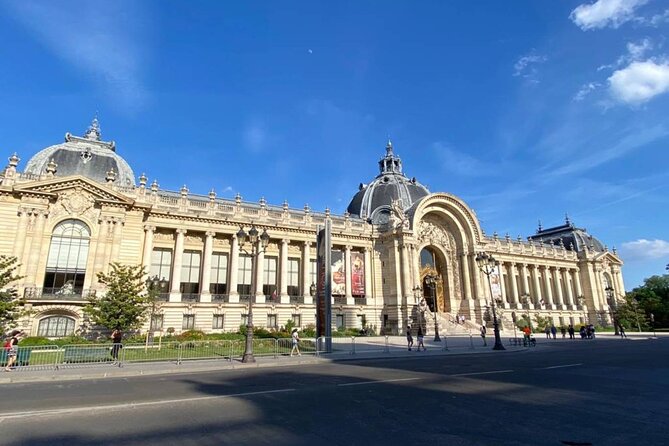
Le Grand Palais: a cultural pause with purpose
Le Grand Palais is in the route, too. Even if you just walk past it in the normal tourist flow, it feels important. In a game, it becomes purposeful because you are trying to solve the next step, and that turns the area into part of the story rather than background.
This is also a helpful stop for adults who enjoy sightseeing but get tired of long explanations. You get prompts and context in smaller pieces, which tends to keep attention steady.
The Eiffel Tower: the finish line moment
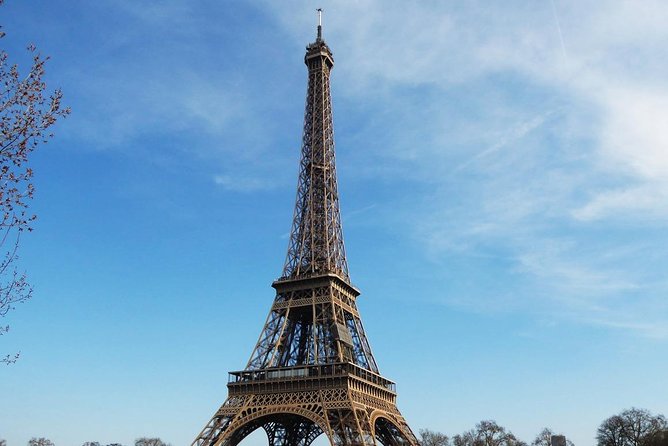
The experience is designed so the walk leads you into the Eiffel Tower area. That matters because it gives the whole hunt a satisfying endpoint: you are not just wandering, you are approaching a goal you can see.
One practical consideration: since the game automatically ends after 3 hours wherever you are, you should aim to keep your clue-solving pace so you do not reach the Eiffel Tower area too late in the timer. If you do, you might have to accept that your final clue set could be shorter than you hoped.
How the timing and 4.5 km distance really affects your day
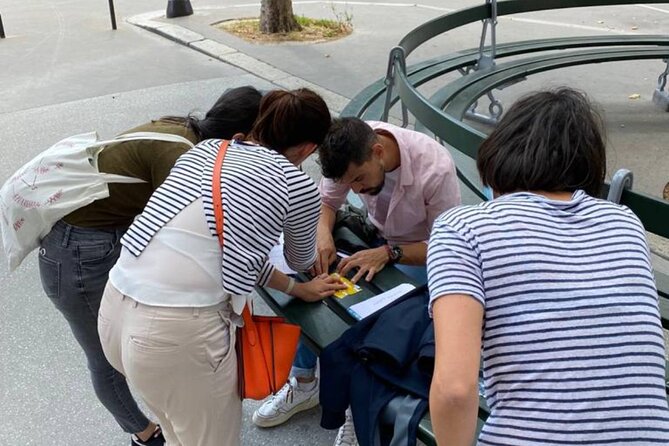
This activity averages about 2.5 hours and covers roughly 4.5 km. That is a very doable walking distance for many people with moderate fitness, especially since the route is a “think and walk” experience rather than a forced march.
Still, the way it is structured can change how you feel by the end. Reviews describe it as fun but also exhausting in a good way, especially when kids stay engaged and the questions keep everyone moving. The game encourages collaboration, and collaboration uses energy.
The 3-hour auto-end is the big constraint. If you show up ready to solve clues, you will likely feel satisfied with how much you complete. If you treat it like a casual hangout with lots of stops, you may finish early or miss some of the investigation steps.
My practical tip: build in one deliberate break, not five tiny ones. For instance, choose one photo moment by a major landmark, then move on. That keeps the game fun while still leaving room to enjoy the river.
What you get in the box: booklet, map, riddles, and real answers
Included with the experience are materials that make it work without a guide:
- a game booklet with riddles, a map, and cultural notes
- answer sheets and all necessary materials
- assistance available throughout the game (the team is physically here)
- language options in English and French
- no downloads or mobile apps required
This is one of the best value parts of the setup. You are paying for a ready-to-use puzzle route, not just a generic ticket. The booklet format also means you are not fighting your phone battery or chasing a signal while you are walking.
And the on-site help is a safety net. If a clue stumps you, you can get a hint rather than spending 20 minutes stuck. That helps families a lot, because kids can lose interest when they feel like they are failing.
Who this is best for, and who might want a different style
This treasure hunt is ideal for families, couples, or small groups who want to see Paris in a playful way. The target ages are a minimum of 8 years old, which fits the idea of children staying engaged with puzzles and reading small clues.
That said, younger kids are not automatically excluded. Children under 5 years old join for free, and families are welcome. For families with mixed ages, this is where the clue design really pays off, since the activities are built to challenge multiple levels at once.
Who might prefer something else? If your group wants deep, continuous narration from a guide for every stop, you might find the self-guided style less satisfying. This is for people who like to figure things out and are okay with learning in small bursts through the booklet.
If you dislike scavenger-style games because you want zero pressure, this might still work, as long as you treat it like a flexible walk. The no-rush approach helps, but you still need to respect the time limit.
Price and value: is $42.05 a good deal?
At $42.05 per person for about 2.5 hours of walking, puzzle-solving, and cultural notes, I see the value in three places.
First, you are getting structured content. This is not a “walk here and good luck” situation. You have a booklet, map, riddles, and answer sheets.
Second, you are paying for convenience. No app, no downloads, just a mobile ticket and a printed game. That reduces friction and keeps everyone focused on the outdoor experience.
Third, you get human backup. Since the assistance is physically present, it improves the experience if your group hits a tricky clue.
It also helps that the group size is capped at 20 travelers, which usually keeps the activity feeling more personal than big-group tours. And since the experience is often booked about 83 days in advance on average, it is wise to reserve early if your dates are fixed.
Practical tips so you finish the hunt without stress
You do not need special gear, but a few habits will make the difference:
- Wear comfortable shoes for 4.5 km of walking along central Paris.
- Plan for weather. The experience requires good weather, and poor weather can trigger a different date or a full refund.
- If you are traveling with kids, set expectations early: the goal is to solve clues and enjoy the Seine views, not just race to the end.
- If you need a hint, ask for one. The team is physically available, and it will usually save time and frustration.
- Keep an eye on the timer, because the game auto-ends after 3 hours, wherever you are.
Also note: service animals are allowed, and the meeting point is near public transportation. If you want an easy start day, that is a win.
Should you book this Paris Treasure Hunt from Louvre to Eiffel?
Book it if you want Paris sightseeing with a built-in reason to look closely. This hunt is a smart match for families and for adults who want something more active than a standard walking tour. The combination of scenic Seine views, a ready-to-go riddle booklet, and physical on-site help makes it feel both fun and practical.
Pass or reconsider if your group needs a nonstop guide voice or if you tend to lose track of time easily. The 3-hour auto-end means you should stay mindful about breaks, especially if you plan extended café time.
If you are trying to balance iconic monuments with an experience that feels different, this one is an easy yes. It turns the Louvre-to-Eiffel corridor into a game, and the best part is you get to move at your own pace while still finishing with a real sense of accomplishment.
FAQ
How long does the Paris Treasure Hunt last?
The activity takes about 2.5 hours on average, and it automatically ends after 3 hours wherever you are on the route.
Is this treasure hunt self-guided, or do I need a guide?
It is completely self-guided. There is no tour guide with you, and there is no app or download required. If you need help, assistance is available throughout the game and the team is physically there.
Where do I meet and where does it end?
You start at 19 Pl. du Carrousel, 75001 Paris. The activity is described as ending back at the meeting point, and the route is designed to take you from the Louvre area toward the Eiffel Tower area.
What sights are included on the route?
The clue route includes the Louvre area and passes by Musée d’Orsay, Pont Alexandre III, Les Invalides, le Grand Palais, and the Eiffel Tower area.
How much walking is involved and what fitness level do I need?
The route is about 4.5 km and is suitable for travelers with a moderate physical fitness level.
What age is this experience for?
A minimum age of 8 years is recommended so children can stay engaged with the clues. Children under 5 years old join for free.
More Tour Reviews in Paris
Not for you? Here's more nearby things to do in Paris we have reviewed












Eiffel Tower Tours, side by side.
 ★ 4.4Eiffel Tower Entry Ticket with Optional Summit AccessTickets from $2920,035 guest reviews
 ★ 4.3Eiffel Tower Summit or Second Floor AccessTickets from $5917,248 guest reviews
★ 4.4Eiffel Tower Summit or Second Floor AccessTickets from $4116,088 guest reviews
★ 4.3Eiffel Tower Summit or Second Floor AccessTickets from $5917,248 guest reviews
★ 4.4Eiffel Tower Summit or Second Floor AccessTickets from $4116,088 guest reviews
 ★ 4.4Seine Cruise & Crepe Tasting near the Eiffel TowerTickets from $2311,231 guest reviews
 ★ 4.1Eiffel Tower Stairs Climb to Level 2 & Summit OptionTickets from $428,985 guest reviews
 ★ 4.6Eiffel Tower Access by Elevator & Seine River CruiseTickets from $797,329 guest reviews
 ★ 4.6Eiffel Tower 2nd Floor or Summit AccessTickets from $696,683 guest reviews
 ★ 4.0Eiffel Tower Dedicated Reserved Access Top or 2nd floor by liftTickets from $306,649 guest reviews
This tour also belongs to