
Review · SEINE RIVER CRUISES
Seine River Guided Cruise by Vedettes de Paris
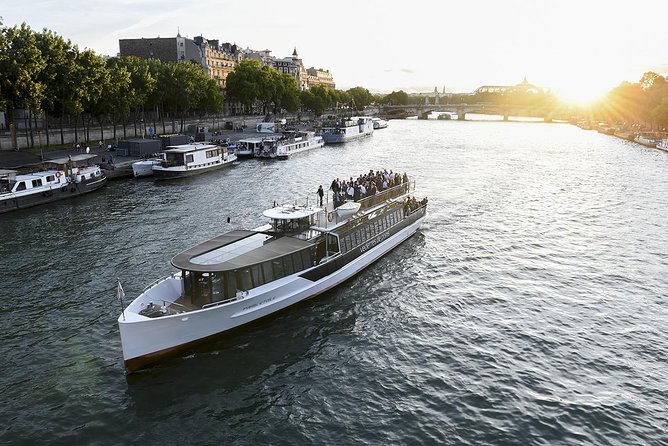
One hour, and Paris feels close. This Seine cruise hits the main icons fast, with a 100% electric boat and live guide narration that pairs well with the view. I especially like how you float past landmarks like Notre-Dame and Musée d’Orsay without the stress of museum lines or getting lost on the streets. The main drawback to consider is that the sound can be harder to catch on the open-top deck in cold or wind.
You get about an hour on the water, with lots of departures so you can match your day. I like that you can pick daytime for clearer sightlines or an evening slot to see the City of Lights from the Seine. Even better, the cruise uses an onboard audio app in multiple languages, so you are not stuck with only one option if you want a different language track.
A couple practical notes help you enjoy it more. The mobile ticket makes things simple, but there is no baggage accepted onboard, so travel light. Also, plan for the weather, because an open-air deck is still an open-air deck, and blankets are available in colder months.
Key things to know before you go
- 100% electric boat on the Seine: quieter, smoother feeling, with the big plus of lower local emissions on the river.
- Bilingual live guide, plus audio app backup: English and French are handled live, and you also get an app for Spanish, Italian, German, and Dutch.
- Icon lineup, in motion: Eiffel Tower, Notre-Dame, Louvre area views, and the grand bridges in between.
- Small-group feel within a big city: they do not accept groups over 14 participants, with a max of 220 travelers overall.
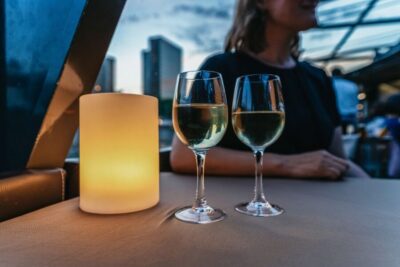
- Optional drinks and snack upgrades: champagne for adults only, or a Gourmand choice with a pancake or cookie plus a soft drink.
- Sound depends on where you sit: top-deck listening can be tougher, so pick seats with audio in mind.
Price and what $25.23 buys you on the Seine
At about $25.23 per person for roughly an hour, this is priced like a “first-day Paris win” rather than a deep, slow tour. You are not paying for a bus ride, you are paying to see a huge chunk of the riverfront sights in one pass, with narration happening while you cruise.
Value comes from two things. First, the route is concentrated: bridges, cathedrals, museums, and palaces all roll by close enough to actually register visually. Second, the cruise includes live commentary in English and French, which is more engaging than only using a phone app.
If you are the type who hates juggling tickets, this one-hour format is a helpful reset between walking-heavy moments.
You can also read our reviews of more boat tours in Paris
The 100% electric boat experience, and how the ride feels
The cruise runs on a modern riverboat powered by electricity. That matters because it tends to feel less harsh than older engines, and the experience is more relaxed when you are trying to hear stories about what you are seeing.
It is also set up for viewing. You can choose to spend time on the open deck for the best views, but you can also sit inside when it is chilly. In colder months, blankets are offered, which is a real quality-of-life detail if you plan to do this early or at sunset.
One other comfort angle: seating can be simple. If you are sensitive to folding-chair style seating, try to get there early and pick your spot, since the ride only lasts about an hour.
Where your hour on the river actually goes
You get a single loop experience that starts and ends at the same meeting point near Port de Suffren. From there, the route follows the classic Seine corridor where you see both the monumental center and the bridge-hopping landmarks.
The big planning win is the timing. There are many departures, so you can fit it around other plans. If you want the Eiffel Tower to sparkle, a late afternoon slot that lines up with the 6pm light moment can work well, since your cruise can finish near that time.
If you do daytime, you usually get clearer, brighter sightlines for photos. If you do evening, the lights add atmosphere, but it can get colder and the narration can compete with wind.
Eiffel Tower to Invalides: starting with the big hit
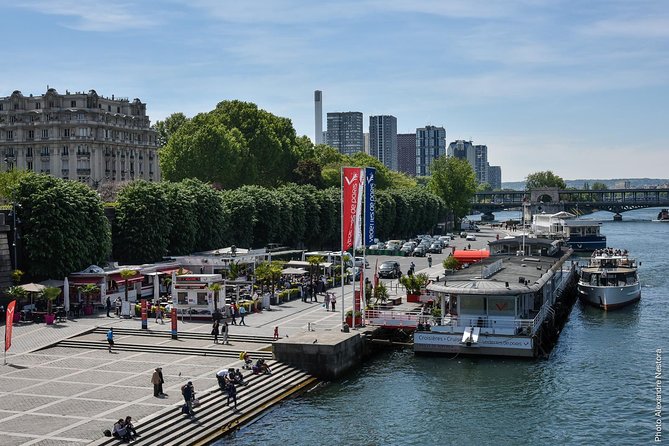
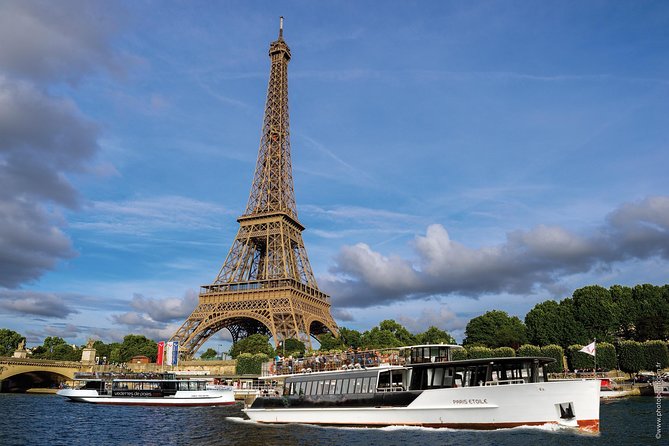
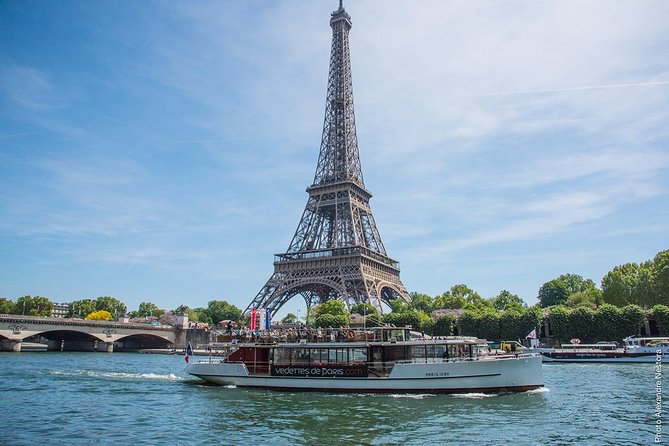
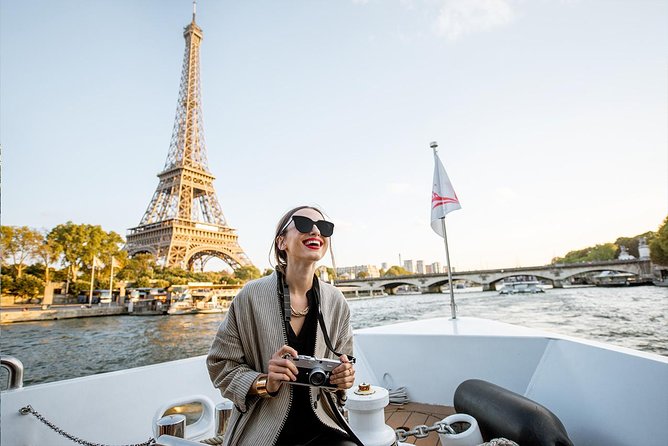
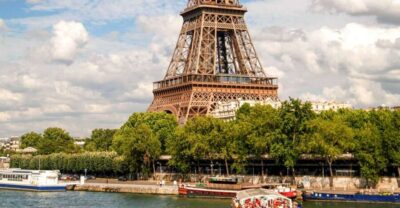
Your cruise begins with the Eiffel Tower area and quickly shifts into the skyline-and-bridge rhythm of central Paris.
You will hear the story of the Eiffel Tower’s 1889 construction for the Universal Exhibition, and why it was meant to last only twenty years at first. You also get the practical backstory that in 1903 a radio antenna was added, helping it avoid demolition and evolve into the symbolic monument it is today.
From there, the boat passes a cluster of religious and cultural landmarks. You may see the Holy Trinity Cathedral, an Orthodox church sometimes associated with a bilingual Franco-Russian school and cultural programming in the center. You may also spot the American Church in Paris, recognizable by its green clock tower, plus stained-glass windows created by Louis Comfort Tiffany.
Then the riverfront brings you to Hôtel des Invalides. This was originally a military hospital ordered by Louis XIV for injured soldiers and officers, and the royal chapel became a home for Napoleon I’s tomb. Seeing Invalides from the water gives you a different scale sense than walking near it, especially with the river framing the buildings.
Pont Alexandre III and Pont de la Concorde: bridges with politics and art
Paris bridges are not just crossings here. They are decorated statements, and the narration gives you what to look for as you pass.
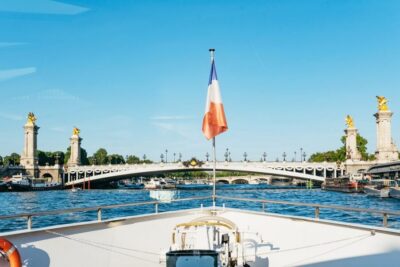
Pont Alexandre III is one of the most “readable” bridges if you know what symbols to spot. You are told it was built for the 1900 Universal Exhibition and tied to the Franco-Russian Alliance. Pay attention to the coat of arms covered in gold leaf, plus the nymphs linked to the Seine. Looking the other direction, you get the Saint Petersburg arms and nymphs connected to the Neva.
Next, Pont de la Concorde is tied to revolutionary history. The bridge uses stones from the former Bastille prison after the storming in 1789, and it leads toward the Palais Bourbon on one side and Place de la Concorde on the other.
If you like architecture details, this bridge section is a sweet spot. Even if you only have one hour, you end up with more than postcard views.
You can also read our reviews of more guided tours in Paris

Hôtel de Salm and the Orsay area: knowing what you are staring at
As you move along, the cruise highlights Hôtel de Salm, which later became the Légion d’honneur Palace under Napoleon I. Since the Légion d’honneur is France’s highest honour, the passing sight feels important even before you connect it to awards and ceremony.
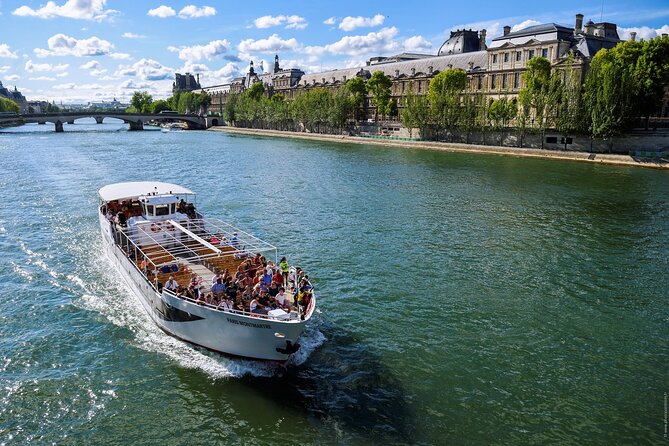
Then you reach the former Orsay railway station, now Musée d’Orsay. You get the origin story that it was built for the 1900 Universal Exhibition and designed with a railway line leading to the south-west of France. The big point for you is that the building itself is part of the experience, not just a container for art. From the river, the museum’s exterior becomes a frame for 19th-century art vibes, including Impressionists and Post-Impressionists such as Renoir, Monet, and Van Gogh.
If you plan to visit Musée d’Orsay later, this cruise helps you recognize the building quickly, which can make your museum day feel smoother.
Institut de France and Pont Neuf: street-level detail, river view
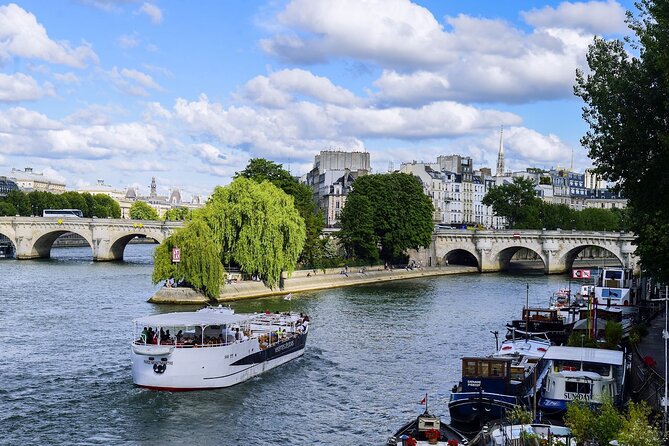
As you continue, you pass the Institut de France, formed from the former Collège des Quatre Nations. The narration covers the Mazarin funding story, and explains that it houses five academies, including the Académie Française, which updates and modifies the official French dictionary.
Then the boat glides toward Pont Neuf, which the narration calls the oldest bridge in Paris. You also get a specific detail that is great for photos: Pont Neuf has 381 grimacing stone masks, each uniquely decorated.
From the river, you can actually see how decorative stone elements repeat across the bridge. It is the kind of thing you might miss when you are walking fast.
Pont Saint-Michel to Île de la Cité: the medieval center comes into focus
Pont Saint-Michel comes next, built at the request of Napoleon III, with imperial Ns on its pillars. You also get the Latin Quarter tie-in, since students at the University of Paris spoke Latin there until the 19th century.
Then comes Île de la Cité, described as the presumed birthplace of Paris, linked to early settlement by the Parisii tribe before the Common Era. This segment helps you understand why this small island became the city’s center of gravity.
And then you hit Notre-Dame Cathedral. You get the construction timeline, starting in 1163 and completed nearly two centuries later in 1345, plus details about gargoyles and sculptures. The narration also points out the Rose du Midi, tied to the New Testament and presented as a gift from King Saint Louis. Even if you already know the basics, hearing what to look for changes the way you look at the facade.
Also watch for the statue of Saint Genevieve, patron saint of Paris, sculpted by Paul Landowski, who later created Christ the Redeemer in Rio.
Arab World Institute and Île Saint-Louis: calmer scenes after the big landmarks
After Notre-Dame and the Île de la Cité, the cruise shifts toward other island neighborhoods and cultural institutions.
You will see the Arab World Institute, inaugurated in 1987 by François Mitterrand. The narration frames it as a cultural center focusing on history, art, society, religions, and science in the Arab world.
Then there is Île Saint-Louis, known for prestigious 17th-century town houses like Hôtel Lambert and Hôtel Lauzun. The story here is that it is one of the quieter-feeling, high-status parts of central Paris, and it has hosted figures like Charles Baudelaire and Georges Moustaki.
This is a nice contrast zone. It breaks the momentum of monuments so your brain can reset for the Louvre and revolution-era stops.
Hôtel de Ville, Conciergerie, and the Louvre corridor
Hotel de Ville, Paris City Hall since 1357, appears as the seat of the Paris City Council. The narration includes the Neo-Renaissance influence and notes that it is open to visitors, with a banquet hall designed as a template of the Hall of Mirrors in Versailles.
Next comes the Conciergerie, built under Philip IV in the 14th century and later turned into a prison. Queen Marie-Antoinette spent her last two months there, before her execution at Place de la Concorde. This is one of those “you feel it more than you read it” passages, because the river naturally slows you down mentally.
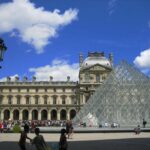
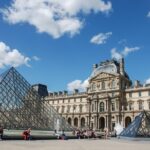
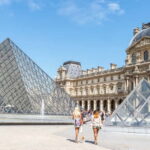
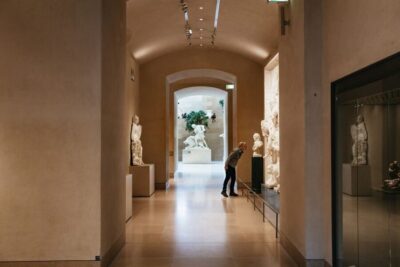
Then the cruise passes the Louvre area. The narration covers the palace-to-museum transformation in 1793 and highlights scale facts like four-plus kilometers of façades and nearly 14 kilometers of galleries. It also notes the Louvre’s enormous collections and fame for works including Winged Victory of Samothrace, Venus de Milo, and the Mona Lisa.
Even if you never step inside, you come away with a clearer sense of what you are seeing from the outside.
Place de la Concorde, Grand Palais, and the Liberty Flame
You move toward Place de la Concorde, tied to the French Revolution. The narration highlights the execution of King Louis XVI and Queen Marie-Antoinette and points out the central obelisk from Luxor, Egypt, brought to France in 1836. It is described as 34 centuries old, which is the sort of number that makes the square feel larger than it looks.
Then Grand Palais arrives on your right. Built for the 1900 Universal Exhibition, it is known for its architectural feat and glass roof, described as the largest in Europe. The narration also mentions its modern role as an events and exhibition venue, including cultural events, and even a large skating rink in season.
Near the riverfront, you may see the Flame of Liberty. It is described as a gift from the United States and the newspaper International Herald Tribune, as thanks for restoring the Statue of Liberty. The sculpture is an exact reproduction of the Statue of Liberty’s flame.
This segment is a helpful bridge between French monuments and American ties.
Palais de Chaillot and looking out over Trocadéro
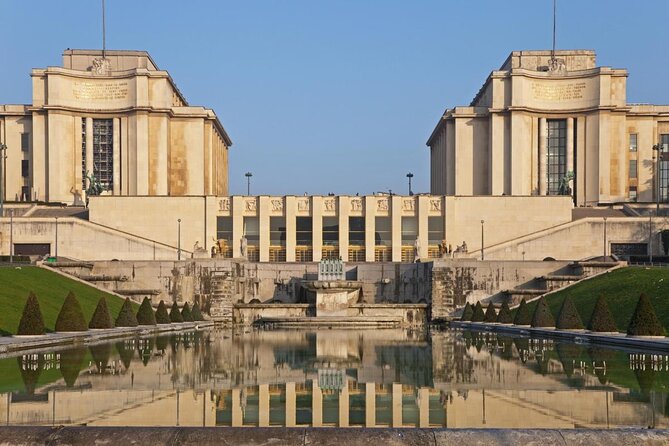
To finish the cruise, the narration turns to Palais de Chaillot at place du Trocadéro. Built for the 1937 Universal Exhibition, it is described as two Neoclassical pavilions with an esplanade overlooking the Trocadéro gardens. It houses several institutions, including the National Navy Museum, City of Architecture and Heritage, Museum of Humankind, and the National Theatre of Chaillot.
If you plan to walk around that area after the cruise, this ending helps you orient fast. You already know the landmarks and you know what direction you are facing.
Drinks and snack upgrades: what the options mean for your trip
If you upgrade, you are buying comfort and ease more than a full meal. The base cruise does not include food or drinks, but you can add packages.
The champagne option includes a glass of champagne, and it is adults-only. If you are traveling with children and you want champagne for adults, you will need separate bookings for the champagne option and the rest. That is an important rule to follow so you do not get stuck at check-in.
There is also a Gourmand option that includes a pancake or cookie with a soft drink. One practical tip: if you select a drinks upgrade, I would check your email for any voucher you need to redeem. It is a small step that can prevent a moment of confusion.
Sound, deck choice, and cold-weather tricks
This is where your enjoyment can swing from great to frustrating.
The cruise uses live narration in English and French, plus an app for other languages. But on the outdoor deck, sound can be harder when it is cold, windy, or when the boat shifts. If you care about hearing every detail, sit where you can better hear the guide, not just where the view is best.
In colder months, blankets are available, and inside seating is warmer. That advice comes up for a reason: if you plan to stand outside for photos too long, your attention starts wandering. I’d rather take a few photos, then warm up and listen for the stories you paid for.
Also, note that the guide may switch between French and English during the narration. If you prefer one language, pick a seat closer to where you can follow clearly.
The guide and the small moments that make it click
One-hour tours succeed when the guide keeps it moving and makes the sights make sense. I liked that this cruise is not just pre-recorded audio floating around.
In the experiences shared, guides like Caterina and Bernadette were singled out as fun and engaging, with narration that helped people understand what they were seeing. Even small touches, like coaching about good photo angles, are a big deal when you only have one hour and you are on a moving deck.
If you want more than scenery, aim for a time slot when you can actually pay attention, not one wedged between rushing events.
Practicalities that matter more than you think
No baggage is accepted onboard. Plan to carry only what you need: phone, camera, wallet, and a layer you can manage easily.
Toilets are another point where you should be aware of how it works on the river. Onboard toilets are free to use, while dock toilets are managed by another company and may require payment or a receipt. If you have a sensitive timing need, know that docking happens, so you can use the onboard facilities during the cruise.
Safety briefings are not described as formal in the way some tours do it. That does not mean ignore safety, just look for the life jackets on board when you board, then you know where you are.
So, is it worth booking this Seine cruise?
I think it is worth booking if you want a low-effort way to see a concentrated slice of central Paris with real-time explanation. It is especially good as a first day activity, because it helps you recognize the city layout and the key landmarks you will likely revisit later.
Skip it or choose your seat with care if you know you struggle with hearing in outdoor windy conditions. Also, if you are planning a food-focused experience, keep your expectations realistic: upgrades add drinks or a small snack, not a full meal.
If you want, tell me your travel month and whether you prefer daytime or evening, and I’ll suggest the best timing for photos and comfort based on what the cruise setup supports.
FAQ
How long is the Seine River guided cruise on Vedettes de Paris?
The cruise is about 1 hour.
What languages are available for narration?
There is a live guide in English and French. You also get a free application for commentary in Spanish, Italian, German, and Dutch.
Is this cruise electric?
Yes. It uses a 100% electric boat.
Does the price include food or drinks?
Food and drinks are not included unless you book one of the snack and drink packages. Champagne or a Gourmand option may be included if you select that add-on.
What does the Champagne option include?
The Champagne option includes a glass of champagne, and it is only bookable for adults.
What does the Gourmand option include?
The Gourmand option includes a pancake or cookie plus a soft drink.
Is a mobile ticket used?
Yes, the tour offers a mobile ticket.
Is there room for luggage on board?
No. No baggage is accepted on board.
Are there limits on group size?
They accept no groups over 14 participants, and the maximum is 220 travelers.
What happens if weather is poor?
This experience requires good weather. If it is canceled due to poor weather, you will be offered a different date or a full refund.
Is there free cancellation?
Yes. You can cancel up to 24 hours in advance for a full refund. Cut-off times are based on local time.
More Guided Tours in Paris
More Boat Tours & Cruises in Paris


More Tour Reviews in Paris

Not for you? Here's more nearby things to do in Paris we have reviewed


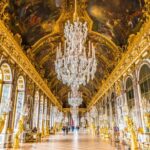

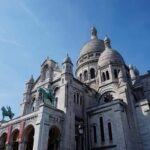




Seine River Cruises, side by side.
 ★ 4.4Evening River Cruise with MusicTickets from $2722,721 guest reviews
 ★ 4.3Illuminations River Cruise with Audio CommentaryTickets from $2012,340 guest reviews
 ★ 4.3Tootbus Hop-on Hop-off with optional river cruiseTickets from $4911,924 guest reviews
 ★ 4.4Seine Cruise & Crepe Tasting near the Eiffel TowerTickets from $2311,231 guest reviews
 ★ 4.3Seine River Panoramic Views Dinner CruiseTickets from $6410,611 guest reviews
 ★ 4.6Louvre Museum Entry Ticket With Host and River CruiseTickets from $1009,926 guest reviews
 ★ 4.6Eiffel Tower Access by Elevator & Seine River CruiseTickets from $797,329 guest reviews
 ★ 4.73-Course-Dinner Cruise on the Seine with live musicTickets from $1357,248 guest reviews
This tour also belongs to