
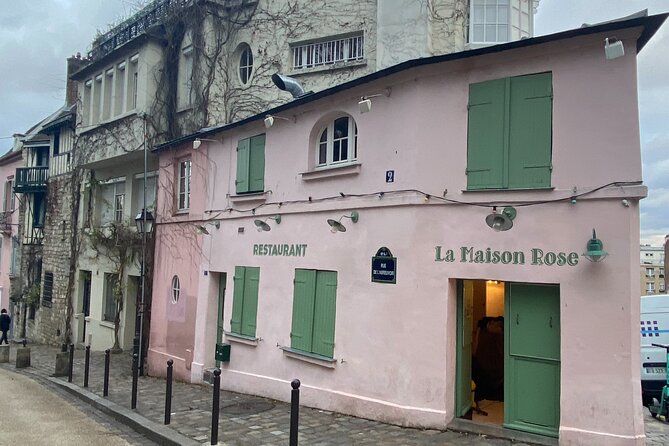
Review · MONTMARTRE TOURS
Montmartre Treasure Hunt — Fun and Cultural Investigation
Riddles turn Montmartre into a living story. This self-guided game has you using a booklet of clues to explore famous spots like Sacré-Cœur and the Moulin Rouge, while learning the neighborhood through observation, logic, and curiosity. I love that there is no app and no guide, just you and the route. I also love the way the puzzles work like mini lessons, with history and even funny anecdotes woven into each stop. One thing to plan for is the built-in 3-hour time limit, and coffee breaks reduce your remaining game time.
You start at Anvers (75018) and end right back where you began, which makes it easier to pair with dinner plans. The format is simple, a mobile ticket, a game booklet, and answer sheets, plus help is available if a clue gets tricky. Another plus for many families is the small group size, with a maximum of 20 participants, so the experience stays relaxed.
This is best for people who can handle Montmartre foot travel, cobblestones, and some walking at a moderate fitness level. It’s suitable for kids age 8 and up, and one reviewer specifically recommended taking a few minutes for St. Jean de Montmartre, an art nouveau church that fits nicely into the route.
Key things I’d mark on your Montmartre map first
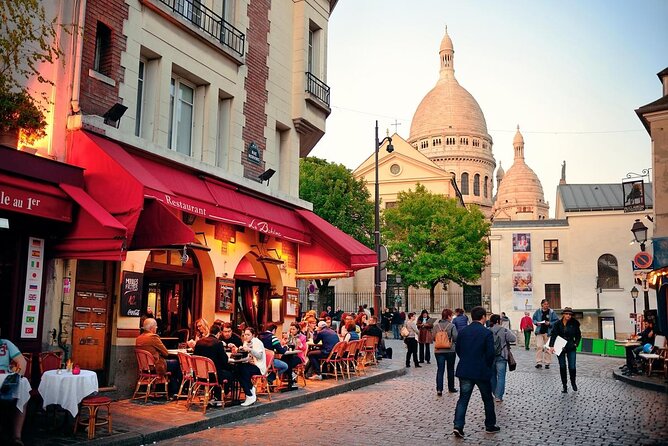
- A riddle-driven walk past Sacré-Cœur, Place du Tertre, Moulin Rouge, and the Montmartre vineyards
- No app, no downloads, just a game booklet, map, answer sheets, and materials you need
- Hints are available if you stall, so you do not feel stuck
- Puzzle difficulty that works for adults and kids (tested with ages 5 to 13)
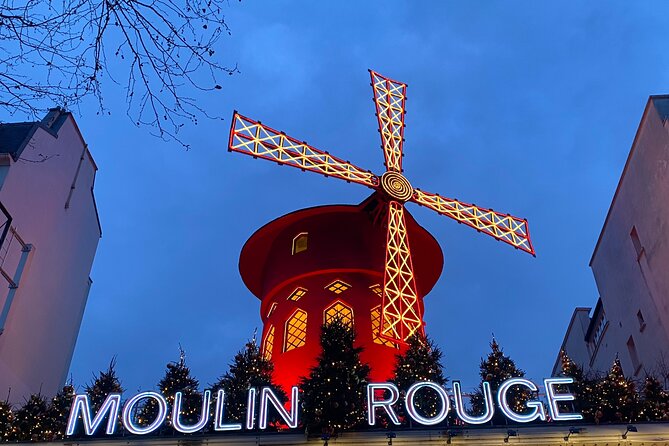
- A clear finale at the Moulin Rouge where you solve the investigation
- An auto time-out after 3 hours 30 minutes, so plan around breaks
Montmartre by clue, not by tour script
Montmartre can feel like a postcard at first glance, but this hunt pushes you to look closer. Instead of following a strict commentary, you move street by street with a booklet that nudges you to notice details and connect them to Montmartre’s past. It’s a smart way to learn without making your day feel like a classroom.
The best part is the balance. The clues are challenging enough that adults stay interested, but they are also approachable for kids to contribute. In one family run, the puzzles worked well for children ages 10 and 13 without turning the experience into boredom or chaos.
Because it is self-guided, you also choose the pace. If you want to slow down for a tricky riddle, you can. If you are flying through, you can keep the momentum. And if rain or wind changes the vibe, you can still play at your own pace, though very poor weather can trigger a cancellation, depending on conditions.
You can also read our reviews of more tours and experiences in Paris.



Price and value: why $41.70 can make sense here
At $41.70 per person for about 3 hours, this is not trying to replace a full-day sightseeing plan. It’s more like buying yourself time to experience Montmartre in a different mode: walking, solving, and learning in the same loop.
You get practical value in the format:
- You pay for a structured route with a built-in learning thread.
- You are not paying for a live guide’s time during the whole 3-hour walk.
- The materials are included, including the booklet and answer sheets, with assistance available if you need a hint.
Compared with a conventional walking tour, the value shows up when you care about flexibility. You can stop, think, and restart when you want. For families, that matters even more because kids often do better when they can actively participate instead of only listening.
Starting point in Paris: Anvers, then back again
The experience starts at Anvers (75018 Paris). You finish back at the meeting point, so you are not trying to guess your way home after the final clue. It also makes dinner planning easier, since you know where your feet will land.
A nice detail is that it is near public transportation. That helps you reach the start without turning your day into a logistics puzzle. It also helps if you want to combine this with other Montmartre stops on the same afternoon.
The activity includes a mobile ticket, with confirmation received when you book. You do not need to download an app, which keeps the whole thing low-friction and easier for families and first-timers.
Your 3-hour flow: how the hunt moves from stop to stop
This is a self-guided game with no app and no tour guide walking beside you. That means the booklet is your engine: you read the clue, solve, and then move to the next spot. Some clues are observation-based, others are logic-based, and others are curiosity-based, so you do not get stuck doing only one kind of thinking.
The route is built around major Montmartre landmarks:
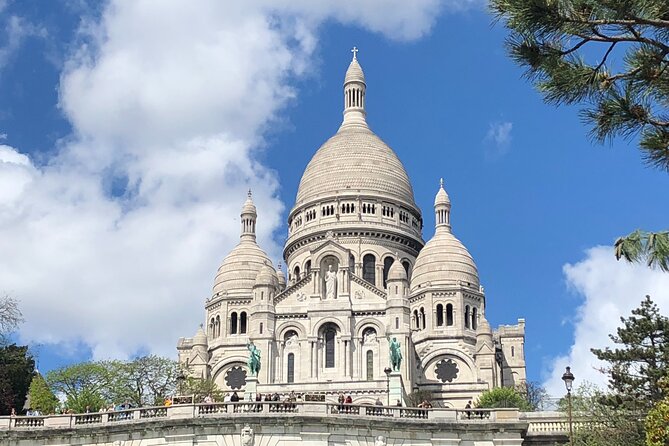
- Sacré-Cœur
- Place du Tertre
- the Moulin Rouge
- and the Montmartre vineyards
You also walk through the narrow cobblestone streets, legendary cabarets, and secret corners that make Montmartre feel like its own world. The pacing works well because each puzzle ties you to a specific location, so you are not wandering aimlessly hoping to stumble onto something important.
There is also a built-in social benefit: small groups can split tasks. One person reads the clue, another checks the map and options, and someone else focuses on the logic. That turns the walk into teamwork, not just navigation.
Sacré-Cœur: first clues that set the tone
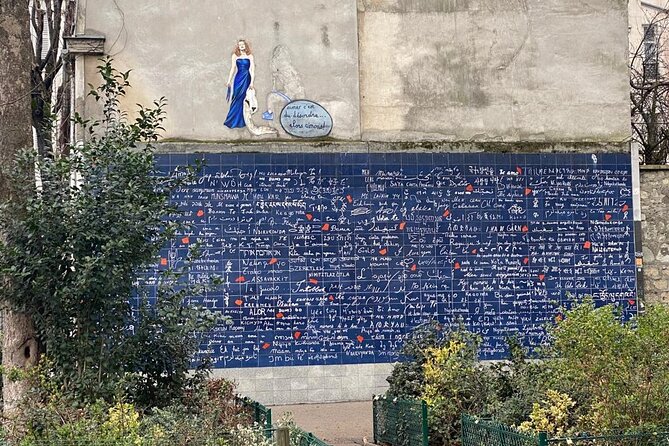
Your hunt includes Sacré-Cœur, which is one of the easiest places to anchor your day. Here, the puzzles start doing their job: getting you to switch from sightseeing mode to investigation mode.
Look at this as your warm-up. The first part teaches you how the clue style works, including how the game expects you to use observation, logic, or curiosity. If you are new to treasure hunts, do not rush. The earlier you get comfortable with the clue format, the better the rest of the route feels.
One practical tip: if a first riddle feels slow, that is normal. Use the available assistance if you need a hint. The point is to keep the day fun and moving, not to get stuck under a streetlight for 20 minutes.






Place du Tertre: a puzzle-driven pause in the neighborhood
Place du Tertre is another key stop in the route. This is where the game helps you understand Montmartre not as a single landmark, but as a working neighborhood with layers.
You can expect the clues here to push you to connect what you see with the neighborhood’s story. The goal is not just to find the right answer, but to learn why that answer matters. That is where the booklet’s cultural anecdotes come in, with history and light humor that keep the tone from getting too serious.
If you are traveling with kids, this is a good place to slow down. The earlier success you have here usually sets the group up for a smoother second half.
St. Jean de Montmartre: take the short detour if you can
One reviewer gave a very specific recommendation: when the route takes you past St. Jean de Montmartre, take a few minutes to visit it.
That advice is worth copying. The game moves you around Montmartre, but it still gives you opportunities to pause at places that are not the main headline. For many people, that is the difference between finishing a hunt and actually feeling like you got to know the neighborhood.
Because your total game time is limited, I suggest budgeting 5 to 15 minutes for this kind of stop. Keep it short so it does not steal your momentum from the final stretch.
Montmartre vineyards: logic and a slower kind of attention
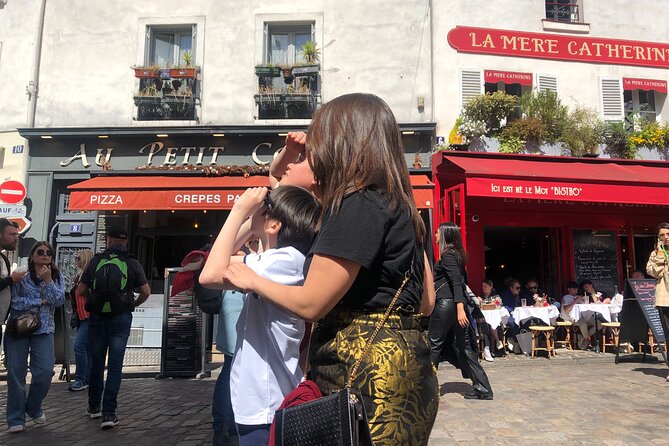
The route includes the Montmartre vineyards, which is a clever choice for a treasure hunt. It gives you a change of pace from the busiest postcard sights and encourages a more careful kind of attention.
This is also where you may see clues that rely more on logic or on noticing details you might miss while walking fast. If your group tends to skim, the vineyards portion can be the moment that pulls you back into careful observation.
If you want a smoother experience, treat this as a breathing zone. Think of it as the part of the day where you stop trying to beat the clock and just solve the clues one at a time.
Moulin Rouge finale: the investigation resolves here
Your treasure hunt ends at the Moulin Rouge, which is where you discover the resolution of the investigation and the hidden stories connected to the neighborhood. That is an effective finale because it gives you emotional closure, not just a location stamp.
By the time you reach this part, you should feel like you have a better handle on how Montmartre’s identity connects across streets, landmarks, and artistic life. The clues are designed so the ending feels earned, because you have been collecting hints all along.
If you are traveling as a couple or a small group, this is also a great moment for shared satisfaction. You get to compare what each person thought the clue meant, then confirm the final answers together.
Families, couples, and small groups: who it fits best
This activity is designed for multiple travel styles, especially:
- Families with kids age 8 and up
- Couples looking for something active but not exhausting
- Small groups who enjoy working as a team
The puzzle difficulty is the selling point here. One family example included kids ages 10 and 5, and another included kids ages 10 and 13, with adults and children able to participate without anyone getting shut out. That suggests the clues are set up to keep kids contributing while adults still feel challenged.
It is still moderate walking on cobblestones, so it is not a sit-everywhere experience. If you have mobility concerns, plan for slower movement and extra time for climbs.
Also, service animals are allowed, and the start is near public transportation, both of which make it easier to plan a smooth day.
Timing and weather: the coffee-break rule is real
The game lasts about 3 hours, and it automatically ends after 3 hours 30 minutes, wherever you are. That matters more than people think, because Montmartre days often include breaks for photos, snacks, and coffee.
One note I especially appreciate from the experience guidance: coffee breaks are completely fine, but they reduce total game time. So if you want a café stop, I’d treat it as a scheduled event, not an accidental detour.
Weather is another factor. The experience is self-guided and can be played at your own pace, but the provider notes it requires good weather. In practical terms, if you are expecting heavy rain or extreme conditions, plan for the possibility of date changes or a refund option, depending on what happens.
Group size and the no-app format: calm over chaos
With a maximum of 20 travelers, this hunt stays on the smaller side. That tends to help you avoid bottlenecks at popular stops, even though Montmartre is busy in general.
The no-app approach is also underrated. If your group includes kids, or if you just do not want your phone to become another chore, this format works well. You are relying on paper, a map, and your own eyes.
When you do need help, assistance is available throughout the game. So if you hit a wall, you can get a nudge without ruining the mood.
Who provides the hints, and why it matters
The human touch shows up in the fact that help is available if a clue seems tricky. One of the responses tied to the experience names Marion, and it’s clear the operator is friendly and responsive.
That matters because puzzle hunts can go either way. If you feel abandoned when you get stuck, it stops being fun. Here, the design includes support, so you can keep moving and still feel smart when you solve the next clue.
Should you book the Montmartre Treasure Hunt?
Book it if you want Montmartre in a more active, brain-on-your-feet way. It’s a strong choice when you care about learning through place-based clues, and when you like having control over pacing. The puzzle level seems to work well for mixed-age groups too, which is not always true with Paris activities.
Skip it or reconsider if your schedule cannot handle a strict end time. The built-in limit and the coffee-break rule mean you should plan breaks instead of letting them expand. Also, if your day needs mostly low-walking sightseeing, this hunt may feel too much on cobblestones and hills.
If you’re on the fence, ask yourself one simple question: do you want Montmartre as a story you solve, or Montmartre as a checklist you cover? If you want the first option, this one is a very solid way to spend an afternoon.
FAQ
How long does the Montmartre Treasure Hunt take?
It lasts about 3 hours and automatically ends after 3 hours 30 minutes, wherever you are.
Is it self-guided, or do I need a guide with me?
It is self-guided. There is no tour guide walking with you, and no app or downloads are required.
What language is the experience offered in?
The game booklet is offered in English.
Where do I start, and where does it end?
You start at Anvers, 75018 Paris, France and the activity ends back at the meeting point.
Do I need to download an app?
No. It uses a game booklet and materials you get with the experience, with no app or downloads.
What should I bring, and what is included?
Included are the game booklet with riddles, a map, cultural anecdotes, answer sheets, and materials needed for solving the clues. A pen is mentioned as part of the provided materials.
Is it suitable for kids?
It is suitable for children age 8 and up. The route is designed so children can participate in the challenges.
What physical level do I need?
A moderate physical fitness level is recommended, since it involves walking through Montmartre’s streets and landmarks.
What happens if the weather is bad?
The experience requires good weather. If it is canceled due to poor weather, you will be offered a different date or a full refund.
More Tour Reviews in Paris
Not for you? Here's more nearby things to do in Paris we have reviewed












Montmartre Tours, side by side.
 ★ 5.0Montmartre Hidden Gems and Scenic Highlights Walking TourTickets from $382,684 guest reviews
 ★ 5.0Montmartre Hill French Gourmet Food and Wine Tasting Walking TourTickets from $1452,588 guest reviews
 ★ 4.8Montmartre Cheese, Wine & Pastry Guided Walking TourTickets from $1272,255 guest reviews
 ★ 4.9Montmartre Highlights Walking Tour with a Local GuideTickets from $341,668 guest reviews
 ★ 4.1Sacré-Coeur and Montmartre Tour with Expert GuideTickets from $281,027 guest reviews
 ★ 5.0Private Montmartre Food Tour with Wine, Cheese & PastriesTickets from $3021,027 guest reviews
 ★ 5.0Paris Montmartre Food Tour – A Full French Meal by Do Eat BetterTickets from $95877 guest reviews
 ★ 5.0Hidden Montmartre: Paris’ Secret Streets Walking TourTickets from $44809 guest reviews
This tour also belongs to