
Review · PARIS CITY TOURS
Paris Landmarks & Crepes
Four hours, and Paris clicks into place. This half-day tour strings together the Bastille, the Marais, Notre-Dame, Saint-Germain, and a final walk right by the Eiffel Tower, with a crêpe break that keeps the pace human.
I love the way the guide turns famous addresses into clear, story-shaped stops, with details you can actually remember. I also like that lunch is included, and you get a dedicated crêpes stop that feels like Paris, not just sightseeing.
The tradeoff is what you skip: you do not go inside the Louvre, and you do not climb the Eiffel Tower. If you want museum rooms and summit views, you’ll need a different plan.
Key highlights to look for
- Bastille to Eiffel, planned as a true half-day walk plus quick metro
- Marais icons with architectural stops like Hôtel de Sully and Hôtel de Sens
- Notre-Dame and Fontaine Saint-Michel, explained in plain language
- A full crêpe stop at Place Saint-André-des-Arts with the ticket included
- Outside-only landmark viewing, finishing at the Champs de Mars
A half-day route that actually makes sense in Paris
Paris can overwhelm you in a hurry. Too many museums. Too many lines. Too many decisions. This tour is built for the opposite feeling: you get a tight route that covers big names and real neighborhoods without pretending you can do everything in a day.
What I like about this format is the rhythm. You start with the Revolution story at Bastille, slide into the elegant geometry of the Marais, then move toward the Seine for cathedral-and-bridge moments. After a crêpe break, you shift into Saint-Germain-des-Prés, famous for its cafés and thinkers, before ending with classic Paris postcard views near the Eiffel Tower. It is a smart “first Paris” strategy, especially if you are short on time.
You can also read our reviews of more tours and experiences in Paris.


Price and value: $153.80 for guided walking plus lunch
At $153.80 per person for about 4 hours, the value is less about paid admissions and more about what you get packaged together: a guided route, a meal, and a crêpe stop. Since the plan explicitly does not include the Louvre interior or an Eiffel Tower ticket, you are not paying for museum or tower entry.
Instead, you are paying for:
- a guided interpretation of major sights you can otherwise rush through
- lunch included, so you are not hunting for food mid-walk
- a mobile ticket and group discounts (helpful if you are traveling with others)
If you are the type who likes to understand what you are seeing, this price can feel fair. If you are only trying to collect icons for photos and you hate walking, you might feel constrained. For many first-time visitors, though, this is a tidy way to get oriented fast.
Starting at Place de la Bastille, with the Revolution in your pocket
You begin near the Opera National de Paris area and meet at Pl. de la Bastille. From the start, the tour gives you context you can use later in your trip.
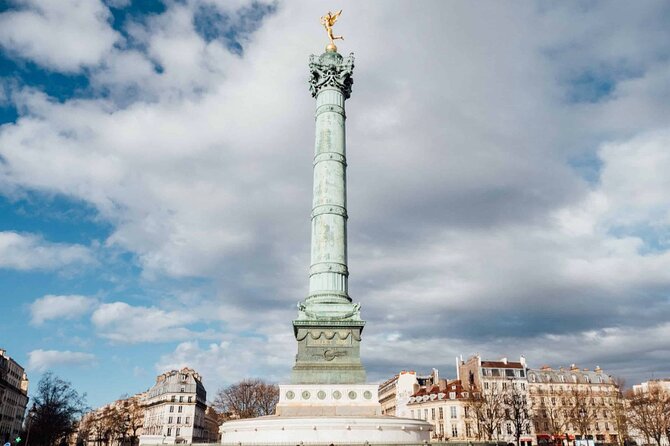
Place de la Bastille matters because the Bastille prison no longer exists. What you see now is the square and surrounding area where it once stood, plus the symbolism of the July Column (Colonne de Juillet). That is a good lesson for sightseeing here: in Paris, the city keeps the memory even when the original structure is gone.
You will also pick up a sense of why Bastille is more than just a historical name. The area connects to places like the Bastille subway station, the Bastille Opera, and even a section of the Canal Saint Martin nearby. The guide’s job is to point out these links so the whole neighborhood feels connected instead of random.
Practical note: this early stop is free admission and short, around 10 minutes. It is a quick start, meant to get your bearings before you settle into longer, slower streets.
Marais stops you can picture later: Place des Vosges and the hôtels particuliers
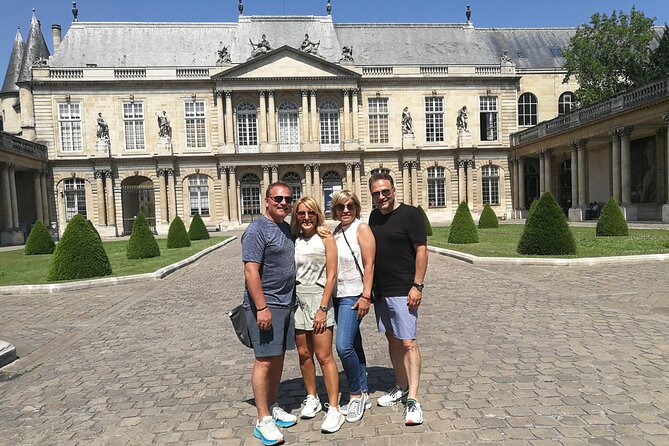
After Bastille, you slide into the Marais, and the tour keeps it classy and architectural.
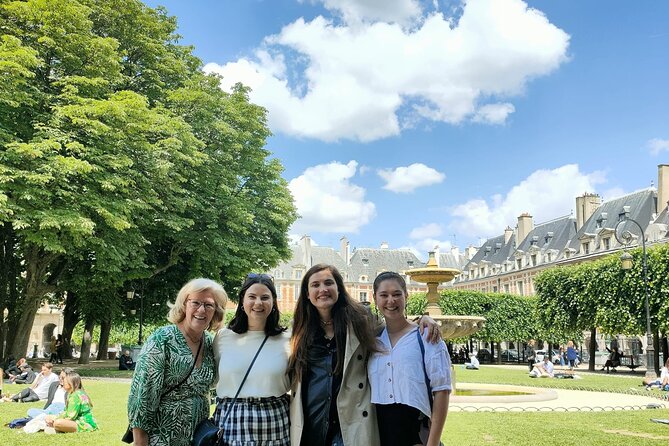
Place des Vosges
You’ll stand at Place des Vosges, the oldest planned square in Paris. The name may be famous, but what makes it special is the idea behind it: it started as the Place Royale and became the kind of address that drew fashionable, expensive residents in the 17th and 18th centuries. This is why Le Marais still feels “ordered” compared with many older streets that grew organically.
Expect a calm, photogenic stop that sets the tone. It is also free, with about 15 minutes here, giving you a real chance to look around rather than just glance.




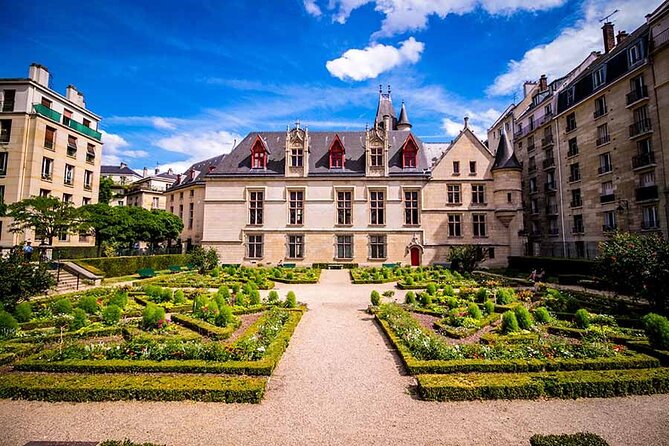
Cour et jardin de l’Hôtel de Sully
Next comes the Hôtel de Sully, a Louis XIII-style private mansion built in the early 17th century. Even though you are not stepping into a museum, you get to see heritage built for elite life, now used by the Centre des Monuments Nationaux.
The context here is useful: Paris is full of hôtels particuliers, but without an explanation, they can look like just “nice old buildings.” With a guide, you learn what function they served and why the architecture belongs to its moment.
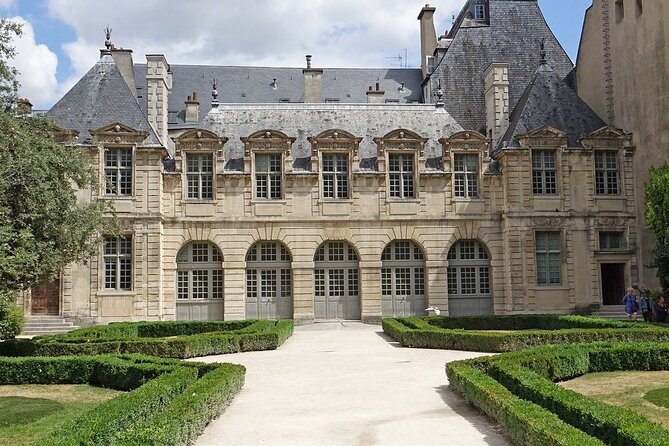
Hôtel de Sens
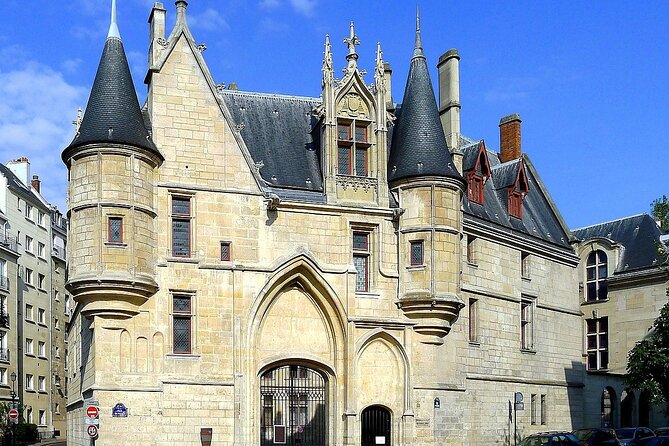
Then you stop at the Hôtel de Sens, a 16th-century hôtel particulier that now houses the Forney art library. Again, it is outside viewing, but the guide can help you spot the layers of time in the building type itself. It is a good stop for travelers who enjoy architecture but do not want another ticket purchase.
All of these Marais moments are short and free, and that is the point. This tour uses quick bursts to stack meaning.
Notre-Dame and Saint-Michel: seeing Gothic and Second Empire with clarity
From the Marais, the tour moves toward the Île de la Cité area and the river-world around it.
Cathedrale Notre-Dame de Paris
Notre-Dame is treated as a key anchor stop, with about 15 minutes. You get an outside look at one of the finest examples of French Gothic architecture. The guide focuses on the building features that make Gothic feel different: rib vaults, flying buttresses, and those enormous rose windows.
It is also worth paying attention to the less obvious details the guide may mention, like the cathedral’s pipe organs and immense bells. Notre-Dame is not just a photo background. It is a functioning church with sound, structure, and craftsmanship.
If you want interior access, this tour is not that. But if you want to understand what you see from the street, it is a solid plan.
Fontaine Saint-Michel
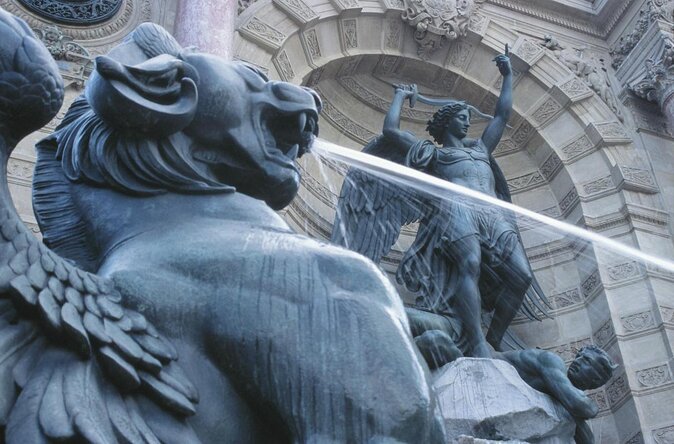
Next is the Fontaine Saint-Michel in Place Saint-Michel, built in 1858 to 1860 during the French Second Empire. The architect Gabriel Davioud is tied to this monument, and that matters because it helps you place the fountain in Paris’s timeline, not just as a landmark.
This stop is short, around 10 minutes, and admission is free. Think of it as a color break between the heavier church architecture and the next phase of the walk.
Crêpes at Place Saint-André-des-Arts, then the café culture of Saint-Germain
Here is where the tour starts feeling like a real day in Paris, not just a sight checklist.
Place Saint-André-des-Arts crêperie stop
At Place Saint-André-des-Arts, you take about 30 minutes for crêpes at a traditional French crêperie, and the crêpe stop is included. This is one of the most praised parts of the experience, and for good reason: it gives you a taste break with time to breathe.
I like that this is not a rushed snack. Thirty minutes lets you order, eat, and actually enjoy the flavors while the guide is still keeping you grounded in what to notice next.
Saint-Germain-des-Prés quarter
After you eat, you move into Saint-Germain-des-Prés. This is where the tour shifts from architecture into atmosphere.
The guide frames the area around the former abbey of Saint-Germain-des-Prés, and you learn the neighborhood’s official borders in broad terms, with the Seine acting as one edge. You also hear the name Germanopratins, which is a fun little detail that makes residents feel like part of the story.
Then there are the cafés. Names like Les Deux Magots, Café de Flore, and Le Procope come up, along with Brasserie Lipp. The tour also connects the area to existentialism in the 1940s and 1950s, linking it to Jean-Paul Sartre and Simone de Beauvoir. Even if you are not a philosophy nerd, it helps to know why the cafés got famous.
This stop is about 15 minutes and free. It is long enough to get the feel of the neighborhood and short enough to keep the pace moving.
Saint-Germain-des-Prés church and Pont des Arts: the Seine’s storytelling bridge-to-bridge
Two more “read Paris” stops bring you back to the river and the oldest layers.
Église Saint-Germain-des-Prés
You visit the church of Saint-Germain-des-Prés, a Roman Catholic parish church tied to an even older Benedictine abbey founded in the 6th century. The guide explanation typically includes how the abbey church was destroyed by Vikings, rebuilt, and then renamed for Saint Germain, an early bishop of the city.
That Viking detail is the kind of information that makes the place feel real. It reminds you that Paris is not frozen. It changes, and the present buildings are survivors.
This stop is free, around 15 minutes, and it fits well after the cafés. You get modern Paris vibes, then you step back in time.
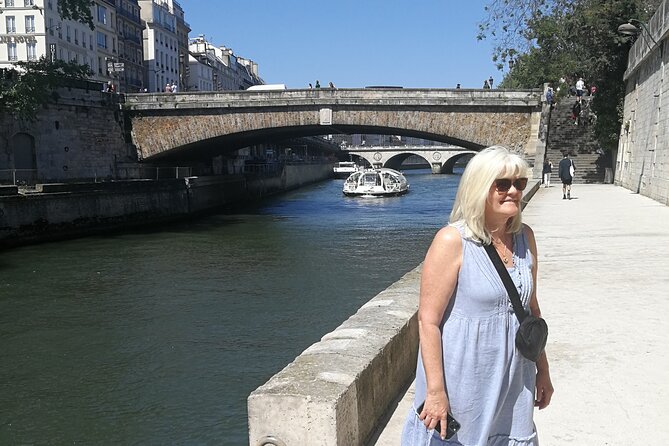
Pont des Arts
Finally in this section, you cross the Seine view zone via Pont des Arts, a pedestrian bridge. You get a sense of how Paris connects its institutions and landmarks: it links the Institut de France and the central square associated with the Louvre.
Even though you are not going onto a guided interior tour of museums here, this bridge stop is valuable because it shows you how the city is laid out. You start to see where you’ve been and where the next major stop will land.
Louvre outside, Tuileries stroll, and the Arc du Carrousel
You do not go inside the Louvre, but you still get something worth your time: outside scale, outside symbolism, and the chance to connect the palace to the garden and monuments next to it.
Louvre Museum, from the outside
The Louvre is a national art museum housed in the Louvre Palace. Since this tour stays outside, you do not need museum tickets or the pressure of crowds indoors. The guide can still point out why the Louvre matters: iconic works like the Mona Lisa and Venus de Milo are associated with it, and the palace itself has roots going back to the late 12th to 13th century.
You also learn that medieval fortress remnants are visible in the museum basements. That detail is useful because it explains why the building feels like more than one thing at once: royal residence, defensive structure, and now museum.
This stop is about 15 minutes, free admission, and it sets you up for the gardens.
Jardin des Tuileries
Between the Louvre and Place de la Concorde is the Tuileries Garden. The guide connects it to Catherine de’ Medici, who created the garden for the Tuileries Palace in 1564, and to its evolution into a public space after the French Revolution.
I like this stop because it gives you a walking pause in a green setting, even though it is still central Paris. It is about 15 minutes, free, and it helps reset your brain before the next big square.
Arc de Triomphe du Carrousel
You also stop at the Arc de Triomphe du Carrousel, a neoclassical triumphal arch built between 1806 and 1808 to commemorate Napoleon’s military victories. It is an interesting counterpoint to the more famous Arc de Triomphe de l’Étoile, and the guide can help you understand how these arches function as political storytelling in stone.
This is another free, about 15 minutes stop that feels compact but meaningful.
Place de la Concorde, Champ de Mars, and the Eiffel Tower finish
As you shift east, you get one of the tour’s biggest payoffs: the view and arrival feeling.
Place de la Concorde
Place de la Concorde is Paris’s largest square, about 7.6 hectares. It is also a place with a heavy past, known for public executions during the French Revolution, including Louis XVI and Marie Antoinette. During that period, it was temporarily renamed Place de la Révolution.
Even with a short stop of around 15 minutes, this is a moment that changes the tone. It is a reminder that Paris’s beauty and Paris’s violence have lived close together for centuries.
Champ de Mars
Then the tour reaches Champ de Mars, the large green space between the Eiffel Tower and École Militaire. The guide often mentions the Roman connection to the name Mars Field and that the lawns were once used for military drilling and marching. It is a good way to explain why the area feels open even in a dense city.
This stop is about 15 minutes and free.
Eiffel Tower, right next to it
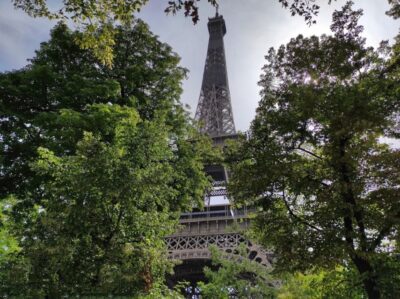
You end by the Eiffel Tower on the Champs de Mars, after a quick metro ride. The tour does not include going up the tower, but it still gets you close enough to appreciate the scale, and the guide can talk through what the tower represents.
You hear that it was constructed from 1887 to 1889 as the centerpiece of the 1889 World’s Fair, named for Gustave Eiffel. You also learn it was initially criticized by some French artists and intellectuals, then later became a global icon. UNESCO World Heritage status in 1991 is part of the storyline too.
This finale works because it lets you see the landmark without the added time cost of tickets and lines. If your energy is saved for the end, you actually enjoy it.
How much walking is involved, and who this tour suits best
This is a 4-hour half-day that mixes walking between neighborhoods with multiple outdoor stops. It is not a sit-and-listen tour.
One comment I’d take seriously is that people mention steps and pacing. Churches, bridges, and city sidewalks add up. The tour is designed for “most travelers,” but if you have mobility limits, you should consider whether you want a lot of on-foot time and occasional stair moments.
The upside is big: because it is a private tour, it is only your group. That means fewer bottlenecks and less waiting on other groups, compared with typical big bus-and-boardwalk formats.
Best matches for this tour:
- first-time visitors who want a guided orientation across key areas
- travelers who love food breaks and hate museum logistics
- people who want Paris stories without buying lots of tickets
If you already have your Louvre and Eiffel summit plans locked, you can still book this as a second-day “best of the streets” companion.
Small tips so the 4 hours feel easy
You can make this tour feel smoother with a few practical choices:
- Wear comfortable shoes. You will be outside for long stretches and moving between neighborhoods.
- Eat smart before you start. Lunch is included on the tour, and you also have the crêpe stop, so you do not want a heavy breakfast that makes you slow.
- Bring a small water bottle. The tour is not long, but summer heat can turn walking into a longer day than you planned.
- Plan for photos at the right moments. Places like the Marais squares and the Seine bridge are quick. If you want photos, pick your spots and move on.
Also, since it is in English, it is a good option if you want detailed explanations without relying on your French vocabulary.
Should you book Paris Landmarks and Crepes?
I think you should book this tour if you want a guided half-day that hits major Paris reference points without pushing you into museums or tower tickets. The included lunch and the included crêpe stop make it feel like more than a “look at buildings” walk. The best part is how the route connects Revolution, architecture, café culture, and the Seine into one continuous story you can carry with you.
Skip it, or pair it with other plans, if you are the type who needs inside access. This tour is intentionally outside-only for the Louvre and does not take you up the Eiffel Tower. In that case, you may feel like you paid for sightseeing that leaves out the experiences you most care about.
FAQ
How long is the Paris Landmarks & Crepes tour?
It lasts about 4 hours.
Is the tour offered in English?
Yes, it is offered in English.
What is included in the experience?
Lunch is included, and the crêpe stop at Place Saint Andre des Arts is included.
Does the tour include entry into the Louvre Museum or going up the Eiffel Tower?
No. You only see the Louvre outside, and you go right next to the Eiffel Tower without going up it.
Where does the tour start and end?
It starts near Opera National de Paris, at Pl. de la Bastille, 75012 Paris, and ends in front of the Eiffel Tower on the Champs de Mars, at Av. Gustave Eiffel, 75007 Paris.
Is there free cancellation?
Yes, you can cancel for free up to 24 hours in advance for a full refund.
More Tour Reviews in Paris
Not for you? Here's more nearby things to do in Paris we have reviewed








Paris City Tours, side by side.
 ★ 4.6Louvre Museum Timed-Entrance TicketTickets from $2671,977 guest reviews
 ★ 4.6Disneyland® Paris 1-Day TicketTickets from $6149,412 guest reviews
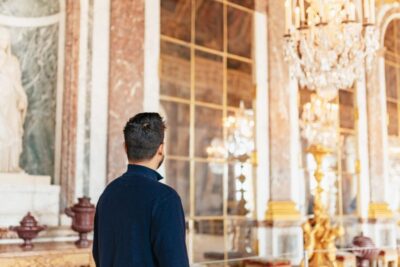 ★ 4.6Versailles Palace and Gardens Full Access TicketTickets from $1741,579 guest reviews
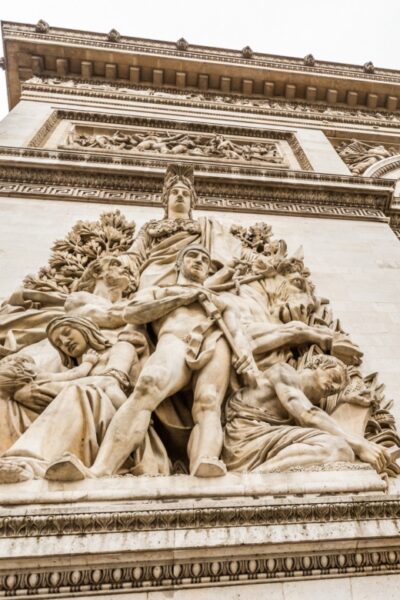 ★ 4.6Arc de Triomphe Rooftop TicketsTickets from $1834,264 guest reviews
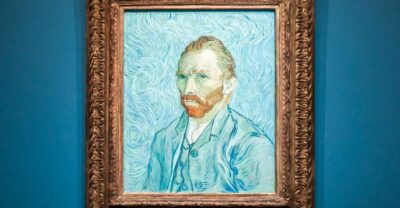 ★ 4.7Orsay Museum Entry TicketTickets from $1525,647 guest reviews
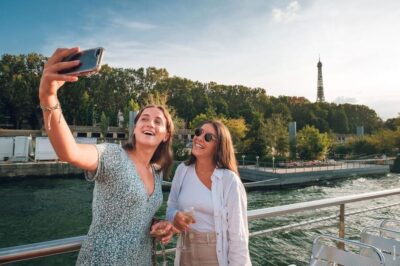 ★ 4.4Evening River Cruise with MusicTickets from $2722,721 guest reviews
 ★ 4.4Eiffel Tower Entry Ticket with Optional Summit AccessTickets from $2920,035 guest reviews
 ★ 4.3Eiffel Tower Summit or Second Floor AccessTickets from $5917,248 guest reviews