
Review · PARIS CITY TOURS
Ohlala Croissants in Paris!
Croissants, taught in a real Paris apartment. In Paris’s 12th arrondissement near Nation station, you learn the hands-on craft of laminated dough, and the class is capped at six participants for real back-and-forth with your instructor. It is a practical way to understand why French breakfast pastries have such a specific texture, not just a cute souvenir bite.
One note before you go: the meeting spot is in a home, and the entrance is down an alley. It is totally manageable, but if you like to arrive exactly on the dot, give yourself an extra few minutes to find it.
Key points worth knowing before you go
- Private apartment setting in Paris 12 near Nation station, not a big studio classroom
- Small group of up to six means you get personal corrections while you work
- You learn the laminated dough method used for French croissants
- Coffee and tea included, with no alcohol served
- Beginner-friendly pace, with instructors named Nuby, Carlos, and Maria in past classes
- Photos and videos are welcome so you can document your technique
Inside Ohlala Croissants, where you learn real technique
This class is one of those Paris experiences that feels like local life, not a production. Instead of walking past pastry windows, you step into a working kitchen in a private apartment in the 12th arrondissement, close to Nation. You will work directly with the dough process that separates an average croissant from one with layers you can see and taste.
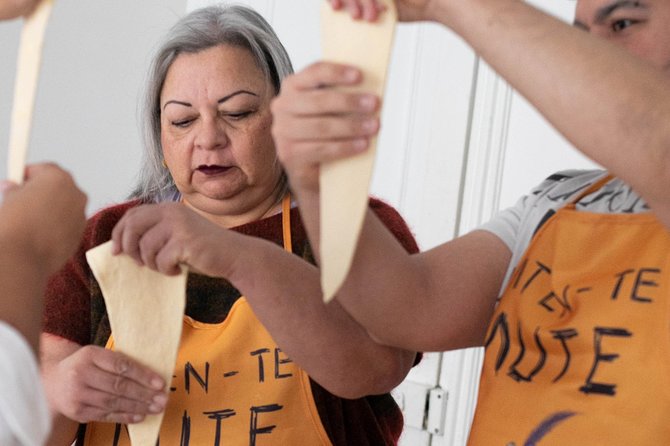
What I like most is that this is not just “watch and snack.” You get to handle the dough and learn the method behind it. And with a maximum of six people, you are not stuck waiting your turn for help when something is going too warm or too stiff.
The vibe is also friendly for beginners. In past sessions, instructors like Nuby, and hosts such as Carlos and Maria, have guided absolute newcomers through each step. You should still expect hands-on work, though. This is flour, rolling pins, and butter, so your job is to stay focused and follow the rhythm.
You can also read our reviews of more tours and experiences in Paris.



Viennoiseries vs French pastry: the quick context you actually use
Before you even start rolling, you get a lesson on how croissants fit into the French pastry world. The class explains the difference between viennoiseries and French pastry, plus the history behind that overlap. You do not need to memorize dates. The goal is to help you understand why croissants are treated differently from, say, classic cakes and tarts.
Here’s why that matters for you at home later: croissants are yeast-leavened and built through lamination. That means dough handling and temperature control are part of the recipe, not just optional. Once you understand that, you stop treating croissants like a simple flour-and-water project.
By the time you start the hands-on part, you are not just copying steps. You are learning why each step exists, which is what makes the finished result feel consistent.
The 1 hour 30 format: what happens from start to finish
The class runs about 1 hour 30 minutes, and it follows a clear workflow. You meet at 22 Pass. du Génie, 75012 Paris, France, and the session ends back at the same point.
Here is the shape of what you can expect during that time:
1) Arrival, tools, and aprons
You start by going to the apartment space where everything is set up for the class. You will get an apron (for borrowing), plus the ingredients and related tools needed for the lesson. You can bring curiosity, but you do not need to bring anything else.
Because you are in a private apartment, the setup feels intentional but compact. That can actually help you as a learner, since you are not competing with a long line of people at the same station.
2) Croissant basics and the laminated dough lesson
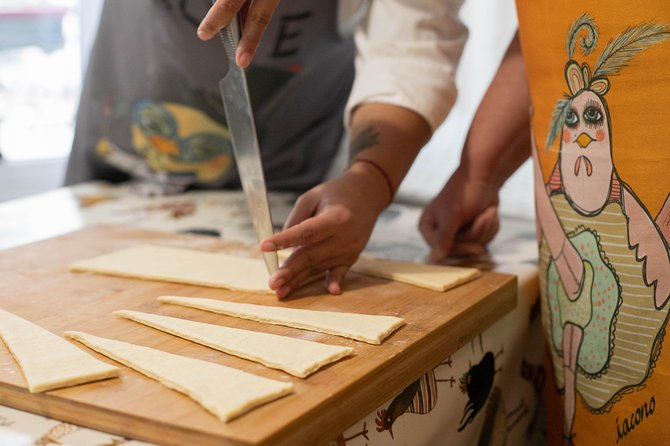
Next, you walk through what you will make: croissants based on pâte feuilletée levée, the laminated dough bakers use for those famous layers. The instructor explains what you are aiming for, then guides you through the process step-by-step.
This is where having a small group matters. When you are rolling dough or working the butter, small differences matter. You are more likely to get a correction before you bake in a problem.






3) Mixing and working the dough
Then you move into making the dough. The exact sequence can vary based on timing, but the focus is consistent: you build a dough structure that can hold up through lamination and baking.
For beginners, this is the moment where the class earns its value. Instead of telling you to roll something thinner, the instructor helps you learn what thickness and texture should feel like. That is the kind of knowledge that transfers to your own kitchen.
4) Lamination practice: the layers you can see
Lamination is the heart of croissant making. You learn how to work with the butter layers inside the dough so you end up with pastry that is flaky, not just dense.
This is also where you will likely notice temperature and timing. If the dough gets too warm, butter can leak. If it stays too stiff, the dough can tear. Your instructor helps you adjust as you go. That hands-on coaching is the reason these small classes are worth it.
5) Shaping, baking, and tasting
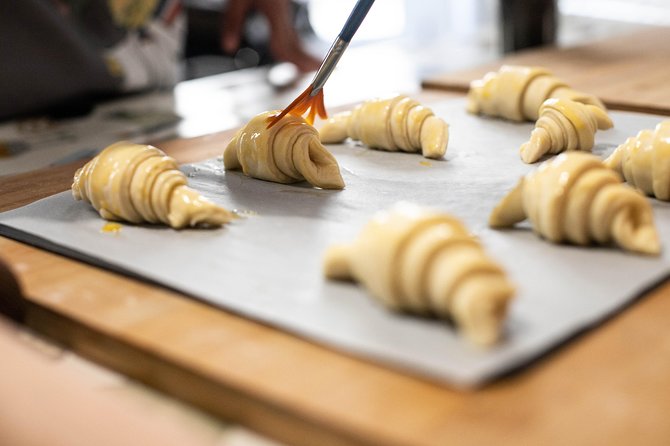
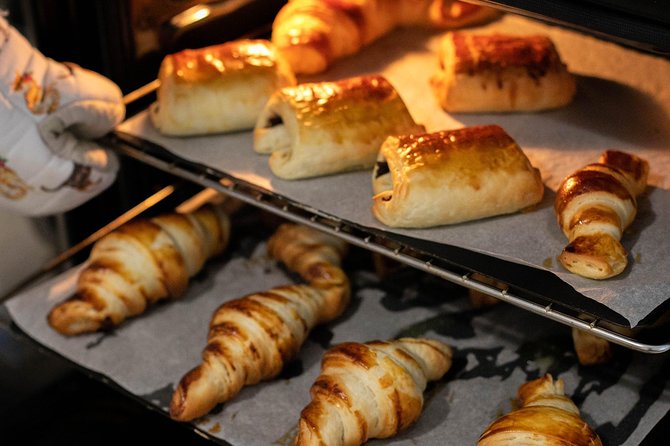
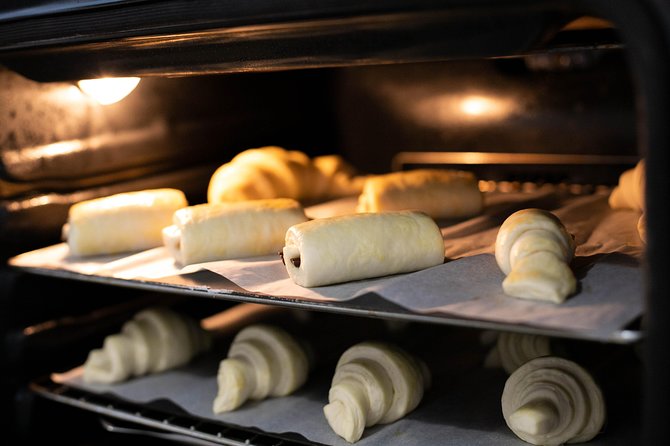
Finally, you shape the croissants and bake them so you can enjoy them during the class. Dessert is listed as croissant, which usually means you get to taste what you made while the lesson wraps up.
They also serve coffee and/or tea. Since alcohol is not included, the experience stays focused on pastry and skill, not a dinner party.
And yes, you can take as many pictures or videos as you want, which is great if you plan to repeat the process at home and want a reminder of how it looked at each stage.
The apartment setting: cozy, real, and a little Parisian
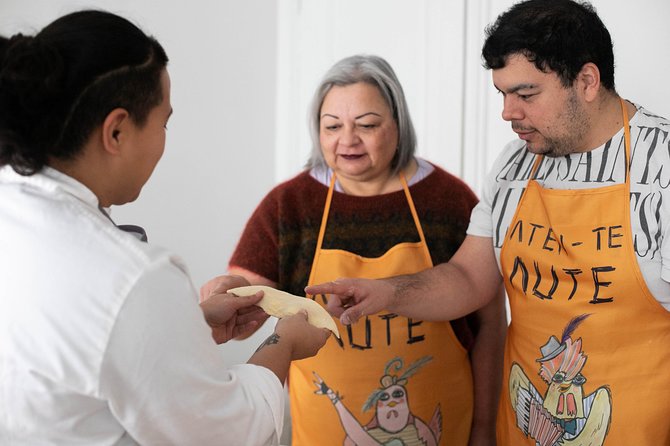
This class happens in a home, and that shapes everything about the experience. It is intimate. There is no huge classroom feel. You get closer to the process, and you feel like you are learning from someone who actually bakes.
The one drawback is easy to anticipate: finding the entrance. One review described the location as a house down an alley, and I agree that you should build in a few extra minutes. Once you arrive, though, it becomes part of the charm. You are not in a tourist bubble.
Also, because it is in a residential area, do not expect the kind of spacious comfort you might get in a professional bakery school. Bring patience and good energy. The upside is that the teacher can pay attention to each person.
Coffee, small talk, and practical tips you can use tomorrow
Coffee and tea are served, and you should expect the class to include short moments of conversation. This is not a silent workshop. It is a teaching session, which means questions are encouraged.
The instruction style is built around one-on-one attention. With up to six participants, the instructor can watch your dough, correct your handling, and explain what went wrong if something looks off. In past classes, teachers like Nuby have been singled out for how fantastic they are, especially in more private situations.
You will leave with more than a finished croissant. You will have an idea of what to watch for when you try again at home:
- how the dough behaves as it warms
- how lamination should look before shaping
- what the final texture should feel like when it is ready
That is the kind of guidance that makes you more confident next time. Not every pastry class gives that.
What this class is really good for (and what it is not)
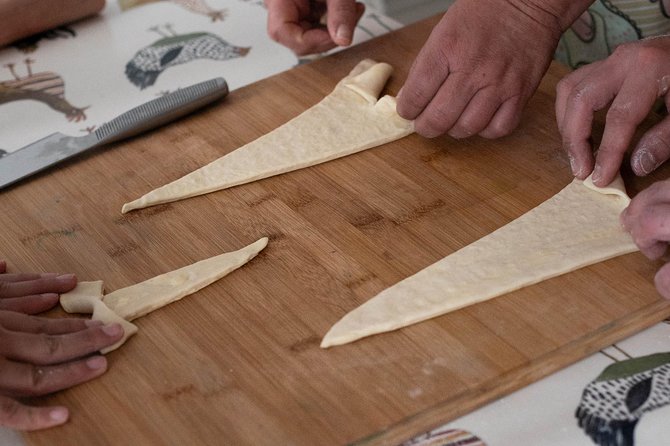
This is a great choice if you want a skill-focused Paris experience. You do not have to love cooking already. You just need enough curiosity to follow a structured process and pay attention to how the dough changes.
You will also get extra value if you like learning by doing. The experience is built around making croissants from scratch, not simply reading about them.
It may be less ideal if you want something passive or low-effort. You are rolling dough and working with butter. Even if you are a slow learner, the small group setup helps. But you should still plan for active participation.
And if you cannot handle mess, be aware that pastry making tends to be flour-heavy. This is normal and part of the deal, especially in a home kitchen.
Getting there: near transit, but plan for the alley entrance
The class is near public transportation, and it is in the area near Nation station, which is a big plus. You should have an easy time reaching it by metro.
Still, plan for the last steps. If you are arriving while distracted, the alley entrance could throw you off. Give yourself time to double-check the address: 22 Pass. du Génie, 75012 Paris.
Because the class ends back at the meeting point, you are not juggling complicated relocation during the experience.
Value for your money: small group coaching beats generic tasting
Since I do not want to pretend I know your budget without seeing it, here is how I think about value based on what you actually get.
You are paying for three things:
1) Hands-on teaching for making croissants from scratch
2) Included ingredients and tools, plus an apron
3) A small group so you get corrections while you work
Compare that to the price of a fancy pastry crawl. You might spend similar money and walk away with several snacks, but you do not gain the technique. Here, the goal is that you can reproduce the process later.
Also, coffee and/or tea are included, which keeps the class from turning into a pay-extra add-on situation. Alcohol is not included, so you are not spending time deciding what to drink.
If you want a true pastry skill, this class makes sense.
Should you book Ohlala Croissants in Paris?
I would book it if you want an active Paris food experience that teaches you something real. The small group size, the private apartment setting, and the focus on laminated dough are the big reasons. You will leave with a croissant you made and the know-how to keep trying at home.
You might skip it if you dislike hands-on cooking or if you need very clear, spacious step-by-step logistics. The alley entrance and the apartment setting mean you should be flexible for a residential, compact setup.
If you are a beginner, this is still a good bet, especially given how instructors like Nuby, and hosts like Carlos and Maria, have guided people through the process from scratch.
In short: if your idea of a great Paris day includes flour on your hands and a lesson you can repeat, this croissant class is a solid choice.
FAQ
Where does the croissant class meet in Paris?
The class starts at 22 Pass. du Génie, 75012 Paris, France, and it ends back at the same meeting point.
How long is the experience?
It lasts about 1 hour 30 minutes.
What group size should I expect?
The class is capped at a maximum of 6 travelers.
Is the class offered in English?
Yes, the experience is offered in English.
What is included in the class?
You get coffee and/or tea, plus ingredients, tools, and an apron borrowed during the experience. Baking is part of the class, and you can take photos or videos.
Are alcoholic beverages included?
No, alcoholic beverages are not included.
Where does the class take place?
It takes place in a private Parisian apartment in the district 12 near Nation station.
Is the location near public transportation?
Yes, it is near public transportation.
What is the cancellation policy?
This experience is non-refundable and cannot be changed for any reason. If it is canceled because a minimum number of travelers is not met, you will be offered a different date or a full refund.
More Tour Reviews in Paris
Not for you? Here's more nearby things to do in Paris we have reviewed











Paris City Tours, side by side.
 ★ 4.6Louvre Museum Timed-Entrance TicketTickets from $2671,977 guest reviews
 ★ 4.6Disneyland® Paris 1-Day TicketTickets from $6149,412 guest reviews
 ★ 4.6Versailles Palace and Gardens Full Access TicketTickets from $1741,579 guest reviews
 ★ 4.6Arc de Triomphe Rooftop TicketsTickets from $1834,264 guest reviews
 ★ 4.7Orsay Museum Entry TicketTickets from $1525,647 guest reviews
 ★ 4.4Evening River Cruise with MusicTickets from $2722,721 guest reviews
 ★ 4.4Eiffel Tower Entry Ticket with Optional Summit AccessTickets from $2920,035 guest reviews
 ★ 4.3Eiffel Tower Summit or Second Floor AccessTickets from $5917,248 guest reviews