
Review · PARIS CITY TOURS
Occupation and Liberation of Paris
One walk can make World War II feel close. This 2 hour 15 minute Paris tour strings together major locations tied to daily life, art, money, and resistance during the Occupation, then carries you to Liberation traces near Place de la Concorde. I love the small group pace, and I also like how the guide, often historian Thierry Heil, tells the story on location with clear facts and human scale anecdotes. The one thing to consider is that it runs in French, so if you want English you need to request an English date or tour.
You’ll get value without museum ticket friction. Many stops are free to view, and the route is built around meaningful streets and buildings you can recognize on your own afterward. The possible drawback is that the subject matter is heavy, with topics like collaboration and spoliation, so you should be ready for that tone.
Key things I’d plan for before you go
- A 12 person max group means more questions and less rushing
- French tour with the option to request English through the provider
- Mobile ticket plus a straightforward end point at Place de la Concorde
- Stops that connect daily life to major decisions, not just famous monuments
- A guided focus on ordinary choices, from denunciation to resistance
How Paris stayed recognizable during the darkest years
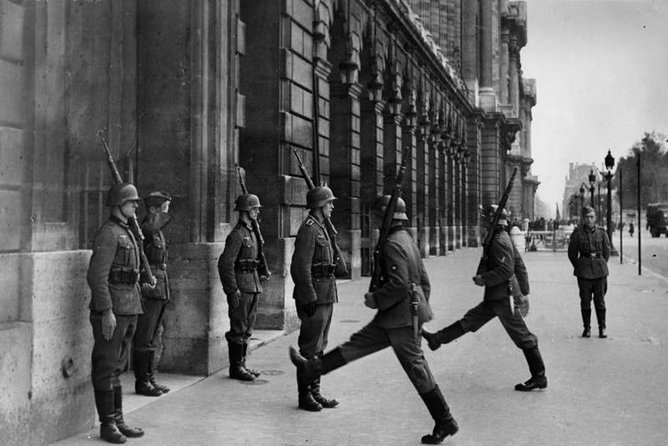
Paris does not scream war from the sidewalk. That is the trick of this tour, in the best way. You move through grand spaces and known landmarks, then the guide reframes what you are seeing by adding the wartime layer: requisitions, propaganda, forced transactions, and the everyday coping mechanisms people used to keep going.
I like tours that teach you how to look. Here, you start training your eye for details, like which buildings became command spaces, where entertainment shifted under pressure, and how the city’s social life kept operating even as moral rules collapsed.
This also explains why the walk works better than a single museum visit. Museums explain objects and documents. A street walk explains how those documents and objects affected people who lived right there.
You can also read our reviews of more tours and experiences in Paris.



From Bouillon Chartier to Folies Bergere, daily life under Occupation pressure
Your first stretch focuses on the city’s “still moving” face during the Occupation. Stop one is Bouillon Chartier Grands Boulevards, a place tied to dramatic anecdotes and day to day life. Even without special effects, the story shows how eating, working, and social habits continued, often under rules nobody asked for.
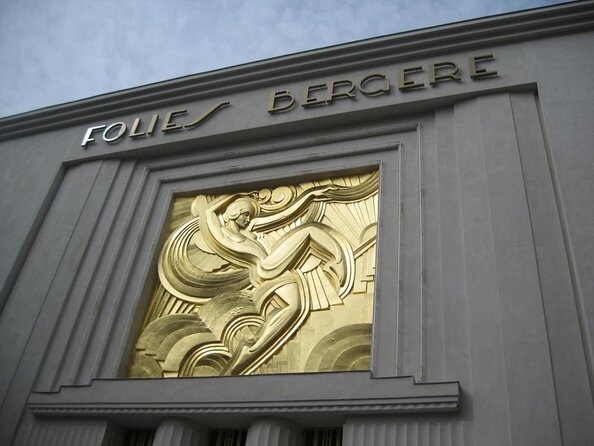
Then you head to Folies Bergere. This stop is about the intense artistic life under the Occupation, including stars, music halls, and cinemas. What I find useful is the contrast: these were cultural spaces people wanted to escape into, yet wartime control also shaped what could be shown and who benefited.
Two practical points for you here. First, this is an early chance to ask questions, because the group is fresh and the guide is setting the tone. Second, take quick photos, but also listen for the “why this matters” lines, not just the site name. The name is the hook, the context is the meal.
Passage Verdeau: the city’s hidden corners and requisition stories
At Passage Verdeau, you get the look and feel of the passages, those covered shopping corridors that keep their atmosphere. The wartime angle is what makes it click. The route points out how the decorations and passage life can still feel similar, even while the story underneath is complicated.
On the opposite side of the passage, the building housed a brothel requisitioned by the German army. That is the kind of detail that you do not pick up from guidebooks alone, and it is exactly why this tour uses multiple small stops. It turns “Paris is pretty” into “Paris was used,” and that shift changes how you understand what you see.
A consideration: you may feel uncomfortable, and that is normal here. The tour does not sanitize the facts, and you should treat it as a historical walk, not a casual sightseeing stroll.
Hotel Drouot and the market for looted art
Hotel Drouot brings the Occupation story into the world of auctions and objects. The wartime economy did not just happen in politics and uniforms. It happened in sales rooms, and it happened with people exploiting access to property.
This stop is a turning point for many visitors because it introduces the spoliation of Jewish property and the story of a German art dealer working for the Reich. Even if you already know the broad facts of Nazi theft, the value here is seeing how the process could look ordinary on the surface: listings, buyers, transactions, and the language of legitimacy.
If you care about how systems work, you will likely appreciate this segment. It explains how cultural loss can be engineered through paperwork and market pressure, not only through violence.
Mairie du 9e: Resistance alongside denunciation
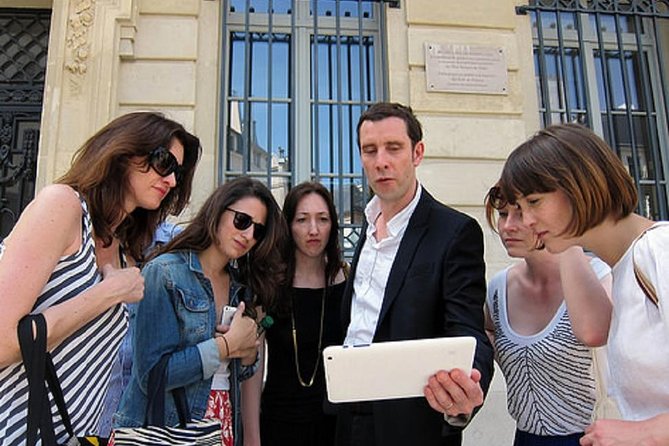
Next, you stand at the Mairie du 9 arrondissement de Paris, where the story moves from commerce and culture to civic life and resistance. The guide uses a town hall connection via an employee of the town hall to approach the Resistance from inside the institutions that were supposed to be neutral.
This is also where denunciation enters the conversation. Wartime France was not just occupiers versus victims. It included choices made by neighbors, co-workers, and officials, including reporting people to the authorities.
This stop is short, but it matters because it restores nuance. Resistance did not live only in heroic speeches. It lived in day to day acts, quiet networks, and risky decisions carried by ordinary people.




The Opéra area: banks, propaganda, and the economics of control
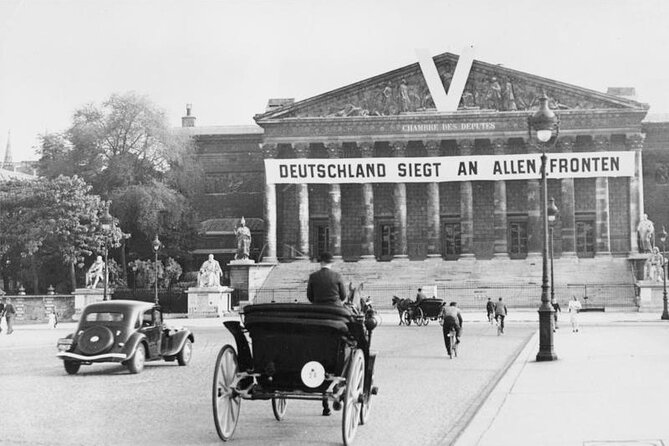
You then move into the heart of financial and symbolic power around Opéra. The route includes BNP Paribas at the Maison Dorée, plus a second banking stop at BRED Banque Populaire in the Espace patrimonial. These stops are designed to answer a hard question: what did banks and finance do during the Occupation, and how did politics and economics lock together?
You also hear about the Paris stock exchange situation and the armistice agreements between France and Germany, and how the economic and political outcome shaped daily constraints. Even if finance is not your hobby, this segment is useful because it explains why so many choices in wartime were shaped by pricing, credit, and legal power.
Near this zone, the tour also points out a cinema requisitioned for German soldiers, plus the presence of an exhibition site linked to propaganda promoting anti-Semitism. This is a heavy pairing, but it makes a key point. Media and entertainment were not separate from politics. They were tools.
Here is the practical advice I give you: let the guide finish the wartime connection before you start snapping photos. The buildings are familiar. The meaning is not.
Place Vendôme and Rue de Castiglione: justice, collaboration, and the Liberation fights
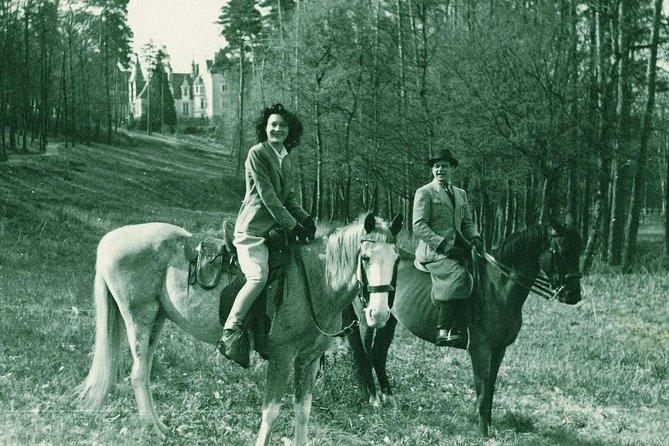
At Place Vendôme, the story widens. You connect the fate of jewelry stores on rue de la Paix with the Occupation’s reach into legal institutions. The Ministry of Justice was occupied by the German army, and the tour explains how an important early Resistance network was established just opposite.
Then the Ritz hotel enters the frame. This stop focuses on why the Ritz became a high place of collaboration and occupation, including celebrities who visited. It is a reminder that the Occupation did not only thrive through force. It also thrived through visibility, money, and social status.
Rue de Castiglione continues the thread with a pattern you can often spot in Paris: large hotels as headquarters for German army units. You finish this stretch by approaching characters tied to these places and the battles of the Liberation that ended nearby.
This part of the walk can feel like political chess on a street map. It is not about memorizing names for the sake of it. It is about recognizing how power physically occupied real addresses.
Place de la Concorde: Liberation traces you can still see
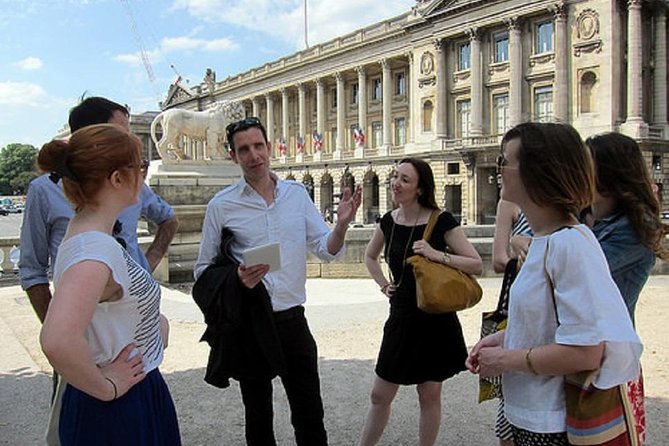
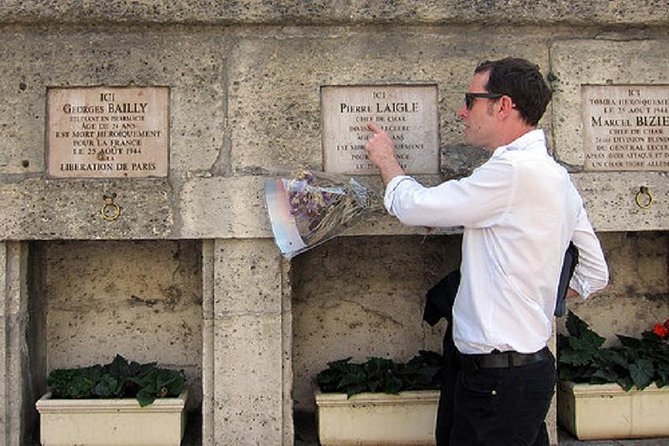
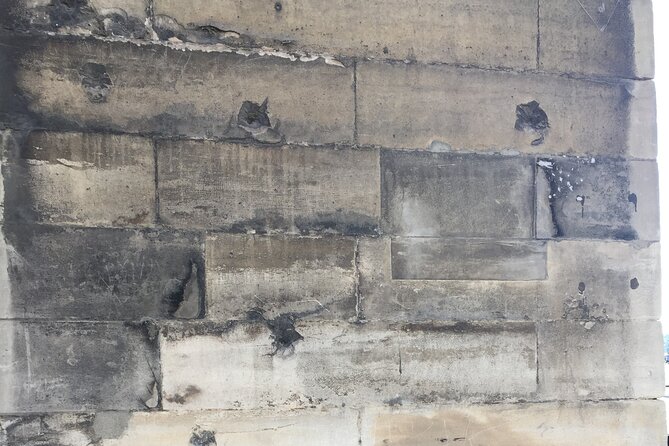
You end at Place de la Concorde, and the tour uses the space as a literal final chapter. You look for traces of the battles of the Liberation, then the guide points out memorial plaques dedicated to soldiers, resistance fighters, and ordinary civilians who took part in those events.
On the terrace, you also get photos used to compare what the place looked like then versus now. That visual anchor helps you “place” the story in your mind, so you do not just memorize a route. You understand it.
If you like travel that changes how you look at cities, this ending is exactly that. You leave with a new habit: read the plaques, read the corners, and ask what power was doing in that specific spot.
Price and what you actually get for it
The price is $25.44 per person for about 2 hours 15 minutes, and it is often booked around 25 days in advance. For a Paris walking tour, that is a straightforward spend, and the big value is in the structure.
Here is why it feels worth it:
- You get a guided explanation across multiple meaningful sites, not just one attraction
- The stops are largely accessible to view without paid admission at each point, so you are not nickel-and-diming your day
- The group stays small, max 12, which supports questions and real conversation
Is it a luxury price? No. Is it a good value for a theme-heavy, historical route that covers daily life, culture, finance, and the Resistance? For many people, yes.
Who this tour suits best
This one fits best if you want history that is specific and location-based. It also suits you if you like asking questions while walking, and you appreciate human scale anecdotes alongside facts.
It may be less ideal if you want a purely upbeat sightseeing day. This is about Occupation and Liberation, so expect serious themes like denunciation, collaboration, and spoliation.
Language matters too. The tour is in French, and while you can request an English tour, you should confirm what is available before you plan your schedule.
Practical setup that helps your day
The tour starts at 2:00 pm at 32 Bd Poissonnière, 75009 Paris, and it ends at Place de la Concorde, 75001 Paris. It is also described as near public transportation, which matters in Paris when you do not want to burn time backtracking across neighborhoods.
You get a mobile ticket, so you should plan to have your phone charged and ready. The experience runs with a maximum of 12 travelers, and service animals are allowed.
Should you book Occupation and Liberation of Paris?
Yes, if your goal is to understand World War II Paris beyond monuments. This route connects arts, entertainment, banking, justice, and Resistance into a single walk, using real addresses where you can still stand and look around.
Skip it or think twice if you need an English tour on short notice, or if heavy topics would make the experience stressful. If you are comfortable with that tone and you want a sharper way to see the city, this is one of the more focused options I would put on your Paris plan.
If you want history that feels grounded in streets, not just facts in a booklet, this is your kind of tour.
FAQ
Is the tour in English or French?
The tour is in French. If you want a tour in English, you need to contact the provider.
How long is this Occupation and Liberation of Paris walking tour?
It lasts about 2 hours 15 minutes.
Where does the tour start and where does it end?
It starts at 32 Bd Poissonnière, 75009 Paris, France and ends at Place de la Concorde, 75001 Paris, France.
What is the group size limit?
The maximum group size is 12 travelers.
Do I need admission tickets for the stops?
The tour description lists stops with admission ticket Free, so you should not need to buy entry fees for each listed stop.
Do I get a ticket on my phone?
Yes, the tour uses a mobile ticket.
Is the tour suitable for most people?
Most travelers can participate, and it allows service animals.
What happens if the weather is bad?
This experience requires good weather. If it is canceled due to poor weather, you will be offered a different date or a full refund.
More Tour Reviews in Paris
Not for you? Here's more nearby things to do in Paris we have reviewed












Paris City Tours, side by side.
 ★ 4.6Louvre Museum Timed-Entrance TicketTickets from $2671,977 guest reviews
 ★ 4.6Disneyland® Paris 1-Day TicketTickets from $6149,412 guest reviews
 ★ 4.6Versailles Palace and Gardens Full Access TicketTickets from $1741,579 guest reviews
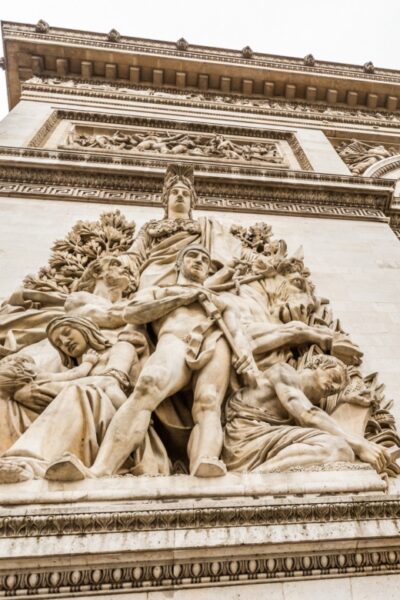 ★ 4.6Arc de Triomphe Rooftop TicketsTickets from $1834,264 guest reviews
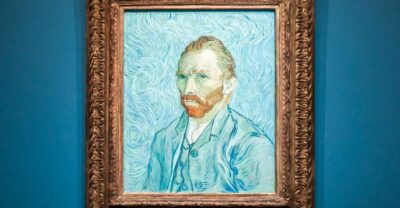 ★ 4.7Orsay Museum Entry TicketTickets from $1525,647 guest reviews
 ★ 4.4Evening River Cruise with MusicTickets from $2722,721 guest reviews
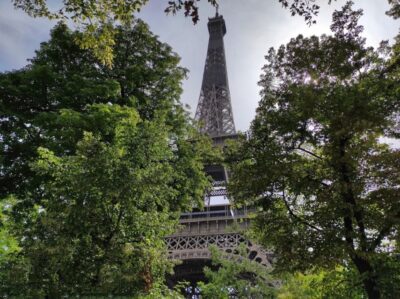 ★ 4.4Eiffel Tower Entry Ticket with Optional Summit AccessTickets from $2920,035 guest reviews
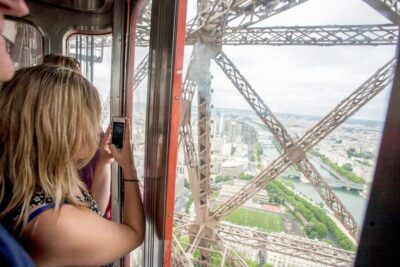 ★ 4.3Eiffel Tower Summit or Second Floor AccessTickets from $5917,248 guest reviews