
Review · MONTMARTRE TOURS
Montmartre Marvels Small Group Guided Stroll in Bohemian Paris
Montmartre is steep, but worth every step. I love the small-group feel that keeps things relaxed and question-friendly, and I also like how the route strings together classic sights with stories that make the neighborhood feel real.
The main catch is physical: cobblestones and stairs come with the territory, and the tour is best if you have a moderate fitness level. Also, a couple of major stops mention admission not included, so you may pay extra if you want to go in.
Key vibe checks before you go
- Up to 15 people means you can actually hear the guide and ask follow-ups
- Morning timing leaves the rest of your day open for museums, neighborhoods, or café time
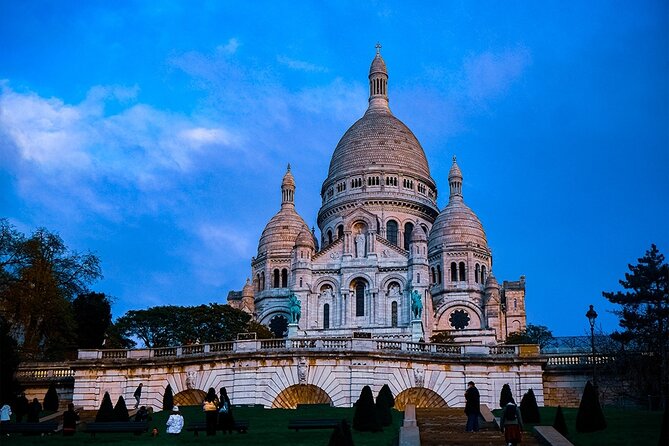
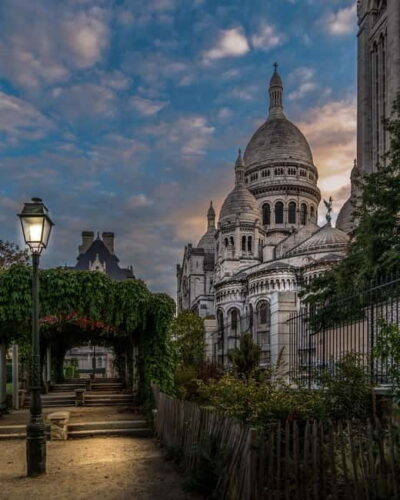
- Sacre-Cœur views are a built-in payoff once you crest the hill
- Art-focused stops connect Place du Tertre, windmills, and Picasso-related sites into one walk
- A mix of famous and local spots, from Amélie filming connections to the historic vineyard
- Some entries not included, so your final spend depends on what you choose to enter
Why This Montmartre Walk Works in 2 to 2.5 Hours
If you only have a morning, Montmartre can feel like a whirlwind. This tour is built for the reality of the neighborhood: lots to see, but not enough time to wander without a plan. In about 2 to 2.5 hours, you get a smart slice of Montmartre and a quick reach into nearby Pigalle, with a guide steering you around the steepest detours.
What I like most is the pacing. Instead of rushing from one photo spot to the next, you get enough time at key stops to understand what you’re looking at. The best kind of walking tour helps you see details you would miss on your own, and this one aims at landmarks plus the stories behind them.
The second reason it works is that the stops are grouped by theme. You move from Montmartre village streets into Sacre-Cœur, then to art-market energy at Place du Tertre, then to places tied to artists, performers, and even pop culture. It’s not just checklists. It’s a walk with an arc.
Meeting Point at Anvers, Ending Near Blanche: Route Realities
The tour meets at Anvers (75018) and ends at Blanche (75018). The start time is 9:30 am, which is ideal if you want daylight views without eating your whole day.
I also like that you’re not stuck with a complicated transit plan. The info notes you’ll be near public transportation. Practically, that means you can aim for the closest metro stop, then arrive a few minutes early, so you’re not doing last-minute navigation while the group is gathering.
One more route reality: because Montmartre is up on a hill, you’ll feel the climb. Even if the tour includes shorter stop times, the overall movement is still “neighborhood by stairs.” If you know you tire easily on inclines, plan your day so you’re not rushing off to another big activity right after.
You can also read our reviews of more guided tours in Paris



Montmartre Village First: Streets, Artists, and Place du Tertre
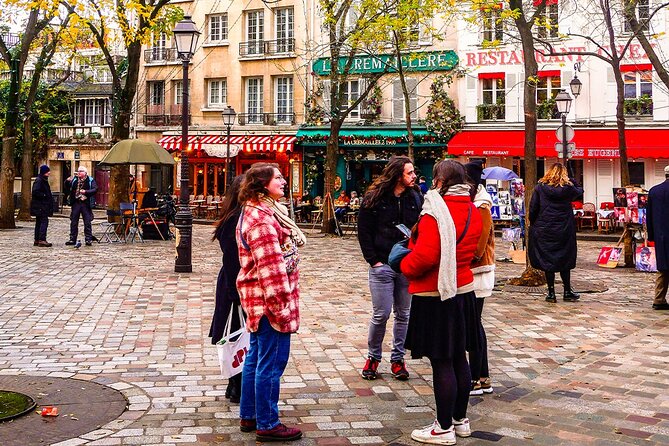
You start with about 1 hour in Montmartre Village, meeting your guide at the foot of the hill. This is the right opener because you’re easing into the neighborhood before you hit the big view moment. It sets context fast: why this area became a magnet for artists, what kinds of creative life you’ll see referenced later, and how the streets connect.
Then you’ll hit Place du Tertre, with its historic, artistic center. This is where the neighborhood’s caricaturist tradition keeps the spirit of the old Montmartre alive. You’ll also hear how the area’s reputation grew and how the street scene became a draw in its own right.
In practical terms, this stop is good for two reasons:
- You get a classic “Montmartre postcard” feeling without needing extra transport.
- You learn what you’re actually looking at, instead of just taking photos of it.
The only drawback here is crowds. Place du Tertre tends to be busy, so if you hate people noise, keep your expectations focused on the art culture, not the perfect quiet street shot.
The Sacré-Cœur Climb and Those Big Paris Views
Next comes Sacre-Cœur Basilica, about 15 minutes. Even if you’ve seen photos, the moment of reaching the top changes everything. The basilica sits on one of the highest points in the city, and the tour is explicit that you’ll enjoy panoramic views of Paris from the top of the hill.
Two practical things to know before you go:
- Admission is not included for Sacré-Cœur, so treat the visit time as guided orientation plus viewpoints, not a guaranteed ticketed entry for everyone.
- You should plan for stairs. The reviews strongly echo that point, and it makes sense. This is Montmartre. Wear shoes you trust.
If you want maximum value, time your photos and questions. The guide’s role matters here because they can point out what you’re looking at and explain why the hilltop view feels so iconic.
Clos Montmartre Vineyard: A Tiny Piece of Wine History
After the big view moment, the tour slows down with the Vigne du Clos Montmartre. This stop is short, about 5 minutes, but it’s a fun contrast. You’re not just walking through “tourist Montmartre.” You’re seeing a working historic urban vineyard on the slopes of the hill.
Here are the facts you’ll likely hear:
- The vineyard was established in 1933
- It produces limited batches of wine each year
- It also hosts Fête des Vendanges each October, a harvest celebration tied to the area
Even in a quick visit, this adds a different layer to your understanding. It’s easy to think of Montmartre only as art studios and cabarets. This stop reminds you the neighborhood has deeper local traditions too, even in such a dense city.
If you’re the kind of traveler who likes “small and specific” sites, this is one of the stops you’ll appreciate most.
Au Lapin Agile and Place Dalida: Cabaret Stories and Famous Names
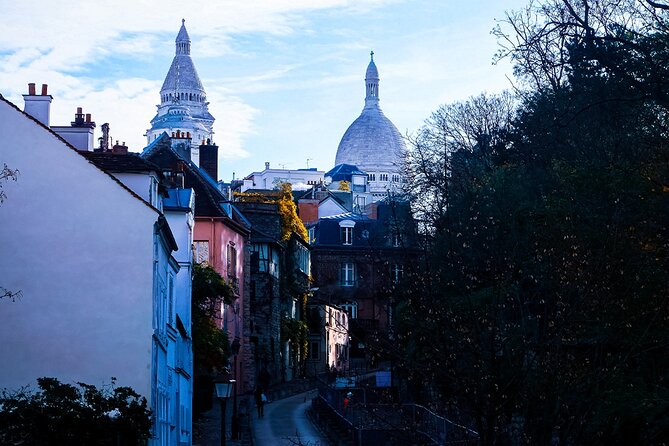
Then the tour heads toward Au Lapin Agile, a historic cabaret. Expect about 10 minutes here, focused on the neighborhood’s performer-art culture. You’ll hear a particular story about Lolo the donkey-artist, which is exactly the kind of Montmartre detail that makes the area feel odd and charming in the best way.
After that, you’ll stop at Place Dalida, about 5 minutes. This is a tribute to singer Dalida, who lived in Montmartre. It’s a quick hit, but it connects the district’s creative identity to real people, not just abstract “artist vibes.”
I like these two stops because they balance the “visual art” side with the “music and performance” side. Montmartre wasn’t only painters. It was writers, singers, and stage life too.





Moulin de la Galette: Windmill Views and Renoir’s Connection
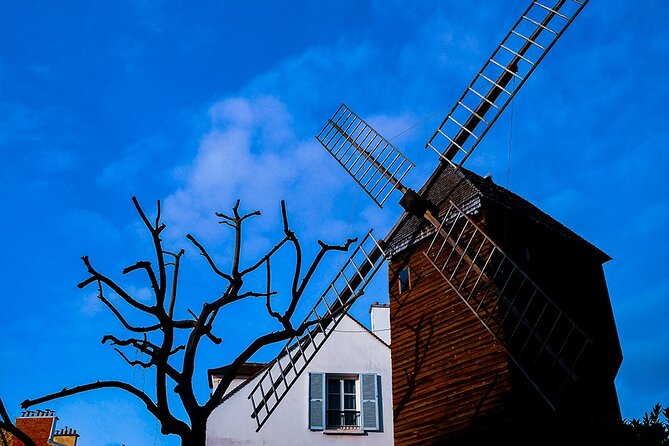
Next is Moulin de la Galette, around 10 minutes. This stop is meaningful because it’s one of the last windmills in Montmartre, and it’s tied to an artist legacy, including the area immortalized by Renoir.
This is another stop where the guide helps you see the “why.” Windmills are not just props here. They were part of the working landscape that artists then transformed into art. Seeing it in place gives you a sense of how Montmartre’s identity shifted from practical rural edges to artistic mythology.
If you’re short on time and you want at least one place where the neighborhood’s history feels physical, this is a strong choice.
Le Bateau-Lavoir and Picasso’s First Cubist Works
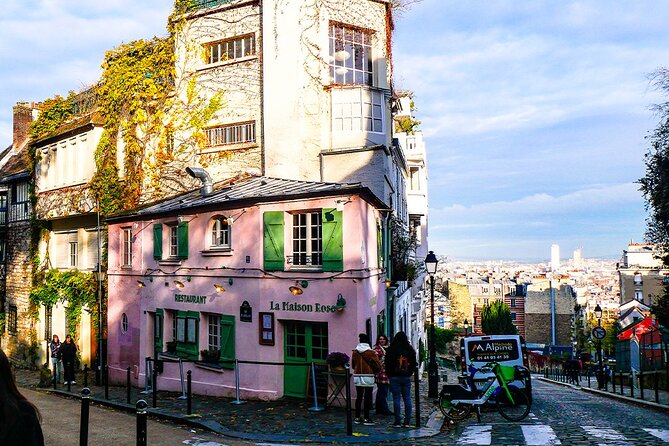
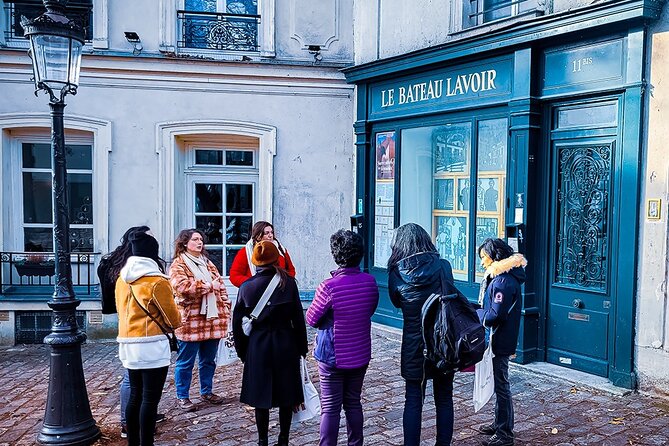
The tour includes a stop at Le Bateau-Lavoir, about 10 minutes. This is one of those Montmartre names you hear in art conversations for a reason: it was an artist workshop where painters including Picasso worked on early cubist works.
One important note: admission is not included for this stop. So if the site entry is on your wish list, plan for extra cost and time inside. If you don’t care about going in, focus on the guided context and what the workshop meant for early modern art.
Even with the short time, this stop can become one of your “anchor moments” on the walk. It’s where the tour’s art story gets more specific, and you can connect the neighborhood myth to actual names and movements.
Café des Deux Moulins and the Amélie Effect
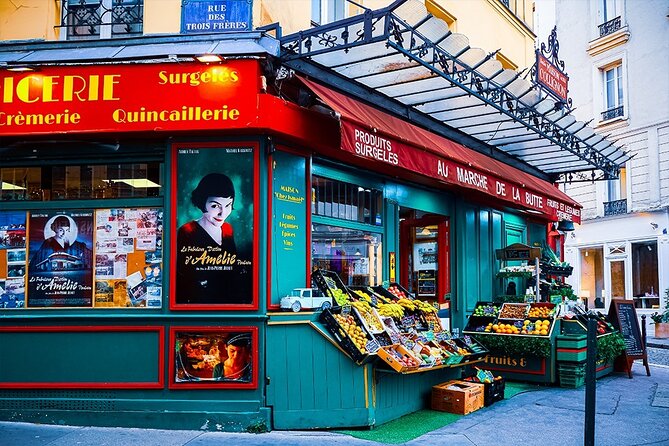
Then you’ll see Café des Deux Moulins, about 5 minutes. This is famous because it appears in the film Amélie, and it’s the kind of pop-culture stop that can either feel fun or feel like distraction, depending on your mood.
I think it works best when you treat it as a bonus layer. You’re learning the neighborhood’s art and performance story, and then you see how later media kept feeding the Montmartre fantasy for new audiences.
If you’re not a film person, just keep moving and use it as a quick reset between bigger stops.
Moulin Rouge Nearby: Red Windmill, Bohemian Past
The final major sight is Moulin Rouge, about 10 minutes. It’s not in the heart of Montmartre, and the tour frames it as nearby in the Pigalle district. The icon here is the red windmill, a symbol of the area’s bohemian past.
Admission is not included for this stop, so it’s best approached as a guided exterior view plus context, not a full cabaret visit unless you decide on your own.
This last stretch is useful because it widens your picture of the “bohemian Paris” theme beyond Montmartre’s top hill. You end your walk with a clear mental link between neighborhoods, not just a single hilltop bubble.
The Guide Makes It: Olivia and Julie as Examples of Style
The reviews highlight guides by name, and that matters because a good Montmartre tour is partly about pace, stories, and how comfortably you move through stairs. Olivia is mentioned for crisp, clear explanations and a strong sense of humor, including a perspective that can focus on women artists. Julie is described as fun, sparkling, and high-energy, with a guide who keeps you engaged while walking.
What you should look for, regardless of who guides you, is a person who can do three things well:
- explain what you see without turning it into a lecture
- keep the group together on cobblestones and uneven streets
- make short stops feel worth it
With a max of 15 people, the guide can usually manage the group better than bigger tours. That’s one of the reasons small groups keep winning on value.
Price and Value: What You’re Paying For
At $107.76 per person, this isn’t a budget stroll. So the question is: what are you buying?
You’re buying:
- a certified local guide
- a guided route that connects multiple landmarks, including Sacré-Cœur and Moulin Rouge
- panoramic views built into the walking plan
- a format designed for questions and a more relaxed pace
- a mobile ticket system
- a small group setting, up to 15 people
In other words, the price pays for time and interpretation. You’re less likely to get lost, less likely to miss the “why” behind things like Clos Montmartre or Le Bateau-Lavoir, and more likely to finish with a coherent sense of Montmartre rather than random snapshots.
The value can rise or fall depending on your priorities:
- If you only want exterior views and you skip optional entries, the total spend stays closer to the base price.
- If you plan to enter sites where admission is not included (Sacre-Cœur, Le Bateau-Lavoir, and possibly more), your final cost can go up.
One more practical point: the tour is commonly booked around 130 days in advance, which suggests demand. If Montmartre is on your must-do list, don’t treat this like a last-minute gamble.
What to Wear and Bring for Cobblestones and Stairs
This tour calls for moderate physical fitness. That’s not fancy language for “easy walking.” Montmartre’s streets are cobblestoned, and your day will involve stairs and uphill stretches.
My simple checklist:
- wear comfortable shoes with grip
- dress for walking, because you will move between stops
- bring a light layer, mornings can feel cooler on the hill
- keep your phone charged for photo breaks, since views are a big part of the payoff
If you’re traveling with knee or ankle issues, it’s worth thinking carefully. You don’t need to be an athlete, but you do need to be ready for the ground to be uneven.
Should You Book Montmartre Marvels?
I’d book this if you want a guided Montmartre experience that is realistic for a half-day, not a full-day commitment. It’s a good fit for first-timers who want structure, for art lovers who like connections between artists and places, and for anyone who prefers a small-group pace with time to ask questions.
I’d hesitate if you:
- hate stairs or steep, cobbled walking
- only want museum-style visits with long indoor time, because this is a stroll with short stops
- plan to enter multiple sites and you dislike paying extra for admission where it’s not included
For most people, though, the mix is the point. You get the Sacré-Cœur view moment, the artist-world stops around Montmartre, and a quick reach into Pigalle with Moulin Rouge, all wrapped in an early-morning schedule that keeps the rest of your day open.
FAQ
How long is the Montmartre Marvels small group guided stroll?
The tour lasts about 2 hours to 2 hours 30 minutes.
Where does the tour start and where does it end?
It starts at Anvers (75018 Paris) and ends at Blanche (75018 Paris).
What time does the tour begin?
The start time listed is 9:30 am.
Is the tour offered in English?
Yes, the tour is offered in English.
How big is the group?
The tour has a maximum of 15 travelers.
Is admission to Sacré-Cœur included?
No. The Sacré-Cœur stop lists admission as not included.
Is Le Bateau-Lavoir admission included?
No. The Le Bateau-Lavoir stop lists admission as not included.
Is transport to and from the meeting point included?
No. Transport to and from the meeting point is not included.
Can I cancel for a full refund?
You can cancel for a full refund if you cancel at least 24 hours before the experience’s start time. Free cancellation is allowed up to that point.
More Guided Tours in Paris



More Tour Reviews in Paris



Not for you? Here's more nearby things to do in Paris we have reviewed












Montmartre Tours, side by side.
 ★ 5.0Montmartre Hidden Gems and Scenic Highlights Walking TourTickets from $382,684 guest reviews
 ★ 5.0Montmartre Hill French Gourmet Food and Wine Tasting Walking TourTickets from $1452,588 guest reviews
 ★ 4.8Montmartre Cheese, Wine & Pastry Guided Walking TourTickets from $1272,255 guest reviews
 ★ 4.9Montmartre Highlights Walking Tour with a Local GuideTickets from $341,668 guest reviews
 ★ 4.1Sacré-Coeur and Montmartre Tour with Expert GuideTickets from $281,027 guest reviews
 ★ 5.0Private Montmartre Food Tour with Wine, Cheese & PastriesTickets from $3021,027 guest reviews
 ★ 5.0Paris Montmartre Food Tour – A Full French Meal by Do Eat BetterTickets from $95877 guest reviews
 ★ 5.0Hidden Montmartre: Paris’ Secret Streets Walking TourTickets from $44809 guest reviews
This tour also belongs to