
Review · PARIS CITY TOURS
Outdoor Escape Game in Paris : The Stone of Nicolas Flamel
Paris can feel like a blur of sights. This game turns the city into a solvable puzzle on Île de la Cité. You follow a story around Nicolas Flamel and work through riddles that depend on what you see in the streets, not what you already know.
Two things I really like: you get a clear mission format that blends an escape game with a treasure hunt, and the host, Thibaut, brings creativity and energy that works even for families. One thing to consider is that you need moderate walking and attention to clues, so if you want a fully hands-off, sit-down experience, this may not feel relaxing.
Key Highlights I’d Plan Around
- A story-driven treasure hunt tied to Nicolas Flamel, set right in the ancient core of Paris
- Riddles built from physical observation, not just reading trivia on a screen
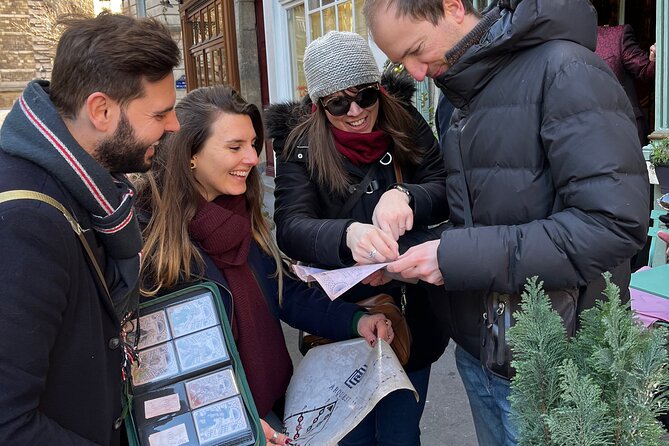
- An artifacts bag with items like an old map and manuscript to visually match clues
- English mobile ticket convenience, with a small group size capped at 30
- Thibaut’s guided energy, praised as entertaining and inventive for adults and kids
- Back-to-the-start layout, ending at the meeting point so you are not stranded
Outdoor Escape Game in Paris: why it feels different on Île de la Cité
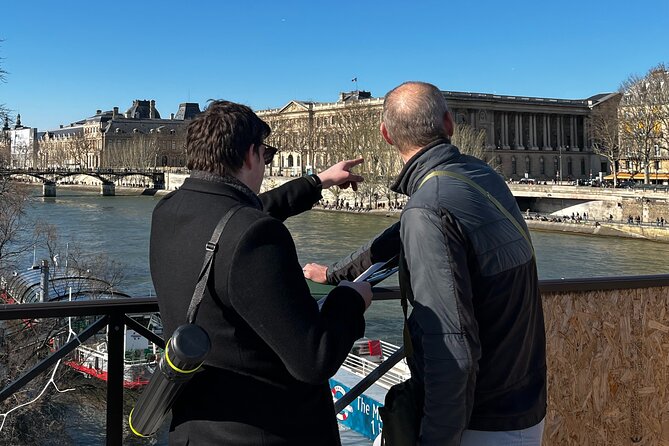
This is not a museum day. It is a 3-hour outdoor challenge that uses Paris like a living game board. You are on Île de la Cité, the heart of the city where old streets, big monuments, and dense history all sit close together. Instead of trying to take it all in at once, you have a reason to look carefully, slow down, and notice details.
The core concept is a mix of two styles. One part is escape-game thinking, where you must piece clues together to move forward. The other part is treasure-hunt momentum, where your progress is driven by exploring specific areas and paying attention to what is around you. In practice, that means you get movement, problem solving, and a little adrenaline as you race the clock and the logic.
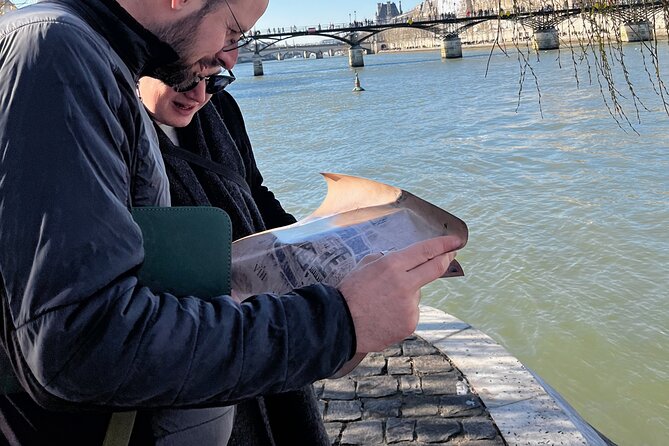
What makes it especially appealing is that the clues are designed around observation in the environment. You are not just walking to landmarks. You are searching for the small things that help you interpret the story. That is how the game keeps you engaged even when Paris is doing what Paris does best, crowds, traffic noise, and distractions.
You can also read our reviews of more tours and experiences in Paris.



Meeting at Place Louis Lépine, and how the start sets you up
The action begins at Place Louis Lépine in the 4th arrondissement, 75004. The tour ends back at the meeting point, which is a practical detail I like. You are not forced into a complicated end-point transfer, and you can line up dinner plans nearby without stress.
Because it runs about 3 hours, I treat this as an afternoon or late-morning activity, not a first thing in the day. You need your eyes switched on and your legs ready. Even though the experience notes only a moderate fitness level, you still want comfortable shoes and a mindset that you will walk and think at the same time.
Also, the group size max is 30 travelers. That tends to keep the experience from feeling like a massive conga line. You should still expect a small degree of waiting and regrouping, since the host has to reset the game flow and keep everyone oriented.
The Nicolas Flamel story: what the game is really asking you to do
The title points to Nicolas Flamel, but the way the story shows up is the important part. You get a narrative framework that turns the city into a puzzle. The goal is to solve riddles connected to the Stone of Nicolas Flamel, using physical clues you observe around the area.
This is where the experience feels more interactive than standard sightseeing. You are learning Paris as you go, but it is not textbook learning. The game nudges you to look at architecture and street details, then translate what you see into an answer that moves you forward. You also pick up France-flavored context along the way, tied to the story beats and the objects you handle.
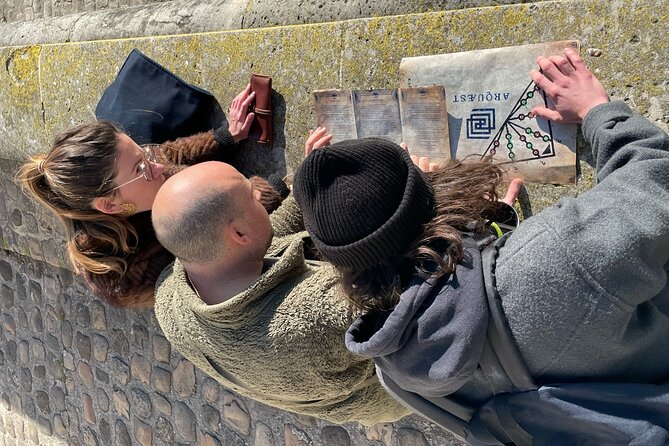
One detail that matters for how you experience it: the host uses an artifacts bag. Inside you get items meant to guide you visually, including an old map and a manuscript, plus a few other objects. That means the puzzle is multi-sensory. You are not only decoding a question, you are matching evidence.
It also helps that the overall format is described as ingenious and well run. That matters because escape-style games can fall apart if the host is unclear or the pacing is slow. Here, the structure is built to keep everyone moving, solving, and staying motivated.
How the riddles work in the real streets of Paris
The game’s mechanics are simple enough to follow, but they require you to pay attention. You will get tasks that rely on what you can notice nearby. Think of it as a loop:
1) See or locate something in the environment.
2) Use the artifacts or clue material to interpret what you found.
3) Answer the next riddle to unlock the next step in the story.
That is why this works well on Île de la Cité. The area has a dense mix of old-world architecture and recognizable urban features, so there are plenty of visual cues for the game to use. You end up moving through the neighborhood with purpose instead of randomly hunting for photos.
Another key point is pacing. The activity lasts around 3 hours, which is long enough for real problem solving but short enough to avoid the fatigue that can come with longer scavenger hunts. If you are the type who likes challenges, this time window feels like a sweet spot: you can get into the thinking without losing the fun.
And yes, there is a bit of adrenaline. Not in a stunt way, but in the sense that you feel progress. You are never just wandering. You are working toward the next clue, and that makes the walking feel like part of the solution.
What you will learn without it feeling like homework
Even though this is a game, it is still teaching you something. The best learning here comes through the way clues are connected to place. As you solve, you are exposed to facts tied to the Paris area you are navigating, and you also pick up context about architecture you pass along the route.
In practical terms, that means you will remember more than the usual snapshot tour. When you look at a building and later connect it to a clue, it sticks in your mind. This is why a story-driven format can outperform a plain guided walk: your brain has a job to do.
The other learning win is the off-the-beaten-track feel. The game is designed to push you beyond the most obvious, cookie-cutter photo stops. You are exploring smaller corners of the ancient heart of Paris, guided by clue logic rather than tourist instinct. That is great value if you already know the basics of Paris and want a different angle.






Walking tips for staying comfortable during a 3-hour puzzle
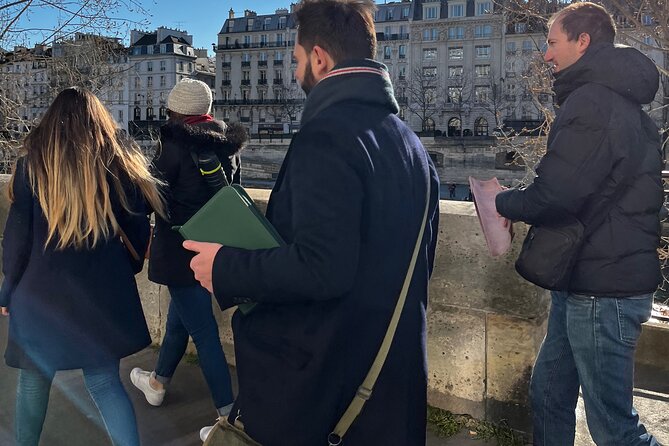
Because this is an outdoor activity, comfort matters. The experience calls for moderate physical fitness, so I would pack for walking and standing. Even if your pace is relaxed, escape-style games often require quick regrouping and short spurts of searching.
Here is what I suggest:
- Wear shoes you trust for uneven sidewalks. Paris sidewalks can be a little less forgiving than you expect.
- Bring water. Even if the weather is mild, problem solving takes energy.
- If you get easily frustrated by puzzles, keep a calm backup plan: work as a team, trade ideas, and do not get stuck on one clue too long.
Rain is a real consideration. One published experience highlight specifically calls out rain as the main disruption. If there is wet weather in the forecast, come prepared with a light rain layer or umbrella you can manage while walking. The game may still run, but your comfort and focus will affect your enjoyment.
Price and value: is $51.66 per person fair for this format?
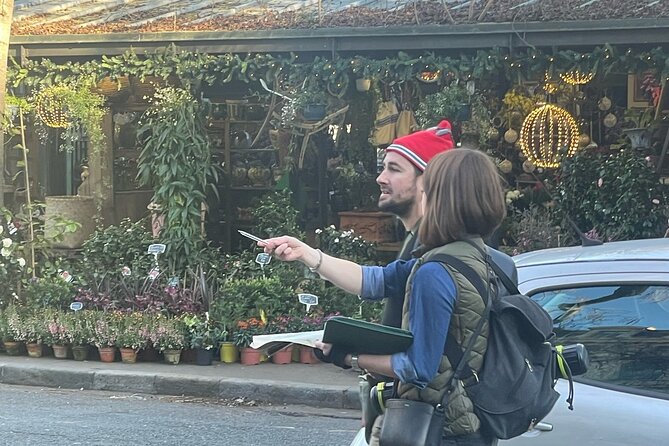
At $51.66 per person for about 3 hours, this is priced like an experience, not like a low-cost self-guided walk. So the value question is: what are you buying?
You are buying three things that are hard to replicate alone:
- A structured story and clue system, so you do not have to invent your own itinerary.
- An artifacts component, including a bag of items that supports visual clue solving.
- A live host, Thibaut, who keeps the game moving and turns puzzle attempts into a fun, shared experience.
The small-group cap at 30 also nudges value upward. You get a more human pace than a large tour bus situation.
And there is a final value signal: the overall score is 5 out of 5, with 29 reviews and 100% recommended. You should not treat online ratings as the only factor, but a perfect recommendation rate is a strong hint that the format lands well for a range of people.
Who this is best for, and who might want to skip it
This works best for you if you like active sightseeing. If you enjoy mixing history-flavored context with hands-on puzzles, you will probably have a great time. It also seems built for mixed ages, since the game is described as entertaining for both adults and children, with Thibaut’s creative approach helping the whole group stay engaged.
You might want to skip or rethink it if:
- You hate walking during a sightseeing day.
- You want a purely educational lecture with a fixed set of stops and photos at each one.
- You are strongly uncomfortable with puzzle uncertainty. Escape-game style tasks can produce moments of head-scratching.
That said, the moderate fitness level and the controlled 3-hour time frame make it a manageable challenge for many visitors who still want to move.
What to expect from the host, Thibaut, and the group feel
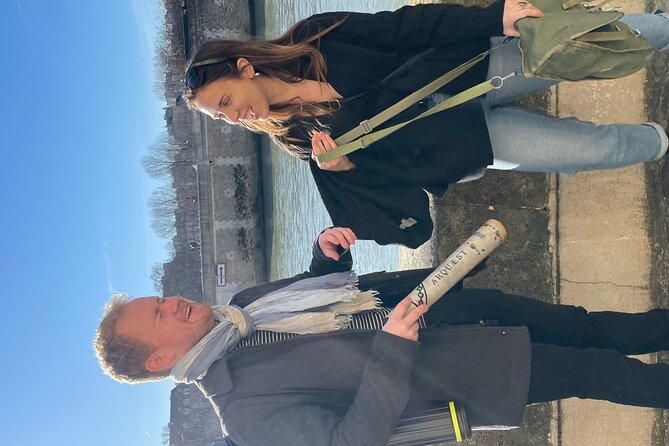
This experience is run by a provider called Arquaest, and the game experience is hosted by Thibaut. The standout praise about him is creativity and friendliness, plus the ability to keep families motivated.
In a practical sense, that means the game should feel guided rather than mechanical. Your host should help if you miss a step, and the group should feel like it is sharing the same puzzle journey rather than competing silently.
You also get a lively atmosphere. The tone sounds like it is designed to keep you curious and even slightly excited, especially as you piece together clues. That energy matters. A puzzle tour is only as good as the atmosphere around it, and the way this is described suggests the atmosphere stays playful without losing structure.
Weather and timing: choosing the right time slot in Paris
Because the activity is outdoor, timing matters. If you have options, pick a time when you expect better weather and when you still have enough energy to think. Rain does not automatically ruin every outdoor game, but it can make clue hunting feel harder and less fun.
As for timing within the day, I like the idea of doing this after you have at least one coffee and before you settle into a long evening meal. It is a good bridge between classic sightseeing and a relaxed dinner plan. Also, since it starts and ends at the same spot near public transport, you are not locked into a complicated schedule.
A smaller detail that can affect planning: this is offered in English, and that reduces the risk of a language gap if you are not fluent in French.
Should you book this Nicolas Flamel outdoor escape game?
Book it if you want to see Île de la Cité with your brain turned on. The best reason is the format: a story-driven escape game and treasure hunt that uses physical observation, plus an artifacts bag that turns clues into something you can handle and interpret.
Do not book it if your ideal Paris day is passive. This is not a slow, sit-and-watch experience. You will walk, focus, and solve. If that sounds like fun, you are in the right place.
Also, if you travel with kids or mixed-age groups, this looks like a smart choice because the game is designed to keep adults and children entertained together, with Thibaut’s hosting style doing real work behind the scenes.
If you are on the fence, ask yourself one question: do you want Paris to be a puzzle you solve, or a checklist you cross off? This experience is built for the first option.
FAQ
Where is the meeting point for the Outdoor Escape Game in Paris: The Stone of Nicolas Flamel?
The meeting point is Place Louis Lépine, 75004 Paris, France.
Is this activity in English?
Yes, the experience is offered in English.
How long does the escape game last?
It lasts about 3 hours.
How much does the experience cost?
The price is $51.66 per person.
What is the maximum group size?
The maximum number of travelers is 30.
Do I get a mobile ticket?
Yes, it includes a mobile ticket.
Is the activity near public transportation?
Yes, it is near public transportation.
Is there a return to the meeting point?
Yes, the activity ends back at the meeting point.
Is service animal access allowed?
Yes, service animals are allowed.
What is the cancellation policy?
Free cancellation is available up to 24 hours in advance for a full refund. If you cancel less than 24 hours before the start time, the amount paid will not be refunded.
More Tour Reviews in Paris
Not for you? Here's more nearby things to do in Paris we have reviewed












Paris City Tours, side by side.
 ★ 4.6Louvre Museum Timed-Entrance TicketTickets from $2671,977 guest reviews
 ★ 4.6Disneyland® Paris 1-Day TicketTickets from $6149,412 guest reviews
 ★ 4.6Versailles Palace and Gardens Full Access TicketTickets from $1741,579 guest reviews
 ★ 4.6Arc de Triomphe Rooftop TicketsTickets from $1834,264 guest reviews
 ★ 4.7Orsay Museum Entry TicketTickets from $1525,647 guest reviews
 ★ 4.4Evening River Cruise with MusicTickets from $2722,721 guest reviews
 ★ 4.4Eiffel Tower Entry Ticket with Optional Summit AccessTickets from $2920,035 guest reviews
 ★ 4.3Eiffel Tower Summit or Second Floor AccessTickets from $5917,248 guest reviews