
Review · SEINE RIVER CRUISES
Seine River Direct Access Guided Cruise
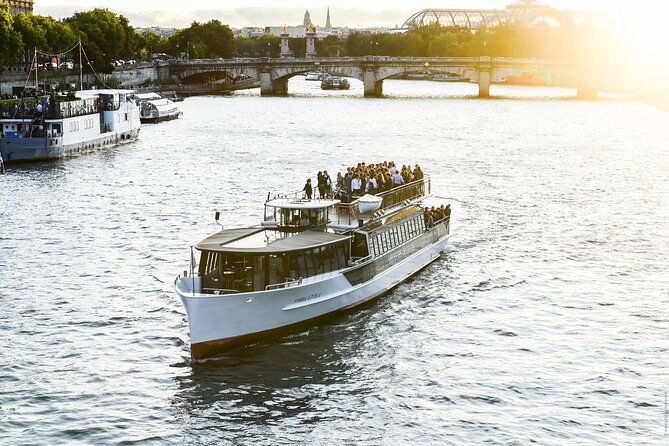
A Seine cruise is the easiest way to get Paris moving in your head. This 1-hour guided electric-boat ride strings together the big landmarks with clear narration, plus wide panoramic windows for photos and people-watching. My favorite part is how fast it turns the city into a map you can remember, and the guide keeps the story focused without making it feel like a lecture.
I also like that it is built for real life, mobile ticket, easy-to-find start point near public transport, and departures in both the morning and afternoon. One thing to consider: depending on the day and the guide, the English clarity can vary, and it can get chilly or windy up top, especially outside peak summer.
Key things that make this Seine cruise worth your time
- 100% electric boat means a calmer, modern ride that feels perfect for city sightseeing
- Live guide narration helps you connect what you see to what it means, without studying a guidebook all day
- Panoramic windows are great for photos, even if the weather is not perfect
- Packed with landmarks from Eiffel Tower area to Pont Neuf masks, Notre-Dame, and the Louvre
- Optional champagne onboard lets you keep it simple without hunting for a bar first
Why a 1-hour Seine cruise from Port de Suffren works so well
This tour is short by design, about 1 hour, which makes it a smart fit for almost any Paris day. You get a concentrated loop of key sights without the time drain of queues or transit. For me, the value is not just the view, it is the way the river gives you a single, readable timeline of Paris.
Starting at 2 Port de Suffren (75007) also helps. It is in central Paris, and it is near public transportation, so it is easier to pair with other plans. And with morning and afternoon departures, you can usually choose a slot that matches your energy level.
You can also read our reviews of more boat tours in Paris
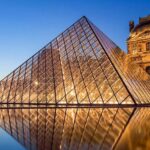
Onboard experience: electric boat, panoramic windows, and live narration
You ride a 100% electric boat, which keeps the experience feeling clean and modern. The boat is set up for sightseeing, with panoramic windows that let you watch landmarks slide by instead of craning your neck street-level.
The onboard guide provides narration as you move along the Seine. The tour is offered in English, and many departures use both languages, which can help you follow along even when the timing gets tight. If you are picky about audio clarity, I suggest positioning yourself so you can hear well, not tucked too far away near loud areas.
A practical tip: dress for wind. Even when the city is warm, the river breeze can bite, and the top deck is exposed.
Eiffel Tower to Alexandre III: the Paris postcard stretch
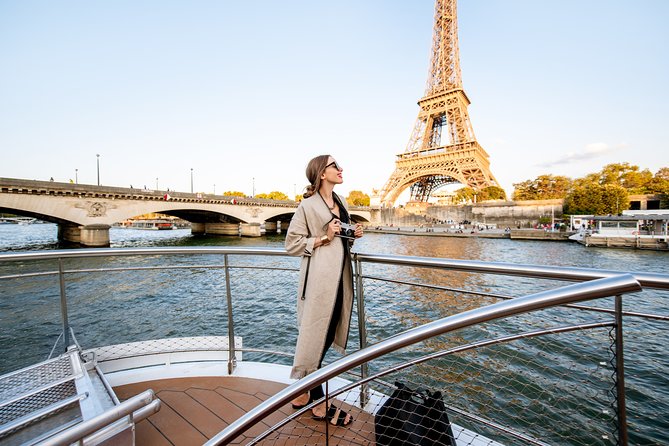
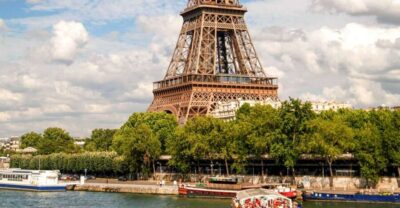
As you head out, the Seine frames Paris in classic layers, starting with the Eiffel Tower area. The guide context here is worth catching: Eiffel Tower was built by French engineer Gustave Eiffel for the 1889 Universal Exhibition, taking just over two years to complete. It is 324 meters tall and weighs about 7,300 tonnes, and the story includes the early backlash from Parisians, who found the steel look too tall and too metallic. The tower was originally built with a 20-year lifespan in mind, and the radio antenna added in 1903 helped it survive.
From there, you glide toward the Alexandre III bridge, one of the most ornate bridges in the city. It was built for the 1900 Universal Exhibition and to seal the Franco-Russian Alliance. The central feature is the Paris coat of arms covered in gold leaf, with two nymphs symbolizing the Seine, while the other side echoes Saint Petersburg with its arms and two nymphs for the Neva.
If you care about photos, this is where you want your camera ready. The bridge details are easier to spot from the water than from most walking routes.
Hotel des Invalides and the American Church: Paris with edge and identity
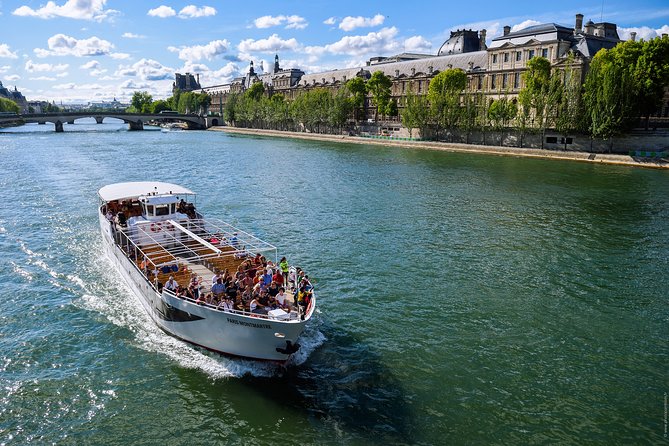
The river also brings you past historic anchors that many visitors do not notice unless they are in this exact viewpoint. Near the Hotel des Invalides, the story centers on Louis XIV and military medicine: it was built as a military hospital for injured soldiers and officers. Today, the royal chapel there houses the tomb of France’s first Emperor, Napoleon I.
Then you catch the American Church in Paris, with its green clock tower. It is described as the first American Church built outside the US, founded in 1931. The stained-glass windows by Louis Comfort Tiffany are a historic monument, so this is one of those “only-in-Paris” details that the river view makes easier to appreciate.
These sections are a good reminder that Paris is not only monuments. It is also institutions, faith, and history stacked side by side.
Bridges, museums, and royal-era landmarks you can actually understand quickly
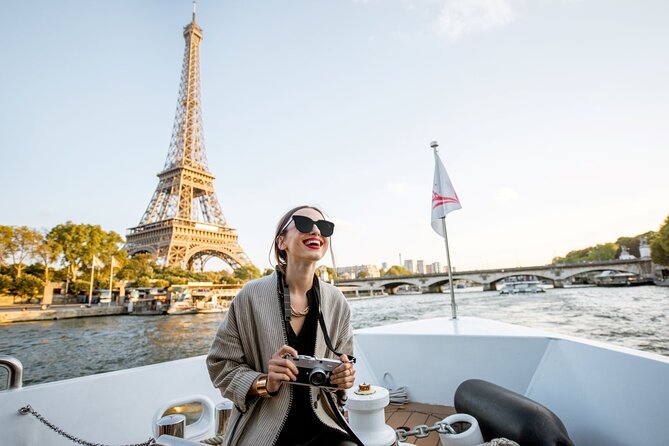
You move through a bridge-and-palace section that teaches you how the city was reshaped through exhibitions and politics. Pont de la Concorde is tied to revolution-era memory: it was built using stones from the former Bastille prison after it was stormed in 1789. It also acts like a connector in the city, leading toward the Palais Bourbon and the Place de la Concorde.
Then comes the former Orsay railway station, built for the 1900 Universal Exhibition. The key idea is the building’s second life: it became a museum in the 1980s to house 19th-century art, with artists like Renoir, Monet, and Vincent Van Gogh. This is a useful stop to remember if you plan to visit museums during the rest of your trip, because the view from the river shows you what to look for later.
A little further along, the Institut de France enters the scene. It began as the Collège des Quatre Nations, funded through bequeathed resources from Cardinal Mazarin in 1661. It houses five academies, including the Académie Française, whose mission includes updating and modifying the official French dictionary. That detail makes the place feel less abstract when you are standing near it later.
You can also read our reviews of more guided tours in Paris

Pont Neuf masks and Pont Saint-Michel: the bridge stories that stick
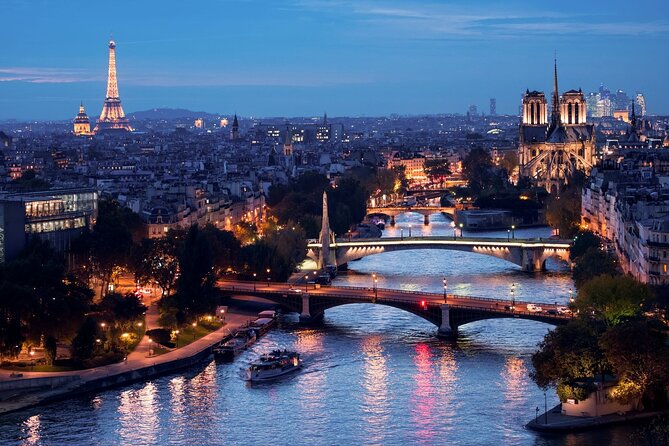
Paris bridges are not just crossings. On this cruise, they become mini-history lessons. Pont Neuf, the oldest bridge in Paris, was the first stone bridge built with pavements rather than houses lining it. It features 381 grimacing stone masks, each individually decorated and unique, which sounds like trivia until you realize why it matters. From the river, you can spot a pattern you miss from sidewalks, so your brain keeps it.
Next is Pont Saint-Michel, built at the request of Napoleon III, which is why you will see the two imperial Ns on its pillars. To the right, it leads to the Latin Quarter, named because students at the University of Paris spoke Latin there until the 19th century.
If you like walking neighborhoods later, these bridge stories help you pick the right direction and make the street names feel earned.
Île de la Cité and Notre-Dame: the Gothic center of the story
When you reach Île de la Cité, the tour gets into the presumed birthplace of Paris. The story shared here is that the Parisii tribe settled on this island about 300 years before the Common Era, calling it Lutetia. From the water, you get a sense of how this island became the core.
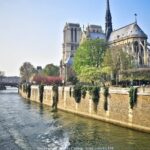
Then you get a clear look at Cathedrale Notre-Dame de Paris, described as a Gothic masterpiece. Construction began in 1163 and took nearly two centuries, finishing around 1345. The cathedral includes gargoyles and sculptures, and the south rose window, called Rose du Midi, is dedicated to the New Testament and was a gift from Saint Louis.
The tour notes admission as free, so this is also a good reminder for your planning. Even if you do not go inside on this exact day, it helps to know the building is more accessible than many major sights.
From Tournelle Bridge to the Louvre and Hotel de Ville: Paris government, faith, and art walls
Between Notre-Dame area and the next big showpieces, you pass the Tournelle Bridge and the statue of Saint Genevieve, patron saint of Paris. The statue is sculpted by Paul Landowski, who later sculpted Christ the Redeemer in Rio de Janeiro, which is a neat cross-connection to keep in mind as you plan future trips.
A little farther along, the Arab World Institute appears. It was inaugurated in 1987 by President François Mitterrand. The cultural center focuses on history, art, society, religions, and science in the Arab world, which gives the cruise a modern cultural layer instead of only a historic postcard vibe.
Then you come to Île Saint-Louis, known for prestigious 17th-century town houses like Hotel Lambert and Hotel Lauzun. It is also tied to writers, including Charles Baudelaire and Georges Moustaki, so this is one of those stretches where the river view feels like a quiet gallery.
You also see Hotel de Ville de Paris, the seat of the Paris City Council since 1357. It draws inspiration from Neo-Renaissance style, and it is open to visitors, including areas like a banquet hall with a design template described as matching the Hall of Mirrors in Versailles. That is a small but helpful planning clue if you want to build a second stop.
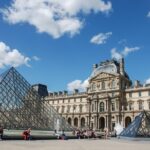
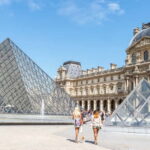
And yes, the Louvre is part of the river story here. It started as a royal palace and became a museum in 1793. It is described as the largest monument in Paris, with over four kilometers of façades and nearly 14 kilometers of galleries, and it holds about 38,000 works, including the Winged Victory of Samothrace, Venus de Milo, and the Mona Lisa.
Place de la Concorde, Grand Palais, and Palais de Chaillot: ending with big architecture
The cruise keeps momentum with the Place de la Concorde, which is tied to the French Revolution. It notes King Louis XVI and Queen Marie-Antoinette were executed there, and the centerpiece is an obelisk from Luxor in Egypt, about 34 centuries old, brought to France in 1836.
Next is the Grand Palais, built for the 1900 Universal Exhibition. The highlight is the glass roof described as the largest in Europe, and today it serves as a venue for cultural events and exhibitions. The tour info also mentions it can run a funfair and has been used for large skating setups, so this building is not stuck in museum mode.
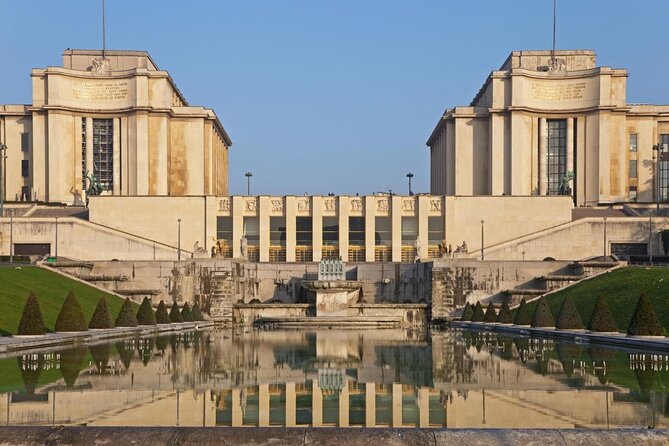
Finally, you reach the Palais de Chaillot at Place du Trocadéro. Built for the 1937 Universal Exhibition, it includes two Neoclassical pavilions flanking an esplanade overlooking the Trocadero gardens. It houses several institutions, including the City of Architecture and Heritage, the National Navy Museum, the Museum of Humankind, and the National Theatre of Chaillot.
This ending works well because you finish with architecture that looks different at river height than it does from the street. It also sets you up to decide whether you want to walk around the Trocadéro area later.
What to wear and how to choose your deck position
This is the kind of activity where comfort affects your experience more than you might think. The most common real-world advice is to bring a hat and a windbreaker, especially for fall departures when the top deck can get chilly.
I would also plan for temperature swings. One practical pattern I expect from this kind of boat setup is that being inside can feel hot when the boat is not moving, and the breeze returns once you are underway. So wear layers you can adjust quickly.
Seat choice matters too. If you want the cleanest views, choose a position with clear sight lines toward bridges and façades. If you want comfort, consider that being lower can mean less wind while still letting you see through the windows.
Value check: is a $25.23, 1-hour cruise a smart use of time?
At $25.23 per person for about an hour, you are paying for a guided, structured “best of Paris from the river” orientation. That is a strong deal if your goal is to connect the city’s biggest landmarks without spending half a day hopping between them.
You also get an electric boat, which adds a feel-good, modern touch. The narration is live, and that matters more than people think, because it is what turns a pile of famous names into a real geography lesson.
Champagne is available to purchase onboard, but it is not included. If you want it, budget extra, and if you do not, you still get the core experience without any pressure.
One more value angle: the cruise is capped at a maximum of 220 travelers, and many people say it stays manageable rather than turning into a packed festival.
Should you book this Seine River direct access guided cruise?
Book it if you want the fast track to understanding Paris from water level. It is especially good for first-time visitors who need a mental map, and for anyone who prefers passive sightseeing with a guide, rather than another museum hour followed by a long walk.
Do not book it as your only plan if you hate short rides and prefer slow, deep stops. This is a highlight circuit, so you will see a lot and linger less. Also, if you are very sensitive to narration clarity, I suggest choosing a departure time when you can hear well, and coming prepared for wind and cold if you cruise outside summer.
If you want one solid, low-stress activity that makes the rest of your trip easier to navigate, this is a strong pick.
FAQ
How long is the Seine River direct access guided cruise?
The cruise is about 1 hour.
Is the cruise offered in English?
Yes. The experience is offered in English.
Does the ticket include champagne?
Champagne is available to purchase onboard, but alcoholic beverages like a glass of Duval Leroy Champagne are not included unless you select them. Alcohol is only served to travelers 18 and above.
Where does the cruise meet?
The tour starts at 2 Port de Suffren, 75007 Paris, France, and it ends back at the meeting point.
What if the weather is poor?
This experience requires good weather. If it is canceled due to poor weather, you will be offered a different date or a full refund.
How far in advance can I cancel for a full refund?
You can cancel up to 24 hours in advance of the experience for a full refund. If you cancel less than 24 hours before, the amount paid is not refunded.
More Guided Tours in Paris
More Boat Tours & Cruises in Paris


More Tour Reviews in Paris

Not for you? Here's more nearby things to do in Paris we have reviewed







Seine River Cruises, side by side.
 ★ 4.4Evening River Cruise with MusicTickets from $2722,721 guest reviews
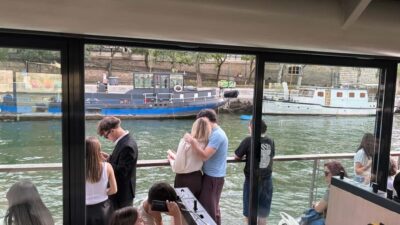 ★ 4.3Illuminations River Cruise with Audio CommentaryTickets from $2012,340 guest reviews
 ★ 4.3Tootbus Hop-on Hop-off with optional river cruiseTickets from $4911,924 guest reviews
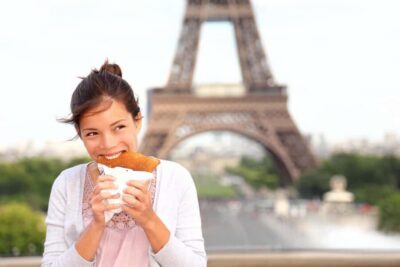 ★ 4.4Seine Cruise & Crepe Tasting near the Eiffel TowerTickets from $2311,231 guest reviews
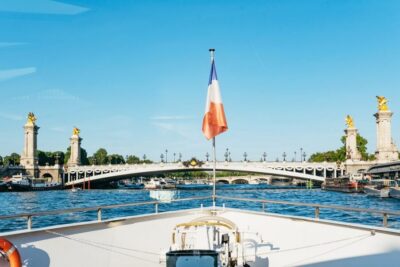 ★ 4.3Seine River Panoramic Views Dinner CruiseTickets from $6410,611 guest reviews
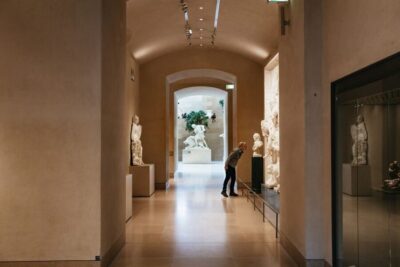 ★ 4.6Louvre Museum Entry Ticket With Host and River CruiseTickets from $1009,926 guest reviews
 ★ 4.6Eiffel Tower Access by Elevator & Seine River CruiseTickets from $797,329 guest reviews
 ★ 4.73-Course-Dinner Cruise on the Seine with live musicTickets from $1357,248 guest reviews
This tour also belongs to