Review · PARIS
Freemasons, myths and revelations about a secret society
Freemasonry myths turn real when you walk Paris. On this guided historical walk, you follow a route in and around Saint-Germain-des-Prés and toward the Bourbon Palace, hunting for visible and hidden Masonic traces, then learning how to read what you’re seeing and what you are not. The focus is practical: the guide explains the Masonic origin story tied to Great Britain in 1717, why secrecy is part of initiation, and how the legends got traction.
What I like most is how much the experience leans on conversation. Several groups mention lively back-and-forth with the guide, and a clear use of visuals like a binder of Masonic signs that gets matched to exterior marks on buildings. The other big plus is the “street-reading” skill you gain, so the symbolism stops feeling like vague conspiracy fog and starts feeling like historical clues. The main drawback to weigh: it can feel building-light for people who expected lots of major monuments. And if you arrive late, you can miss parts of the walk.
Key takeaways before you go
- Masonic symbols made practical: you learn to spot marks and sort signals from hype
- Conversation matters: the best versions of this tour lean on questions and discussion
- Small group size: capped at 25 travelers, which helps you actually ask things
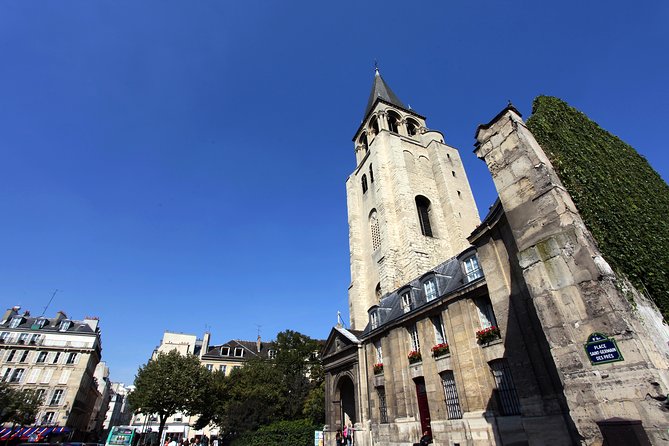
- Starts at a classic Paris landmark: Church of Saint-Germain-des-Prés (Place Saint-Germain-des-Prés)
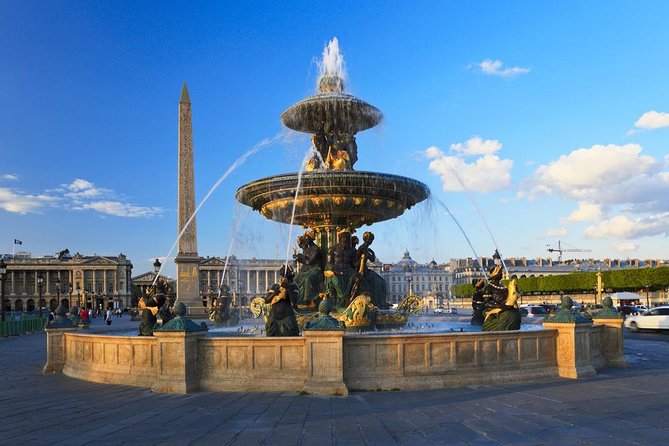
- Route runs from left bank to Concorde: you end at Place de la Concorde (75008)
- Not everyone loves the stop density: some find it more explanation than heavy monument time
Freemasons in Paris: a walk that teaches symbol spotting
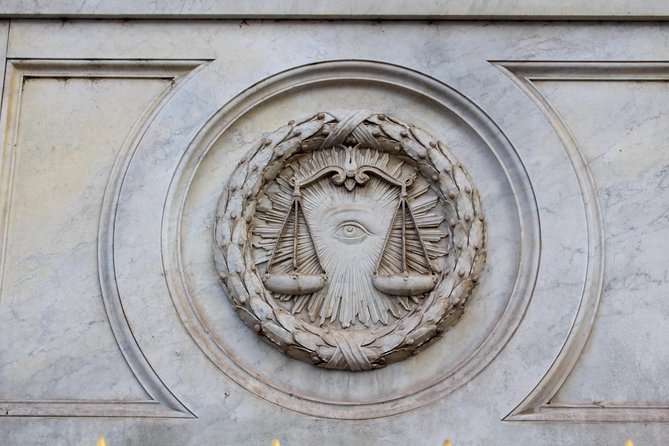
If you like Paris for its details, this kind of tour is made for you. You are not just “hearing about” Freemasons. You are walking through neighborhoods and training your eyes to recognize patterns that people associate with Masonic tradition, then hearing the guide sort history from myth.
The theme is secrecy, but the approach is not secret at all. You’ll hear why initiation rituals are wrapped in non-disclosure, and how that secrecy helped fuel misconceptions over time. The tour also frames Freemasonry as something that grew from a specific context in Great Britain in 1717, rather than treating it like a timeless shadow organization that somehow survived every century without changing.
This is also a good reality check tour. Masonic signs are easy to misread if you only know the folklore version. The guide’s job, based on the tour description, is to help you distinguish signs and decipher truth from false.
You can also read our reviews of more tours and experiences in Paris.


Getting oriented: from Saint-Germain-des-Prés to Place de la Concorde
The walk begins at the Church of Saint-Germain-des-Prés, 3 Pl. Saint-Germain-des-Prés, 75006 Paris. That’s a smart starting point. It’s a familiar landmark, and it places you in one of Paris’s most walkable, story-dense zones.
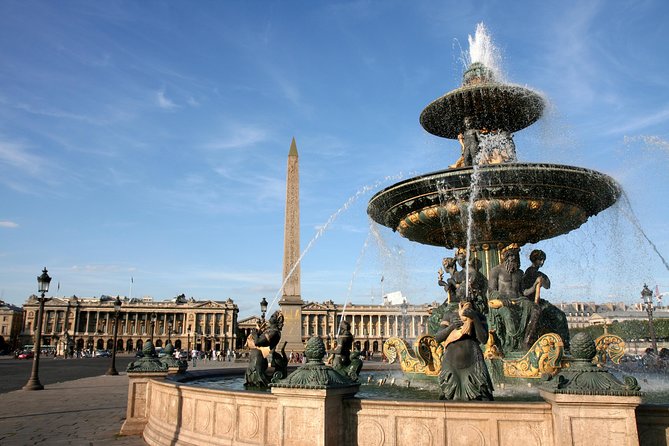
From there, the route continues on foot across central Paris and ends at Place de la Concorde, 75008. That endpoint is useful because it drops you right where you can grab transit or line up other sights without needing a long return trip.
Duration matters here. You have about 1 hour 45 minutes. That means you should treat this as a focused training walk, not a slow amble with bathroom breaks every ten minutes. If you like to stop for photos, plan on doing that quickly and efficiently.
One more practical note: it’s a mobile ticket tour. Keep that ticket on your phone and make sure your battery is healthy. This is one of those tours where starting on time matters, and late arrivals can miss the early explanation.
What you’ll actually see: facades, statues, and small street clues
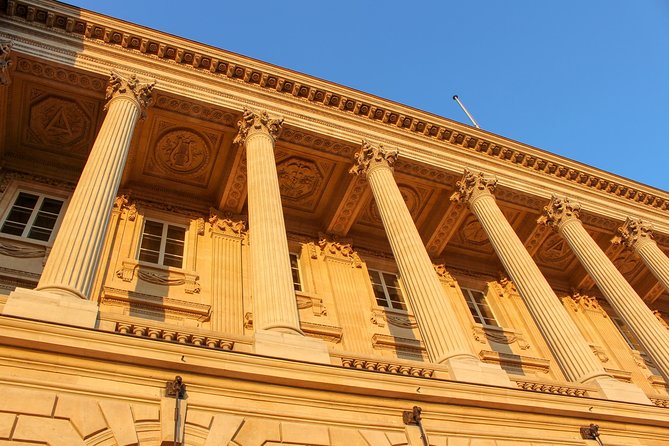
The tour’s promise is to search for visible or hidden traces of Freemasonry in the capital. In practice, that usually means exterior details you might otherwise ignore: markings on building facades, references placed where people would pass them, and symbolic decorations that look like they belong to another language.
More than one group feedback points to the same pattern: a guide brings a binder with Masonic signs, then uses it to connect the “what” to the “where” on the walk. That approach helps a lot. Instead of you staring at random carved shapes and hoping for a miracle, you get a method.
Still, there’s a trade-off. One of the most common complaints is that the walk can feel like it spends more time talking than inspecting lots of different structures. People who expected a tour built around many specific buildings or major monuments have sometimes felt shortchanged by how few dramatic stops were used to make the points.
So go in with the right expectations:
- If you like street-level details, this can be satisfying.
- If you need a heavy sequence of recognizable monuments, you might wish for more stops.
The Masonic secrecy angle: why myths stick to Paris
The tour doesn’t treat Freemasons as a purely modern pop-culture topic. It ties the story to a historical origin often associated with Great Britain in 1717 and then explains how secrecy and initiation customs contributed to rumors.
You’ll hear the idea that new members are introduced by cooptation, and that members are required not to reveal the identity of other members throughout initiation. Whether you agree with every interpretation of Masonic history or not, this is the kind of ingredient that makes myths spread. Human beings love a “closed door,” and symbols are the perfect fuel for guessing.
Paris makes the myth easier to believe because it is a city that literally preserves layers. Even when a symbol’s meaning is debated, the stonework and placement can make the story feel plausible. That’s exactly why a guided walk is useful here. The guide’s job is to help you keep your feet on the ground while your imagination wants to run.
The Bourbon Palace area: connecting symbols to power and institutions
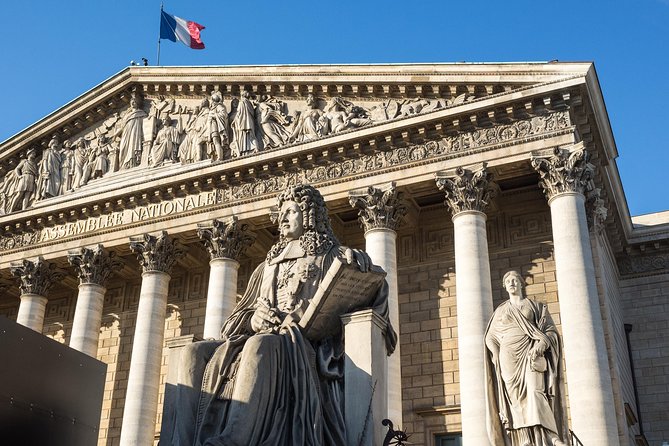
The route includes the neighborhoods of Saint-Germain and the Bourbon Palace area. That combination is intentional. Saint-Germain-des-Prés is strongly associated with intellectual Paris, while the Bourbon Palace zone sits close to the political heart of the city.
The tour’s theme is how Freemasonry ties into the formation of society. The description says the guide will cover historical origin, organization, main figures, and the importance of Freemasons in shaping society. In other words, you are not just learning symbols. You’re also being nudged to connect those symbols to institutions, networks, and influence.
One more thing: the tour is designed to help you “decode the truth from the false.” That matters most in areas where legends like to grow. When a story mixes institutions, secrecy, and symbolic language, people jump to conclusions. On this walk, you can use the guide’s explanations as a filter.

How the guide’s style affects your results
This is where the reviews become very instructive. Some people loved the tour because the guide was engaging, punctual, friendly, and well documented. They mentioned clear historical explanations, numerous anecdotes, and a guide who could answer questions during the walk.
Other comments are a warning sign for what can happen if the guide’s pedagogy does not match your needs. One feedback described an explanation style that felt unclear and hard to question, with the tour feeling directed toward people who already know the basics. Another complaint says the binder plus quick facade pointing could have been done indoors, which is essentially a critique of how the exterior time is used.
There is also a specific caution about timing. One comment warns to be right on time, because the group can be left behind if the walk moves.
And one note that might matter to some readers: one comment mentions an overly assertive political tone. If you’re sensitive to that, go in expecting a historical topic that can sometimes brush against modern viewpoints.
If you can, arrive early, come with at least a light curiosity, and keep your questions ready. This tour seems to reward participation.
Pace, weather, and group size: the real logistics that affect comfort
This is an outdoor walking tour with a set time window. The experience requires good weather. If the forecast is bad, the tour may be canceled, with an alternate date or a full refund offered.
The group cap is 25 travelers, which is a practical sweet spot for a symbol-focused walk. With fewer people, it’s easier to keep moving without losing the explanation, and it’s easier to ask questions.
In terms of accessibility, the data says most travelers can participate. That’s helpful, but it still means you should plan for cobblestones, sidewalks, and standing during explanations. If you know you struggle with long outdoor standing, consider it before booking.
Price value: why $17.09 can feel either perfect or too light
At $17.09 per person, the cost sits in the “low ticket, high curiosity” zone. That’s important. For this price, you should treat the walk as an introduction and a practical skills lesson, not a deep, museum-grade lecture.
The best value comes from the combination of:
- a guided method to read Masonic symbols,
- real street context (at least for the stops that are used),
- and a guide who can handle questions.
If you are already well read on Freemasonry, you might find the tour limited in scope because it may not rely heavily on many different buildings. The complaints about “barely a building” are a sign that this walk is not trying to be an exhaustive architectural checklist.
On the other hand, people who want a manageable, urban-friendly primer usually do well with this format. You can finish it, still feel curious, and then choose where to go next on your own.
Who should book this Freemasonry walk in Paris
Book it if you:
- enjoy walking tours that teach you how to notice details,
- want a guided way to separate symbolism from pure myth,
- like historical explanations with anecdotes,
- and you’re comfortable asking questions during the walk.
Consider something else if you:
- expect lots of major monuments and many substantial building stops,
- need a very structured, classroom-like lecture format,
- or you know you get frustrated when a guide does not seem open to questions.
Family note, from the pattern of comments: one group mentioned bringing two kids around ages 12 and 15, and felt the guide’s approach was not very accessible. That doesn’t mean the tour is “not for families,” but it does suggest you should be prepared for a history and symbolism focus that works best for curious teens and adults.
Should you book Freemasons, myths and revelations in Paris?
I’d book this if your goal is to learn how to read Masonic symbols on the streets without falling for every rumor you hear. The price is reasonable for a focused 1 hour 45 minute walk, and the small group size helps you get answers.
But I’d be cautious if you want a stop-heavy, building-heavy “greatest hits” itinerary. The experience seems to concentrate on exterior clues and explanation more than on hopping between famous sites. Your enjoyment will depend on the guide’s teaching style, so arriving on time and being ready to engage really helps.
If you’re the type who likes to look up at facades while others look at their phones, you will probably have a good time.
FAQ
How long is the Freemasons walking tour in Paris?
It lasts about 1 hour 45 minutes.
Where do I meet for the tour?
You meet at the Church of Saint-Germain-des-Prés, 3 Pl. Saint-Germain des Prés, 75006 Paris.
Where does the tour end?
The tour ends at Place de la Concorde, 75008 Paris.
How much does it cost?
The price is $17.09 per person.
Is the ticket mobile?
Yes, it includes a mobile ticket.
What is included in the price?
A guide is included.
Is weather important for this experience?
Yes. The tour requires good weather, and if it is canceled due to poor weather, you’ll be offered a different date or a full refund.
Can I cancel for a refund?
Yes. Cancellation is free up to 24 hours in advance for a full refund.