
Review · MONTMARTRE TOURS
Clos Montmartre ‘Paris in your Glass’ Wine Tasting
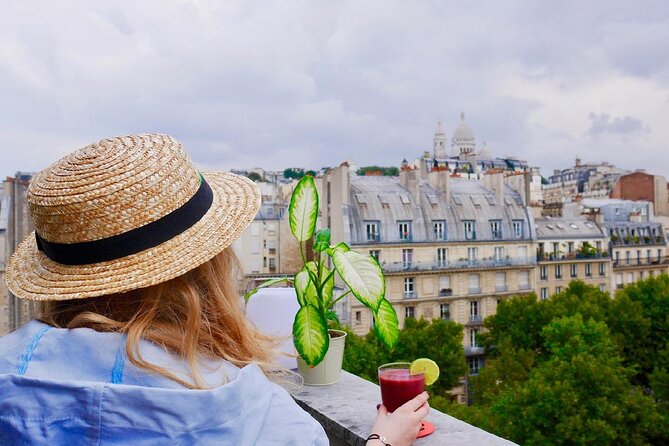
Wine, history, and Montmartre views in one walk. I love the chance to taste Clos Montmartre wine, plus do a guided blind tasting of a white and a red. I also like how the route builds toward a serious payoff, with scenic lookouts from the Renoir Garden at the Musée de Montmartre.
One thing to plan for: this is an uphill walk with stairs. If you have only a little stamina, you will still want a moderate fitness level and comfortable shoes.
Key highlights that make this walk worth your time
- Clos Montmartre is the star, including a very rare pour that you cannot casually order anywhere.
- Blind tasting game included, with two additional wines, one white and one red, served for comparison.
- Geoffrey guides the history and wine together, connecting what you see on the streets to how Paris wine got to this point.
- Renoir Garden viewpoint gives you a clear overview of the vineyard and the “how did this survive here?” story.
- Cheese and rustic bread arrive during the tasting, so you snack while you learn, not after the fact.
- Montmartre landmarks are not just photos, each stop ties to the neighborhood’s Roman, artistic, and local-wine threads.
The big idea: a Montmartre walk that ends in a real tasting
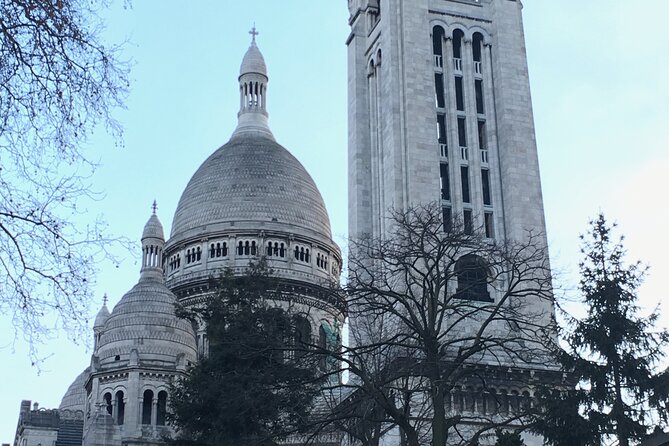
This is not a sit-and-listen wine class. It is a walking tour that mixes classic Montmartre sights with a vineyard-focused narrative, then finishes with a structured tasting.
You should expect a total experience time of about 2 hours 20 minutes to 3 hours, starting at 3:30 pm. The group size is capped at 110, and the tour is offered in English with a mobile ticket. It is near public transportation, but you still have to climb.
The best value here is how the tasting fits the setting. You walk uphill through places tied to Roman-era traces, artists, and Montmartre’s bread and windmills, then you stand where the vineyard story is visible. That makes the wine lesson feel practical, not abstract.
You can also read our reviews of more food & drink experiences in Paris



Starting at Église Saint-Pierre de Montmartre, where Romans left their mark
Your walk begins at Église Saint-Pierre de Montmartre, a church built on the site of a Roman temple. This is the kind of stop that changes how you read the hill. You are not just looking at a pretty church, you are seeing layers of Paris land use.
Inside, you can find Roman columns recovered from a temple to Mars that once stood there. The church also connects to the Abbey of Montmartre and a time when vineyards surrounded the area.
This is a quick stop, around 10 minutes, and the admission ticket is free. The real benefit is the context it gives you for everything that comes later.
La Bonne Franquette and the artist heart of the hill
Next comes La Bonne Franquette, a café tied to the community of artists who lived in Montmartre. The inner courtyard is painted by Vincent Van Gogh, which is an easy detail to remember because it links the arts directly to the places you are walking past.
This stop stays short, about 5 minutes, and again it is free to enter. Even in a brief visit, it helps you understand why Montmartre became the artistic magnet it did, and why wine and food culture fit right into that scene.
If you like tours where the guide makes you look up and around, this is a good moment to do exactly that before the walking intensifies.
Commanderie du Clos-Montmartre, one of Paris’s wine fraternities
The tour then reaches Commanderie du Clos-Montmartre, which used to be a water tower and is now the headquarters of one of the wine fraternities in Paris.
What I like about this kind of stop is that it answers an unasked question. Wine culture is often explained as vineyards and barrels, but it also lives in clubs, traditions, and local identities. This is Paris-specific and very Montmartre-shaped.
This is another short, about 5 minutes, and it is free. The timing also works well, because you will be warming up for the vineyard story that comes next.
The charming in-between stops: Passe-Muraille, Moulin de la Galette, and Suzanne-Buisson
Montmartre tours can either feel like a straight line or a steady drip of personality. This one does a bit of both, with several tight stops that give you texture.
At Le Passe-Muraille, you see a bronze sculpture of a man walking through or caught in a wall. It references Marcel Aymé’s book about that stubborn, imaginative character. Even if you do not know the story, the sculpture is easy to read, and it fits Montmartre’s reputation for art that bends reality.
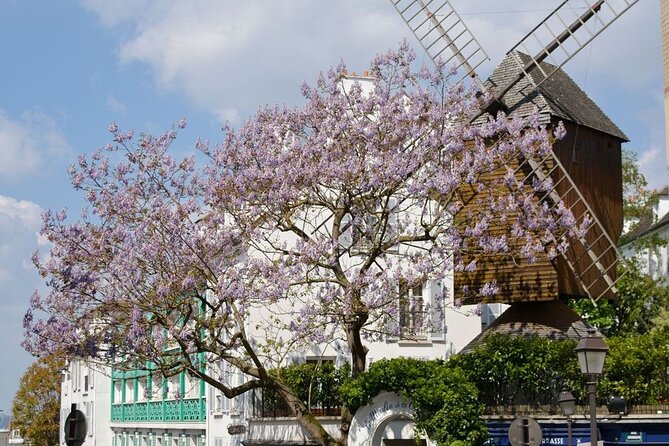
Then you hit Le Moulin de la Galette, the windmill area that once milled grain. It is associated with a brown bread called a galette, and the tour ties it to the Debray family of millers who served galette with a glass of milk. This stop is brief, about 2 minutes, but it is memorable because it connects a building to a very specific local food tradition.
Finally, you reach Square Suzanne-Buisson, where you can see a grapevine entrance about 30 meters long plus a view of Saint-Denis. This is where the tour starts talking about vines as living plants: cultivation, pruning, grape varieties, and the fact that wine involves more than just one or two grapes.
All of these points are free and short, so they are low-pressure stops. They work best if you are willing to slow down for details, not just rush for photos.
You can also read our reviews of more wine tours in Paris




Place Dalida and the Montmartre-to-vineyard payoff
After the little sights, you get a breather and a view. The tour reaches the Dalida Statue area at Place Dalida, which gives a spectacular view down rue de l’Abreuvoir toward the Butte Montmartre and Sacré Coeur.
This stop lasts about 15 minutes, and it is a good chance to catch your breath before the vineyard-focused part of the day. It also helps you understand the geography of what you are about to learn. Montmartre feels like a small village on a hill, and this viewpoint makes that feeling real.
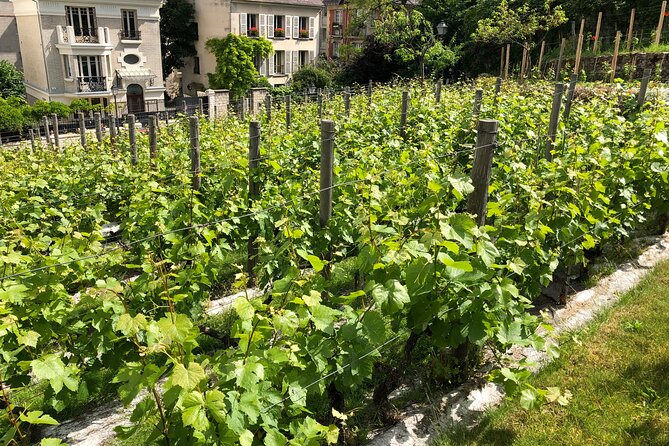
Right after that, you move to the Musée de Montmartre for the Renoir Garden. This is about 30 minutes, and the admission here is included. From the garden, you get a clear overview of the vineyard area and the history tied to the Clos Montmartre.
I find this moment valuable because it pulls the whole walk together. You can finally see where the story physically lives.
The Clos Montmartre vineyard story, told where you can see it
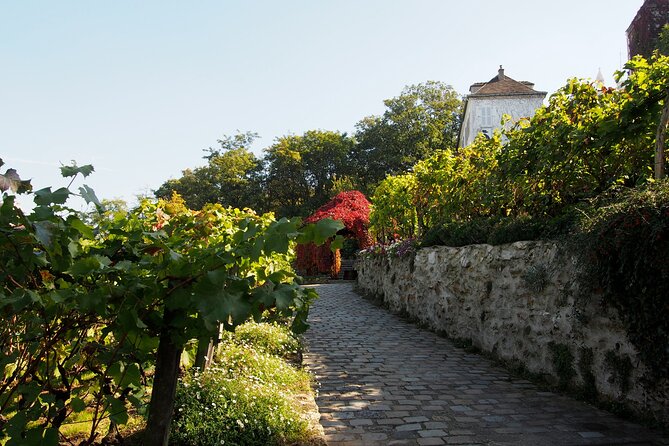
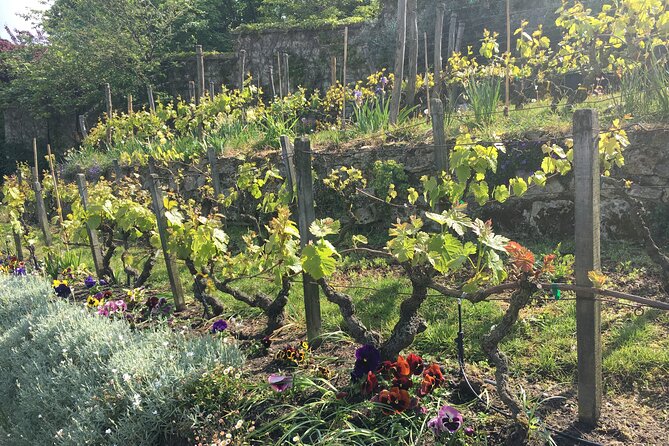
The centerpiece is the Vigne du Clos Montmartre, described as one of the celebrated vineyards inside Paris, an “old Paris” element that helps you feel far from the crowds even while you are still in the city.
From the museum garden parapet, you get a view of the vineyard and the guide explains its history. Then the walk continues through the vineyard area with anecdotes that connect Montmartre’s wine past to the wider artistic, literary, and cultural reputation of the village.
One practical reason this part works: it is not only interpretation. You are standing in the right space to understand why people in earlier centuries bothered to plant grapes here. It is a real sense of place, not just a narrated fact list.
Expect this portion to take about 30 minutes and to lead smoothly to the tasting at Place du Tertre.
Place du Tertre tasting, rare wine plus a blind white-and-red test
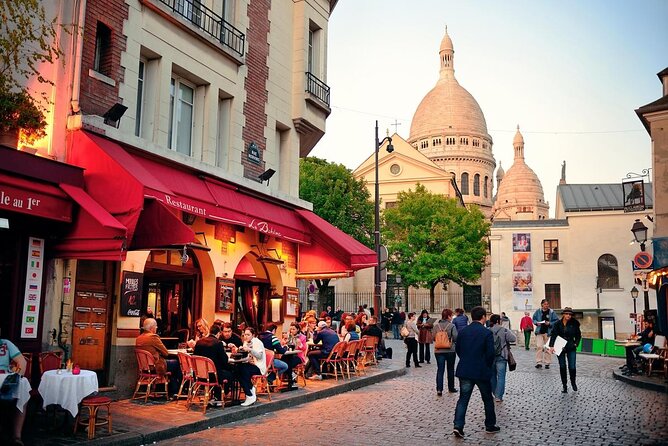
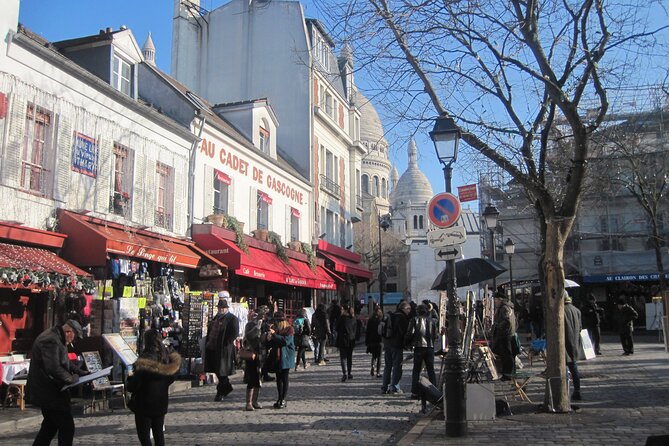
The final stretch lands at Place du Tertre, the heart of Montmartre’s village feel. The tasting happens in one of the square’s renowned and authentic winebar bistros.
Here is what you can expect, based on the tour format:
- You taste the very rare wine of the Clos Montmartre.
- You do a blind tasting of two additional wines, one white and one red.
- You eat shared plates of cheeses and rustic fermented bread while you taste.
The tasting component is included, and the time at Place du Tertre is about 1 hour. So you are not rushed. You get time to reset your palate between pours, and you can follow the guide’s cues without feeling like you are being pulled along.
This is also the portion that wine lovers seem to love most. The blind tasting turns wine into a challenge, not a lecture. Even if you have never done one, it is a fun way to learn what to look for, and what you think you know might still surprise you.
Price and value: what you pay for at $126.17 per person
At $126.17 per person, this is not a budget snack tour. But you are paying for a combination that is hard to recreate on your own: a guided Montmartre walk, vineyard history, and a tasting that includes Clos Montmartre plus a blind comparison with added food.
Consider what is included:
- The Musée de Montmartre Renoir Garden visit is included.
- The tasting is included, along with the cheeses and rustic fermented bread.
- Many landmark stops along the way are free, which helps stretch your money.
Also note timing and demand. It is often booked about 61 days in advance, so if you want a specific day, booking ahead is smart. With an English guide and a max group size of 110, it can feel social, but the format still holds together because the tasting is a clear structured segment.
If you are choosing between a generic Montmartre tour and a wine-focused one, this is the kind that gives you a tangible payoff you can carry home in your taste buds.
Logistics that matter: walking uphill, shoes, and how to show up
Montmartre is a hill town, so plan around the physical reality. The tour requires uphill walking and includes stairs, and it lists a moderate physical fitness level as the right match.
Practical tip: wear shoes you are comfortable walking in for a couple of hours. Even if you take breaks at viewpoints, the hill does not care about your optimism.
The good news is that the route is staged. You get short stops at several landmarks, then longer stretches at the viewpoints and museum garden, and finally the tasting. It is not a nonstop grind.
If you want the experience to stay fun, you should also arrive on time for the 3:30 pm start. The first stop is Église Saint-Pierre de Montmartre on Rue du Mont-Cenis, and the tour ends at 17 Pl. du Tertre.
Service animals are allowed, and it is near public transportation, so you should be able to reach the start area without a car.
So who is this best for?
This tour fits best if you:
- Like wine but also want the story behind it, tied to neighborhoods and buildings.
- Prefer learning by walking through places rather than sitting in one room.
- Enjoy structured tastings, especially a blind tasting format.
- Want a Montmartre experience that is not only about Sacré Coeur and postcard streets.
It is also a solid pick if you appreciate food with wine. The shared plates of cheese and rustic fermented bread are not an afterthought. They are part of how you keep going during the tasting.
If you dislike stairs or steep climbs, this may feel like too much. The tour’s wine payoff is great, but the hill is real.
Should you book Clos Montmartre Paris in your Glass?
Book it if you want Montmartre with a purpose. The rare Clos Montmartre tasting and the blind white-and-red test are a stronger end payoff than most casual wine stops. Add in the vineyard viewpoint from the Renoir Garden, and you get a sense of why wine belongs here, not just what wine tastes like.
Skip it or look for an easier alternative if uphill walking and stairs are a problem for you. The tour is short in total time, but the elevation is part of the experience design.
If you do book, do it ahead if your dates are fixed, wear comfortable shoes, and come ready to pay attention. This one rewards the people who slow down enough to see what is actually in front of them.
FAQ
How long is the Clos Montmartre Paris in your Glass wine tasting?
The experience runs about 2 hours 20 minutes to 3 hours.
What time does the tour start?
It starts at 3:30 pm.
Where does the tour begin and end?
It begins at Église Saint-Pierre de Montmartre, 2 Rue du Mont-Cenis, 75018 Paris, France. It ends at 17 Pl. du Tertre, 75018 Paris, France.
What language is the tour offered in?
The tour is offered in English.
Is the tasting included, and what do I taste?
Yes. The tasting includes the rare Clos Montmartre wine and a blind tasting of two more wines, one white and one red. It is accompanied by shared plates of cheeses and rustic fermented bread.
What sights are included before the tasting?
You visit several Montmartre landmarks including Église Saint-Pierre de Montmartre, La Bonne Franquette, Commanderie du Clos-Montmartre, Le Passe-Muraille, Le Moulin de la Galette, Square Suzanne-Buisson, the Dalida Statue area, the Musée de Montmartre Renoir Garden, and the Vigne du Clos Montmartre.
Is there uphill walking on this tour?
Yes. The tour requires uphill walking and stairs, and it lists a moderate physical fitness level as the right match.
Is there a group size limit?
Yes. The maximum size is 110 travelers.
Can I get a refund if I cancel?
Yes. You can cancel for a full refund up to 24 hours before the experience’s start time. If you cancel less than 24 hours before, the amount paid will not be refunded.
More Wine Tours in Paris
More Food & Drink Experiences in Paris

More Tour Reviews in Paris






Not for you? Here's more nearby things to do in Paris we have reviewed












Montmartre Tours, side by side.
 ★ 5.0Montmartre Hidden Gems and Scenic Highlights Walking TourTickets from $382,684 guest reviews
 ★ 5.0Montmartre Hill French Gourmet Food and Wine Tasting Walking TourTickets from $1452,588 guest reviews
 ★ 4.8Montmartre Cheese, Wine & Pastry Guided Walking TourTickets from $1272,255 guest reviews
 ★ 4.9Montmartre Highlights Walking Tour with a Local GuideTickets from $341,668 guest reviews
 ★ 4.1Sacré-Coeur and Montmartre Tour with Expert GuideTickets from $281,027 guest reviews
 ★ 5.0Private Montmartre Food Tour with Wine, Cheese & PastriesTickets from $3021,027 guest reviews
 ★ 5.0Paris Montmartre Food Tour – A Full French Meal by Do Eat BetterTickets from $95877 guest reviews
 ★ 5.0Hidden Montmartre: Paris’ Secret Streets Walking TourTickets from $44809 guest reviews
This tour also belongs to