
Review · PARIS
Freemason; myths and revelation of a secret organization
One walk, and the city starts talking back. This 90-minute guided stroll turns Freemason myths into readable history, using symbols you can spot on buildings around Saint-Germain and Palais Bourbon. I like how it stays focused on ideas, not wild conspiracy claims.
I especially like the way the tour explains the Grande Loge de France and how it’s organized, including rituals, hierarchy, and the group’s influence in France since the Enlightenment. I also appreciate the practical angle, because you’re taught to look closely at the visible and hidden Masonry traces in Paris.
One possible drawback is that the guide is in French only, so if your French is shaky, you may miss some of the finer points. And depending on the guide day, the pacing can feel a bit evasive when you want direct answers.
Key points before you go
- Grande Loge de France in plain terms, from origins and spread to how it’s structured today
- Rituals, hierarchy, and symbolism, explained as part of a system, not just spooky secrecy
- Enlightenment context in France, tying Freemasonry to politics, arts, and public life
- Symbol spotting in Saint-Germain and Palais Bourbon, focusing on what you can actually observe
- A guide style that can be very pedagogical, but may not always answer questions with pinpoint precision
Why Freemason Myths Work Better as a Walking History Lesson
Paris is great at rewarding curiosity. This tour leans into that, but in a grounded way. You’re not asked to believe secret whispers. You’re asked to understand why Freemasonry gathered attention, created symbols, built networks, and developed a taste for discretion in the first place.
Freemasonry, according to the tour’s framing, started in Great Britain at the beginning of the 18th century and spread quickly through Europe. It moved alongside the Enlightenment’s emphasis on reason and debate, and it became entangled in the kinds of conversations that shaped democratic ideas. That matters, because in France, Masonry isn’t just an odd footnote. It’s presented as something you need to understand some major historical and social phenomena since the Enlightenment era.
What you get, in practice, is a guided tour that treats Masonry as a cultural and historical force. Symbols are given real time and attention. Secrecy is discussed as a mechanism. And the tour pushes you to use observation as your main tool, which is exactly how you learn to read a city.
You can also read our reviews of more tours and experiences in Paris.



Meeting at Saint-Germain-des-Prés, Then Learning to Read Paris Facades
The tour meets at 3 place Saint-Germain-des-Prés, right in front of the entrance to Saint-Germain-des-Prés Church. That’s a smart starting point because the neighborhood around Saint-Germain-des-Prés is visually dense, and you can feel how layers of Paris history stack on top of each other.
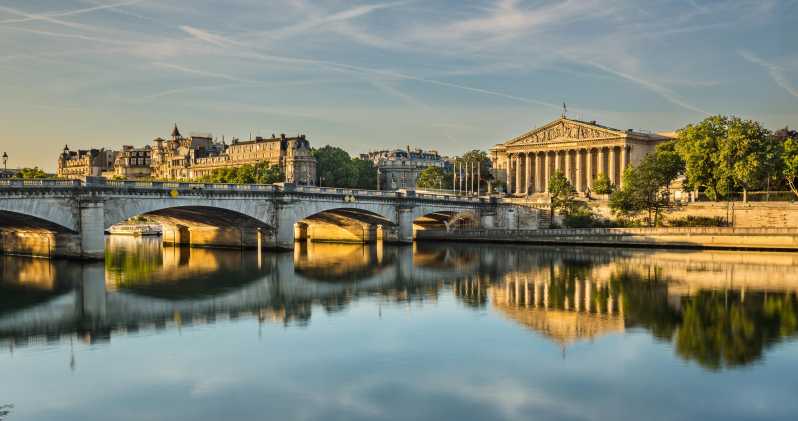
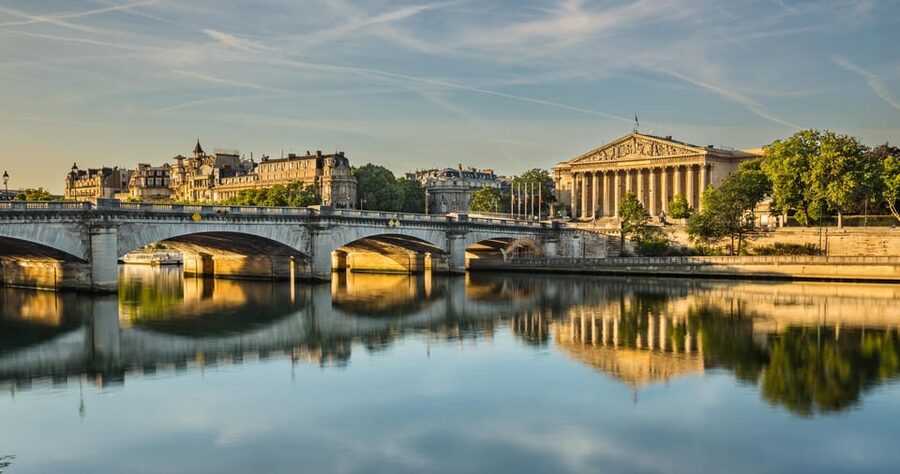
From there, the walking route focuses on two emblematic districts: Saint-Germain and Palais Bourbon. The difference between these areas is part of the lesson. Saint-Germain often feels like a place where ideas and culture gather. Palais Bourbon is tied to political weight in the broader Paris imagination. The tour uses that contrast to make sense of how Freemasonry could influence the thinking and networks of public life.
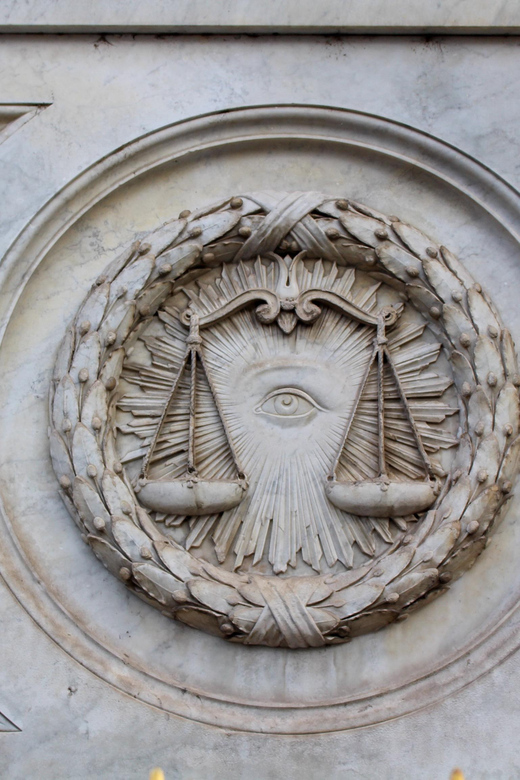
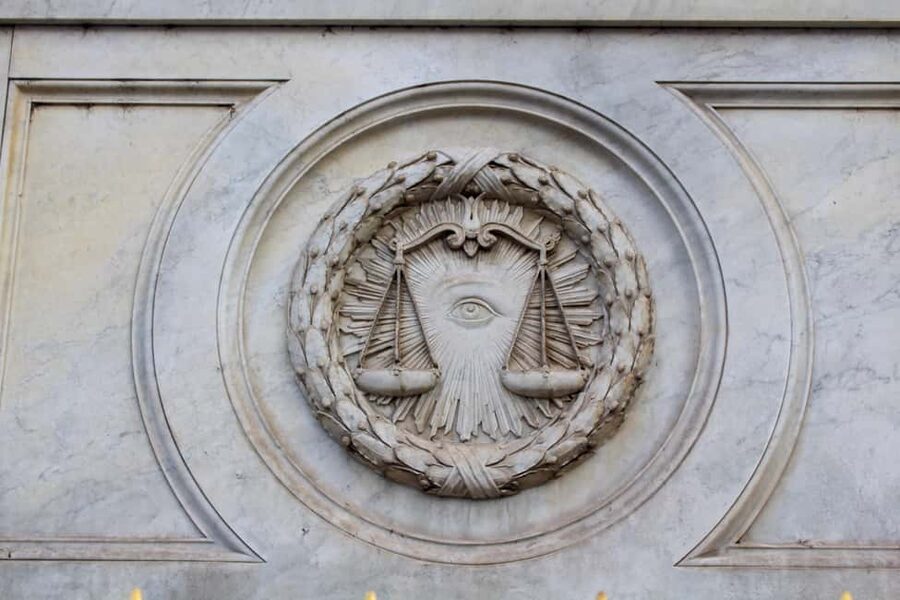
Your job on this tour is not to memorize names. It’s to look. The guide encourages careful observation of the visible or hidden traces of Masonry that embellish facades and sculptures. That’s not just a gimmick. It’s a way of training your eyes to notice why certain buildings carry symbolic details in the first place, and why those details would matter to groups obsessed with meaning.
If you’re worried about what to look for, don’t. Instead of telling you one magic “spotting list,” the tour approach is about learning how symbols function in a system. Even if you can’t interpret every mark perfectly, you’ll understand what symbolism is doing in the story.
Grande Loge de France: How Organization Replaces Mystery
A big part of the appeal here is that the tour doesn’t treat Freemasonry as pure myth. It introduces the history of the Grande Loge de France, then shifts to its organization.
You’ll learn how Freemasonry adapted over time, taking different forms and persuasions across Europe, yet keeping core principles linked to the English founders. That balance is important. It helps you avoid two extremes: reducing everything to a single origin story, or assuming the whole movement changed so much that its original ideas don’t matter anymore.
The tour also emphasizes the complex organization behind Masonry. You hear about its system of co-option, its arcane hierarchy, and how its teaching can include biblical references. Those elements can sound mysterious on paper. But on a walking tour, they become easier to accept because the guide keeps tying them back to how organizations actually maintain identity. Hierarchy is how roles are defined. Co-option is how membership and influence carry forward. Symbolism is how messages survive across time.
In other words, the tour treats secrecy as a social tool. Not as a magic spell.
That’s useful to you because it changes what you take away when you leave the tour. You stop asking, What are they hiding? and start asking, How did they build a repeatable system of belief, learning, and community influence?
Rituals and Hierarchy: The Logic Behind the Veil
Freemasonry has a reputation for secrecy, and the tour leans into that topic. But it frames secrecy as part of the tradition and the internal logic, not as a reason to speculate wildly.
You’ll hear about rituals and how they relate to teaching. The idea is that Masonry uses symbolism and structured practice to convey moral and philosophical concepts. The tour’s wording places biblical references in the mix, which helps explain why people associate Masonry with religious imagery without assuming it is simply church.
The “arcane hierarchy” theme is another key point. Hierarchy can look like a fancy power structure, but in a group like this it also functions as a learning path. The tour’s explanation gives you a sense that rank and structure are tied to knowledge, responsibility, and membership progression.
If that sounds heavy, it doesn’t have to be. A good part of the value is that the tour gives you a language to interpret what you’ll encounter while walking. You learn that symbols are not random decoration. They’re designed to be noticed by those who know how to read them. And that’s why the tour keeps pushing observation on the streets of Paris.
One practical tip for you: if you want crisp answers, ask direct questions. The structure of the tour topics lends itself to that. Based on the experience’s mixed feedback, sometimes the guide can be a bit evasive. You can reduce that by keeping your question narrow, like asking how a specific idea links to a specific type of symbol or ritual.
Saint-Germain and Palais Bourbon: Where Symbol Traces Actually Matter
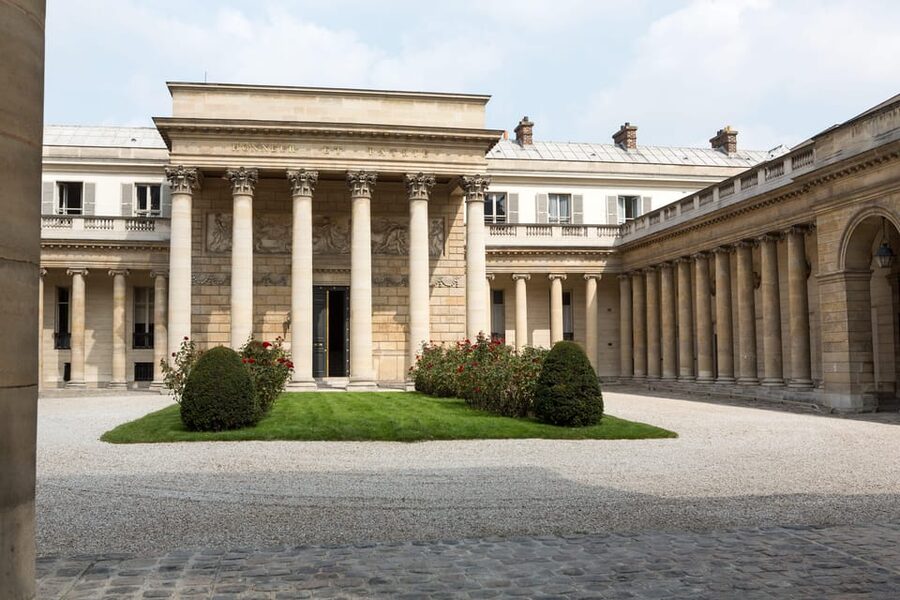
This is the part you feel most while you’re walking.
The tour’s core promise is to help you recognize visible or hidden traces of Masonry through Paris, specifically in the Saint-Germain and Palais Bourbon areas. The guide points out how symbolic details can appear in facades and sculptures. You’re not just hearing about Freemasonry in the abstract. You’re seeing the kinds of places where symbolic thinking leaves physical evidence.
That matters because Paris architecture is full of meaning. But meaning isn’t always obvious at street level. A guided approach helps you slow down. You notice details you’d normally walk right past. And even when a symbol is subtle, you learn how to ask the right question: Why would that detail be there, and what would it communicate to someone paying attention?
As you move through the neighborhoods, you get more than sightseeing. You get interpretation. The tour treats symbols as part of Freemason philosophy, and it keeps them at the center of the visit. That’s a good match for people who like history but don’t want to sit through a lecture in a room.
Drawback to keep in mind: because the tour relies on observation, it rewards attention. If you’re trying to multitask, take photos constantly, or keep your headphones on, you’ll likely miss a chunk of the teaching.




The Guide Factor: Passion, Pedagogy, and Occasional Fog
The human side matters on tours like this, and the feedback you can expect to find here centers on guide communication.
On the positive side, the strongest praise points to a passionate and pedagogical guide style. In plain terms, it means the guide doesn’t just recite facts. They explain. They listen. And they make the subject feel accessible, even when Freemasonry’s internal language is unfamiliar.
That teaching style is especially helpful because the tour covers a lot of conceptual ground: origins in Great Britain, spread across Europe, Enlightenment ties, the Grande Loge de France context, and then organization, rituals, hierarchy, and influence. Without a good communicator, the topic can feel like a jumble of secret-sounding terms. A clear guide keeps it connected.
The one caution is that one experience noted the guide could be a bit evasive at times. That doesn’t mean the tour is unclear. It means if you want highly specific answers on demand, you might need to be patient and ask in a very targeted way.
If you speak French, you’ll get the best version of the explanation. If your French is intermediate, try to focus on the big sections and jot down a couple of terms you want clarified later.
Price and Value: $17 for 90 Minutes in Central Paris
At $17 per person for a 90-minute walking tour, this sits in a very reasonable mid-range for central Paris. You’re paying for three things at once: a live guide, a structured topic, and a route that uses Saint-Germain and Palais Bourbon as your classroom.
Is it a bargain? It’s a fair value if you actually care about the “why” behind symbols and organizations. If you’re only in Paris for quick photo ops, this may feel more like a lesson than a pure sightseeing walk.
But if you like interpretive history tours, this price makes sense. You’re not just getting general background. You’re getting an explanation of how Freemasonry influenced France since the Enlightenment, plus a framework for reading symbolic details in the streets.
Also, it’s a short duration. Ninety minutes is long enough to teach you something real and short enough that you can pair it with other plans the same day. That flexibility is part of the value.
Two more practical value points: it’s a walking tour, so you’re exploring on foot, and it’s wheelchair accessible. That accessibility is a meaningful plus because many city-center tours forget about mobility needs.
Who This Tour Is For (and Who Might Prefer Something Else)
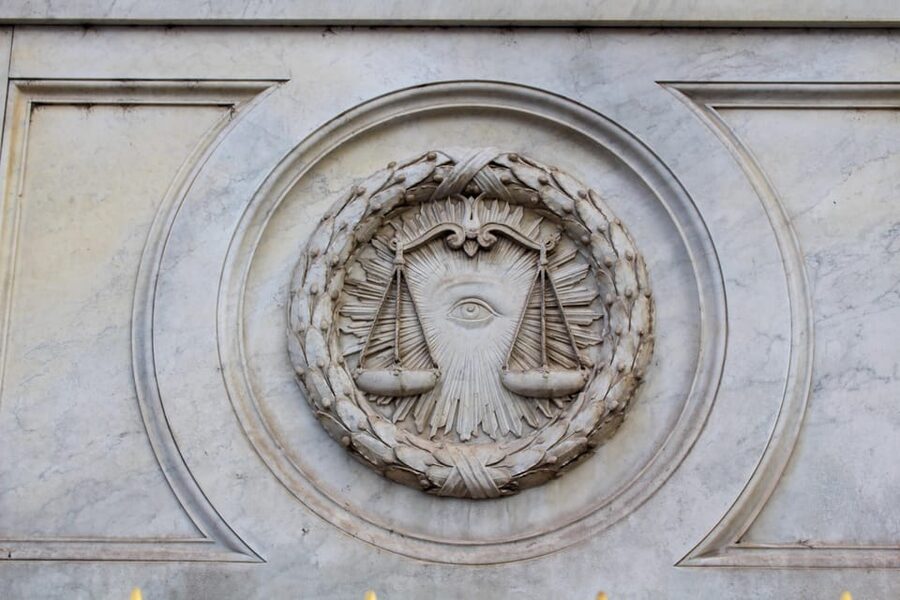
This tour is a strong fit for you if you like:
- History tied to ideas, especially the Enlightenment and how it shaped public debate
- Tours that teach you how to look at architecture, not just what to see
- People curious about how organizations build identity through symbols and ritual
It’s also a good match for you if you enjoy secular, historical interpretation of groups that often get treated as myth only. The tour’s approach helps you understand Freemasonry as a social force, including its influence and the way it includes iconic public figures who helped transform society in areas like politics and the arts.
Where it may be a tougher fit:
- If you don’t speak French, this is guided in French only, and that can limit your experience.
- If you dislike structured interpretation, and you want a looser walk, you might find the symbol focus more rigid than you expect.
Should You Book This Freemason Tour in Paris?
Book it if you want a guided walk that treats Freemasonry as history and symbol systems, not tabloid drama. The combination of Grande Loge de France context, time spent on rituals and organization, and the street-level push to spot Masonry traces in Saint-Germain and Palais Bourbon is exactly the kind of thing that makes Paris feel personal and specific.
Consider skipping it if you mainly want standard landmark sightseeing, or if your French is not strong enough to follow a French-only guide. Also, if observation-heavy tours stress you out, you might prefer something more straightforward.
If you do book, go in with one mindset: you’re learning to see. Bring curiosity, not skepticism or hype. Ninety minutes is enough to change how you interpret certain details you’ll notice in Paris long after the tour ends.
FAQ
How long is the tour?
It lasts 90 minutes.
How much does it cost?
The price is $17 per person.
Where does the tour start?
You meet at 3 place Saint-Germain-des-Prés, 75006 Paris, in front of the entrance to Saint-Germain-des-Prés Church.
Is the tour guided?
Yes. It includes a walking tour with a live guide.
What language is the tour in?
The tour is in French only.
Is it wheelchair accessible?
Yes, the activity is listed as wheelchair accessible.
What is included in the price?
The included item is the walking tour with a guide.
Is transfer included?
No, transfer is not included.
Is there free cancellation?
Yes. You can cancel up to 24 hours in advance for a full refund.











