
Review · PARIS CITY TOURS
Private cruise with Paris water way
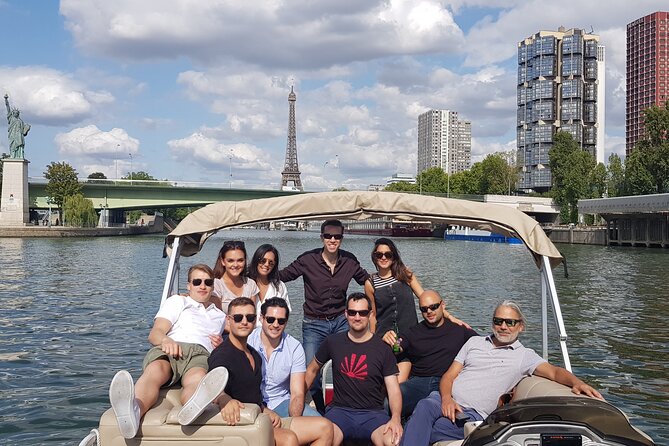
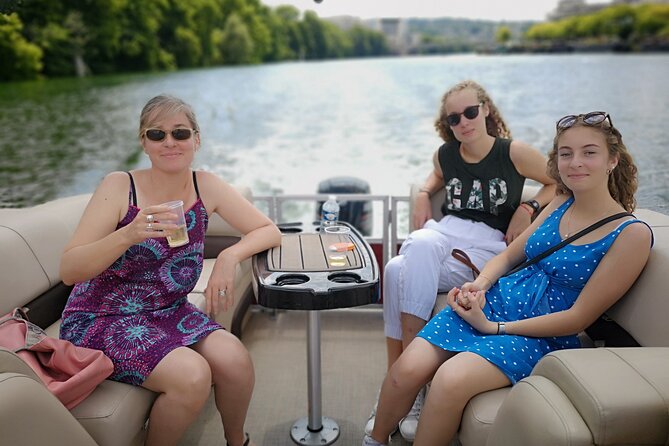
Seine views beat Paris crowds fast. This private 1h30 cruise brings you past Île Saint-Louis, Île de la Cité, and the bridges that frame classic Paris, with English guidance that keeps it easy to follow. I really like the private feel, our guide Diego explaining each landmark in a way kids and adults can track, and I like the 90 minutes pacing that makes the whole river feel doable in one sitting. One thing to keep in mind, it is all exterior viewing from the water, so you will not get museum time inside any of these sights.
At the start, you just show your mobile ticket at 14 Quai François Mitterrand, and you are close to public transportation. The route is designed for quick photo moments under Pont Neuf and Pont des Arts, then longer sightlines toward the Louvre, Musée d’Orsay, and the Eiffel Tower.
Because it is outdoors, weather matters. If rain or wind cancels things, you get offered a different date or a full refund, which is a nice safety net for Paris planning.
Key highlights you will actually notice
- Private group cruise: only your party, so the pace stays calm.
- Guide Diego style: clear narration that works even with 3 kids on board.
- Stop-by-stop landmark flow: Île Saint-Louis to Île de la Cité, then the big bridges.
- The art triangle from the Seine: Louvre, Musée d’Orsay, and major government buildings in one sweep.
- Ending with Eiffel Tower views: the classic finish without booking a timed-entry ticket.
Price and what you get for $94.63 per person
At $94.63 per person for about 1 hour 30 minutes, this is not a budget activity. But you are paying for two things that matter in Paris: time efficiency and a private format.
First, the cruise packs a lot of the city’s signature sights into one continuous ride. You are not bouncing between neighborhoods or hunting for the next “perfect view.” You also get English commentary for the full stretch, which turns “pretty water” into a real orientation tool. If it is your first trip, that orientation is worth money.
Second, the private setup helps more than you might think. It keeps the experience calmer. No waiting around for strangers to funnel in and out at each moment. For families especially, a quieter atmosphere makes it easier to keep attention on what the guide is pointing at, not just on the boat rocking.
You can also read our reviews of more boat tours in Paris
Getting on board at Quai François Mitterrand (and why that matters)
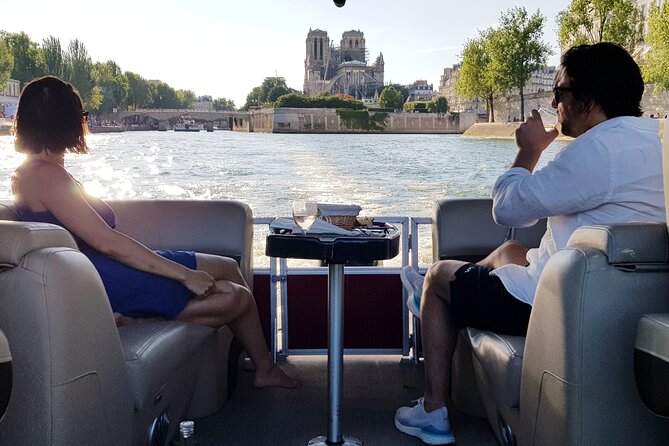
The meeting point is 14 Quai François Mitterrand, 75001 Paris. This is on the river, so you are not stuck with the usual “start location mystery” that turns the beginning of a trip into a scavenger hunt.
A few practical notes that help you enjoy the cruise right away:
- You use a mobile ticket, so you are not digging for paper.
- Service animals are allowed.
- It is near public transportation, which helps if you are mixing this with museum time later.
- Confirmation comes at booking.
Also, given the itinerary is all about passing famous frontages and bridges, the cruise’s value drops if you arrive flustered. Show up a bit early, get settled, and then you can focus on the views instead of the clock.
Île Saint-Louis: the smaller island with a big Paris vibe
The cruise begins with a passage in front of Île Saint-Louis. This is one of the two natural islands of the Seine that remain in Paris (the other is Île de la Cité). Île Saint-Louis is smaller, about 11 hectares, and it sits just upstream from Île de la Cité.
What makes this stop interesting is that it sets a more intimate mood than you might expect. You are not looking at the “start to finish” spectacle yet. You are seeing an island that feels like it belongs to old Paris geometry: compact, close to the water, and tied to stories that predate the modern tourist machine.
The island’s name has an origin that is worth remembering. It takes its name since 1725 from King Louis IX, nicknamed Saint Louis, who is a patron saint and ancestor of Louis XIII. There is also a legend tied to Louis IX praying at Île aux Vaches and taking the cross there before the Eighth Crusade, which ended with his death in Tunis.
There is another detail that adds texture: Lambert hotel, one of the most beautiful private mansions on the island, was bought by Abdallah Ben Abdallah-Al-Thani from the princely family of Qatar. It also had a major fire in July 2013.
Practical tip: Treat Île Saint-Louis like your “warm-up,” not your main photo session. It is the moment you start learning what to look for from the river, so pay attention to shapes, banks, and how the islands sit in relation to the bridges.
Île de la Cité: Paris’s ancient core, still in the middle
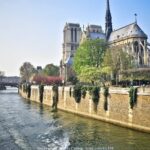
Next up is the passage in front of Île de la Cité, the island considered the ancient cradle of Paris (formerly Lutèce). This is where you get the sense of Paris as a city with roots that never moved too far away.
Île de la Cité is in the 1st and 4th arrondissements, and it has long been described as the heart of the city. A chronicler, Gui de Bazoches, referred to it in 1190 as the head, the heart, and the marrow of Paris. Whether you love medieval wording or not, that line gives you the point: this is the political and historical center, not just a scenic detour.
The island’s “city” name refers to the fortified limits of Paris at the end of Antiquity, reduced to this single island, which formed the medieval urban core. Translation for your trip: from the water, you can understand how Paris condensed power and daily life into this one strategic spot.
One drawback to keep in mind: since the cruise is moving, you will get views, not time on-site. If you want to walk the streets of Île de la Cité for longer, this cruise is your preview, not your substitute.
Palais de Justice and the Conciergerie: power on the Seine
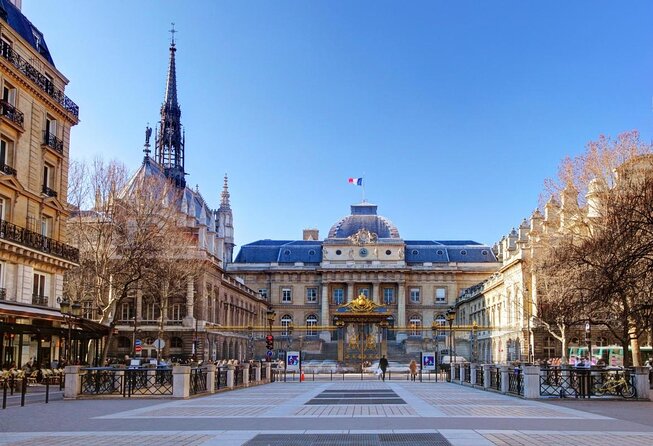
The cruise then passes in front of the concierge at the courthouse, tied to the Palais de Justice. This is the former Curia Regis, the seat from which Parliament of Paris and other sovereign jurisdictions came, and the link continues into current institutions like the Council of State, Court of Cassation, and Court of Accounts.
The Palais de Justice has been located since its inception in the Palais de la Cité, which served as the residence and seat of power of French kings from the 10th to the 14th century. That range matters. It is not a single building with one era of influence. It is layers.
What you can take in from the river is a front-row look at the “institutional Paris” side of the Seine. The narration also connects you to key vestiges tied to power, including the great room with its kitchen, the Conciergerie, Sainte Chapelle, and several towers.
Photo note: You will not have control over angles the way you do on foot. Use the narration to choose what to shoot, then snap quickly as you get the best framing.
You can also read our reviews of more private tours in Paris


Pont Neuf: oldest bridge in Paris, and it still tells a story
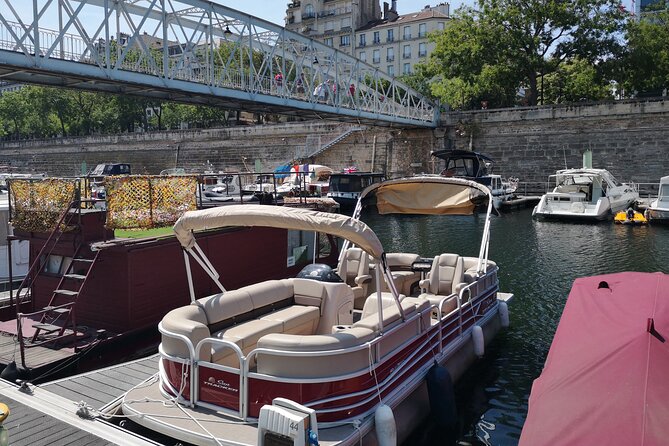
Passing under Pont Neuf is one of those “how is this real?” Paris moments. Despite the name, Pont Neuf is the oldest existing bridge in Paris. It crosses the Seine at the western tip of Île de la Cité.
Construction took place at the end of the 16th century and was completed at the beginning of the 17th century. The bridge earned its name because it was novel at the time: it was built without houses and included sidewalks protecting pedestrians from mud and horses. It is also the first stone bridge in Paris to cross the Seine entirely.
Pont Neuf is classified as a historical monument, and in 1991 it was listed as a UNESCO World Heritage Site as part of the quays of the Seine in Paris. That UNESCO tie is more meaningful than it sounds. It signals that the riverbanks and their bridges are treated as a single heritage scene, not random landmarks.
Why this stop is valuable: It gives you a “timeline anchor.” After Pont Neuf, the rest of your sightseeing starts to feel less like a scatter of monuments and more like a connected city.
Pont des Arts and the love padlocks that disappeared
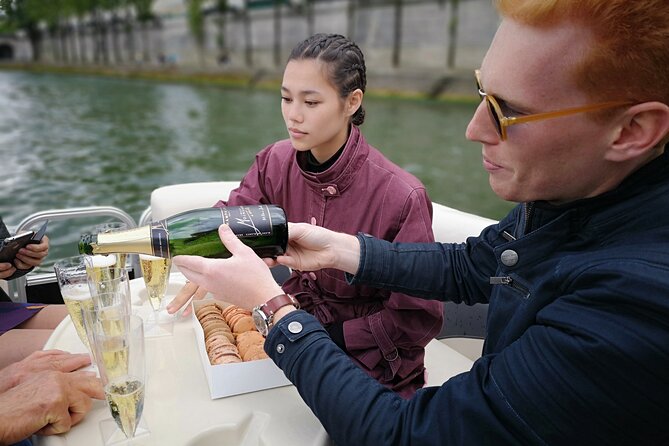
Then you glide under Pont des Arts, and yes, this is where the famous love padlocks enter the story.
From 2008, wire mesh parapets on Pont des Arts became a support for love locks hung by couples. The practice expanded to other footbridges too, like Léopold-Sédar-Senghor footbridge, Archbishopric Bridge, and Simone-de-Beauvoir footbridge.
Paris later faced two problems at once. Some people worried the locks could degrade the heritage and even add weight that might affect structural safety. Others simply felt the look was unsightly. In September 2014, the practice ended, and by June 1, 2015, fences were definitively removed. After that, the parapets went through a transition: first a temporary exhibition of street art works by Jace, eL Seed, Pantonio, and Brusk, then later glass panels from autumn 2015.
Good to know as a visitor: This stop helps you understand how Paris manages public spaces, not just how it photographs well. It is a reminder that city traditions change when preservation and aesthetics collide.
Louvre from the river: the museum as a city centerpiece
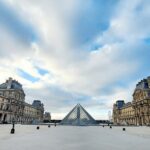
Passing in front of the Louvre gives you the chance to see the museum in its “surroundings first” context. You are not inside, and that is key. This cruise does not replace a museum visit. It makes your later visit easier because you understand the Louvre’s relationship to the river and the broader axis of Paris.
The Louvre’s story in brief: it was inaugurated in 1793 under the name Muséum central des arts de la République in the Louvre Palace, which used to be a royal residence. Today, it is the largest museum of art and antiques in the world, with an exhibition area listed as 72,735 m².
It conserves more than 500,000 works, with more than 36,000 on display at the end of 2019. The collection spans Western art from the Middle Ages to 1848, plus art from earlier civilizations like Egyptian, Greek, Etruscan, and Roman, as well as Islamic art and the arts of early Christians.
From the Seine, you get a practical advantage: you can place the Louvre into your day. If you plan to go later, you will have a mental map that makes getting there feel simpler.
Musée d’Orsay: the station that became an art machine
Next, the cruise passes in front of Musée d’Orsay. This museum is located in the 7th arrondissement on the left bank of the Seine, overlooking the Édouard-Glissant promenade. It is housed in the former Orsay station, built by Victor Laloux from 1898 to 1900, then converted into a museum by decision of President Valéry Giscard d’Estaing.
What I like about this stop is that Orsay signals a different kind of Paris: industrial architecture turned into a home for modern art. The museum’s collections cover Western art from 1848 to 1914, including painting, sculpture, decorative arts, graphic art, photography, and architecture. It is known for Impressionist and Post-Impressionist paintings, with nearly 1,100 canvases out of more than 3,650.
How this helps you plan: Even if you do not know much art history, seeing Orsay from the river helps you decide whether you want to commit time inside. If you are short on days, you can skip the museum but still feel like the cruise gave you a real sense of Paris culture.
National Assembly and the river’s political side
The cruise also passes in front of the National Assembly. This is not just a pretty façade stop. It connects to the long arc of French representation and how the name of the institution has shifted across centuries.
If you like context, this is a solid reminder that Paris’s monuments are not frozen. Institutions evolve, and the same buildings can carry different meanings over time. The naming detail, like how the title of National Assembly reappeared and disappeared across history, gives you a framework for thinking about modern France beyond a postcard.
Realistic expectation: Again, you will not go inside. But you will understand what you are looking at and why it matters.
Alexandre III Bridge: engineering, alliance, and style
Under Alexandre III bridge, you get one of those “Paris loves symbolism” scenes. The bridge was inaugurated for the Universal Exhibition of Paris in 1900 and was intended to symbolize Franco-Russian friendship.
The alliance connects to the signing in 1891 between Emperor Alexander III and French President Sadi Carnot. The first stone was laid by Tsar Nicolas II, Empress Alexandra Fedorovna, and President Félix Faure on October 7, 1896. Construction involved engineers Jean Résal and Amédée Alby, plus architects Cassien-Bernard and Gaston Cousin. There is also an inscription on the column (right bank downstream) noting that Émile Loubet, President of the French Republic, opened the Universal Exhibition and inaugurated the bridge on April 14, 1900.
Built on the axis of the Esplanade des Invalides, Alexandre III bridge also leads toward the Petit and Grand Palais, both built for the same Universal Exhibition.
Why it works on a cruise: this stop turns a bridge into a mini history lesson, and because you pass underneath, you get a strong sense of scale and detail without needing to climb anything.
Eiffel Tower: the iconic finish that ends the loop
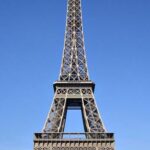
The cruise concludes with a passage in front of the Eiffel Tower. It is a puddled iron tower 324 meters high, built by Gustave Eiffel and collaborators for the Universal Exhibition of Paris in 1889, celebrating the centenary of the French Revolution.
It started with the name tower of 300 meters, then became the symbol of the French capital. It has been one of the most visited French cultural sites, with 5.9 million visitors in 2016 noted in the provided information, and since opening it has welcomed more than 300 million visitors.
For many people, the Eiffel Tower is the reason they book the cruise. The value here is that you reach it as the final stop after seeing how Paris’s islands, court power, bridges, and art institutions line up along the river.
Photo and comfort tips for your 1h30 on the Seine
This is a moving boat with major landmarks along both banks. So your best strategy is simple: plan for quick shots and comfort.
- Dress for wind on the water, even in mild weather.
- If you are sensitive to cold, bring a layer. River air hits differently than the street.
- For photos, keep your camera ready during bridge sections. That is where you often get the “framed view” effect.
- If you travel with kids, make it a game: assign one landmark per child and ask them to spot it when your guide names it.
One more small tip: the cruise includes major stops like Pont Neuf, Louvre area, and Eiffel Tower. If you want to do museums afterward, use the cruise as your orientation pass, then pick one interior visit instead of trying to cram everything in.
Who should book this private Seine cruise
This cruise is a good fit if:
- You want a relaxed Paris overview without museum crowds.
- You are traveling with family and need an easy experience that still has stories.
- You prefer guided context in English instead of DIY guesswork.
- You want iconic sights in a single sitting, roughly 1 hour 30 minutes.
It is less ideal if you need deep time at any one site. This is a water-based viewing experience, so you are not going to replace walking tours of Île de la Cité, full Louvre time, or a dedicated Eiffel Tower time slot.
Should you book? My take
I would book this if you want a smart first pass at Paris icons, with a guide who explains in a way you can follow without effort. The private format also makes it feel like your day, not a cattle call. For families, the calmer pacing is a real advantage.
Skip it if you are planning to spend your entire day only on one major landmark, because the cruise’s power is breadth, not depth. Also, treat weather as a planning factor. If it looks bad, consider timing your day with flexibility.
If you want the Seine to act like a guided map of Paris, this cruise does that job well.
FAQ
How long is the private cruise?
It lasts about 1 hour 30 minutes.
Is this tour private?
Yes. It is a private tour or activity, so only your group will participate.
What language is the tour offered in?
The experience is offered in English.
Do I get a mobile ticket?
Yes, it includes a mobile ticket.
Where does the cruise start?
The meeting point is 14 Quai François Mitterrand, 75001 Paris, France, and the activity ends back at the meeting point.
Are service animals allowed?
Yes, service animals are allowed.
What if the cruise is canceled due to poor weather?
This experience requires good weather. If it is canceled due to poor weather, you will be offered a different date or a full refund.
More Private Tours in Paris
More Boat Tours & Cruises in Paris


More Tour Reviews in Paris

Not for you? Here's more nearby things to do in Paris we have reviewed







Paris City Tours, side by side.
 ★ 4.6Louvre Museum Timed-Entrance TicketTickets from $2671,977 guest reviews
 ★ 4.6Disneyland® Paris 1-Day TicketTickets from $6149,412 guest reviews
 ★ 4.6Versailles Palace and Gardens Full Access TicketTickets from $1741,579 guest reviews
 ★ 4.6Arc de Triomphe Rooftop TicketsTickets from $1834,264 guest reviews
 ★ 4.7Orsay Museum Entry TicketTickets from $1525,647 guest reviews
 ★ 4.4Evening River Cruise with MusicTickets from $2722,721 guest reviews
 ★ 4.4Eiffel Tower Entry Ticket with Optional Summit AccessTickets from $2920,035 guest reviews
 ★ 4.3Eiffel Tower Summit or Second Floor AccessTickets from $5917,248 guest reviews
This tour also belongs to