
Review · PARIS CITY TOURS
Paris: VR Experience “L’Horizon de Khéops”
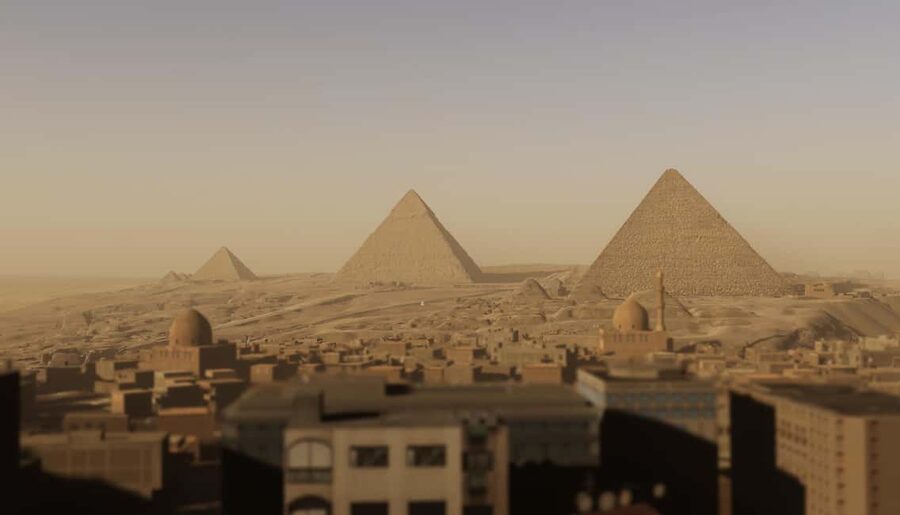
VR is a strange new way to see Giza. L’Horizon de Khéops lets you roam for 45 minutes in a 1,000m² area with a headset, while the story carries you from the Giza Necropolis at sunrise to a VIP moment near the pyramids at nightfall.
What I like most is how realistic it feels, and how the experience makes you part of the scene, starting as a giant avatar walking those ancient grounds with a virtual guide and other visitors.
The one watch-out is simple: this is not for everyone. It is not suitable for children under 8, and it is also listed as not for people with heart problems or epilepsy. Also, a few people flag that the time can feel a bit short for soaking in the environment.
Key highlights at a glance
- Sunrise-to-nightfall story set at Giza so you get contrast, not just a single view
- Move freely in a 1,000m² VR space instead of standing still like many VR demos
- Giant avatar perspective that gives you scale when you reach the Sphinx and the pyramid area
- Mastabas and inner-circle tomb silhouettes used as part of the narrative, not random visuals
- A VIP visit at nightfall at the foot of the Pyramid of Giza
- Strong tech and script praise including very realistic 3D and an enriching, cultural tone
A VR show that turns the Giza Necropolis into a story
The experience opens as the sun rises over the Giza Necropolis, the Egyptian site known for the three Great Pyramids. Right away, you are not looking at a museum screen. You are standing inside the setting, watching the land take shape around you as the light changes.
What helps is that the story does not treat the location like a backdrop. It brings in the mastabas as silhouettes in the shadows, describing them as tombs connected to deceased monarchs’ inner circles and families. That matters because it gives you a reason to look around, instead of just following camera angles.
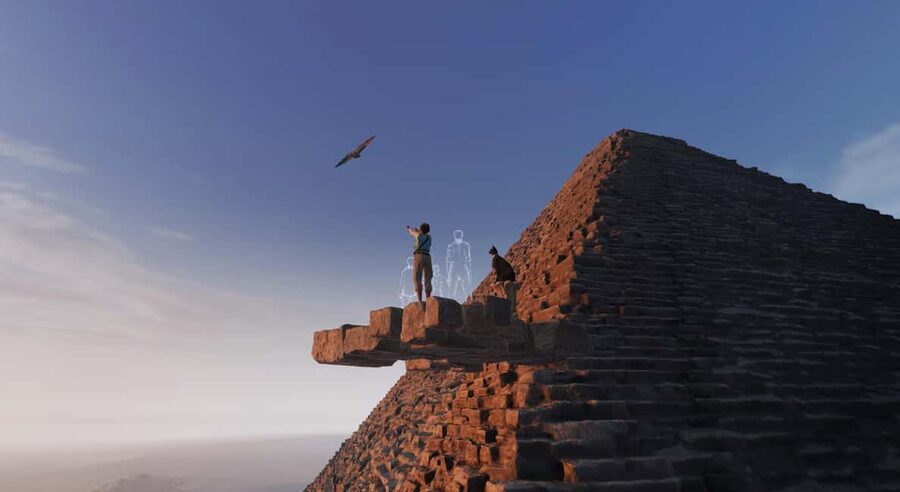
Then the experience keeps pushing forward. You are guided to the Sphinx and later to the foot of the Pyramid of Giza for a night visit. The sunrise-to-nightfall structure gives you a natural rhythm: it starts big and clear in morning light, then turns more dramatic as night arrives.
You can also read our reviews of more tours and experiences in Paris.



Inside the 1,000m² space, you actually get to move
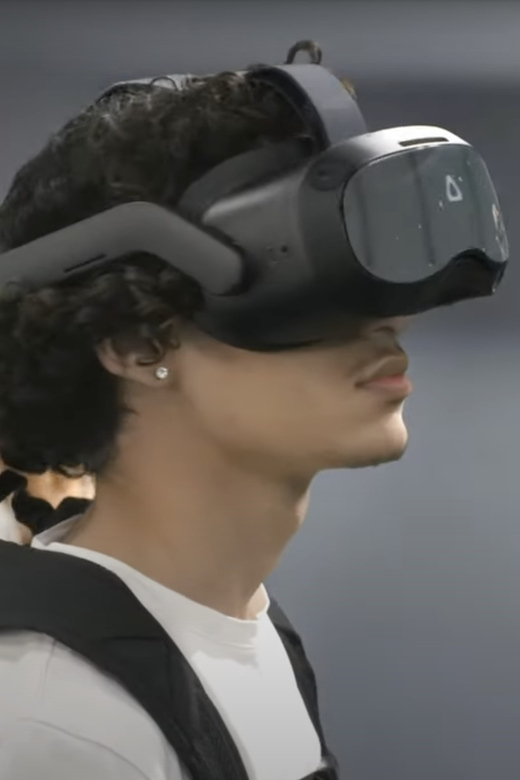
A lot of VR experiences tell you to move, then quietly reduce it to arm motions or short animations. Here, you get something more practical: you can move freely for 45 minutes in a 1,000m² space. That is a lot of room for a VR attraction, and it changes how the whole thing feels.
You start as a giant avatar treading the eternal sand of the Giza Plateau. That choice is more than a fun visual. It is the trick that helps you understand scale. When you are physically free to reposition, you naturally find your own angles. You are not stuck with the same fixed viewpoint for the whole show.
I also like that there is a virtual guide in the mix along with other visitors. Even when you are alone in your headset, there is a sense of shared timing. It makes the experience feel like an organized expedition, not just a video you wear.
The path: sunrise, mastabas silhouettes, Sphinx, then the pyramid foot
Here is the emotional arc, and why it works.
First, the sun rises over the necropolis. You begin by surveying the area, and the visual story points out the mastabas as silhouettes laid out around the scene. That is a smart way to explain what you are seeing, since you are not going to guess the meaning of those shapes on your own.
Next comes the walk. You travel in VR toward the Sphinx, still moving in your real space while the virtual world pulls you forward. The Sphinx moment tends to be the one people remember because it is an instantly recognizable anchor in the visual story. Even if VR has a way of smoothing edges, the sense of arrival is clear.
Then you head for the foot of the Pyramid of Giza, and the experience shifts again for a VIP visit at nightfall. Nightfall matters because it forces a different kind of attention. Bright midday details get replaced with silhouette, contrast, and atmosphere, so you notice shape and placement more than small surface textures.
A small drawback worth knowing: some people feel a few passages could be longer, so they could enjoy the environment even more. That is not unusual for a timed VR show, but it is good to go in knowing the ride is designed to move.
“Spaces previously closed to the public” in VR terms
One of the headline claims is that you get to discover spaces previously closed to the public. In a VR context, that typically means the experience can show angles, approaches, or interior-like moments that a normal visit would not allow.
In this case, the night visit at the foot of the Pyramid of Giza is where that idea shows up most clearly. Real-world access near the pyramids is tightly controlled. VR lets the producers compress the sense of access into a guided storyline, so you get a feel for being closer to key locations than you would normally manage.
The value here is not that VR replaces the real thing. It is that VR can fill the gaps in understanding. When you later visit Giza for real, you will likely recognize the layout more quickly, and you might remember how the route felt from sunrise to nighttime.
What the praise tells you about the production
The overall rating is 4.9 across 16 reviews, and the themes are consistent. The biggest compliment is the sense of realism. People specifically mention how amazingly realistic the experience feels, along with very realistic images.
Next comes the script. Several reviews describe the narrative as well-done, enriching, and cultural. That is important because VR can go wrong if it becomes a sequence of visuals with no meaning. Here, the story uses elements like mastabas silhouettes, the Sphinx, and the pyramid foot as part of a guided journey.
People also praise the 3D quality, noting it is good and that it should improve further over time. I take that as a sign that the show is working now, not just in theory.
Finally, there is the human side. One review calls out perfect welcome and welcome reception, which matters because VR is easier when you start feeling comfortable, not rushed.
The one recurring “could be better” note is time. If you love lingering in scenery, you may wish certain passages were longer to fully enjoy the environment. That is worth factoring into your expectations.



Duration and pacing: 1 hour on the clock, 45 minutes in VR
The total booking is 1 hour, with 45 minutes inside the VR portion. That means you should treat it like a compact attraction, not a long-form guided tour.
For value, I think that pacing makes sense. You get a beginning (sunrise setup), a middle (walk to the Sphinx), and a climax (VIP night visit). You are not stuck for an hour staring through a headset with no story change.
That said, if you are the type who wants to take photos, pause often, and stay in one area to soak up details, you may find the final stretch comes quickly. The best way to handle that is mental. Go for the storyline, not the long wander.
Price value: $37 for a high-tech guided hour
At about $37 per person, this sits in the “worth it if you want a fun learning format” range.
Here is how I judge the value:
- You get a guided virtual experience with a headset, not just a generic 3D show.
- You have a large 1,000m² space and 45 minutes to move, which uses the format well.
- The storyline is tied to specific Giza elements, including sunrise and nightfall, plus the VIP moment near the pyramid foot.
If your budget is tight and you are aiming to prioritize classical landmarks in person, then yes, you might skip VR. But if you want a smart warm-up for the Giza concept and enjoy tech-driven experiences, the price is not outlandish for what you get.
Also, with free cancellation up to 24 hours in advance and reserve now, pay later, you can book without committing right away. That flexibility is often the difference between a “maybe” plan and a “done” plan.
Language options: French or English
The host or greeter is listed as French and English, and the experience languages are also French and English. That is good because VR experiences can be tricky if the narration and timing do not match your understanding.
In practice, you should pick the language you prefer for the guide. If you want the most out of the cultural elements described in the story, using the language you are most comfortable with will help you catch the context faster while you are moving.
Accessibility and who should skip this VR experience
This one is clearly marked wheelchair accessible, which is a real plus. VR attractions can be hit or miss for mobility. Here, the listing says access is supported.
At the same time, the restrictions are strict for health reasons:
- Not suitable for children under 8
- Not suitable for people with heart problems
- Not suitable for people with epilepsy
If any of those apply, do not assume you can make it work. The safety note is not a minor technicality. It is part of the product design and screening.
Practical tips so the hour feels smooth
A few practical things help you enjoy the show more.
First, check starting times before you arrive. The experience is booked by time slots, and the duration is 1 hour overall. If you show up late, you can lose a chunk of the VR portion.
Second, plan for headset use. You will be wearing a VR headset for the 45-minute guided experience, and you will be moving in the space, so keep your plan simple before and after.
Third, consider how you like to learn. This experience is educational and cultural in tone, and it uses visuals like mastabas silhouettes and structured movement to teach by doing. If you like guided storytelling, you will probably enjoy it more than if you only want “cool tech” with no context.
Should you book L’Horizon de Khéops?
I would book it if you want:
- A high-quality VR format with a realistic Giza setting
- A guided path that actually has a beginning, middle, and VIP nightfall finale
- Tech and storytelling that people consistently describe as realistic and culturally enriching
I would think twice if you:
- Need a longer, slower pace to enjoy scenery, since some people wish passages lasted longer
- Have concerns that fall under the listed restrictions, like epilepsy or heart problems
- Are traveling with kids under 8, since it is not suitable for that age group
Bottom line: for the price, the time in the headset, and the storyline from sunrise to nightfall, this is a strong choice for anyone who wants a memorable taste of Giza without a flight, a long day of walking, and a guide who says, okay, now picture it in the morning light.
FAQ
Where is this VR experience located?
It takes place in Ile-de-France, France.
How much does it cost?
The price is listed as $37 per person.
How long is the activity?
The total duration is 1 hour, including a 45 minutes VR experience.
How much space will you move in?
You can move freely for the VR portion in a 1,000m² space.
What is the experience storyline?
It begins as the sun rises over the Giza Necropolis, then you move as a giant avatar toward the Sphinx, and later you visit the foot of the Pyramid of Giza at nightfall for a VIP moment.
Are French and English available?
Yes. The host or greeter and the experience languages are French and English.
Is it wheelchair accessible?
Yes, the experience is listed as wheelchair accessible.
Who is it not suitable for?
It is not suitable for children under 8, people with heart problems, and people with epilepsy.
Is free cancellation available?
Yes. You can cancel up to 24 hours in advance for a full refund.
Does it offer reserve now, pay later?
Yes. It lists a reserve now & pay later option, so you can book and pay nothing today.
More Tour Reviews in Paris
Not for you? Here's more nearby things to do in Paris we have reviewed












Paris City Tours, side by side.
 ★ 4.6Louvre Museum Timed-Entrance TicketTickets from $2671,977 guest reviews
 ★ 4.6Disneyland® Paris 1-Day TicketTickets from $6149,412 guest reviews
 ★ 4.6Versailles Palace and Gardens Full Access TicketTickets from $1741,579 guest reviews
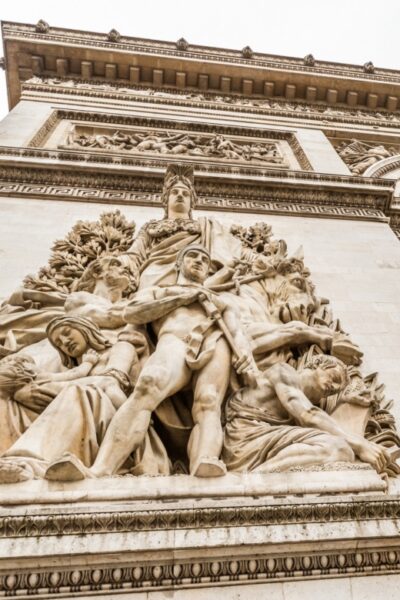 ★ 4.6Arc de Triomphe Rooftop TicketsTickets from $1834,264 guest reviews
 ★ 4.7Orsay Museum Entry TicketTickets from $1525,647 guest reviews
 ★ 4.4Evening River Cruise with MusicTickets from $2722,721 guest reviews
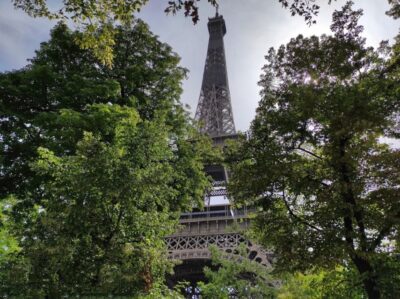 ★ 4.4Eiffel Tower Entry Ticket with Optional Summit AccessTickets from $2920,035 guest reviews
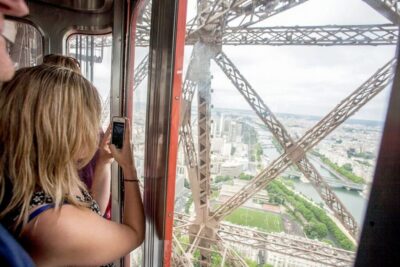 ★ 4.3Eiffel Tower Summit or Second Floor AccessTickets from $5917,248 guest reviews