
Review · PARIS CITY TOURS
Paris: Panthéon Admission Ticket
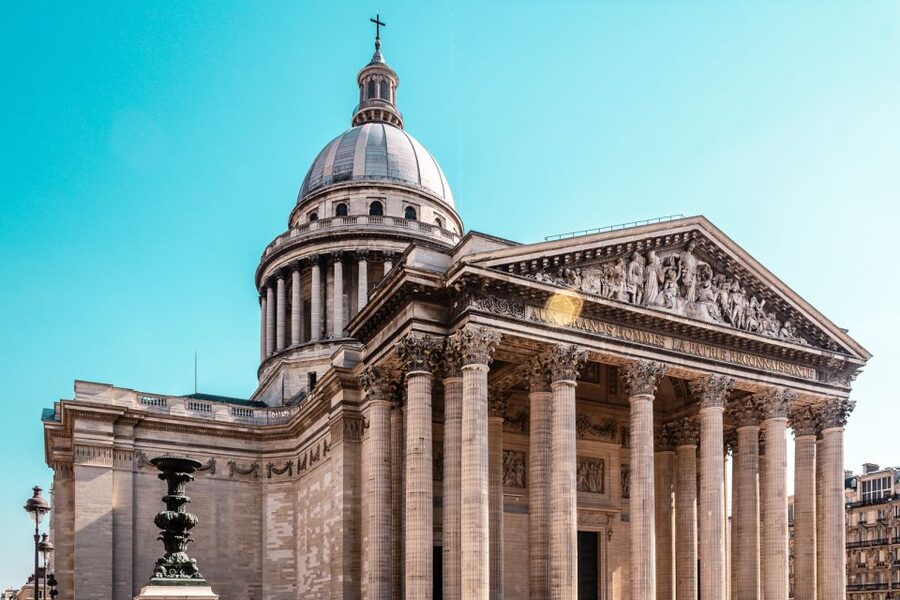
Paris has a way of turning history into stone. The Panthéon is one of the best examples, a former church remade into a national monument with tombs that read like a who’s who of France. I love the contrast here, the grand symmetry above ground and the quiet weight of the crypt below, all wrapped in Soufflot’s architectural ideas from the 1700s.
Two things I really like: first, the self-guided format makes it easy to move slowly and reread inscriptions without feeling rushed. Second, the crypt is where the Panthéon becomes personal, because you come face to face with names you’ve studied, like Voltaire, Rousseau, Émile Zola, Alexandre Dumas, and Marie Curie.
One consideration: the experience is mostly on your own, and the audio guide is an optional extra you pay for at the monument. If you want a lot of guided context, you might still enjoy the site, but you may have to work a bit more to connect the symbols.
Key points before you go
- Soufflot’s story is the core theme, with a special exhibition that traces his career and his signature approach
- A crypt visit is non-negotiable, since it’s home to 70+ major figures of French history
- You control the pace, which is great if you want to linger over sculpture, tombs, and inscriptions
- Seasonal top-floor views (April to October) can add a big wow factor to your visit
- Skip-the-line entry is the practical win, so you can spend time inside instead of waiting outside
- The audio is optional, and while it can help a lot, the devices can be a little fiddly at times
Why the Panthéon feels different from other Paris stops
The Panthéon is not just a pretty building in Paris. It’s a whole argument in architecture, first designed as a royal church, then repurposed during the French Revolution into a place for national memory. You’ll feel that switch as you move through the monument, because the space holds two eras at once: monarchy and Enlightenment ideas, faith and civic pride.
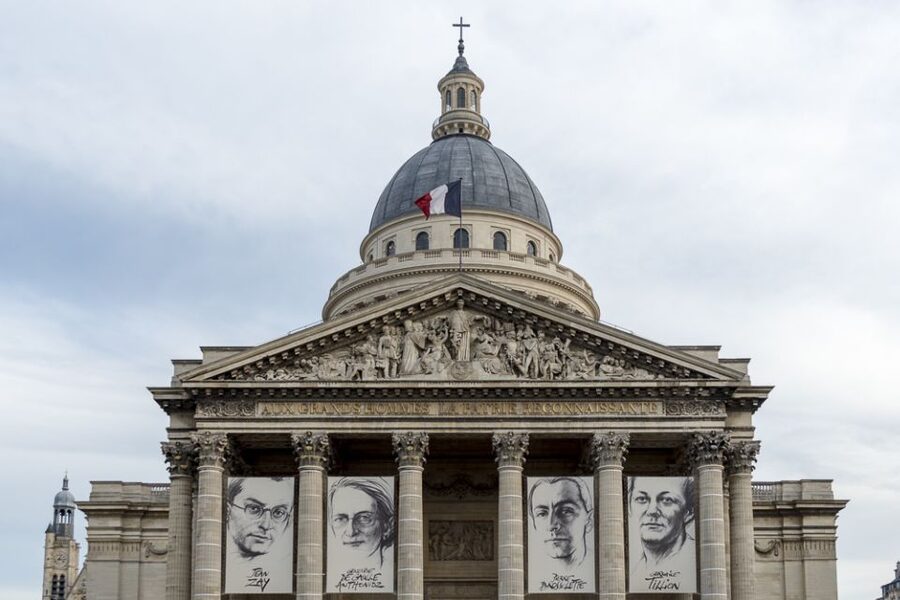
If you’re into symbolism, this place rewards you. The building’s shape and decoration are meant to create impact, but the real punch comes from the people interred here. The Panthéon has been the resting place for famous French writers, scientists, generals, clergy, and politicians since Victor Hugo’s death in 1885, and that roster makes the building feel alive.
Even better, the atmosphere is often calmer than some of Paris’s flashier stops. The monument is large, and if you visit at a comfortable time of day, you can actually read, look up, and think.
Getting in fast with your Panthéon admission ticket
Your ticket is for self-guided entry, and it’s valid for one day. The key practical benefit is flexibility: it can be used on any date and at any time. That means you can match your visit to your schedule, not the other way around.
Bring a passport or ID card. Free entry rules are strict, especially for EU visitors under 26, so you’ll need a photo ID with picture at the ticketing station first before going to the entrance of the monument. Also plan on no luggage or large bags, which keeps things smooth inside.
Two timing details matter. The last admission is 45 minutes before closing time, so don’t drift in late. And on December 24 and December 31, the Panthéon closes at 4:00 PM, so plan your day accordingly.
The main self-guided route, from the nave to the big interior wow
Once you enter, you’ll be working on your own timeline. That’s not a weakness here. In fact, the Panthéon is a great place to self-direct because you can choose what to linger on, the sculpture, the wall inscriptions, or the overall geometry of the space.
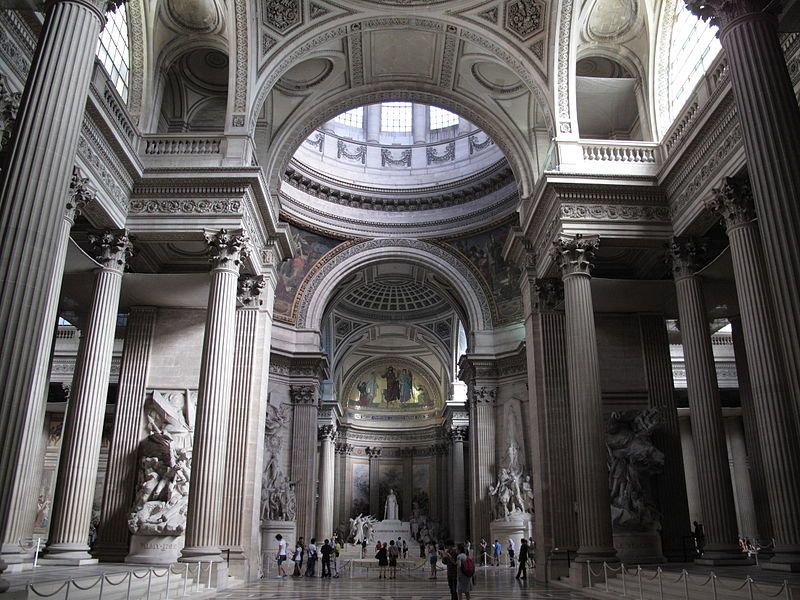
Soufflot’s design is central to the experience. You’ll notice how the monument funnels your attention toward the heart of the building, and how the upper structure gives it that monumental, cathedral-like presence even after its many political and religious changes. It’s one of those interiors where you look up, then look again, because your perspective keeps shifting as you walk.
Plan for about an hour to explore at a comfortable pace, but you can easily go longer if you want to read more of the names and explanations. If you’re visiting when it’s not crowded, the experience feels less like a checklist and more like a real museum visit.
Don’t miss the crypt: 70+ tombs and the names you actually know
The crypt is where the Panthéon becomes emotional. It houses tombs of 70+ illustrious figures, and the list includes household names for many visitors: Voltaire, Jean-Jacques Rousseau, Émile Zola, Alexandre Dumas, Pierre and Marie Curie, and Victor Hugo. You’ll also see other major figures associated with French history, and the density of names makes the space feel like a timeline you can walk through.
Here’s the practical way to enjoy it. Slow down when you reach the larger tombs, then take a second pass to scan smaller inscriptions. If you only rush once, you’ll miss the connections between writers, scientists, and political figures that make the Panthéon feel like a curated national memory, even though you’re exploring freely.
Is it always equally spectacular to everyone? Not necessarily. Some people find the crypt more intimate than dramatic compared to the main interior spaces, and that’s a fair expectation. The trade-off is that the crypt rewards attention more than spectacle.
The top-floor restored views: when April to October matters

One reason to plan your timing is the chance to reach restored upper floors. From April to October, you can enjoy superb views across Paris from the top areas of the monument. If you like getting your bearings in a city, this is a smart payoff for your ticket.
What I like about this is that it turns a history stop into a city stop. You get a moment of scale, you can see how far out the neighborhoods stretch, and then you can return to the interior with a better sense of where you are.
Also, don’t treat the upper floors as an automatic add-on. It’s seasonal, and it can change your visit strategy. If you’re traveling outside April to October, you’ll still get plenty from the main areas and the crypt, but you’ll want to be extra intentional with your interior time.
The Soufflot exhibition that explains the whole building
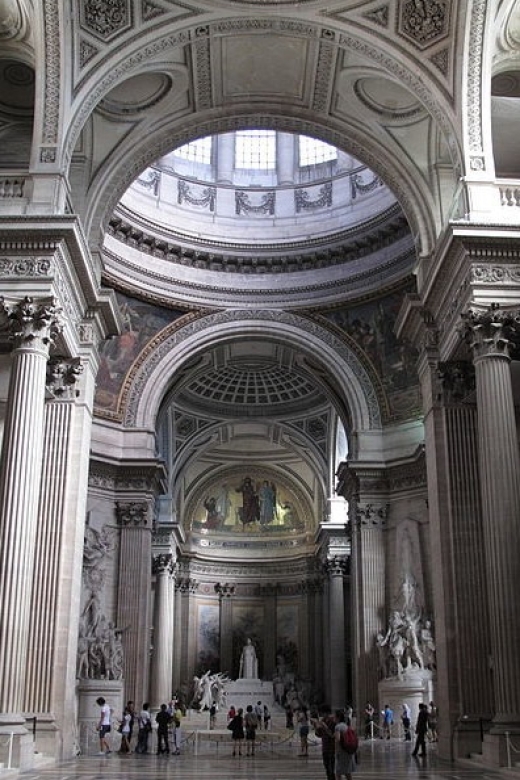
The Panthéon doesn’t just tell you stories through tombs. It also frames the monument through its architect. Inside, you can see a major exhibition that pays tribute to Jacques-Germain Soufflot, tracing his career and his monumental achievements, including the royal Church of Sainte-Geneviève, the building that became the Panthéon.
This exhibition is useful because it gives you a way to read what you’re seeing. For example, you’ll learn how Soufflot’s church was designed to reflect Louis XV’s desire to glorify the monarchy in church form dedicated to Saint Geneviève. Then, during the French Revolution, the building was deconsecrated in 1791 and renamed the Panthéon.
The exhibition also helps connect the 19th-century shifts between religious and patriotic monument. That context matters, because the Panthéon is not frozen in time. It’s changed roles over and over, and your experience feels smarter when you know why.
Audio guide and optional guided tours: choose what matches your style
The self-guided experience comes with an information booklet that’s available online or at the entrance. That alone can be enough if you enjoy reading at your own pace.
If you want extra guidance, the audio guide is available for an additional fee, €3 payable directly at the monument. Some visitors find it makes the route much easier to follow, with narration that points you to what to look at next. Others say the audio devices can be a little tricky at first, so it helps to ask staff for a quick reset if something acts up.
Guided tours are also available every afternoon, subject to availability. One name you might hear is Florencia, and on at least one guided session she used a tablet to illustrate the stories as she walked people through the area around Montmartre. Even if you don’t get the same guide, the point is useful: a live guide can add context fast, especially if you want the political and architectural meaning explained out loud.
A practical way to spend your time inside
Because this is self-guided, the best plan is the one that prevents you from skimming. I like to treat the visit like two missions: symbolism first, names second.
Start with the main interior areas, where Soufflot’s design and the overall layout do the heavy lifting. Then go straight to the crypt so you’re not mentally tired and you can still feel the gravity of the tombs. After that, check any special displays or small exhibits you see along the way, because small details add up when you’re moving at your pace.
If you’re into scientific history, keep an eye out for displays related to famous experiments. One standout mentioned by visitors is a pendulum display tied to Foucault’s concept, and there’s a nice trick to make it more than background entertainment: check the reading when you arrive, then check again when you leave, so you can feel how the experiment is meant to change over time.
Pair the Panthéon with the Left Bank for a calmer day
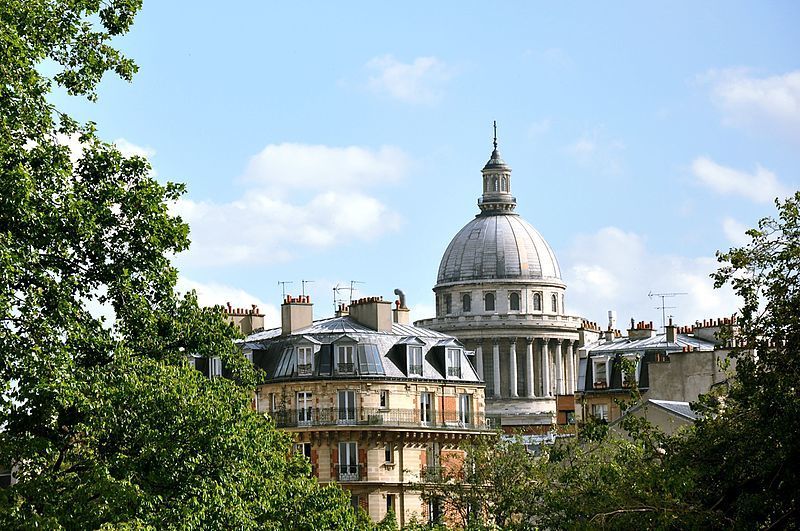
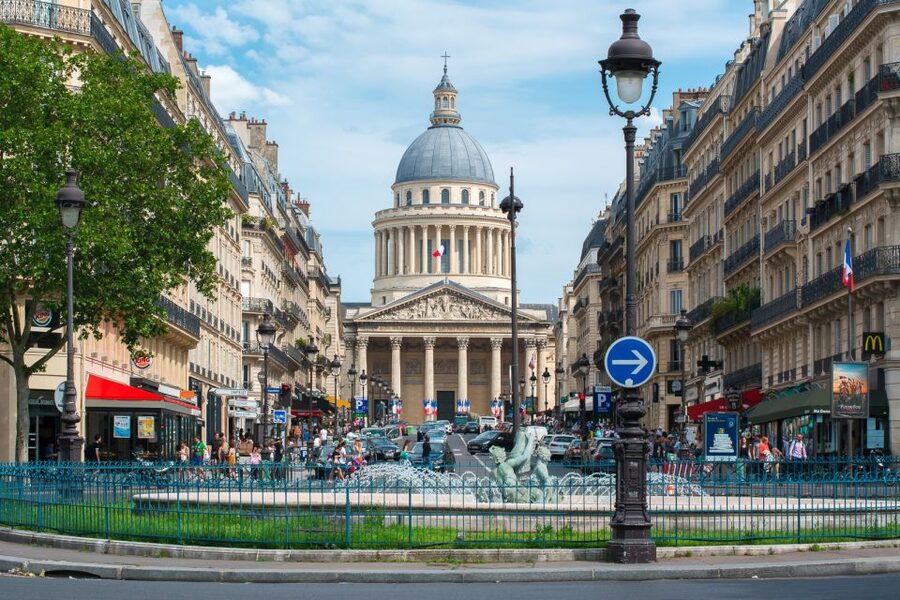
The Panthéon sits on the Left Bank, and it pairs naturally with a stroll in the surrounding area. People commonly combine it with Luxembourg Park, and it makes sense because the atmosphere shifts from monumental interior to relaxed outdoor time.
This is also a good stop if you want a break from the biggest tourist traffic. The monument is large, so it can feel less like a bottleneck when you choose a good time of day. Weekdays often give you that advantage, and mornings or later afternoons can help too, depending on opening hours.
If you’re a TV and culture fan, you might also enjoy spotting recognizable spots nearby. One visitor pointed out that the area is near locations associated with Emily in Paris, and even without chasing a specific set, it’s a fun extra layer to your day.
Price and value: what $15 buys you in real terms
At about $15 per person, the ticket price is reasonable for a monument that covers three things at once: major architecture, a focused Soufflot exhibition, and the crypt of 70+ figures. This is one of those Paris tickets where the value comes from how much meaning you can pull from the space without needing additional paid add-ons.
The audio guide costs extra at the monument, €3, but it’s optional. If you feel comfortable reading the information booklet and you like learning at your own pace, you can skip it. If you want the stories tied together and explained as you walk, the audio can help you get more out of each room.
Also consider free entry. Visitors under 18 get free entrance, and EU citizens under 26 can enter for free with photo ID at the ticketing station first. There are also free entry days on the first Sunday of January, February, March, November, and December, plus European Heritage Days in September. If you can align your trip with one of those windows, you’ll get the best possible deal.
Should you book this Panthéon admission ticket?
Yes, book it if you want a serious Paris stop that doesn’t feel like a rushed crowd scene. The self-guided format is a big win because it lets you move slowly through both the grand interior and the crypt without needing to match anyone else’s pace.
You should especially book if you care about French history beyond battle dates. The Panthéon gives you names, artists, scientists, and political figures in one physical place, and the Soufflot exhibition helps you connect the building’s design to its political story. If you’re okay doing some reading on your own, the included booklet plus your time in the crypt will still feel like money well spent.
If you want a heavily guided interpretation, you can still do that too, by timing your visit for an afternoon guided tour when available. And if you’re traveling outside April to October, plan your expectations around the seasonal views, since those upper-floor panoramas are not guaranteed year-round.
FAQ
What is included with the Panthéon admission ticket?
Your ticket includes a self-guided tour and an information booklet (available online or at the entrance). Guided tours are available every afternoon subject to availability, but the live guide is not included.
Is an audio guide included?
No. The audio guide is not included. It costs €3 and is paid directly at the monument.
Can I use the ticket any time on my visit day?
Yes. The admission ticket can be used on any date and at any time, for a visit valid 1 day. Check availability to see starting times.
What do I need to bring to enter?
Bring your passport or ID card.
When is the last admission to the monument?
The last admission is 45 minutes before closing time.
Are there days when the Panthéon is closed or has early closing times?
Yes. It closes at 4:00 PM on December 24 and December 31. It is closed on January 1, May 1, and December 25, and on June 5 it opens at 12:00 PM.
Paris City Tours, side by side.
 ★ 4.6Louvre Museum Timed-Entrance TicketTickets from $2671,977 guest reviews
 ★ 4.6Disneyland® Paris 1-Day TicketTickets from $6149,412 guest reviews
 ★ 4.6Versailles Palace and Gardens Full Access TicketTickets from $1741,579 guest reviews
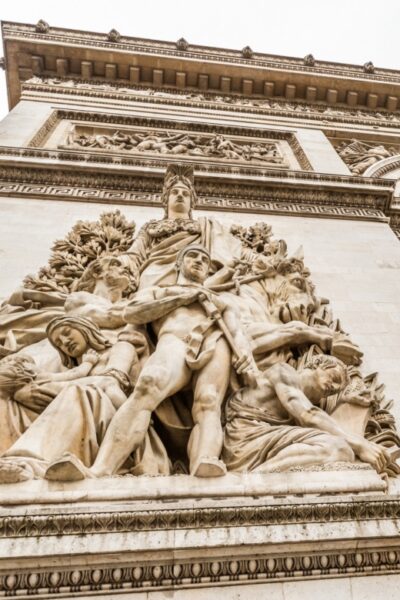 ★ 4.6Arc de Triomphe Rooftop TicketsTickets from $1834,264 guest reviews
 ★ 4.7Orsay Museum Entry TicketTickets from $1525,647 guest reviews
 ★ 4.4Evening River Cruise with MusicTickets from $2722,721 guest reviews
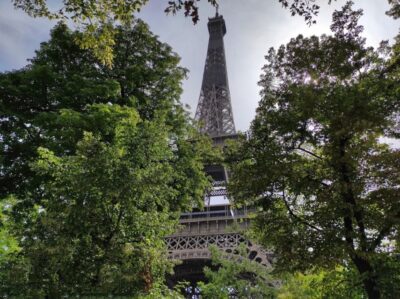 ★ 4.4Eiffel Tower Entry Ticket with Optional Summit AccessTickets from $2920,035 guest reviews
 ★ 4.3Eiffel Tower Summit or Second Floor AccessTickets from $5917,248 guest reviews